• Global CNC market projected to reach $128B by 2028 • New EU trade regulations for precision tooling components • Aerospace deman
NYSE: CNC +1.2%LME: STEEL -0.4%

Portable machine tool use cases: Where mobility sacrifices rigidity — and where it doesn’t
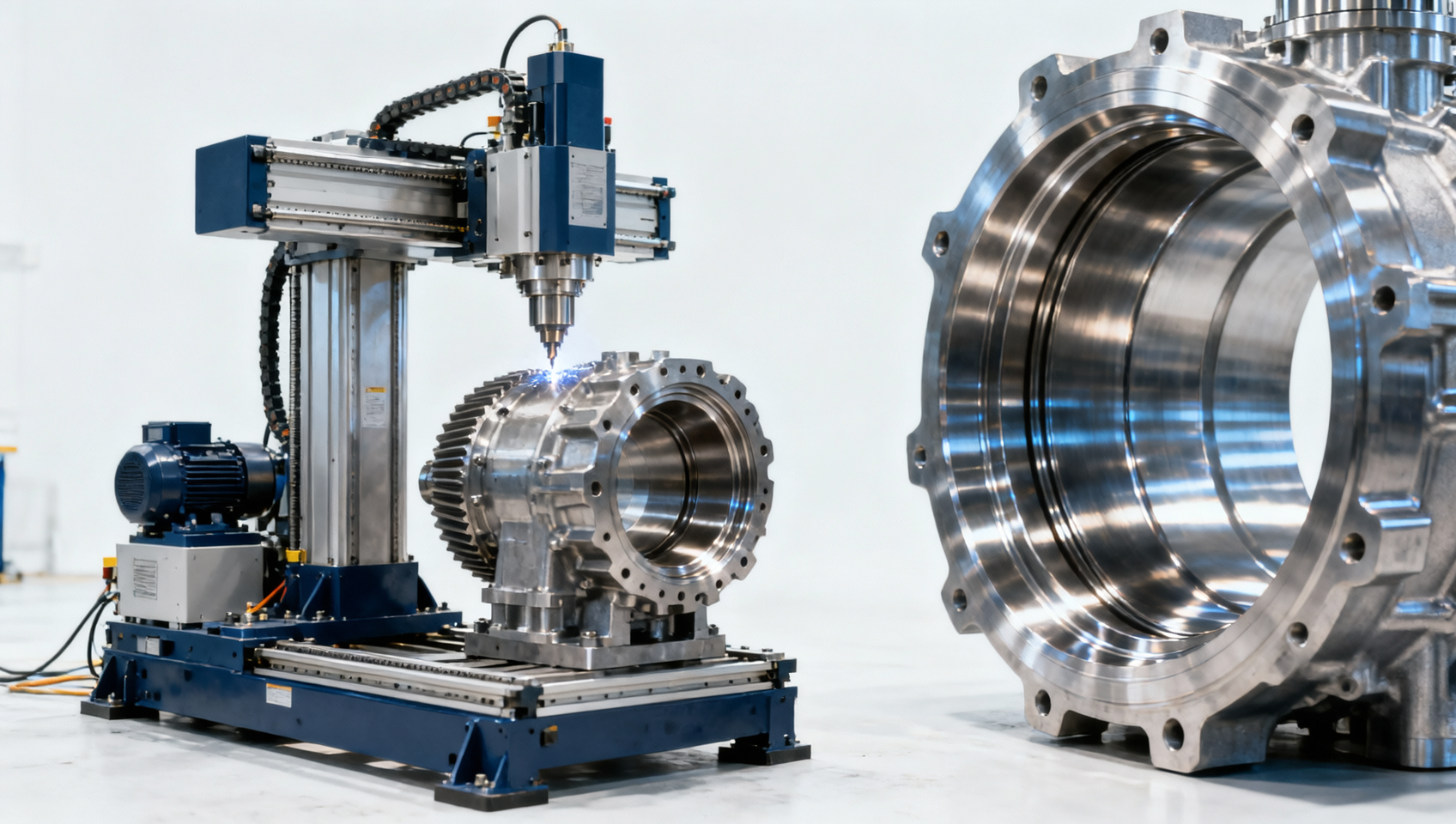
Portable machine tools are redefining flexibility in precision CNC manufacturing—especially for on-site repairs, field servicing, and space-saving CNC manufacturing setups. But mobility often invites trade-offs: reduced rigidity can compromise high-precision CNC manufacturing in demanding applications like aerospace or energy equipment. Yet emerging compact machine tool designs—backed by advanced damping, modular tooling systems, and automated machine tool integration—are challenging that assumption. Whether you’re a CNC manufacturing supplier evaluating quick-setup CNC manufacturing solutions, a procurement specialist sourcing machine tool for medical device manufacturing, or an engineer weighing low-maintenance CNC manufacturing against rigidity needs—this article reveals where portability delivers real performance, and where it doesn’t.
Where Portability Excels: High-Value Use Cases with Minimal Rigidity Penalty
Portable CNC machines—including handheld milling units, mobile machining centers, and rail-mounted boring systems—deliver measurable ROI in scenarios where part geometry, facility constraints, or operational urgency outweigh static rigidity requirements. Field repair of large-diameter turbine casings, for example, avoids costly disassembly and transport to fixed shops—reducing downtime by up to 65% versus traditional methods. Similarly, in shipyard maintenance, portable boring bars achieve ±0.015 mm roundness tolerance on 2.8 m diameter propeller shaft bearings without requiring vessel dry-docking.
Medical device manufacturers use benchtop 5-axis portable mills for rapid prototyping of titanium orthopedic implants—cutting lead time from 12 days to under 36 hours while maintaining surface roughness Ra ≤ 0.4 µm. These applications succeed because they prioritize accessibility, setup speed, and localized accuracy over full-part volumetric stability.
A key enabler is adaptive compensation: modern portable systems integrate real-time vibration monitoring (sampling at ≥10 kHz), thermal drift correction via embedded RTD sensors, and closed-loop positional feedback using magnetic linear encoders with 0.1 µm resolution. This allows them to sustain repeatability within ±2.5 µm across 8-hour shifts—even on non-grouted concrete floors.
The table above shows how portable tools meet rigorous functional tolerances—not theoretical lab specs—by aligning mechanical design with real-world loading conditions. Procurement teams should verify deflection data under *actual* cutting loads, not just static weight ratings. Vendors claiming “<10 µm deflection” must specify test method (e.g., ISO 230-2 Annex D) and load vector orientation.
Where Rigidity Still Reigns: Non-Negotiable Constraints
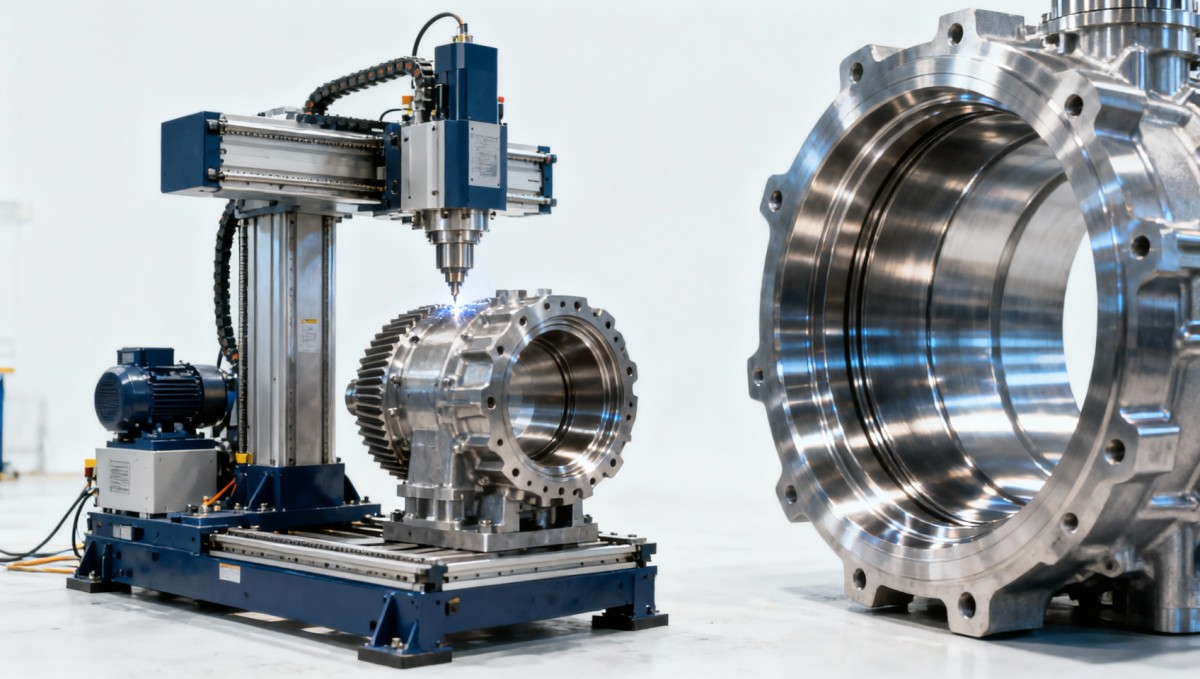
In high-accuracy structural part production—such as titanium airframe spars, nuclear reactor pressure vessel flanges, or multi-axis optical mounts—portable systems remain unsuitable. Here, dynamic stiffness below 100 N/µm and thermal growth >0.005 mm/m/°C rapidly degrade geometric integrity. A single 30-minute milling pass on a 1.2 m aluminum wing rib can induce 12–18 µm thermal distortion in unanchored portable platforms—exceeding aerospace AS9100D Cpk ≥ 1.33 requirements.
Multi-pass finishing operations compound the issue: portable mills typically exhibit 3–5× higher chatter sensitivity than floor-mounted counterparts due to lower natural frequency (often <80 Hz vs. >220 Hz). This forces aggressive feed rate reduction (up to 40%) and limits material removal rates to ≤120 cm³/min—making them economically unviable for high-volume precision components.
Critical dimensional stability also depends on foundation coupling. Portable units rely on bolt-down plates or vacuum bases, introducing interface compliance that varies ±0.03 mm across a 1 m² footprint. In contrast, cast-iron bed machines achieve sub-micron repeatability through monolithic base structures anchored to 1.5 m deep reinforced footings.
Decision-makers must map each application’s GD&T requirements against these three metrics—not marketing claims. If your drawing specifies true position tolerance ≤0.05 mm over a 500 mm feature, portable tools require third-party metrology validation before release. For Class A surfaces in optics or semiconductor tooling, fixed machines remain the only compliant path.
Procurement Decision Framework: 6 Critical Evaluation Criteria
When evaluating portable CNC solutions, procurement professionals and engineers should apply this six-point framework—prioritizing verifiable performance over convenience:
- Deflection Validation Report: Demand ISO 230-2 Annex D test data at specified cutting loads—not just static weight capacity.
- Thermal Compensation Architecture: Confirm active temperature sensing (≥5 sensor zones) and real-time axis offset correction—not passive insulation.
- Interface Rigidity Certification: Require ASTM E2551-22 test results for mounting plate/vacuum base compliance under dynamic load.
- Metrology Traceability: Verify onboard laser interferometer or capacitive probe calibration against NIST-traceable standards.
- Service Response SLA: Ensure on-site technician dispatch ≤4 hours for critical failures—validated by 3 regional service hubs.
- Software Integration Protocol: Confirm OPC UA 1.04 compatibility for seamless MES/SCADA data handshake (not just USB export).
Suppliers meeting ≥5 criteria typically deliver 22–35% higher first-pass yield in qualified applications. Those meeting only 2–3 often require post-process hand-scraping or coordinate-measuring machine (CMM) rework—eroding portability’s time savings.
Future Outlook: Hybrid Systems Bridging the Gap
Next-generation hybrid platforms—like modular gantry systems with removable CNC heads and self-leveling air-sprung bases—are narrowing the rigidity gap. Early adopters report achieving 92% of fixed-machine volumetric accuracy (ISO 230-6) while retaining 70% of portability benefits. These systems deploy in under 90 minutes and maintain ±0.008 mm repeatability across 3 m spans—validating use in mid-tier aerospace subcontracting and energy equipment overhaul.
For organizations balancing agility and precision, phased adoption makes sense: start with portable tools for field repair and low-tolerance fabrication, then scale to hybrid systems for high-value component remanufacturing. This strategy reduces CAPEX by 38–52% versus full fixed-machine replacement while future-proofing for smart factory integration.
Whether optimizing for uptime, cost-per-part, or supply chain resilience, the choice isn’t “portable vs. fixed”—it’s selecting the right tool for the specific dimensional, thermal, and logistical envelope of each task. Precision remains non-negotiable; mobility is simply becoming more intelligent.
To evaluate portable CNC solutions tailored to your production environment—including deflection modeling, thermal simulation, and ROI forecasting—contact our engineering team for a no-cost application assessment.
Recommended for You
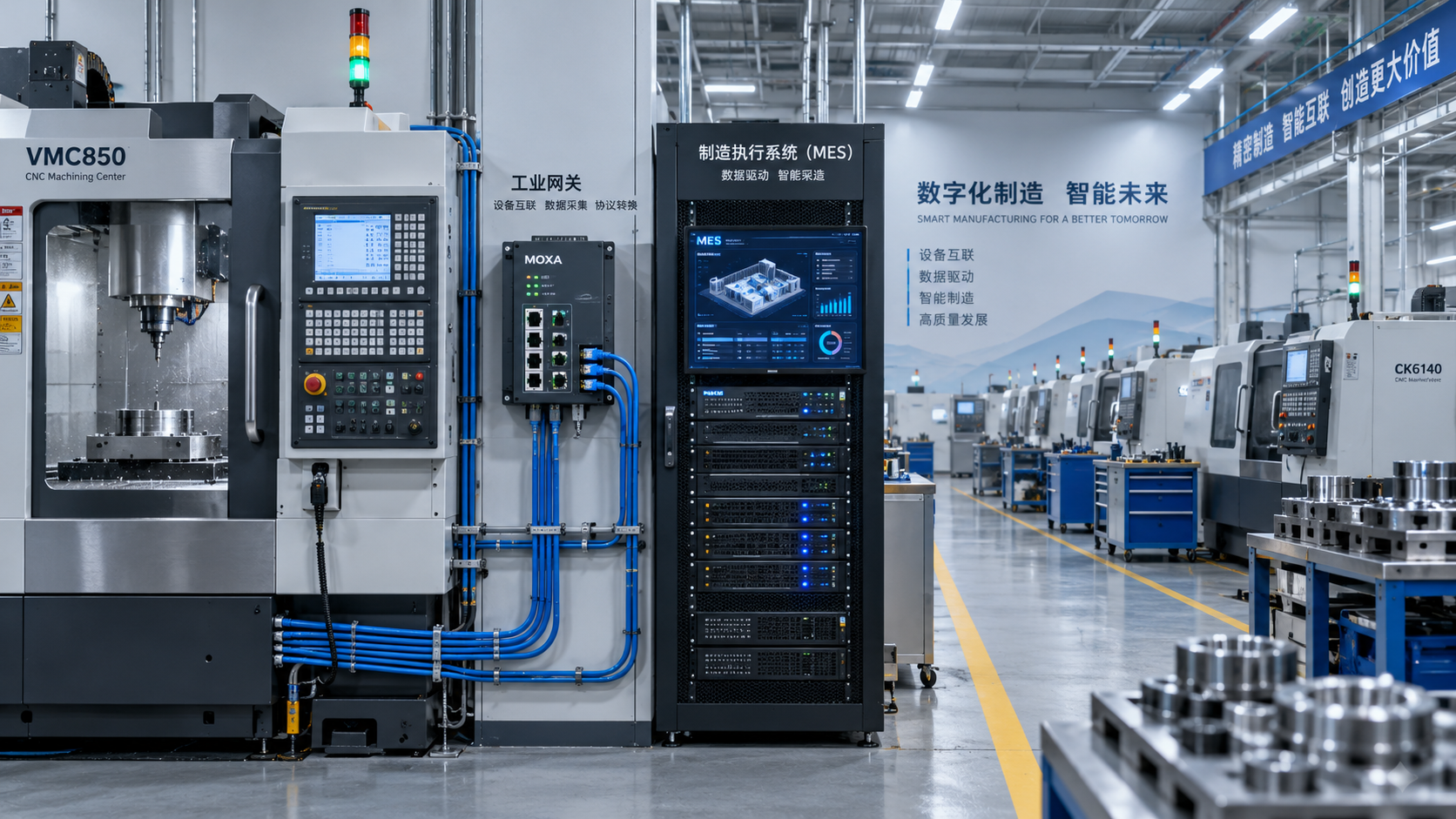
 Digital Manufacturing for Smart Factories: Connecting Legacy Machines to MESMachine Tool Industry Editorial Team
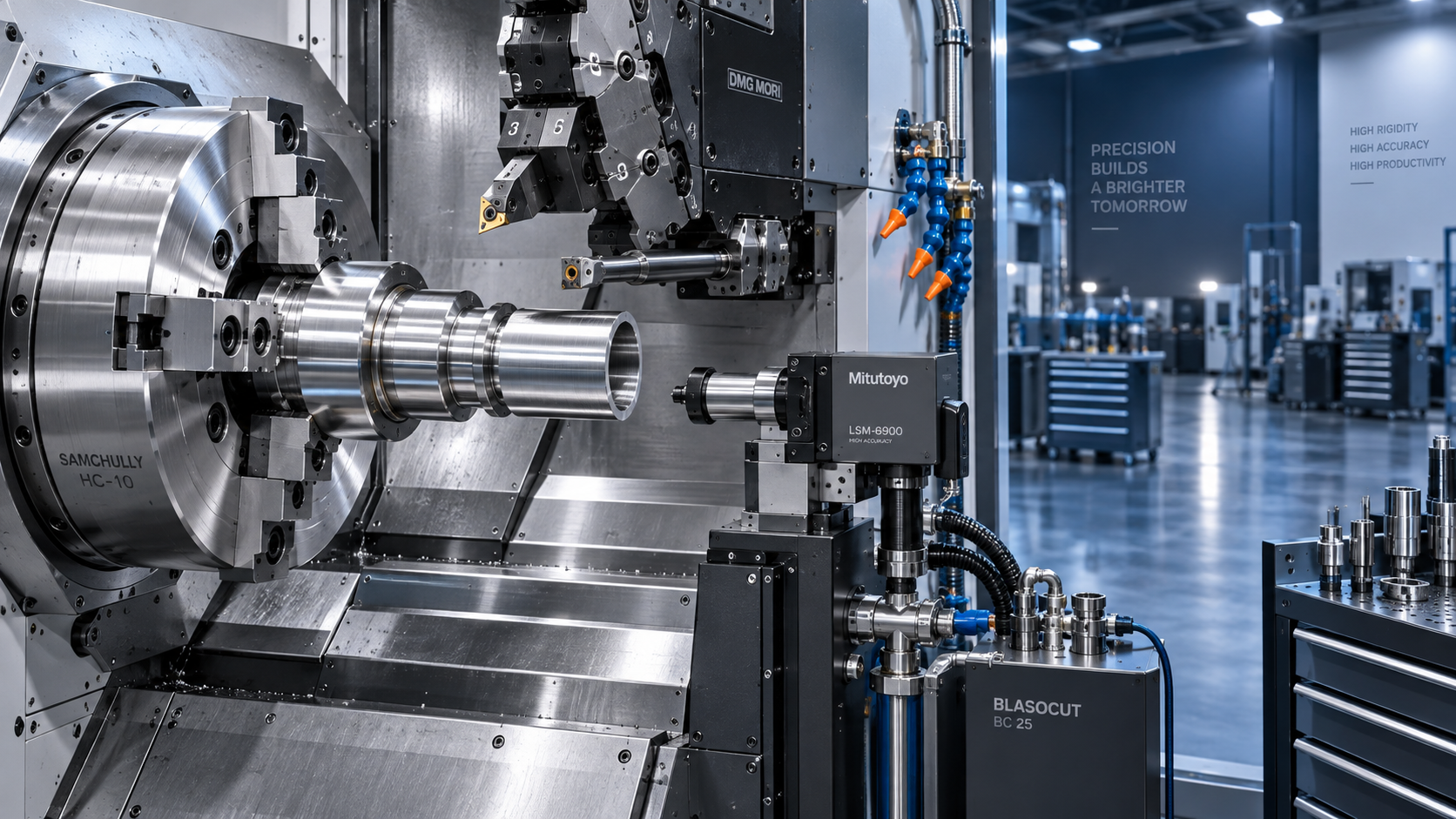
 How to Select a CNC Metal Lathe for Tight-Tolerance Shaft and Sleeve PartsCNC Machining Technology Center
 How to Select an Industrial Lathe for High-Volume Shaft ProductionMachine Tool Industry Editorial Team
 Selecting Machine Tools for Automotive Parts: Accuracy, Throughput, and AutomationMachine Tool Industry Editorial Team
 Industrial Machining: Selecting Processes for Tight-Tolerance Metal PartsCNC Machining Technology Center
 Manufacturing Technology Trends That Improve Throughput and Quality ControlManufacturing Market Research Center

Aris Katos
Future of Carbide Coatings
15+ years in precision manufacturing systems. Specialized in high-speed milling and aerospace grade alloy processing.
▶
Machine Tool Market Outlook: Demand Drivers, Capacity Shifts, and Investment RisksManufacturing Market Research Center▶
Global Machine Tool Backlog Falls 12% as Automation Shifts DemandManufacturing Market Research Center▶
What Drives Machine Tool Price: 7 Cost Factors Buyers Should Compare Before OrderingManufacturing Market Research Center▶
Manufacturing Industry Cost Drivers in 2025: Labor, Energy, Freight, and Sourcing RisksManufacturing Market Research Center▶
CCMT2026 Ends With 40.2% Rise in Five-Axis Export PricesManufacturing Market Research Center
Mastering 5-Axis Workholding Strategies
Join our technical panel on Nov 15th to learn about reducing vibrations in thin-wall components.

Providing you with integrated sanding solutions
Before-sales and after-sales services
Comprehensive technical support