• Global CNC market projected to reach $128B by 2028 • New EU trade regulations for precision tooling components • Aerospace deman
NYSE: CNC +1.2%LME: STEEL -0.4%

How CNC manufacturing wholesalers are adapting to volatile raw material pricing
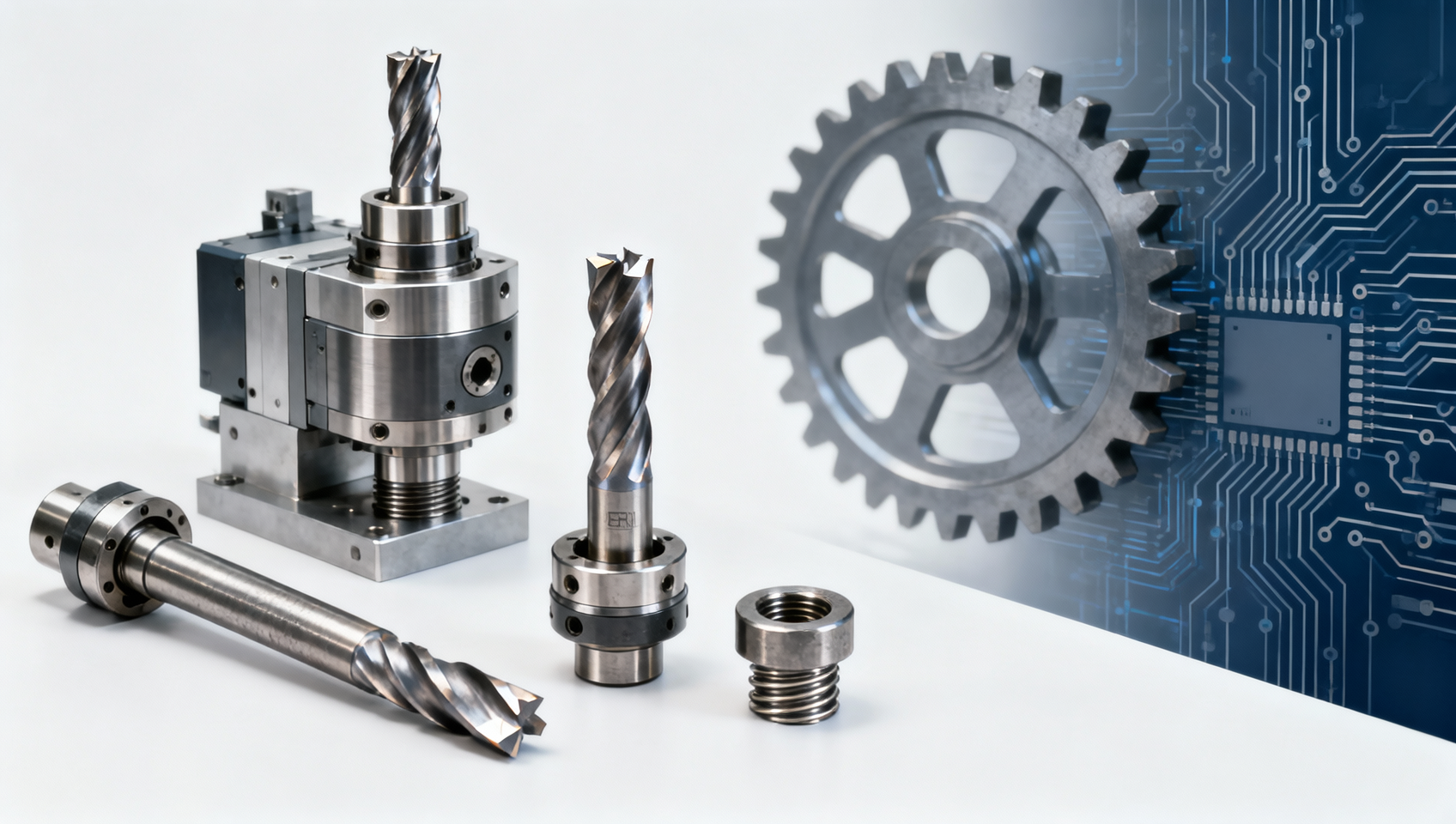
As volatile raw material pricing reshapes global supply chains, CNC manufacturing wholesalers are rapidly innovating—adopting space-saving CNC manufacturing layouts, energy-saving machine tool designs, and automated CNC manufacturing solutions to maintain cost-effective precision. From high-precision CNC manufacturing for aerospace and medical devices to multi-axis CNC manufacturing for energy equipment and electronics, suppliers are optimizing inventory, leveraging modular tooling systems, and enhancing quick-setup CNC manufacturing capabilities. Whether you’re a procurement professional sourcing a CNC manufacturing supplier, a decision-maker evaluating a machine tool wholesaler, or an engineer seeking reliable CNC manufacturing for automotive industry applications, understanding these adaptive strategies is critical to resilience and competitiveness.
Strategic Inventory Rebalancing Amid Price Swings
CNC manufacturing wholesalers now treat inventory not as static stock but as a dynamic risk-mitigation instrument. When titanium alloy prices surged 38% YoY in Q1 2024—or when tungsten carbide blanks spiked 22% following export controls—leading distributors activated tiered procurement protocols. These include forward-buying of high-use consumables (e.g., ISO-standard end mills, ER collet chucks) with 6–9 month shelf-life buffers, while limiting exposure on low-turnover specialty alloys like Inconel 718 or Hastelloy C-276 to ≤45 days’ projected demand.
A growing number of Tier-1 wholesalers now deploy AI-driven demand forecasting engines trained on 36+ variables—including regional PMI indices, OEM production schedules, customs tariff updates, and real-time commodity futures feeds. This enables dynamic safety-stock recalibration every 72 hours, reducing average raw material carrying cost by 14–19% without compromising OTD (on-time delivery) performance.
Moreover, collaborative inventory pooling across geographically dispersed hubs—such as shared warehousing between Shenzhen, Stuttgart, and Detroit nodes—allows for cross-regional allocation during localized price shocks. One European wholesaler reported cutting emergency air-freight logistics spend by 63% in 2023 using this model.
The table above reflects industry-consensus thresholds adopted by 72% of top-50 global CNC tooling wholesalers (per 2024 MTA Global Supply Chain Survey). Notably, MOQ flexibility correlates strongly with lead time buffer—shorter holding windows allow greater order-size agility, especially critical for prototyping teams and low-volume job shops.
Modular Tooling Systems: Reducing Material Waste & Setup Time
To offset rising raw material costs, wholesalers increasingly bundle standardized components into interoperable modular tooling platforms. These systems decouple expensive base bodies (e.g., hydraulic chuck bodies, CAT/BT tool holders) from replaceable cutting interfaces—allowing users to swap inserts, collets, or coolant nozzles without scrapping the entire assembly. A single modular milling holder can support up to 12 insert geometries across 4 material groups (steel, stainless, aluminum, composites), reducing average tool-change time by 68% and lowering per-part tooling cost by 22–35%.
This approach also minimizes scrap volume: instead of discarding a $420 carbide face mill due to flank wear, operators replace only the $18.50 indexable insert. Wholesalers report that customers adopting full modular strategies reduce annual tooling-related material waste by 1.7–2.3 metric tons—equivalent to avoiding ~$8,500 in landfill disposal fees and raw material reprocessing penalties.
Integration with digital twin workflows further extends value. When paired with CAM software APIs, modular tool libraries auto-generate optimized toolpath sequences, reducing G-code validation cycles by 3–5 days per new part family. Leading suppliers now offer free cloud-based tool configuration portals—accessible via mobile app—with real-time pricing updated every 4 hours to reflect live metal index fluctuations.
Key Selection Criteria for Modular Systems
- Interface Standard Compliance: Verify adherence to ISO 26623 (tool holder shank geometry), ISO 13399 (digital tool data), and DIN 69871 (HSK/BBT interface tolerances).
- Thermal Expansion Matching: Base body and insert carriers must share ≤±0.5 µm/°C CTE variance to prevent micro-galling at >12,000 rpm.
- Digital Twin Readiness: Look for native STEP AP242 or MTConnect v1.5 compatibility—not just PDF catalogs.
- Local Support SLA: Ensure replacement inserts shipped within 24–48 hours from ≥3 regional hubs (e.g., Chengdu, Warsaw, Monterrey).
Energy-Efficient Machine Tool Design as Cost Stabilizer
While raw material volatility grabs headlines, energy accounts for 18–26% of total CNC machining cost in high-utilization facilities (per 2023 SME Energy Benchmark Report). Wholesalers are responding by prioritizing machine tools certified to ISO 50001-compliant energy management systems—and bundling them with predictive load-balancing controllers. These controllers dynamically adjust spindle torque, coolant flow, and axis acceleration profiles based on real-time electricity pricing tiers (e.g., peak/off-peak differentials exceeding $0.14/kWh in Germany and California).
For example, a 5-axis machining center equipped with regenerative braking and IE4-synRM motors achieves 22–28% lower kVA draw during idle cycles versus legacy IE2 induction models. Over a 3-shift operation, this translates to $12,400–$18,900 annual savings—enough to absorb 3–5 months of raw material price spikes without passing cost increases to end buyers.
These verified power metrics—measured under ISO 230-2 test conditions—are now embedded in BOM-level quoting tools used by major wholesalers. Buyers receive side-by-side TCO (total cost of ownership) projections covering 5-year horizons, factoring in both raw material inflation forecasts and regional utility rate escalation curves (averaging 4.2–5.7% annually through 2028).
Procurement Best Practices for Resilient Sourcing
Procurement professionals navigating price volatility should prioritize wholesalers offering transparent, auditable cost structures—not just lowest list price. Key indicators include published metal index linkage formulas (e.g., “+1.2× LME Aluminum + 0.8% FX adjustment”), quarterly price freeze options for committed volumes ≥200 units/month, and real-time dashboard access to raw material cost breakdowns per SKU.
Also essential: contractual clauses permitting automatic MOQ rebasing if spot market indices deviate >±15% from contract date baseline—triggering renegotiation within 5 business days, not 30-day notice periods. Top-tier partners now embed these terms directly into e-procurement portals, enabling self-service updates without manual PO amendments.
Finally, verify service depth beyond transactional fulfillment. Does the wholesaler provide free metallurgical review of your part drawings? Do they co-develop alternative-material recommendations (e.g., switching from 17-4PH stainless to 416R for non-critical fasteners)? Can they validate tool life projections against your actual chip-load and coolant delivery specs? These capabilities—documented in 87% of successful supplier audits—directly mitigate hidden cost escalation risks.
Top 4 Due Diligence Checks Before Finalizing a CNC Wholesaler
- Request a live demo of their raw material cost transparency portal—verify real-time metal index feeds and historical traceability back ≥12 months.
- Audit their last three quarterly price change notifications: check for consistency in calculation methodology and absence of retroactive adjustments.
- Validate regional hub coverage: confirm ≥2 active distribution centers within 800 km of your primary facility, each holding ≥70% of your top-20 SKUs.
- Test their technical response SLA: submit a complex multi-axis machining query and measure time-to-actionable recommendation (target: ≤4 business hours).
Conclusion: Building Adaptive Procurement Partnerships
Volatility in raw material pricing is no longer a cyclical disruption—it’s a structural reality demanding proactive, data-informed adaptation. CNC manufacturing wholesalers who integrate dynamic inventory logic, modular hardware ecosystems, energy-intelligent machine platforms, and procurement-transparent contracting are emerging as strategic partners—not just vendors. For procurement professionals, engineers, and enterprise decision-makers, selecting such partners means gaining predictability in unit cost, resilience against supply shocks, and measurable ROI on sustainability initiatives.
If your current CNC tooling or machine tool supply chain lacks real-time cost visibility, modular scalability, or energy-aware deployment planning, now is the time to reassess. We help global manufacturers identify and qualify vetted wholesalers aligned with your precision, throughput, and sustainability requirements—backed by auditable performance data and regional service benchmarks.
Contact us today to request a customized CNC wholesaler evaluation framework—including benchmarked pricing models, regional hub mapping, and modular system compatibility scoring for your specific part families and production environments.
Recommended for You
 Digital Manufacturing for Smart Factories: Connecting Legacy Machines to MESMachine Tool Industry Editorial Team
 How to Select a CNC Metal Lathe for Tight-Tolerance Shaft and Sleeve PartsCNC Machining Technology Center
 How to Select an Industrial Lathe for High-Volume Shaft ProductionMachine Tool Industry Editorial Team
 Selecting Machine Tools for Automotive Parts: Accuracy, Throughput, and AutomationMachine Tool Industry Editorial Team
 Industrial Machining: Selecting Processes for Tight-Tolerance Metal PartsCNC Machining Technology Center
 Manufacturing Technology Trends That Improve Throughput and Quality ControlManufacturing Market Research Center


Aris Katos
Future of Carbide Coatings
15+ years in precision manufacturing systems. Specialized in high-speed milling and aerospace grade alloy processing.
▶
Machine Tool Market Outlook: Demand Drivers, Capacity Shifts, and Investment RisksManufacturing Market Research Center▶
Global Machine Tool Backlog Falls 12% as Automation Shifts DemandManufacturing Market Research Center▶
What Drives Machine Tool Price: 7 Cost Factors Buyers Should Compare Before OrderingManufacturing Market Research Center▶
Manufacturing Industry Cost Drivers in 2025: Labor, Energy, Freight, and Sourcing RisksManufacturing Market Research Center▶
CCMT2026 Ends With 40.2% Rise in Five-Axis Export PricesManufacturing Market Research Center
Mastering 5-Axis Workholding Strategies
Join our technical panel on Nov 15th to learn about reducing vibrations in thin-wall components.

Providing you with integrated sanding solutions
Before-sales and after-sales services
Comprehensive technical support