• Global CNC market projected to reach $128B by 2028 • New EU trade regulations for precision tooling components • Aerospace deman
NYSE: CNC +1.2%LME: STEEL -0.4%

What Automated CNC Manufacturing Solves Best in 2026
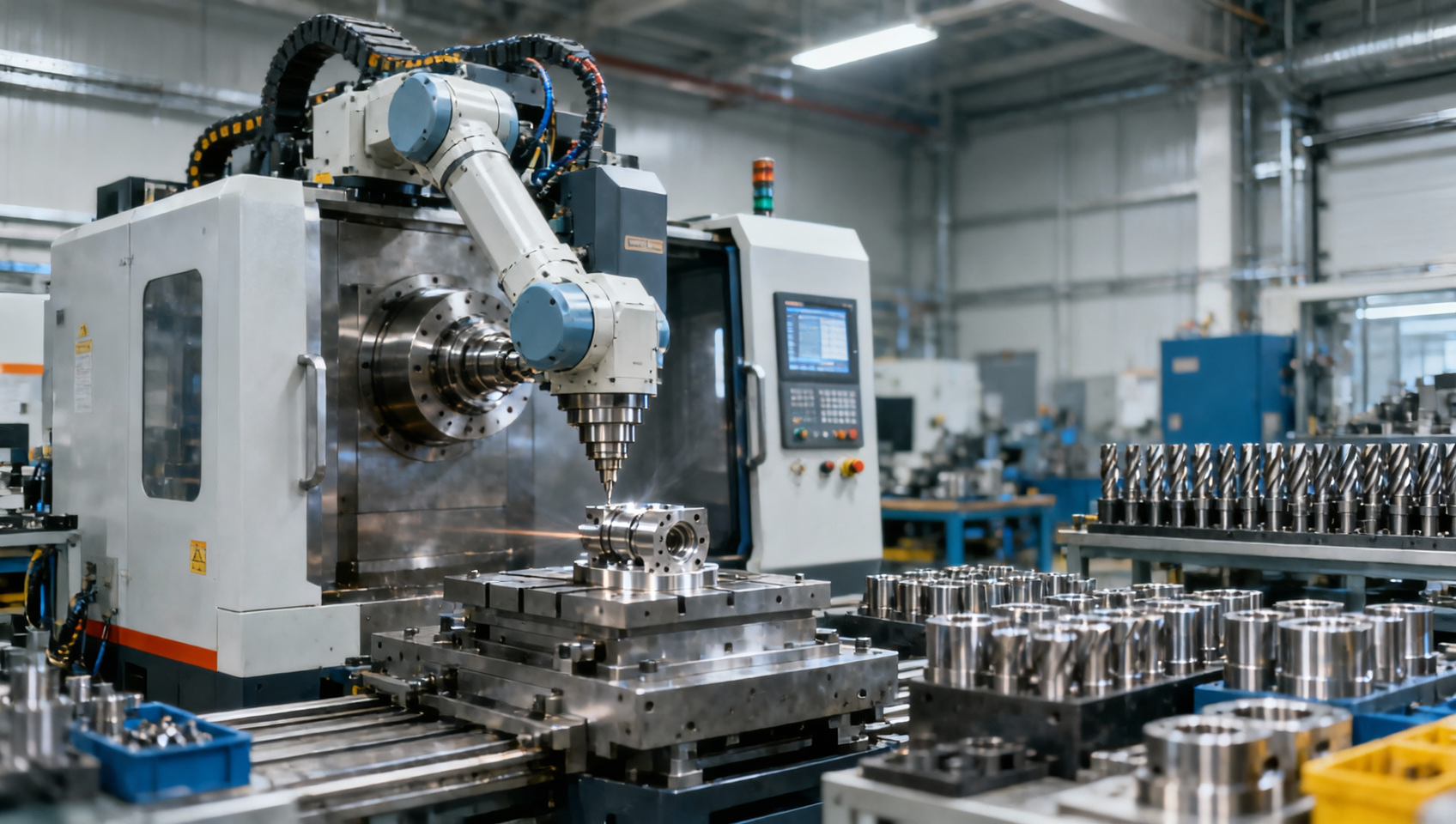
In 2026, automated CNC manufacturing solves some of the toughest production challenges by combining high precision CNC manufacturing, multi-axis CNC manufacturing, and quick setup CNC manufacturing into one efficient workflow. For buyers, operators, and decision-makers, it delivers cost-effective CNC manufacturing for aerospace, automotive, electronics, medical devices, and energy equipment while supporting smarter factories, lower downtime, and faster response to complex machining demands.
Across the global machine tool sector, this shift matters because production teams are being asked to deliver tighter tolerances, shorter lead times, and more part variants without inflating labor or floor space. Automated CNC systems are increasingly expected to handle low-volume customization and stable batch production in the same environment.
For researchers, operators, sourcing teams, and business leaders, the central question is no longer whether automation belongs in CNC manufacturing. The real question is what it solves best, where it creates measurable value, and how to choose a setup that supports quality, uptime, and return on investment over the next 3 to 5 years.
Where Automated CNC Manufacturing Creates the Most Value
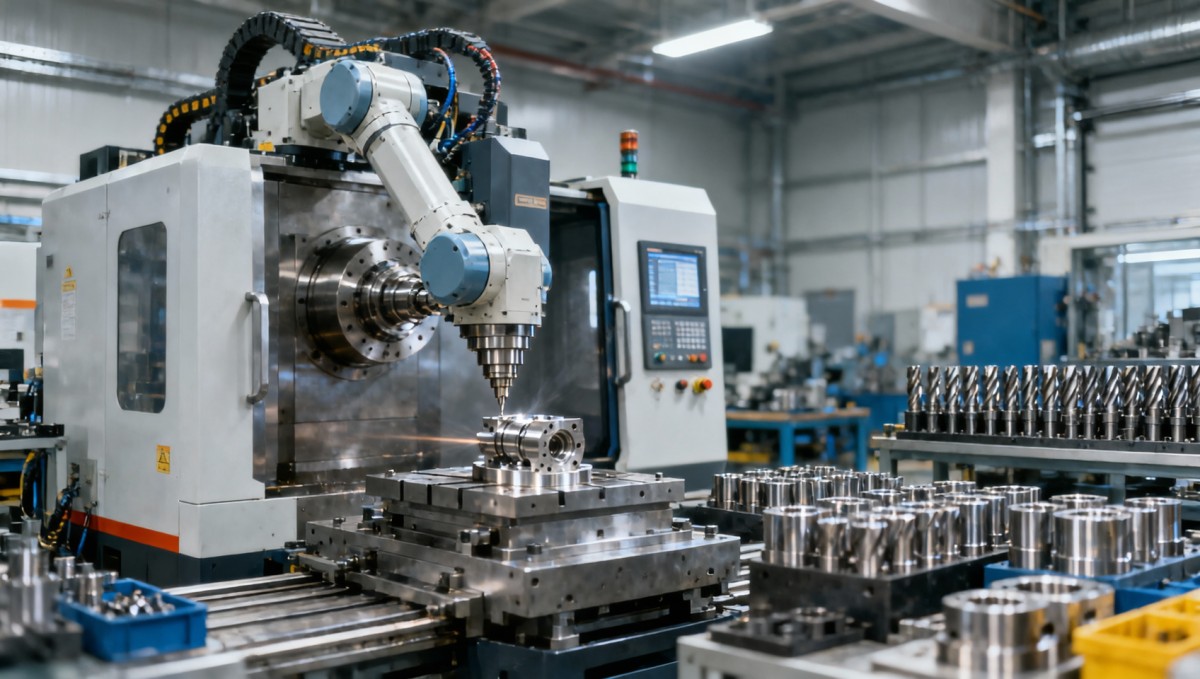
Automated CNC manufacturing creates the greatest value where complexity, repeatability, and delivery pressure intersect. In 2026, many factories are producing 20 to 200 part numbers on the same line each month, often with tolerance targets in the ±0.005 mm to ±0.02 mm range. Manual intervention can still support prototype work, but it becomes a bottleneck when schedules tighten and quality requirements increase.
A key advantage is stable production across multiple shifts. A well-integrated CNC cell with automatic loading, tool monitoring, and in-process checks can reduce idle time between jobs from 20 to 40 minutes down to 5 to 15 minutes in many common applications. That improvement directly affects spindle utilization, labor allocation, and delivery reliability.
This matters especially in industries such as aerospace and medical devices, where part geometry is complex and traceability is essential. It also matters in automotive and electronics, where the challenge is often not one difficult part but hundreds or thousands of identical parts that must remain within process limits over long production runs.
Typical production problems automation addresses
Automated CNC manufacturing is most effective when manufacturers face recurring pain points that cannot be solved by adding more operators alone. The strongest use cases usually involve labor inconsistency, setup frequency, tool wear variation, and unplanned downtime during night or weekend shifts.
- Frequent setup changeovers on mixed-part production lines with 5 to 30 jobs per week.
- High scrap risk on precision features such as bores, sealing faces, threads, or thin-wall structures.
- Long cycle times on 4-axis or 5-axis parts that require continuous monitoring.
- Labor shortages that make it difficult to run a second or third shift profitably.
When these conditions are present, automation does more than save labor. It standardizes output, reduces process drift, and allows production managers to forecast capacity more accurately over 2-week to 12-week planning cycles.
High-value application scenarios by industry
Not every industry uses automation in the same way. The table below shows where automated CNC manufacturing typically solves the most urgent operational problems and what buyers should expect from each scenario.
The main takeaway is that automated CNC manufacturing performs best when part quality and machine utilization must improve at the same time. If a factory only focuses on labor reduction, it may underestimate the value of process consistency and delivery control, which are often the larger long-term gains.
What Problems Multi-Axis and Quick-Setup CNC Solve Better Than Conventional Methods
Conventional machining remains practical for simple parts and stable routing, but it struggles when manufacturers face frequent engineering changes, tight delivery windows, or compound geometries. In 2026, multi-axis CNC manufacturing and quick setup CNC manufacturing are solving problems that 3-axis machines and manual fixture changes often cannot address efficiently.
One of the clearest gains comes from reduced handling. A 5-axis machining center can complete several features in one clamping, which lowers cumulative positioning error and can cut total setup steps from 4 or 5 down to 1 or 2. That matters on housings, impellers, brackets, manifolds, and precision structural parts with angled surfaces or deep cavities.
Quick setup CNC manufacturing addresses a different but equally important issue: setup loss. For factories handling small batches of 10 to 500 pieces, setup time may represent 15% to 35% of total job time. Standardized fixtures, tool libraries, preset offsets, and digital job recipes can sharply reduce this non-cutting time.
Why one-clamp machining changes cost and quality
Every additional clamping step increases the risk of dimensional shift, surface marking, and operator variation. Multi-axis CNC manufacturing reduces that exposure by consolidating operations. For many medium-complexity metal parts, one-clamp processing improves geometric consistency and reduces inspection rework, especially where flatness, true position, and coaxiality must be controlled together.
This is also important for procurement teams comparing machine options. A lower machine price does not always mean lower part cost. If one machine requires 3 setups and another completes the same part in 1 setup, the more automated option may deliver better economics over 12 to 24 months, particularly when labor and scrap costs are included.
Operational improvements commonly seen
- Setup reduction from 30 to 90 minutes per job down to 10 to 30 minutes with standardized tooling and fixture references.
- Fewer handling steps, which lowers the probability of damage on precision surfaces and finished edges.
- Higher repeatability across day and night shifts because machine logic replaces part of the manual judgment process.
- Better machine scheduling when 1 operator can supervise 2 to 4 automated cells instead of loading one machine continuously.
Comparison of conventional and automated CNC approaches
The comparison below is useful for enterprises evaluating when to move from standard CNC workflows to more automated, digitally integrated production cells.
For many manufacturers, the most practical conclusion is not to replace every conventional machine. It is to identify the 20% to 30% of jobs where automation solves the highest-cost constraints first, then expand based on measurable cycle, scrap, and delivery performance.
How Buyers and Decision-Makers Should Evaluate Automated CNC Solutions
Choosing an automated CNC manufacturing solution requires more than reviewing spindle speed, axis travel, or machine brand. Buyers should evaluate the complete production system, including fixtures, tool management, loading method, software integration, service support, and the fit between machine capability and actual part families.
A common mistake is to size the solution around a single sample part. A better method is to group parts by material, dimensions, cycle time, tolerance level, and annual demand. If 60% of parts fall within a similar envelope, that group should drive the automation concept. This reduces the risk of overinvestment in flexibility that the factory may never use.
Decision-makers should also separate visible and hidden costs. The visible costs are machine purchase, tooling, and installation. Hidden costs include programming complexity, changeover losses, operator training, spare parts availability, and recovery time after a breakdown. In many cases, these hidden factors decide whether a project reaches payback in 18 months or stretches beyond 36 months.
Four evaluation dimensions that matter most
- Process fit: Can the machine, tooling, and automation handle current parts and the next 2 to 3 years of expected variants?
- Utilization potential: Will the cell run one shift, two shifts, or lights-out for 4 to 8 hours unattended?
- Support readiness: Are service response, spare parts, and remote diagnostics available within acceptable lead times?
- Data integration: Can the system connect to MES, production dashboards, or tool management platforms without excessive custom work?
These four dimensions help procurement teams move from equipment comparison to business-case comparison. They also help operators and production engineers participate in sourcing decisions, which reduces implementation problems after installation.
Practical supplier evaluation checklist
Before issuing a purchase order, it is useful to compare suppliers against the same operating criteria rather than marketing claims. The following table can support cross-functional evaluation between engineering, purchasing, and management teams.
A disciplined selection process often prevents the two most expensive outcomes: buying too much machine for too little work, or buying too little automation for a production mix that clearly demands more flexibility.
Implementation, Maintenance, and Risk Control in Smart CNC Production
The success of automated CNC manufacturing depends as much on implementation discipline as on equipment quality. Many projects underperform because the machine is installed before process data, tooling standards, and operator roles are fully defined. In a smart factory environment, stable output comes from the system around the machine, not only the machine itself.
A practical rollout typically follows 3 stages: process preparation, pilot production, and scale-up. Preparation includes fixture validation, tool-life baselining, alarm mapping, and part program verification. Pilot production usually runs for 2 to 6 weeks, long enough to identify recurring stoppages, loading inefficiencies, and measurement issues before volume production begins.
Maintenance planning is equally important. Automated cells should not be treated like isolated machine tools. They require coordinated checks on spindle condition, lubrication, robot grippers, sensors, chip evacuation, coolant quality, and communication interfaces. Missing a simple maintenance routine can trigger multiple hours of downtime across an entire linked cell.
A practical 5-step deployment approach
- Define part families: Group jobs by size, material, tolerance, and cycle time to confirm automation suitability.
- Standardize tooling and fixtures: Reduce setup variability before automation is introduced.
- Run pilot lots: Use trial batches of 30 to 200 pieces to validate cycle time, quality, and alarm response.
- Train operators and technicians: Build skills in recovery, offsets, basic diagnostics, and preventive maintenance.
- Review data weekly: Track uptime, scrap rate, setup loss, tool life, and first-pass yield for at least 8 to 12 weeks.
This structured approach helps plants avoid a common implementation error: automating unstable manual processes. Automation scales good process control, but it can also scale poor process habits if standards are not fixed first.
Common risks and how to reduce them
Risk 1: Over-automation for low part stability
If parts change every week and engineering data is incomplete, a highly rigid automation concept may create more disruption than value. In those cases, modular automation with flexible fixturing and quick recipe change is safer than a fully dedicated line.
Risk 2: Weak maintenance discipline
A preventive maintenance cycle of daily, weekly, and monthly checks is often sufficient for many cells, but it must be documented and owned. Coolant contamination, chip buildup, and gripper wear are small issues that can quickly become major downtime events if ignored for 2 to 4 weeks.
Risk 3: Poor production data visibility
Without basic dashboards for cycle time, alarm frequency, and stoppage categories, managers cannot separate process loss from machine failure. Even a simple reporting structure with 5 to 7 key indicators can improve decision quality and maintenance planning significantly.
Frequently Asked Questions About Automated CNC Manufacturing in 2026
Many companies understand the promise of automated CNC manufacturing but still need practical answers before investing. The following questions reflect common search intent from sourcing teams, production planners, and plant managers evaluating modernization projects.
How do I know whether automation is justified for my factory?
Automation is usually justified when at least 2 or 3 conditions are present: repeated labor shortages, setup-heavy production, night-shift utilization targets, or ongoing quality variation on precision parts. If annual part demand is stable and changeovers consume more than 15% of available machine time, an automated CNC cell often deserves serious evaluation.
What production volume works best for automated CNC manufacturing?
There is no single threshold. Some cells are justified by high-mix batches of 20 to 100 pieces, especially for complex multi-axis parts with high setup cost. Others are designed for repeat production of 1,000 pieces or more. The decision depends on cycle time, setup burden, quality risk, and whether unattended running can be used effectively.
How long does implementation usually take?
For a standard cell, planning and installation may take 6 to 16 weeks depending on machine availability, fixture readiness, and software integration. Reaching stable production often takes an additional 2 to 8 weeks. Projects move faster when tooling, training, and part validation are prepared before the machine arrives.
What should procurement focus on besides machine price?
Procurement should focus on total operating fit: setup speed, service access, spare parts lead time, training support, and compatibility with current part families. A machine with lower upfront cost may become more expensive if changeovers are slow, unattended running is limited, or technical support takes 48 hours to respond during critical production periods.
In 2026, automated CNC manufacturing solves its toughest challenges best where precision, flexibility, and throughput must improve together. It is especially effective for complex parts, setup-intensive production, and multi-shift operations that need tighter quality control and lower downtime without simply adding labor.
For industry researchers, operators, buyers, and decision-makers, the smartest approach is to evaluate automated CNC manufacturing as a complete production system rather than a standalone machine purchase. Clear part-family analysis, disciplined implementation, and practical service planning are what turn automation into measurable business value.
If you are assessing CNC automation for aerospace, automotive, electronics, medical, or energy equipment production, now is the right time to compare workflows, define performance targets, and build a realistic sourcing roadmap. Contact us to discuss application details, request a tailored solution, or learn more about global CNC manufacturing and precision production strategies.
Recommended for You
 Digital Manufacturing for Smart Factories: Connecting Legacy Machines to MESMachine Tool Industry Editorial Team
 How to Select a CNC Metal Lathe for Tight-Tolerance Shaft and Sleeve PartsCNC Machining Technology Center
 How to Select an Industrial Lathe for High-Volume Shaft ProductionMachine Tool Industry Editorial Team
 Selecting Machine Tools for Automotive Parts: Accuracy, Throughput, and AutomationMachine Tool Industry Editorial Team
 Industrial Machining: Selecting Processes for Tight-Tolerance Metal PartsCNC Machining Technology Center
 Manufacturing Technology Trends That Improve Throughput and Quality ControlManufacturing Market Research Center

Aris Katos
Future of Carbide Coatings
15+ years in precision manufacturing systems. Specialized in high-speed milling and aerospace grade alloy processing.
▶
Manufacturing Technology Trends That Improve Throughput and Quality ControlManufacturing Market Research Center▶
Global Manufacturing Trends: How Supply Chains and Regional Shifts Affect SourcingManufacturing Market Research Center▶
Small-Batch Production and Smart Manufacturing for Small Businesses: Where to Start FirstManufacturing Market Research Center▶
What Smart Manufacturing Technology for Industry 4.0 Means for Mid-Sized FactoriesManufacturing Market Research Center▶
How Smart Manufacturing Benefits Reduce Downtime and Scrap in Metal Parts ProductionManufacturing Market Research Center
Mastering 5-Axis Workholding Strategies
Join our technical panel on Nov 15th to learn about reducing vibrations in thin-wall components.

Providing you with integrated sanding solutions
Before-sales and after-sales services
Comprehensive technical support