• Global CNC market projected to reach $128B by 2028 • New EU trade regulations for precision tooling components • Aerospace deman
NYSE: CNC +1.2%LME: STEEL -0.4%

How to Choose a Heavy-Duty Machining Center for Mold Making
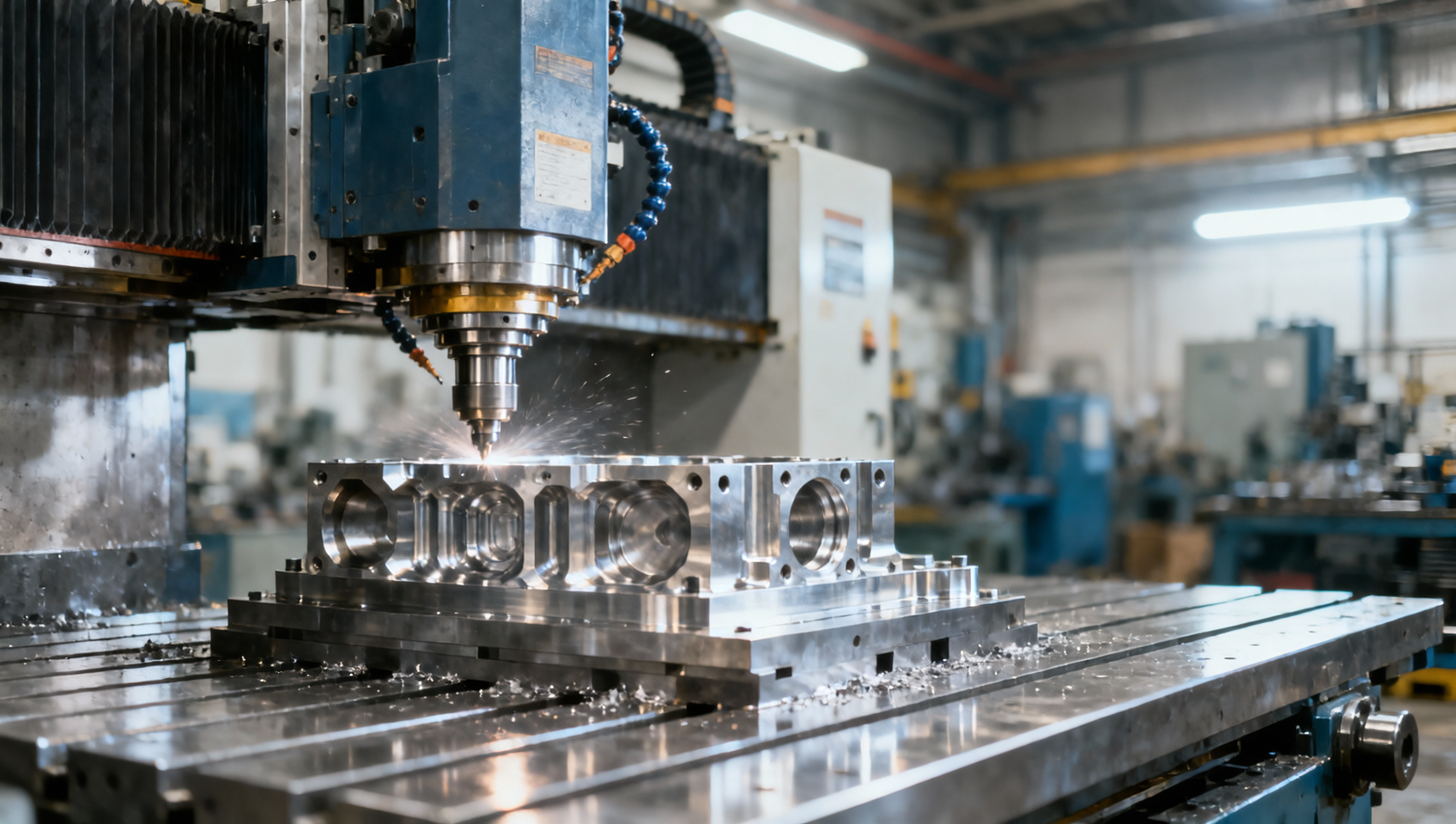
Choosing the right heavy-duty machining center for mold making is not just about buying a bigger machine. For most manufacturers, the real question is whether the machine can hold tight tolerances on large or hard materials, reduce setup time, support complex mold geometries, and deliver stable output over years of production. A good choice improves mold quality, machining efficiency, and total cost control. A poor choice leads to vibration, rework, downtime, and expensive bottlenecks.
If you are comparing options from a CNC machine tool manufacturer, machine tool supplier, or CNC manufacturing wholesaler, focus first on rigidity, spindle capability, axis travel, control system, thermal stability, and service support. These factors usually matter more than headline power or price alone.
What should you evaluate first when choosing a heavy-duty machining center for mold making?
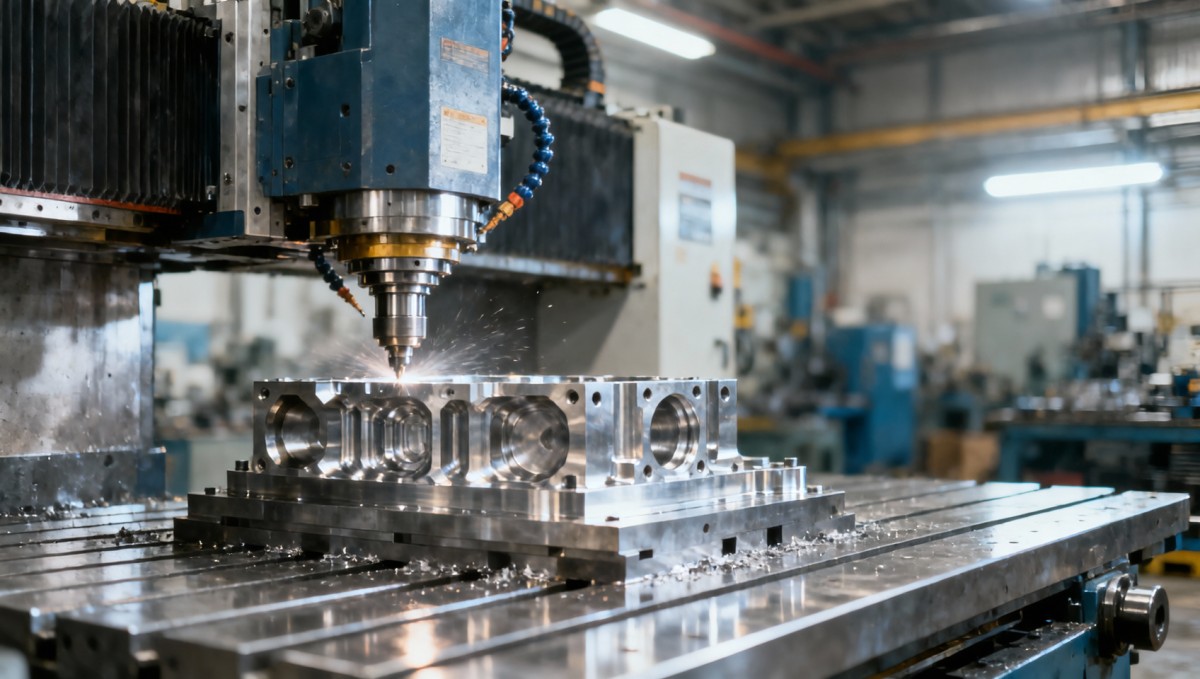
Before comparing brands or machine configurations, define the actual mold-making tasks the machine must handle. This is the fastest way to avoid overbuying or choosing a machine that looks capable on paper but performs poorly in production.
Start with these questions:
- What are the typical mold sizes and weights?
- What materials will be machined most often, such as P20, H13, S136, stainless steel, or hardened steel?
- What level of surface finish is required before polishing or EDM?
- How much roughing versus finishing work will the machine do?
- Do you need 3-axis machining, 4-axis positioning, or full 5-axis capability?
- What tolerance consistency is required over long production cycles?
For mold making, a heavy-duty machining center must combine high rigidity with precision machine tool performance. It is not enough to remove material aggressively. The machine must also maintain dimensional accuracy and repeatability, especially on deep cavities, complex contours, and large mold bases.
In many buying decisions, the most practical first filter is this: choose a machine that matches your largest real workpiece and your most demanding material, not just your average job.
Why machine rigidity matters more than simple power ratings
Many buyers focus on spindle power first, but rigidity often has a bigger impact on mold quality. A machine with strong structural stability will cut more predictably, reduce chatter, improve tool life, and produce better surface finishes.
Key rigidity factors include:
- Machine base and column construction
- Box guideways or heavy-duty linear guide design
- Wide-span axis support
- High-quality ball screws and bearing systems
- Strong spindle housing and headstock design
For heavy mold machining, weak structural design causes vibration during roughing and poor contour accuracy during finishing. This becomes especially costly in automotive and aerospace applications where large molds must meet strict quality standards.
When reviewing a machine tool supplier's proposal, ask for information on machine weight, casting design, damping characteristics, and cutting stability in real applications. A heavier and better-engineered frame usually performs more reliably than a lighter machine with attractive specs but weaker structural support.
How to match spindle performance to mold materials and machining stages
The right spindle depends on what kind of mold work you do most. Roughing large steel blocks has different requirements than high-speed finishing of detailed cavity surfaces.
In general:
- High torque, moderate speed is better for heavy roughing and difficult materials.
- Higher speed with stable thermal control is better for fine finishing and detailed geometry.
For mold making, consider these spindle-related points:
- Spindle power and torque curve, not just peak power
- Maximum spindle speed and usable speed range
- Spindle cooling and thermal management
- Tool holder type and clamping reliability
- Vibration behavior at different cutting loads
If your jobs include both roughing and finishing, a balanced spindle configuration may be more valuable than choosing an extreme high-speed setup. Many manufacturers benefit from a machine that can rough efficiently and still maintain enough speed and smoothness for semi-finishing and finishing operations.
What travel, table size, and load capacity are actually needed?
One of the most common selection mistakes is choosing a machine with barely enough travel. In mold making, this creates setup limitations, toolpath restrictions, and difficulty when using large fixtures or long tools.
Check the following carefully:
- X, Y, and Z travel versus your largest mold dimensions
- Table size versus actual workholding requirements
- Maximum table load and weight distribution
- Distance from spindle nose to table
- Interference risks with fixtures, rotary tables, or angle heads
Always leave enough room for real operating conditions, not only nominal part size. Large molds often require clamping systems, extra clearance for deep cavities, and safe access for long-reach tools. A machine with slightly larger travels can improve quick setup CNC manufacturing and reduce repeated re-fixturing.
How important are control systems, automation, and programming efficiency?
For users, operators, and production managers, the control system has a direct effect on productivity. Even a mechanically strong machine can underperform if the CNC system is difficult to program, weak in contour control, or limited in automation support.
Look for these capabilities:
- High-speed processing for complex mold surfaces
- Smooth interpolation and contour accuracy
- Tool life management and tool breakage detection
- Workpiece probing and tool measurement
- Easy integration with CAD/CAM workflows
- Remote diagnostics and production monitoring
For companies moving toward smart manufacturing, digital integration matters more than before. Features such as automatic pallet systems, tool changers, data connectivity, and process monitoring can significantly improve machine utilization and reduce non-cutting time.
If your business handles varied mold projects in shorter lead times, these functions support more cost-effective CNC manufacturing than relying only on manual setup and operator experience.
How do accuracy, thermal stability, and repeatability affect mold quality?
Mold making demands not only initial accuracy but stable accuracy over time. Long cutting hours, changing ambient temperatures, and heavy machining loads can all affect machine behavior.
This is why thermal stability should be part of every evaluation. Ask about:
- Spindle cooling systems
- Ball screw temperature control
- Machine structure symmetry and heat management
- Accuracy compensation functions
- Real-world repeatability data
For precision mold components, thermal drift can lead to dimensional variation, poor cavity matching, and extra hand finishing. A machine designed for stable thermal performance often delivers better long-term value than one with impressive catalog numbers but weaker control of heat-related error.
Request test cut samples, inspection reports, and if possible, customer references in similar industries such as automotive, electronics, or energy equipment. Real process evidence is more useful than standard specification sheets alone.
What should procurement teams and decision-makers compare beyond machine price?
For purchasing teams and business leaders, the lowest machine price rarely equals the best investment. The smarter comparison is total value over the machine lifecycle.
Evaluate these commercial and operational factors:
- Installation, training, and commissioning support
- Warranty scope and response time
- Spare parts availability
- Local service capability
- Expected maintenance costs
- Energy consumption and operating efficiency
- Software, accessories, fixtures, and tooling compatibility
- Resale value and long-term upgrade potential
A reliable CNC machine tool manufacturer or machine tool supplier should be able to explain not only machine specifications but also expected output, uptime, and support capability. This is especially important for mold shops and manufacturers that cannot afford long interruptions once the machine becomes part of a critical production flow.
For procurement, a useful decision framework is to compare:
- Cost per productive hour
- Lead-time reduction potential
- Scrap and rework risk
- Operator learning curve
- Service reliability in your region
Which machine configuration suits different mold-making scenarios?
Different production environments need different heavy-duty machining center configurations.
For large automotive molds:
Prioritize large travels, high table load, strong roughing capability, stable long-cycle accuracy, and efficient chip evacuation.
For precision electronics molds:
Focus more on fine contour control, spindle smoothness, thermal stability, and surface finish quality.
For hardened steel mold work:
Choose a machine with strong rigidity, reliable spindle bearings, suitable high-speed finishing capability, and advanced control features for precision toolpaths.
For mixed production environments:
A versatile machining center with balanced roughing and finishing performance, fast tool change, probing, and automation-ready options may offer the best return.
This is why there is no single best machine for all mold-making operations. The best choice depends on your part mix, production volume, quality targets, and future business direction.
Common mistakes to avoid when selecting a heavy-duty machining center
Several mistakes appear repeatedly in mold-making equipment purchases:
- Buying based only on price or spindle power
- Ignoring thermal behavior and long-cycle repeatability
- Choosing minimal travel limits with no setup margin
- Overlooking service response and spare parts support
- Assuming all CNC machining centers handle mold work equally well
- Not validating performance with sample parts or trial cuts
A careful evaluation process saves money later. In mold manufacturing, machine selection errors often show up as hidden costs: unstable quality, slow setup, tool breakage, excessive polishing, and missed delivery schedules.
Final checklist before making your decision
Before placing an order, confirm the following:
- The machine can handle your largest and most demanding mold jobs
- Rigidity and spindle performance match your materials and cutting strategy
- Travel, table capacity, and Z-axis clearance are sufficient in real setups
- The CNC control supports your programming and automation needs
- Accuracy and thermal stability are proven, not just advertised
- Service, parts, training, and application support are dependable
- Total cost of ownership makes sense for your production goals
Choosing a heavy-duty machining center for mold making is a strategic decision that affects productivity, precision, lead time, and profitability. The right machine should do more than cut metal. It should help your team produce better molds faster, with less risk and more consistent output. For most buyers, the best decision comes from matching real production needs with machine stability, process capability, and long-term support rather than chasing the lowest price or the most aggressive marketing specification.
PREVIOUS ARTICLE
Recommended for You
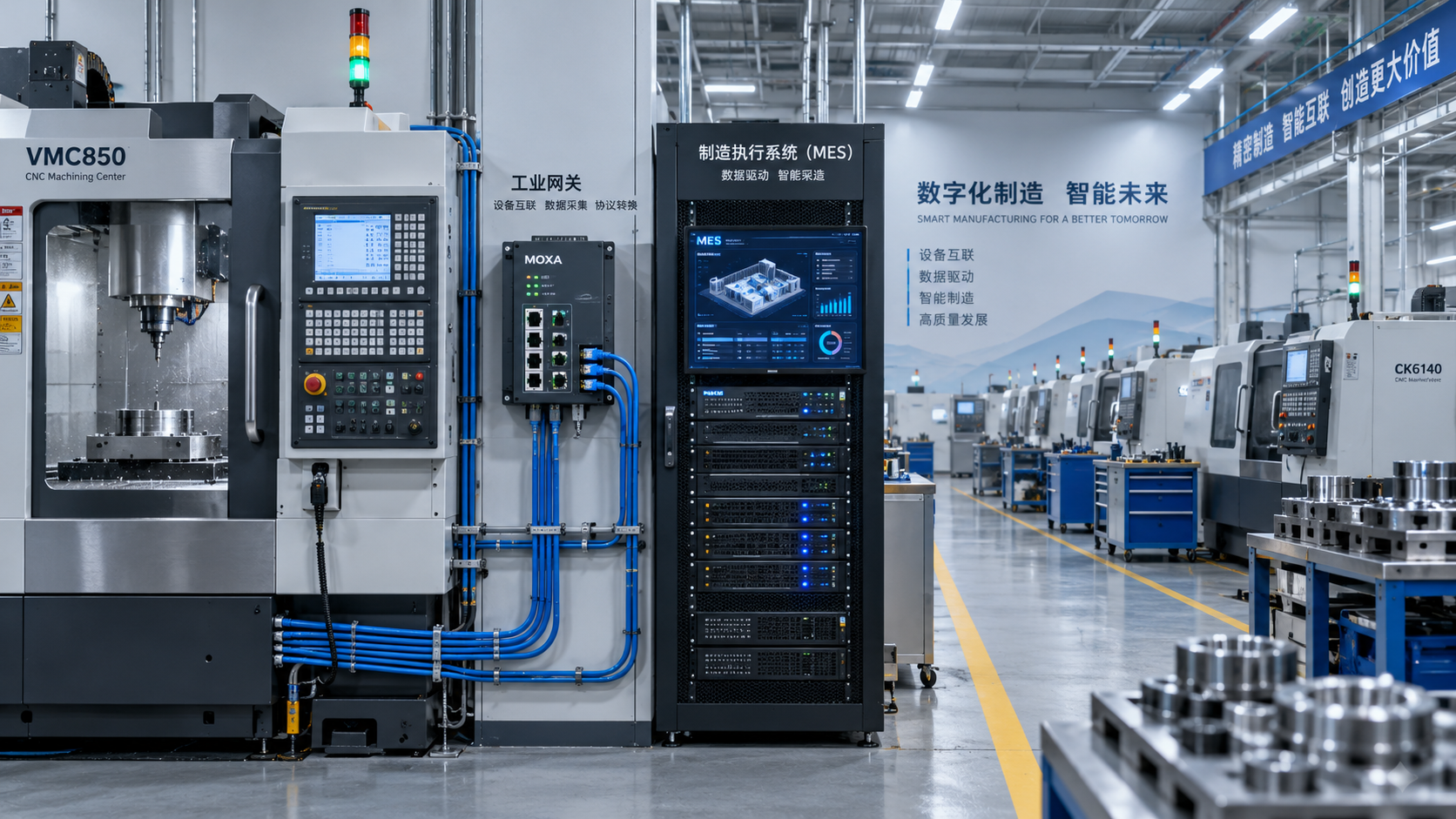
 Digital Manufacturing for Smart Factories: Connecting Legacy Machines to MESMachine Tool Industry Editorial Team
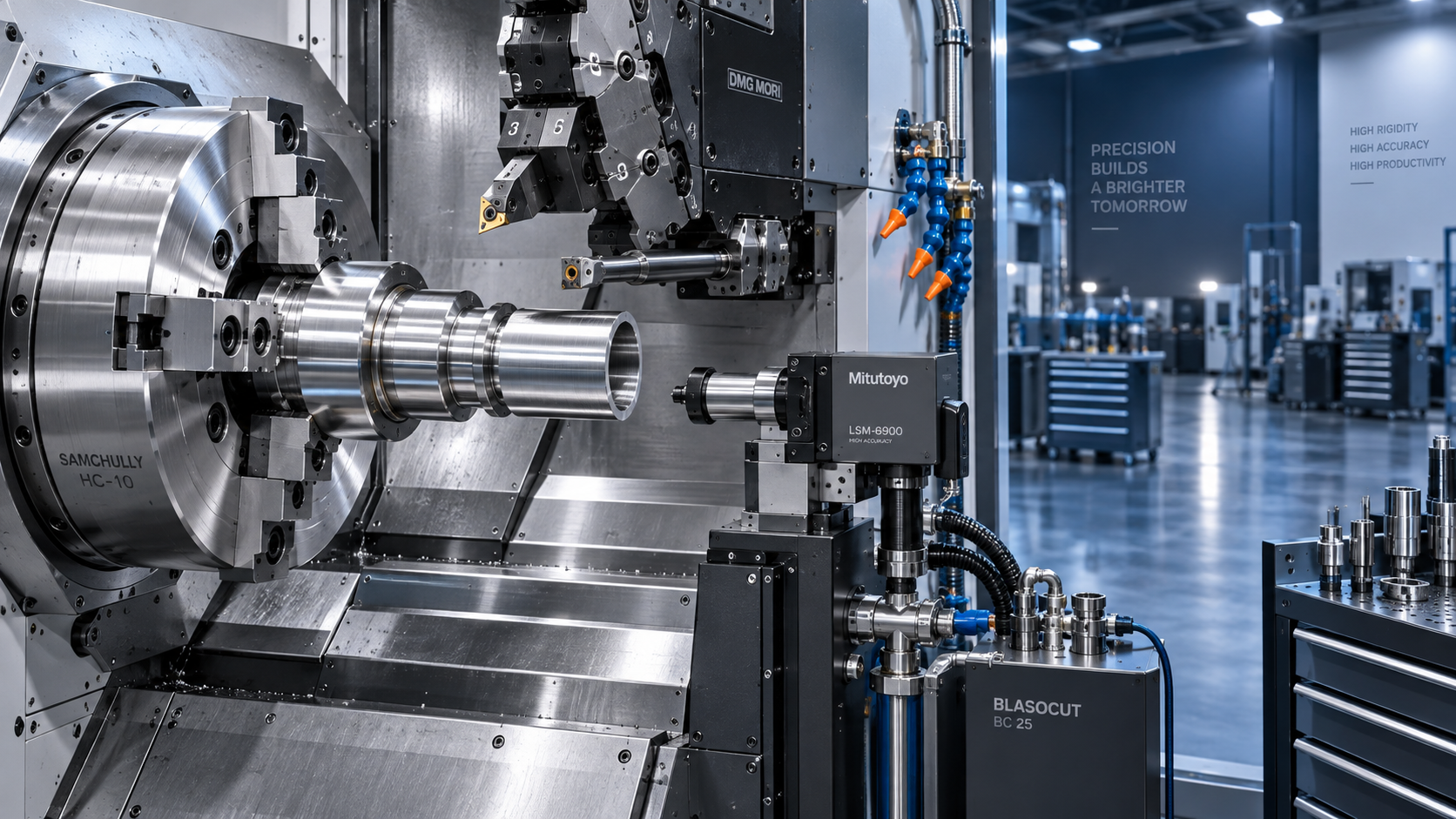
 How to Select a CNC Metal Lathe for Tight-Tolerance Shaft and Sleeve PartsCNC Machining Technology Center
 How to Select an Industrial Lathe for High-Volume Shaft ProductionMachine Tool Industry Editorial Team
 Selecting Machine Tools for Automotive Parts: Accuracy, Throughput, and AutomationMachine Tool Industry Editorial Team
 Industrial Machining: Selecting Processes for Tight-Tolerance Metal PartsCNC Machining Technology Center
 Manufacturing Technology Trends That Improve Throughput and Quality ControlManufacturing Market Research Center

Aris Katos
Future of Carbide Coatings
15+ years in precision manufacturing systems. Specialized in high-speed milling and aerospace grade alloy processing.
▶
How to Select a Machine Tool for Aerospace Parts with Tight Tolerances?Machine Tool Industry Editorial Team▶
How to Compare Machine Tools for Small-Batch vs Mass Production JobsMachine Tool Industry Editorial Team▶
Multi-Axis Machine Tool Selection Guide: Travel, Spindle, Accuracy, and Control SystemMachine Tool Industry Editorial Team▶
How to Evaluate Precision Equipment for Tight-Tolerance Parts and Stable OutputMachine Tool Industry Editorial Team▶
KATS Tightens CNC Grinder Import Test RulesMachine Tool Industry Editorial Team
Mastering 5-Axis Workholding Strategies
Join our technical panel on Nov 15th to learn about reducing vibrations in thin-wall components.

Providing you with integrated sanding solutions
Before-sales and after-sales services
Comprehensive technical support