• Global CNC market projected to reach $128B by 2028 • New EU trade regulations for precision tooling components • Aerospace deman
NYSE: CNC +1.2%LME: STEEL -0.4%

Why Multi-Axis Machine Tools Beat Standard Setups for Complex Parts
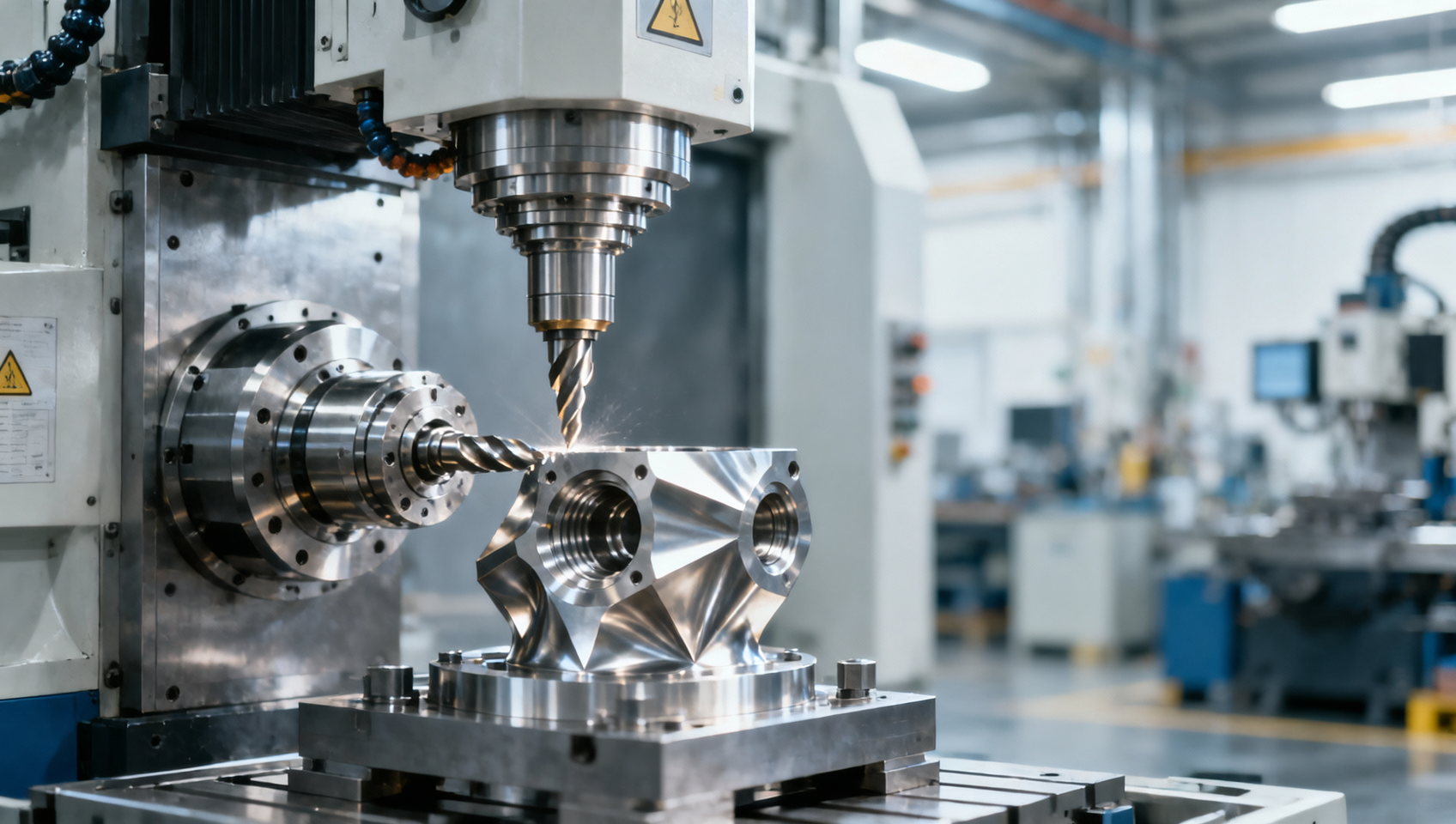
For manufacturers producing intricate components, a multi-axis machine tool delivers clear advantages over standard setups by combining high precision machine tool performance, quick setup CNC manufacturing, and automated CNC manufacturing efficiency. From aerospace and energy equipment to electronics and medical devices, multi-axis CNC manufacturing reduces handling, improves accuracy, and supports a more cost-effective CNC manufacturing workflow.
Why complex part manufacturers move beyond standard 3-axis setups
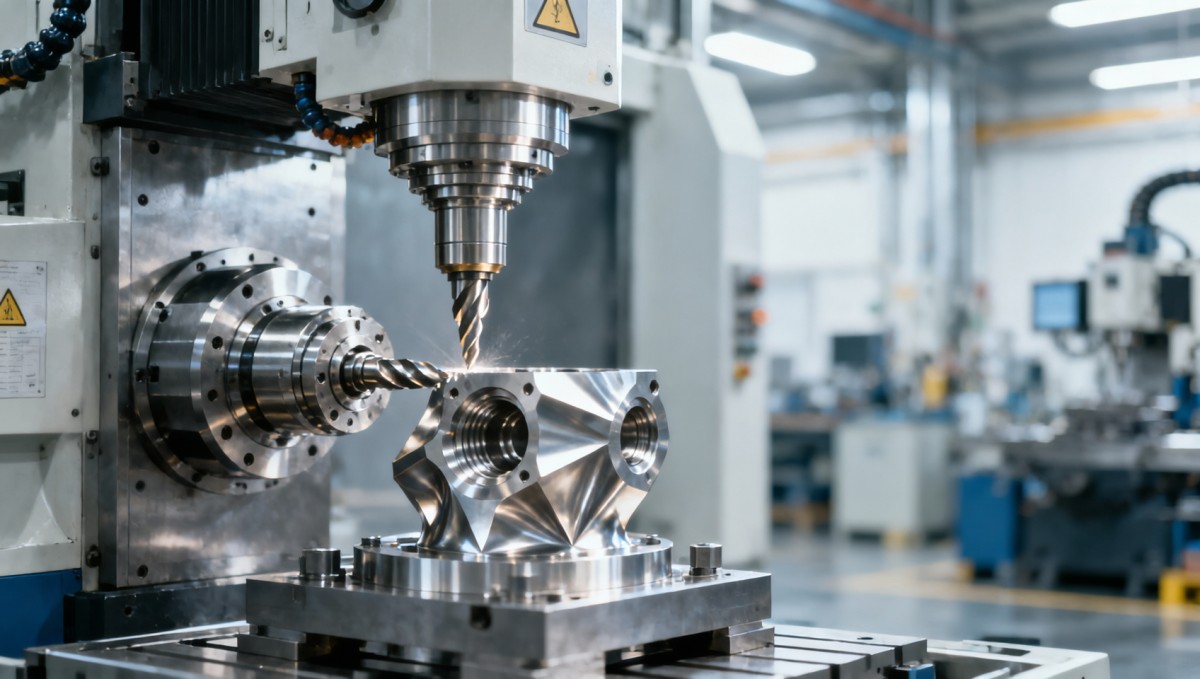
A standard setup can machine many prismatic components well, but it becomes restrictive when a part includes compound angles, deep cavities, undercuts, or multiple datum relationships. In those cases, every extra clamping step introduces a new chance for positional error. A multi-axis machine tool reduces that risk by machining more surfaces in one cycle, often within a single setup or within 2 setups instead of 4–6.
This matters across the broader manufacturing sector. Aerospace housings, turbine-related parts, electronic enclosures, pump bodies, and medical frames all require tighter dimensional control and smoother process flow. Operators want fewer manual transfers. Buyers want better throughput. Decision-makers want higher spindle utilization and lower rework exposure. Multi-axis CNC manufacturing addresses all 3 concerns in a more scalable way than standard setups.
The shift is also tied to smart manufacturing. As factories move toward digital integration, automated CNC manufacturing performs best when process interruptions are minimized. A machine tool that can rotate, tilt, and approach the part from multiple directions supports more stable scheduling, clearer fixture strategy, and easier integration with tool monitoring, probing, and offline programming systems.
What changes when more axes are available?
The practical change is not only geometric freedom. It is process consolidation. Instead of moving a part between vises, angle plates, or secondary fixtures, the machine reorients the workpiece automatically. That reduces setup variation, shortens non-cutting time, and helps preserve tolerance chains. For many precision components, the gain comes from fewer human touchpoints as much as from advanced cutting motion.
- Fewer setups can mean fewer cumulative alignment errors, especially when flatness, position, and concentricity must be held across several faces.
- Shorter handling time supports quick setup CNC manufacturing for prototypes, small batches, and mixed production schedules.
- Improved tool access often enables shorter cutting tools, which can improve stability on difficult geometries.
In procurement terms, the question is no longer whether multi-axis is advanced. The real question is whether the part family, production volume, tolerance requirement, and labor structure justify the investment. For many plants producing high-mix, medium-complexity to high-complexity components, the answer is increasingly yes.
Multi-axis vs standard setups: where the real performance gap appears
The performance difference between multi-axis machine tools and standard setups is easiest to understand when comparing process behavior, not just axis count. A 3-axis machining center with skilled fixturing can still be productive. However, once a part requires machining on 5 faces, angular drilling, or contour finishing around curved surfaces, standard methods usually depend on repeated repositioning. That adds labor, queue time, inspection effort, and process risk.
The table below compares common shop-floor decision factors. These are not universal fixed outcomes, because actual results depend on machine rigidity, tooling, CAM strategy, and operator skill. Still, the comparison reflects typical manufacturing conditions seen in precision machining, energy equipment, aerospace supply chains, and electronics-related component production.
The core takeaway is that multi-axis manufacturing wins when complexity multiplies process steps. If your components require tight true position across several faces, deep side features, or frequent setup changes, a high precision machine tool with multi-axis capability can reduce the hidden costs that standard setups rarely show on the first quotation.
Where standard setups still make sense
Not every part belongs on a 5-axis platform. Flat plates, simple brackets, and low-complexity blocks often remain economical on 3-axis equipment, especially in stable medium-volume production. If a part can be completed in 1–2 simple operations and tolerance relationships are not demanding, standard setups may still offer a lower machine-hour cost.
A practical decision rule
A useful shop-floor rule is to review 4 indicators: setup count, feature accessibility, tolerance stack sensitivity, and expected changeover frequency. When at least 3 of those 4 indicators are high, multi-axis CNC manufacturing usually offers a better long-term process window than a standard approach.
Which applications benefit most from multi-axis CNC manufacturing?
The strongest fit appears in industries where part geometry and quality expectations rise together. Aerospace components often require complex surfaces, pocketing, and angular features within tight tolerance frameworks. Energy equipment uses valve bodies, impellers, housings, and structural parts that demand controlled concentricity and robust machining consistency. Electronics and automation sectors need compact, precise parts with frequent design updates and short lead times.
For operators and process engineers, multi-axis machining is especially valuable when tool reach becomes a problem. By tilting the workpiece or spindle, the process can use shorter, more stable tools. That can improve finish quality, reduce chatter risk, and help protect cutting edges. In materials such as stainless steel, titanium alloys, or heat-resistant alloys, that benefit becomes even more relevant.
For procurement teams, the application review should include not just part shape but production style. A shop producing high-mix, low-volume work may gain from quick setup CNC manufacturing and reduced fixture inventory. A plant making medium-volume precision assemblies may gain more from repeatability and lower inspection burden than from pure cycle-time reduction.
The following table helps connect typical applications to the most relevant process advantage. It is useful during machine selection, RFQ discussions, and internal investment justification.
These application patterns show that the best candidates are not defined by industry name alone. They are defined by complexity, tolerance dependency, and the cost of process interruption. When those 3 factors rise together, a multi-axis machine tool usually brings a clearer return than a standard multi-setup route.
Typical production scenarios
- Prototype and pilot runs delivered in 7–15 days, where setup reduction is more valuable than maximizing one single cycle time.
- High-mix contracts with 10–50 part numbers per month, where fixture simplification improves scheduling flexibility.
- Medium-volume precision programs running across 2–3 shifts, where process repeatability and lower operator intervention matter most.
How to evaluate machine selection, cost, and implementation risk
Buying a multi-axis machine tool is not just a capital expenditure decision. It is a process capability decision. The wrong purchase may result in underused capacity, difficult programming, or tooling costs that are not justified by the part mix. The right purchase can compress several operations into one platform and create a stronger foundation for automated CNC manufacturing over the next 3–5 years.
Procurement teams should evaluate at least 5 core areas: part envelope, axis configuration, spindle performance, probing and automation readiness, and post-sales service response. For many factories, support speed within 24–72 hours is as important as machine specification because downtime on a complex machining cell disrupts both production and delivery commitments.
A practical selection checklist for buyers
- Confirm whether the primary workload is 3+2 positioning or true simultaneous 5-axis machining. The answer affects control capability, CAM requirements, and budget.
- Review the part family over the next 12–24 months, not only current drawings. Expansion into more complex components can change the ideal machine specification.
- Check fixture and tool strategy. A high precision machine tool performs best when supported by stable workholding, balanced tool assembly, and in-process measurement.
- Assess programming resources. Advanced hardware without qualified CAM support often delays implementation and weakens expected return.
Cost analysis should go beyond purchase price. Compare setup labor, scrap risk, fixture count, inspection hours, and delivery performance. A machine with a higher hourly rate can still reduce total part cost if it eliminates 2 secondary operations, reduces in-process handling, or shortens lead time from 4 weeks to 2 weeks on urgent orders.
Implementation timeline to expect
A realistic rollout commonly involves 3 stages: process planning, machine installation and validation, then pilot production. Depending on complexity, the ramp-up may take 2–6 weeks after delivery. Facilities planning should include coolant management, power requirements, training schedules, and trial parts for acceptance. Decision-makers who prepare these items early usually reduce start-up friction significantly.
Common misconceptions, compliance concerns, and FAQ
One common misconception is that multi-axis machining always means the fastest cycle time for every part. In reality, the advantage is often process consolidation, better accuracy retention, and lower handling. Another misconception is that only aerospace suppliers need this capability. Many energy, electronics, industrial automation, and medical manufacturers also benefit when component complexity and tolerance dependence increase together.
Compliance and quality teams should also consider process documentation. In many sectors, machine capability must align with inspection planning, calibration discipline, and traceable work instructions. While specific standards depend on customer and industry, it is common to review machine accuracy verification, tool management records, and first article inspection procedures before releasing full production.
For international sourcing, buyers should ask about installation support, training coverage, spare parts availability, and response plans for critical downtime. These service details are often more important than minor specification differences, especially when a production line depends on one machine cell for several high-value components.
FAQ for information seekers and buyers
How do I know if a multi-axis machine tool is justified for my parts?
Review 4 points: setup count, angular or curved features, tolerance relationships across multiple faces, and changeover frequency. If your parts regularly require 3 or more setups, involve difficult tool access, or suffer from alignment variation after reclamping, multi-axis CNC manufacturing is usually worth serious evaluation.
Is quick setup CNC manufacturing only important for prototypes?
No. It is critical for both prototypes and high-mix production. In shops handling 20 or more drawing revisions per quarter, shorter setup logic improves schedule stability, lowers fixture complexity, and helps operators switch between jobs with less downtime.
What should procurement ask during supplier comparison?
Ask about application fit, not only price. Confirm axis type, spindle range, probing options, software compatibility, training hours, delivery lead time, and spare-part response. Also request a process review based on 2–3 actual sample parts. That gives a more reliable basis for investment than catalog language alone.
Can automated CNC manufacturing be added later?
In many cases yes, but automation readiness should be considered from the start. Pallet systems, tool life monitoring, probing, and robot loading all work better when the machine layout, control options, and process plan were prepared in advance. Retrofitting is possible, but it can cost more and deliver a slower return.
Why choose us for machine selection and next-step planning
We focus on the global CNC machining and precision manufacturing industry, with attention to machine tool technology, application trends, sourcing logic, and cross-border industrial trade. That makes our support useful not only for technical teams comparing a high precision machine tool, but also for buyers and decision-makers balancing lead time, automation plans, and long-term production strategy.
If you are comparing multi-axis machine tools with standard setups, we can help structure the evaluation around real production needs. That includes parameter confirmation for part size and material, process suitability review for 3+2 versus simultaneous machining, delivery cycle discussion, and preliminary guidance on fixtures, tooling, and automated CNC manufacturing readiness.
You can contact us for 6 practical topics: machine selection, sample-part feasibility, configuration comparison, expected delivery window, customization direction, and quotation communication. If your project also involves certification review, export coordination, or supplier comparison across regions such as China, Germany, Japan, or South Korea, we can help organize the decision process more efficiently.
The most effective next step is to share 2D drawings, 3D files, target material, tolerance priorities, annual volume, and desired lead time. With those 5 inputs, it becomes much easier to judge whether a multi-axis machine tool will outperform a standard setup for your complex parts and what configuration path is most practical for your operation.
PREVIOUS ARTICLE
Recommended for You
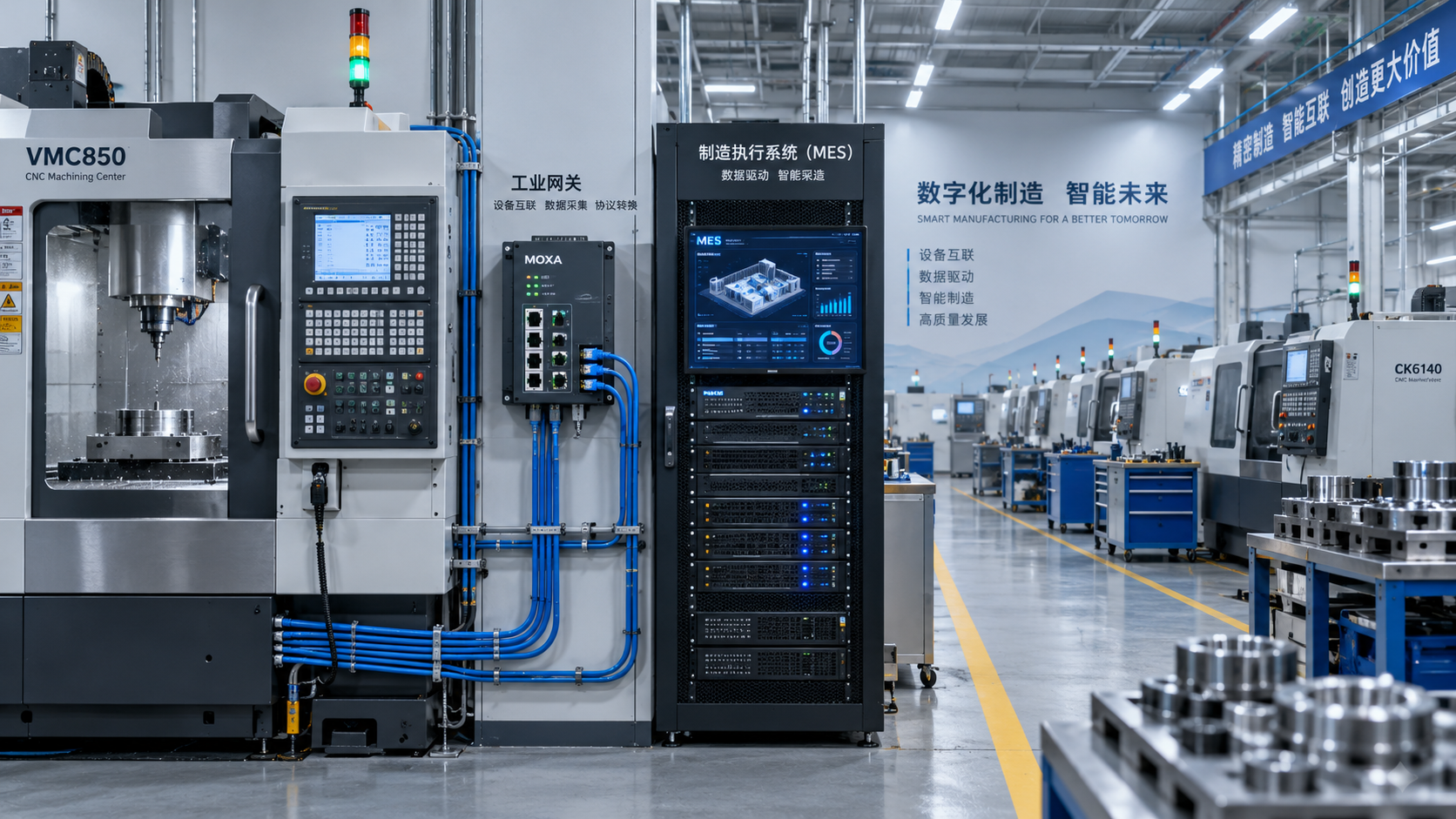
 Digital Manufacturing for Smart Factories: Connecting Legacy Machines to MESMachine Tool Industry Editorial Team
 How to Select a CNC Metal Lathe for Tight-Tolerance Shaft and Sleeve PartsCNC Machining Technology Center
 How to Select an Industrial Lathe for High-Volume Shaft ProductionMachine Tool Industry Editorial Team
 Selecting Machine Tools for Automotive Parts: Accuracy, Throughput, and AutomationMachine Tool Industry Editorial Team
 Industrial Machining: Selecting Processes for Tight-Tolerance Metal PartsCNC Machining Technology Center
 Manufacturing Technology Trends That Improve Throughput and Quality ControlManufacturing Market Research Center

Aris Katos
Future of Carbide Coatings
15+ years in precision manufacturing systems. Specialized in high-speed milling and aerospace grade alloy processing.
▶
How to Select a Machine Tool for Aerospace Parts with Tight Tolerances?Machine Tool Industry Editorial Team▶
How to Compare Machine Tools for Small-Batch vs Mass Production JobsMachine Tool Industry Editorial Team▶
Multi-Axis Machine Tool Selection Guide: Travel, Spindle, Accuracy, and Control SystemMachine Tool Industry Editorial Team▶
How to Evaluate Precision Equipment for Tight-Tolerance Parts and Stable OutputMachine Tool Industry Editorial Team▶
KATS Tightens CNC Grinder Import Test RulesMachine Tool Industry Editorial Team
Mastering 5-Axis Workholding Strategies
Join our technical panel on Nov 15th to learn about reducing vibrations in thin-wall components.

Providing you with integrated sanding solutions
Before-sales and after-sales services
Comprehensive technical support