• Global CNC market projected to reach $128B by 2028 • New EU trade regulations for precision tooling components • Aerospace deman
NYSE: CNC +1.2%LME: STEEL -0.4%

What Smart Manufacturing Benefits matter most in 2026?
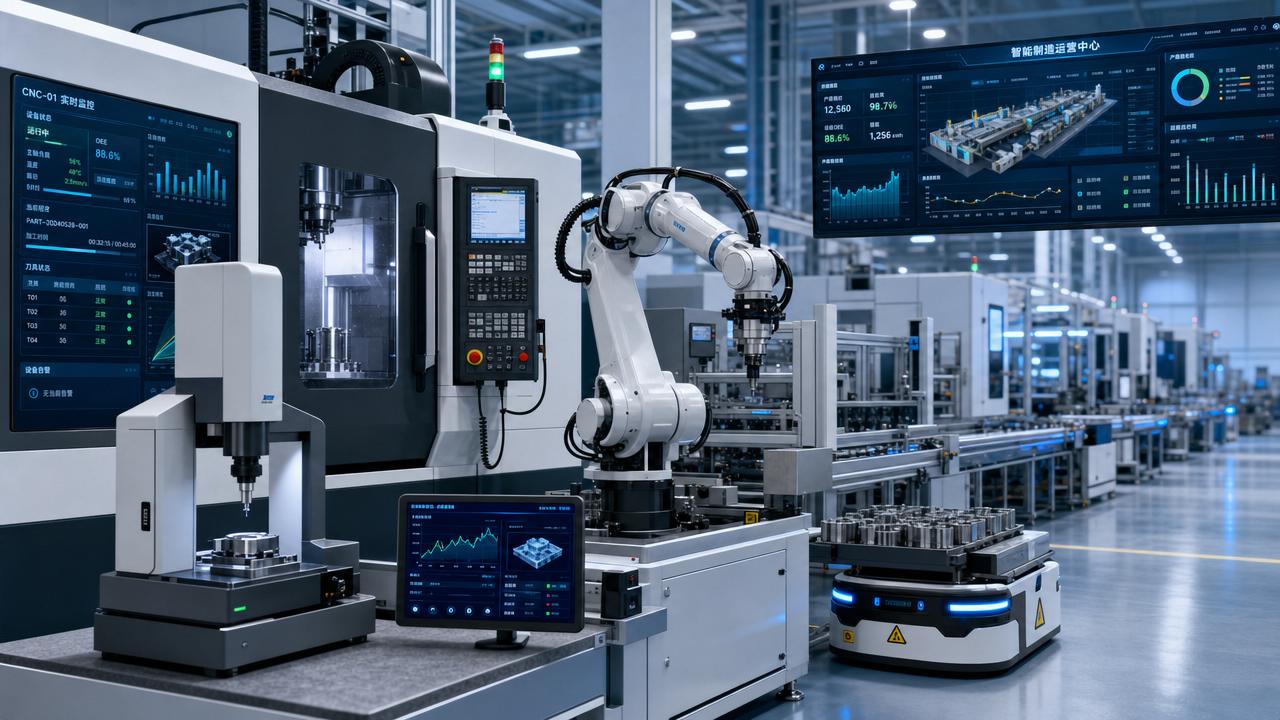
In 2026, enterprise leaders are under growing pressure to improve productivity, resilience, and cost control while adapting to digital transformation across global manufacturing.
For CNC machining, precision tooling, and automated production lines, the most important Smart Manufacturing Benefits go beyond faster output.
They include real-time visibility, predictive maintenance, flexible capacity, higher quality consistency, and smarter investment decisions.
Understanding which benefits create measurable business value helps enterprises prioritize technology adoption and build future-ready operations.
What Smart Manufacturing Benefits Matter Most in 2026?
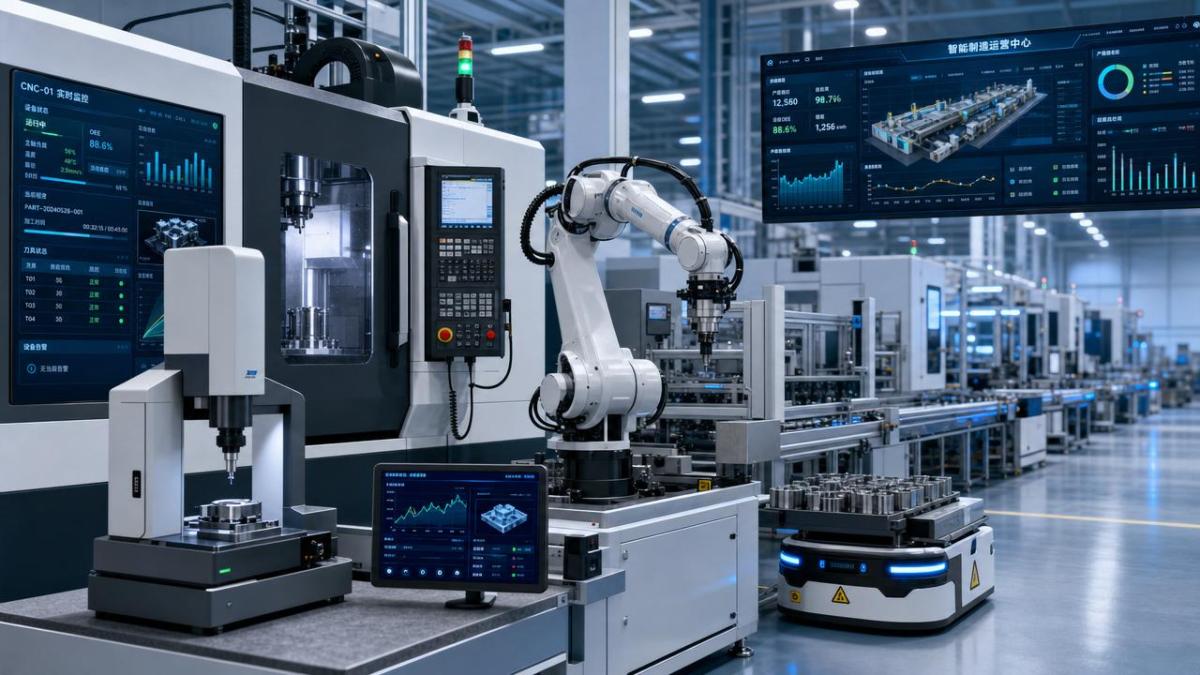
The manufacturing environment is shifting from isolated automation toward connected, data-driven, and adaptive production ecosystems.
This shift changes how Smart Manufacturing Benefits are evaluated across CNC machining, assembly, inspection, logistics, and maintenance.
In earlier cycles, automation often meant replacing manual tasks with faster machines or robotic systems.
In 2026, the focus moves toward intelligent coordination between equipment, software, people, and supply networks.
Trend Signals Showing Where Value Is Moving
Several trend signals show why Smart Manufacturing Benefits are becoming strategic rather than purely operational.
First, high-mix production is increasing across automotive components, aerospace parts, energy equipment, electronics, and general machinery.
Factories need shorter changeovers, better scheduling, and fewer errors when switching between part families.
Second, global supply chains remain sensitive to logistics disruption, cost volatility, and sudden demand changes.
Connected production data helps enterprises respond faster when capacity, materials, or delivery windows change.
Third, quality requirements continue to rise for precision shafts, discs, molds, structural parts, and complex assemblies.
Smart Manufacturing Benefits now include process traceability, closed-loop correction, and earlier detection of quality drift.
Why Smart Manufacturing Benefits Are Accelerating
The momentum comes from multiple technical and commercial forces acting at the same time.
These drivers make Smart Manufacturing Benefits more visible, measurable, and connected to financial outcomes.
Real-Time Visibility Becomes the First Competitive Layer
Real-time visibility is one of the most important Smart Manufacturing Benefits for 2026.
Without accurate live data, automation investments can still hide bottlenecks, rework, downtime, and scheduling conflicts.
Connected CNC machines, machining centers, robots, and inspection stations can report status continuously.
This gives production operations a clearer view of utilization, cycle time, work-in-progress, and delivery risk.
The practical value is not only seeing the factory, but acting before minor delays become major losses.
Predictive Maintenance Reduces Hidden Production Risk
Predictive maintenance remains a high-value area among Smart Manufacturing Benefits because equipment failure is expensive.
CNC spindles, servo systems, ball screws, fixtures, coolant systems, and cutting tools all influence process stability.
Sensor data and operating history can reveal abnormal vibration, temperature changes, overload patterns, or tool degradation.
Maintenance can then move from fixed schedules toward condition-based intervention and better spare parts planning.
This supports higher machine availability while reducing emergency downtime and unnecessary maintenance activity.
Quality Consistency Gains Strategic Importance
Quality consistency is another core reason Smart Manufacturing Benefits matter in precision manufacturing.
Modern parts often involve tighter tolerances, complex geometries, advanced materials, and demanding certification requirements.
Smart inspection systems, process monitoring, and digital traceability help identify variation earlier in the workflow.
For multi-axis machining, this can protect dimensional accuracy across complex surfaces and critical features.
For automated assembly, it helps reduce defect escape and supports more reliable process documentation.
The long-term value is fewer disputes, less scrap, and stronger confidence in repeat production.
Flexible Capacity Becomes More Valuable Than Maximum Speed
Maximum output still matters, but flexible capacity is gaining more attention in 2026.
One of the strongest Smart Manufacturing Benefits is the ability to adapt production without excessive disruption.
Flexible cells, modular fixtures, automated tool management, and digital work instructions support faster product transitions.
This is especially important when order sizes change or component designs are revised frequently.
Flexible capacity helps avoid the trap of highly efficient systems that cannot adapt to market shifts.
Business Impact Across Key Manufacturing Links
Smart Manufacturing Benefits affect multiple parts of the industrial value chain, not only the machine shop.
- Production planning gains more accurate capacity and delivery information.
- Machining operations reduce downtime, scrap, tool waste, and manual reporting gaps.
- Quality control improves traceability, process evidence, and root-cause analysis.
- Maintenance teams shift toward earlier intervention and better resource planning.
- Management decisions become more data-based, especially for investment prioritization.
These effects show why Smart Manufacturing Benefits should be evaluated as system-wide improvements.
A single advanced machine may raise productivity, but connected workflows create broader performance gains.
Investment Decisions Need Clearer Measurement
In 2026, digital investment must be tied to measurable operational outcomes.
Smart Manufacturing Benefits should be assessed through uptime, yield, lead time, energy use, labor efficiency, and delivery performance.
The strongest projects usually solve a visible business constraint rather than adopting technology for image reasons.
For example, predictive maintenance is compelling when unplanned downtime limits output or causes missed delivery dates.
Digital quality tracking is valuable when traceability, rework, or process variation creates repeated cost pressure.
Priorities Enterprises Should Watch Closely
The following priorities help identify where Smart Manufacturing Benefits are most likely to deliver practical value.
- Data reliability: Inaccurate machine data weakens every digital decision.
- Interoperability: CNC systems, robots, MES, and inspection platforms must connect smoothly.
- Scalable automation: Solutions should expand from one cell to larger production networks.
- Cybersecurity: Connected factories need stronger protection for operational technology.
- Workforce capability: Digital tools require practical skills in data use and process control.
These factors determine whether Smart Manufacturing Benefits remain isolated improvements or become long-term competitive advantages.
A Practical Roadmap for 2026 Decisions
A staged approach reduces risk and keeps digital transformation aligned with operational needs.
This roadmap makes Smart Manufacturing Benefits easier to compare against costs and implementation complexity.
What to Judge Before Scaling Smart Manufacturing
Before scaling, enterprises should judge whether pilot results are repeatable, measurable, and transferable.
A pilot that works only under ideal conditions may not deliver stable Smart Manufacturing Benefits across different lines.
Key questions include whether data sources are standardized and whether operators can use insights during real production.
It is also important to confirm whether software, equipment, and automation vendors support open integration.
The best scaling plans combine technical readiness with practical process discipline.
Final Outlook and Next Steps
The most important Smart Manufacturing Benefits in 2026 are visibility, resilience, predictive maintenance, flexible capacity, and quality consistency.
Together, they help manufacturing operations respond faster, reduce waste, and make better use of capital equipment.
For CNC machining and precision manufacturing, the winning approach is not simply buying more automation.
It is building connected production systems that convert machine data into better decisions.
A practical next step is to map current bottlenecks, define measurable targets, and select one high-impact area for digital improvement.
When technology adoption follows clear business needs, Smart Manufacturing Benefits become durable advantages rather than short-term experiments.
PREVIOUS ARTICLE
Recommended for You
 Digital Manufacturing for Smart Factories: Connecting Legacy Machines to MESMachine Tool Industry Editorial Team
 How to Select a CNC Metal Lathe for Tight-Tolerance Shaft and Sleeve PartsCNC Machining Technology Center
 How to Select an Industrial Lathe for High-Volume Shaft ProductionMachine Tool Industry Editorial Team
 Selecting Machine Tools for Automotive Parts: Accuracy, Throughput, and AutomationMachine Tool Industry Editorial Team
 Industrial Machining: Selecting Processes for Tight-Tolerance Metal PartsCNC Machining Technology Center
 Manufacturing Technology Trends That Improve Throughput and Quality ControlManufacturing Market Research Center

Aris Katos
Future of Carbide Coatings
15+ years in precision manufacturing systems. Specialized in high-speed milling and aerospace grade alloy processing.
▶
Manufacturing Technology Trends That Improve Throughput and Quality ControlManufacturing Market Research Center▶
Global Manufacturing Trends: How Supply Chains and Regional Shifts Affect SourcingManufacturing Market Research Center▶
Small-Batch Production and Smart Manufacturing for Small Businesses: Where to Start FirstManufacturing Market Research Center▶
What Smart Manufacturing Technology for Industry 4.0 Means for Mid-Sized FactoriesManufacturing Market Research Center▶
How Smart Manufacturing Benefits Reduce Downtime and Scrap in Metal Parts ProductionManufacturing Market Research Center
Mastering 5-Axis Workholding Strategies
Join our technical panel on Nov 15th to learn about reducing vibrations in thin-wall components.

Providing you with integrated sanding solutions
Before-sales and after-sales services
Comprehensive technical support