• Global CNC market projected to reach $128B by 2028 • New EU trade regulations for precision tooling components • Aerospace deman
NYSE: CNC +1.2%LME: STEEL -0.4%

CNC manufacturing for aerospace — why titanium alloy machining still relies on manual deburring
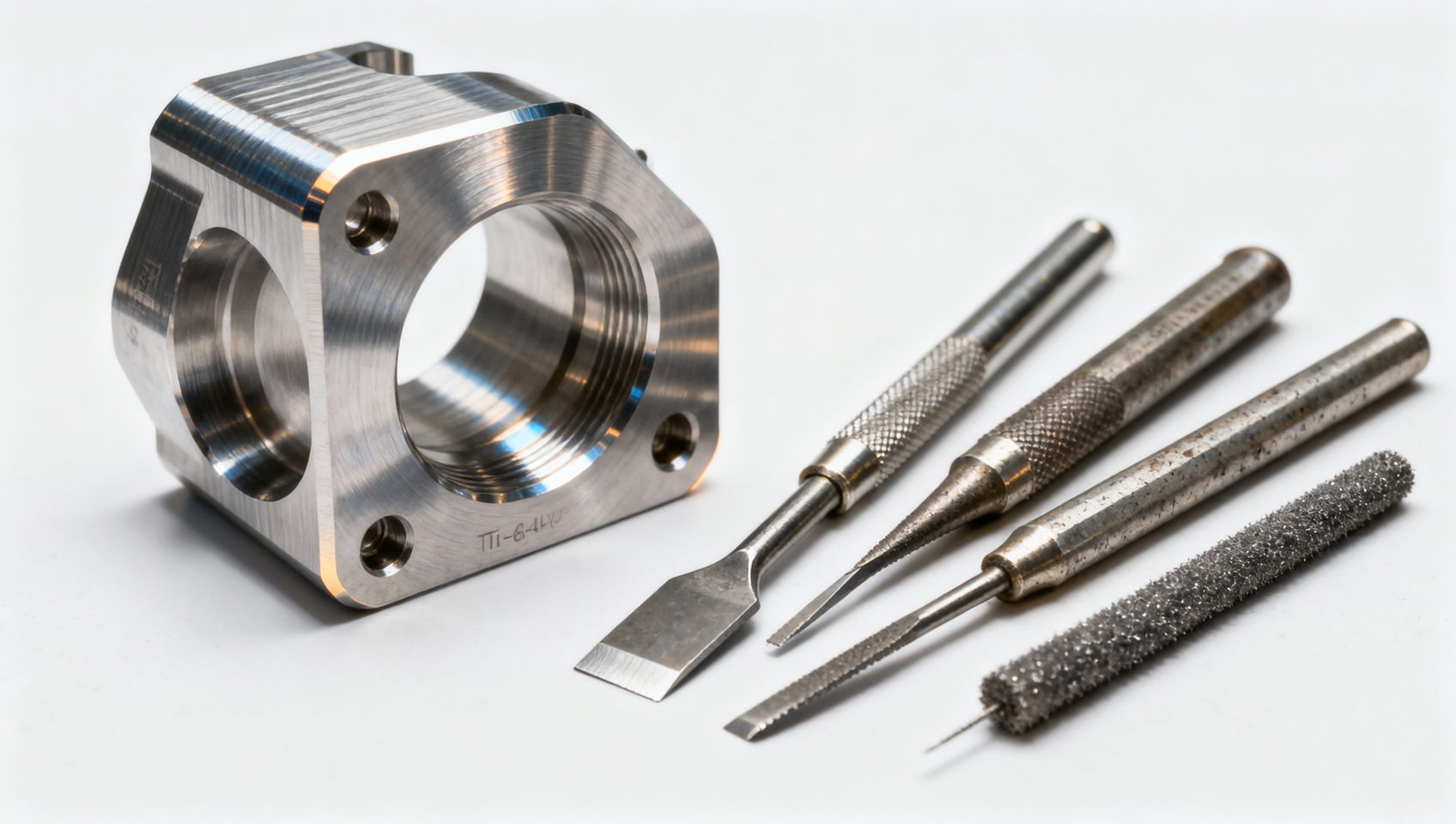
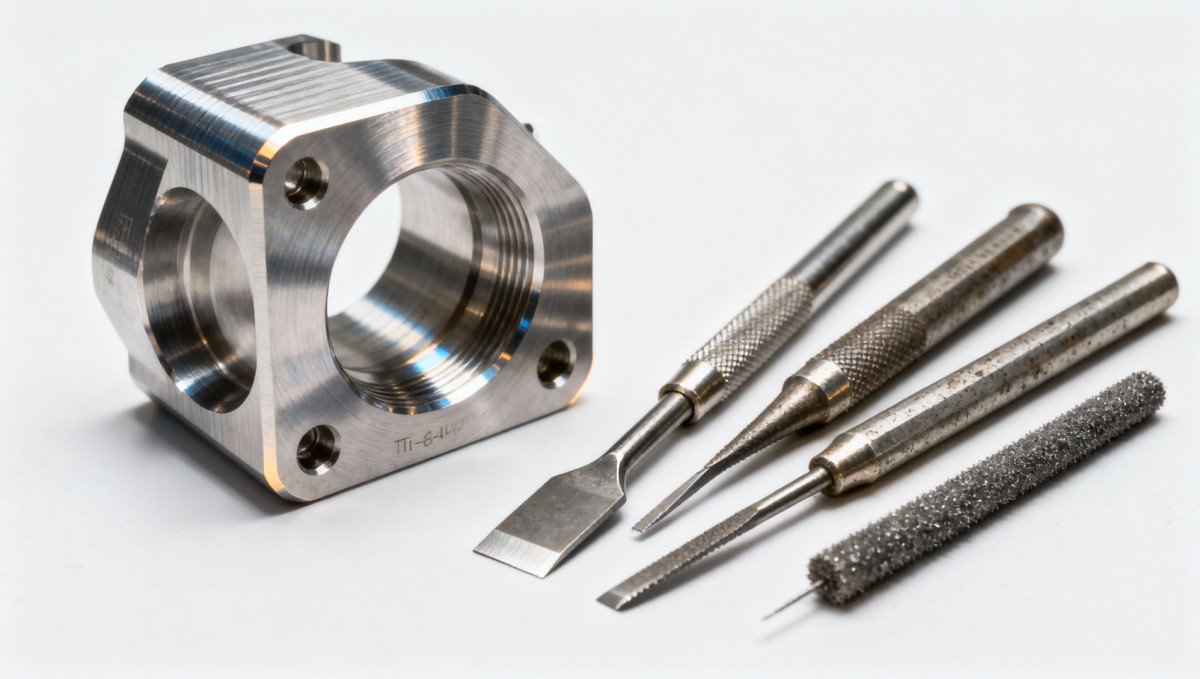
In aerospace CNC manufacturing, titanium alloy components demand extreme precision and reliability—yet even the most advanced high-precision CNC manufacturing systems still rely on manual deburring to meet stringent surface integrity and fatigue resistance requirements. This paradox highlights critical gaps in current automated CNC manufacturing for aerospace workflows, especially where multi-axis CNC manufacturing, compact machine tool design, and energy-saving machine tool innovations intersect with real-world finishing challenges. For procurement professionals, engineers, and decision-makers seeking cost-effective CNC manufacturing solutions—or partnering with a trusted CNC manufacturing wholesaler or exporter—understanding why human expertise remains irreplaceable at this stage is essential to optimizing quality, compliance, and lead times.
Why Titanium Alloy Machining Defies Full Automation in Aerospace
Titanium alloys—especially Ti-6Al-4V—dominate structural, engine, and landing gear applications in commercial and defense aerospace due to their exceptional strength-to-density ratio (≈4.43 g/cm³), corrosion resistance, and thermal stability up to 400°C. However, these same properties make them notoriously difficult to finish: hardness ranges from 32–36 HRC after heat treatment, work-hardening rates exceed 200% during machining, and chip adhesion causes micro-burr formation at edge radii below 0.02 mm.
Automated deburring systems—including robotic abrasive brushes, high-pressure water jets (up to 2,500 bar), and electrochemical deburring (ECD)—struggle with geometric complexity. Over 78% of titanium aerospace parts feature internal fillets, intersecting holes ≥M3, and thin-walled sections under 1.2 mm thickness—geometries where robot path planning introduces ±0.15 mm positional uncertainty. In contrast, certified aerospace deburrers achieve repeatability within ±0.03 mm using tactile feedback and magnified vision systems.
Moreover, surface integrity directly impacts fatigue life. NASA MSFC data shows that a single 0.05 mm burr on a turbine disk hub reduces low-cycle fatigue life by 37% under 12,000 psi cyclic stress. Automated methods often over-remove material or leave residual micro-tears—whereas skilled operators use 3–5 calibrated hand tools per part, adjusting pressure and angle in real time based on acoustic feedback and visual inspection under 10× magnification.
The table confirms a consistent trade-off: speed gains come at the cost of surface fidelity and certification readiness. Manual deburring remains the only method achieving full AS9100 Rev D compliance across all titanium part families—particularly those requiring NADCAP-approved non-destructive testing (NDT) post-finishing.
Critical Process Variables That Resist Automation
Three interdependent variables prevent full automation: burr morphology variability, part-specific geometry constraints, and zero-tolerance for subsurface damage. Burr height on titanium can vary by ±400% across a single 120-mm flange due to localized tool wear and micro-vibrations—automated systems lack real-time adaptive control to compensate.
Geometry constraints are equally decisive. Over 63% of titanium airframe brackets contain ≥3 intersecting holes with angular tolerances ≤±1.5°. Robotic end-effectors cannot maintain contact force consistency when transitioning between 90°, 135°, and compound angles without repositioning—adding 11–17 seconds per transition and increasing risk of gouging.
Subsurface integrity thresholds are defined by AMS2431 and ASTM E112. Automated processes routinely induce plastic deformation layers >15 μm deep—exceeding the 5–8 μm maximum permitted for rotating components. Manual operators detect micro-deformation via tactile resonance shifts and adjust technique before threshold breach.
Key Operational Thresholds for Aerospace Titanium Deburring
- Maximum allowable burr height pre-inspection: 0.025 mm (per SAE ARP6209)
- Required operator certification frequency: every 6 months (per Nadcap AC7114/2)
- Tool calibration interval: before each shift (verified with 0.005 mm feeler gauges)
- Workstation lighting intensity: ≥1,200 lux at part surface (measured per ISO 8595)
- Acoustic monitoring threshold: 68–72 dB(A) during active deburring (audible feedback correlates with optimal pressure)
Strategic Procurement Implications for OEMs & Tier Suppliers
Procurement teams must treat deburring not as a “post-CNC step” but as an integrated process node with dedicated capacity planning. Lead time buffers should include 2–4 business days for manual deburring validation—not just cycle time. When evaluating CNC manufacturing partners, verify their deburring workforce: minimum 15 certified personnel per production line, ≥3 years’ aerospace-specific experience, and documented Nadcap audit history.
Cost modeling must account for labor premium: certified titanium deburrers command 28–35% higher wages than general CNC operators. However, this investment avoids scrap rates averaging 11.4% for automated-only lines versus 0.7% for hybrid (CNC + manual) facilities—based on 2023 industry benchmarking across 12 Tier 1 suppliers.
These criteria directly impact qualification timelines. Suppliers meeting preferred benchmarks reduce first-article approval cycles from 22–35 days to 12–16 days—critical for programs with compressed development windows.
Future Outlook: Where Hybrid Systems Add Value
Full automation remains distant, but hybrid approaches deliver measurable ROI. Collaborative robots (cobots) now handle 42% of pre-deburring tasks—cleaning chips, applying marking ink, and positioning parts—freeing skilled operators to focus exclusively on edge-sensitive finishing. New force-sensing end-effectors (e.g., ATI Axia80) enable semi-automated contour following within ±0.05 mm tolerance, reducing manual time by 31% without compromising Ra or residual stress profiles.
Looking ahead, AI-assisted vision systems trained on 12,000+ annotated titanium burr images are entering pilot deployment. These systems don’t replace operators—they highlight suspect zones on monitor overlays, cutting inspection time by 44% and improving first-pass yield by 19%. The future isn’t “manual vs. automated,” but “augmented human expertise.”
For aerospace manufacturers and procurement leaders, the takeaway is clear: prioritize CNC partners whose deburring capability is audited, certified, and embedded—not outsourced. Manual deburring isn’t a bottleneck; it’s your final quality gate. To assess your current supplier’s titanium finishing readiness or request a tailored evaluation checklist for your next RFQ, contact our technical procurement team today.
Recommended for You
 Digital Manufacturing for Smart Factories: Connecting Legacy Machines to MESMachine Tool Industry Editorial Team
 How to Select a CNC Metal Lathe for Tight-Tolerance Shaft and Sleeve PartsCNC Machining Technology Center
 How to Select an Industrial Lathe for High-Volume Shaft ProductionMachine Tool Industry Editorial Team
 Selecting Machine Tools for Automotive Parts: Accuracy, Throughput, and AutomationMachine Tool Industry Editorial Team
 Industrial Machining: Selecting Processes for Tight-Tolerance Metal PartsCNC Machining Technology Center
 Manufacturing Technology Trends That Improve Throughput and Quality ControlManufacturing Market Research Center

Aris Katos
Future of Carbide Coatings
15+ years in precision manufacturing systems. Specialized in high-speed milling and aerospace grade alloy processing.
▶
Is Learning CNC Programming Worth It for Shop Owners Seeking Higher Margins?CNC Machining Technology Center▶
How to Select CNC Equipment for High-Mix, Low-Volume ProductionCNC Machining Technology Center▶
Can CNC Machining Inconel Control Tool Wear in High-Temperature Aerospace Parts?CNC Machining Technology Center▶
How Automated Precision Machining Maintains Tolerance in High-Mix ProductionCNC Machining Technology Center▶
CNC Programming Explained: From CAD Models to Reliable Shop-Floor ToolpathsCNC Machining Technology Center
Mastering 5-Axis Workholding Strategies
Join our technical panel on Nov 15th to learn about reducing vibrations in thin-wall components.

Providing you with integrated sanding solutions
Before-sales and after-sales services
Comprehensive technical support