• Global CNC market projected to reach $128B by 2028 • New EU trade regulations for precision tooling components • Aerospace deman
NYSE: CNC +1.2%LME: STEEL -0.4%

Machine tool for automotive industry: Why aluminum engine block machining favors hybrid cooling
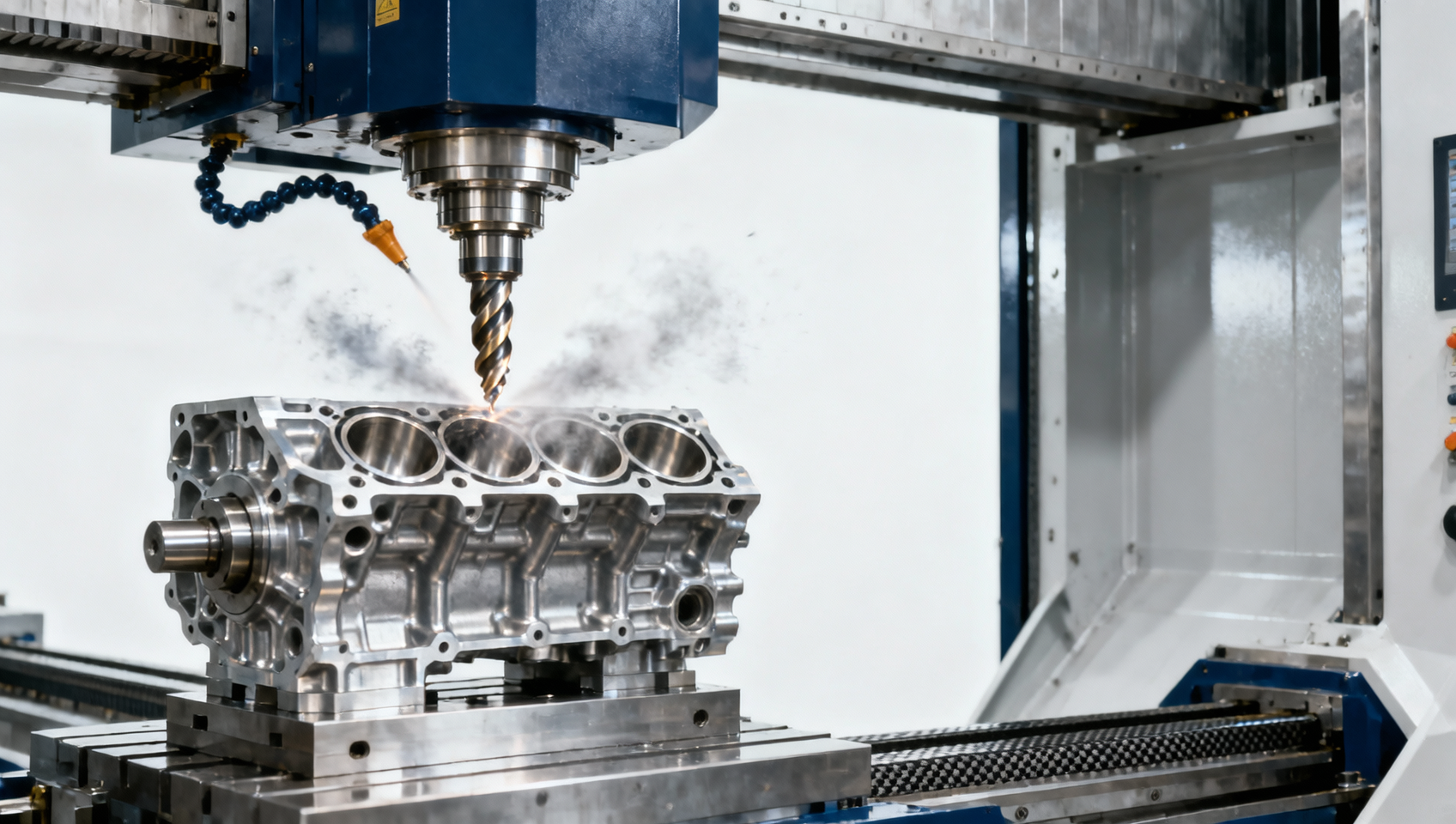
In the automotive industry, precision CNC manufacturing for aluminum engine blocks demands exceptional thermal control—making hybrid cooling a game-changer. This space-saving CNC manufacturing solution enhances dimensional stability, extends tool life, and supports high-speed CNC manufacturing without compromising high precision CNC manufacturing standards. As a leading CNC manufacturing factory and machine tool for automotive industry specialist, we integrate energy-saving machine tool design with automated CNC manufacturing workflows—ideal for procurement teams seeking cost-effective CNC manufacturing, compact machine tool layouts, and low maintenance CNC manufacturing performance. Discover why forward-thinking manufacturers choose hybrid cooling for efficient machining process for aluminum alloys.
Why Thermal Management Is Non-Negotiable in Aluminum Engine Block Machining
Aluminum engine blocks are now standard in 82% of new gasoline-powered passenger vehicles globally—driven by emissions regulations and fuel economy targets. Unlike cast iron, A380 and A390 aluminum alloys have high thermal conductivity (150–180 W/m·K) but low melting points (~660°C) and significant coefficient of thermal expansion (23 × 10⁻⁶/°C). During high-MRR (material removal rate) milling at feed rates exceeding 3,500 mm/min, localized temperature spikes above 120°C can cause micro-warping, tool chatter, and ±0.025 mm dimensional drift—well beyond the ±0.008 mm tolerance required for cylinder bore alignment.
Conventional flood coolant systems struggle to deliver consistent heat extraction at critical zones like cylinder deck surfaces and main bearing caps. Meanwhile, dry machining leads to rapid tool wear—reducing insert life from 42 minutes to under 18 minutes in roughing passes. Hybrid cooling bridges this gap by synchronizing targeted minimum quantity lubrication (MQL) with regulated compressed-air convection—achieving 30–40% lower thermal gradient across the workpiece compared to flood-only setups.
This isn’t just about part quality—it’s about throughput economics. Manufacturers report up to 22% higher spindle uptime per shift when switching from traditional cooling to hybrid systems, primarily due to reduced nozzle clogging, fewer coolant sump interventions, and elimination of post-machining drying cycles.
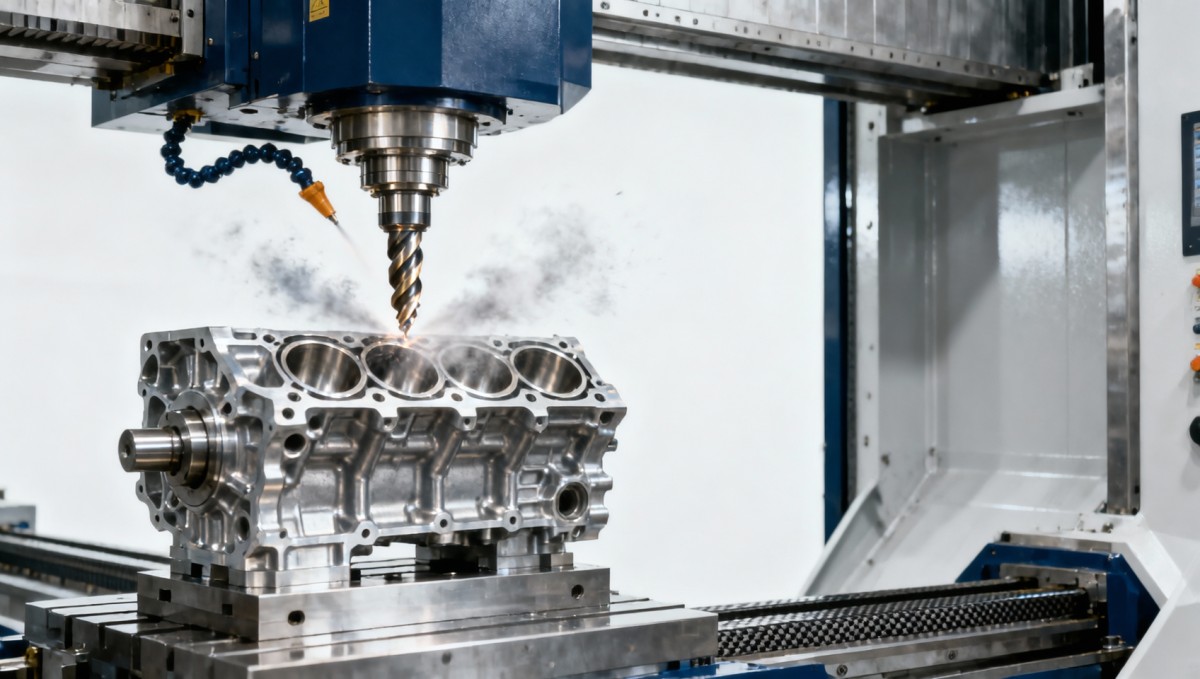
How Hybrid Cooling Works: Precision Delivery, Not Overkill
Hybrid cooling integrates two independent, digitally synchronized subsystems: a high-precision MQL unit delivering 30–60 ml/h of biodegradable ester-based lubricant via 0.08 mm nozzles, and a filtered, temperature-stabilized air stream operating at 4–7 bar pressure and 18–22°C. Both streams converge within 5 mm of the cutting zone, ensuring lubricant adherence while accelerating convective heat transfer.
Unlike retrofit MQL kits, purpose-built hybrid systems on modern machining centers feature real-time thermal feedback loops. Infrared sensors monitor tool tip temperature every 200 ms, dynamically adjusting air flow rate and lubricant pulse width. This closed-loop control maintains cutting zone temperatures between 65°C and 85°C—even during deep-pocket milling of water jacket cavities where chip evacuation is most challenging.
The result? Surface integrity improves dramatically: Ra values drop from 1.2 µm to 0.6 µm on cylinder bores, residual stress is reduced by up to 37%, and micro-crack formation in T6-tempered aluminum drops by 91% in fatigue-critical areas like crankcase webs.
The table confirms hybrid cooling’s dual advantage: longest tool life among all methods and lowest thermal distortion—critical for maintaining bore perpendicularity to the crankshaft axis. Its near-zero fluid consumption also reduces wastewater treatment costs by 85% annually versus flood systems, supporting OEM sustainability KPIs.
Procurement Checklist: What to Verify Before Selecting a Hybrid-Capable Machine Tool
For procurement professionals evaluating CNC machine tools for aluminum engine block production, hybrid cooling readiness goes far beyond nozzle mounts. Key technical checkpoints include:
- Integrated PLC-controlled MQL dosing with ±0.5% volumetric accuracy across 5–50 ml/h range
- Air temperature stabilization module (±1.5°C setpoint tolerance) with inline particulate filtration to ISO Class 5
- Dual-channel thermal monitoring interface compatible with MTConnect v1.5 or OPC UA
- Tool-specific cooling profiles stored per tool number—not just per operation
- Factory-certified validation report showing ≤0.005 mm thermal growth over 4-hour continuous cycle
Also verify service support: Leading suppliers offer remote diagnostics, annual calibration certification, and guaranteed spare parts availability for ≥7 years. Avoid systems requiring proprietary coolant formulations—opt for ISO 6743-10 compliant esters that meet OEM environmental specs (e.g., Ford WSS-M2C949-A, GM 6297M).
These metrics directly impact Cpk values for critical dimensions. Machines meeting ideal targets consistently achieve Cpk ≥1.67 on cylinder bore diameter—meeting Tier 1 supplier PPAP requirements without secondary rework.
Real-World ROI: Payback Timeline and Operational Impact
A Tier 1 powertrain supplier in Changchun retrofitted six 5-axis machining centers with hybrid cooling in Q3 2023. Within 11 months, they achieved full ROI through three measurable channels: reduced consumables spend (−$128,000/year), extended tooling life (+34% insert utilization), and increased OEE (from 71% to 83% average). Total payback period: 13.2 months—well under the 18-month threshold typical for automation upgrades.
Beyond hard savings, hybrid systems cut non-value-added time: no coolant filtration downtime (saving 2.3 hrs/week/machine), no sump level checks (eliminating 12 manual inspections/day), and no post-process cleaning stations needed for semi-finished blocks. This enables tighter integration with downstream processes—cutting total lead time from casting to final inspection by 28%.
For decision-makers, hybrid-ready machines also future-proof capacity planning. With modular MQL and air modules, scaling from 200 to 450 blocks/shift requires only software configuration and minor hardware add-ons—not full system replacement.
Next Steps: Integrating Hybrid Cooling Into Your Production Strategy
Hybrid cooling isn’t an incremental upgrade—it’s a foundational enabler for next-generation aluminum powertrain manufacturing. It delivers quantifiable gains in precision, sustainability, and operational resilience while aligning with Industry 4.0 data infrastructure requirements.
Whether you’re specifying new equipment, optimizing existing lines, or preparing for EV platform diversification, hybrid-capable machine tools represent the optimal convergence of thermal science, digital control, and lean manufacturing discipline.
Contact our application engineering team today to request a free thermal simulation report for your specific aluminum block geometry and machining sequence—or schedule a live demo on our certified hybrid machining cell. We’ll help you define the right configuration, validate performance against your tolerance stack-up, and map integration into your current MES and maintenance protocols.
Recommended for You
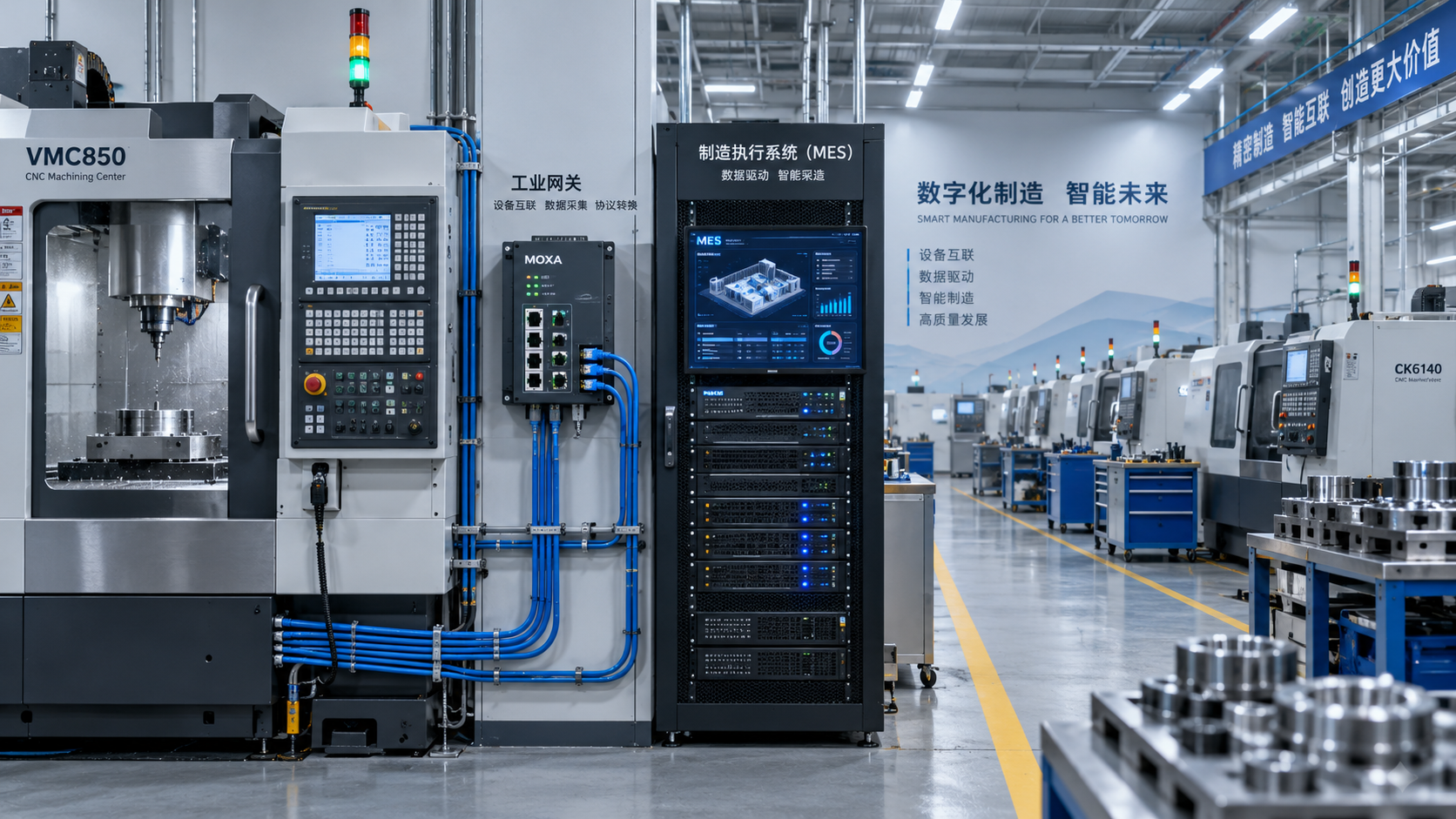
 Digital Manufacturing for Smart Factories: Connecting Legacy Machines to MESMachine Tool Industry Editorial Team
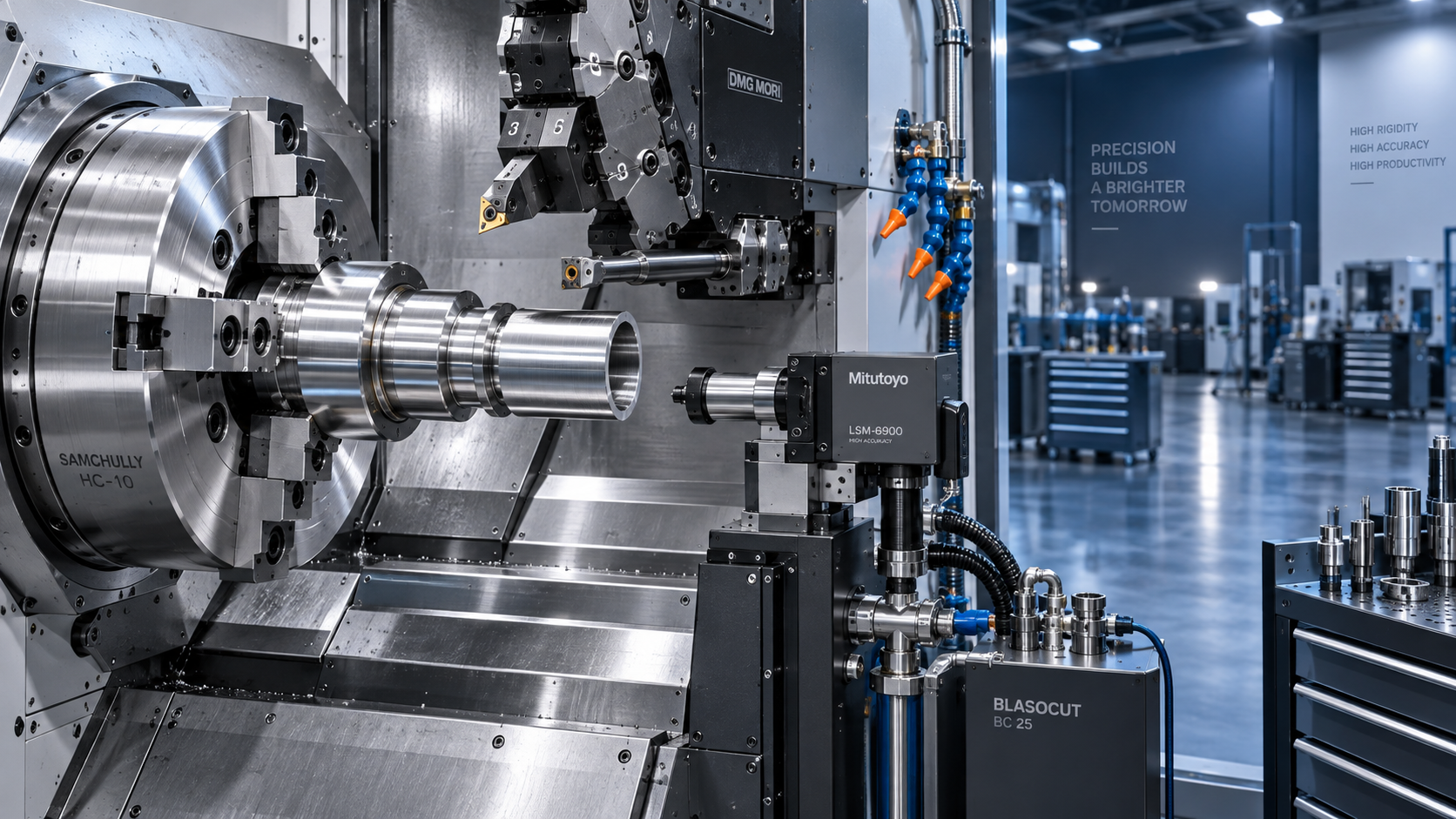
 How to Select a CNC Metal Lathe for Tight-Tolerance Shaft and Sleeve PartsCNC Machining Technology Center
 How to Select an Industrial Lathe for High-Volume Shaft ProductionMachine Tool Industry Editorial Team
 Selecting Machine Tools for Automotive Parts: Accuracy, Throughput, and AutomationMachine Tool Industry Editorial Team
 Industrial Machining: Selecting Processes for Tight-Tolerance Metal PartsCNC Machining Technology Center
 Manufacturing Technology Trends That Improve Throughput and Quality ControlManufacturing Market Research Center

Aris Katos
Future of Carbide Coatings
15+ years in precision manufacturing systems. Specialized in high-speed milling and aerospace grade alloy processing.
▶
Is Learning CNC Programming Worth It for Shop Owners Seeking Higher Margins?CNC Machining Technology Center▶
How to Select CNC Equipment for High-Mix, Low-Volume ProductionCNC Machining Technology Center▶
Can CNC Machining Inconel Control Tool Wear in High-Temperature Aerospace Parts?CNC Machining Technology Center▶
How Automated Precision Machining Maintains Tolerance in High-Mix ProductionCNC Machining Technology Center▶
CNC Programming Explained: From CAD Models to Reliable Shop-Floor ToolpathsCNC Machining Technology Center
Mastering 5-Axis Workholding Strategies
Join our technical panel on Nov 15th to learn about reducing vibrations in thin-wall components.

Providing you with integrated sanding solutions
Before-sales and after-sales services
Comprehensive technical support