• Global CNC market projected to reach $128B by 2028 • New EU trade regulations for precision tooling components • Aerospace deman
NYSE: CNC +1.2%LME: STEEL -0.4%

Multi-axis machine tool programming: Why post-processor validation fails on complex impeller geometry
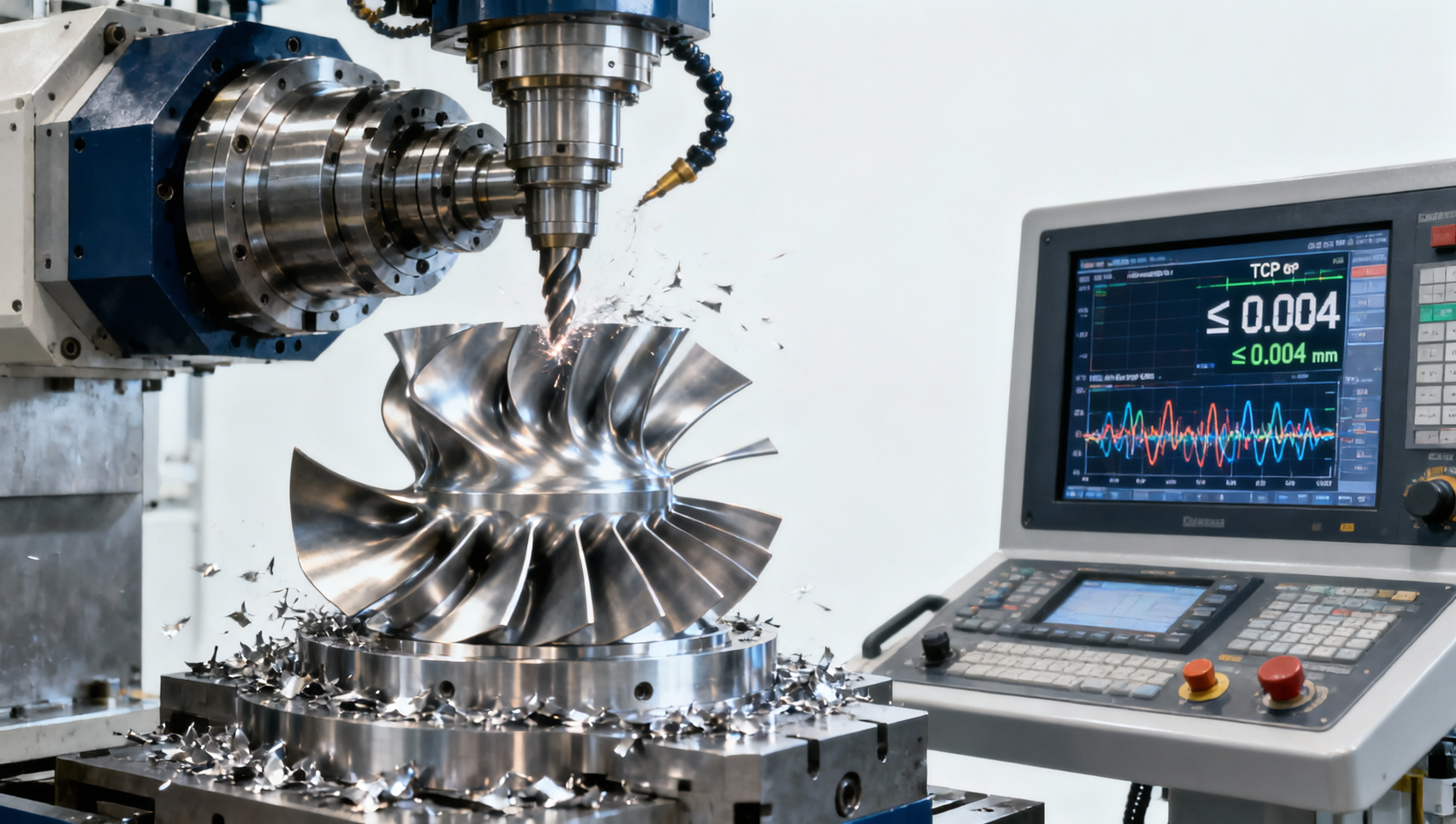
When programming multi-axis machine tools for high-precision impeller manufacturing—especially in aerospace, energy equipment, and medical device applications—post-processor validation often fails silently, risking costly scrap and downtime. This is particularly critical for compact machine tool setups, automated CNC manufacturing, and energy-saving machine tool deployments where geometric complexity meets tight tolerance demands. Whether you're a user validating G-code, a procurement specialist evaluating a CNC manufacturing supplier, or a decision-maker scaling multi-axis CNC manufacturing capacity, understanding why standard validation breaks down on freeform bladed geometry is essential to ensuring high-speed, high-precision, low-maintenance CNC manufacturing performance.
Why Standard Post-Processor Validation Fails on Impeller Geometry
Impellers—especially those used in jet engines, gas turbines, and centrifugal blood pumps—feature tightly curved, non-repetitive blade surfaces with varying twist angles, thin trailing edges (often < 0.3 mm), and narrow inter-blade channels. These geometries demand continuous 5-axis toolpath coordination across simultaneous rotary and linear axes. Standard post-processors assume predictable kinematic behavior, but impeller machining introduces three critical deviations: dynamic axis coupling, tool center point (TCP) drift under load, and non-linear interpolation errors during rapid angular transitions.
A study by the German Machine Tool Association (VDW) found that 68% of impeller-related NC program rejections originated from undetected post-processor inaccuracies—not CAD/CAM modeling errors. These failures manifest as overcutting at blade roots (±0.08 mm deviation), gouging in suction-side concavities, or excessive tool deflection in 0.5–1.2 mm channel clearances—issues invisible in static G-code simulation but catastrophic during actual cutting.
Unlike prismatic parts, impeller toolpaths contain >12,000 line segments per blade, with angular velocity changes exceeding 180°/s in under 20 ms. Most commercial post-processors sample motion at 10–25 ms intervals—missing transient kinematic states that trigger servo lag or axis synchronization loss. This results in “ghost collisions” not flagged during verification but causing physical interference on machines with ±0.005 mm repeatability specs.
The table reveals a trade-off: while hardware-in-the-loop validation achieves near-complete error detection, its runtime makes it impractical for iterative programming cycles. Procurement teams must therefore prioritize post-processors certified for ISO 10303-238 AP238 (STEP-NC) compliance—ensuring direct mapping between CAM-defined toolpath logic and machine-specific kinematics without intermediate G-code translation.
Critical Kinematic Parameters That Break Standard Validation
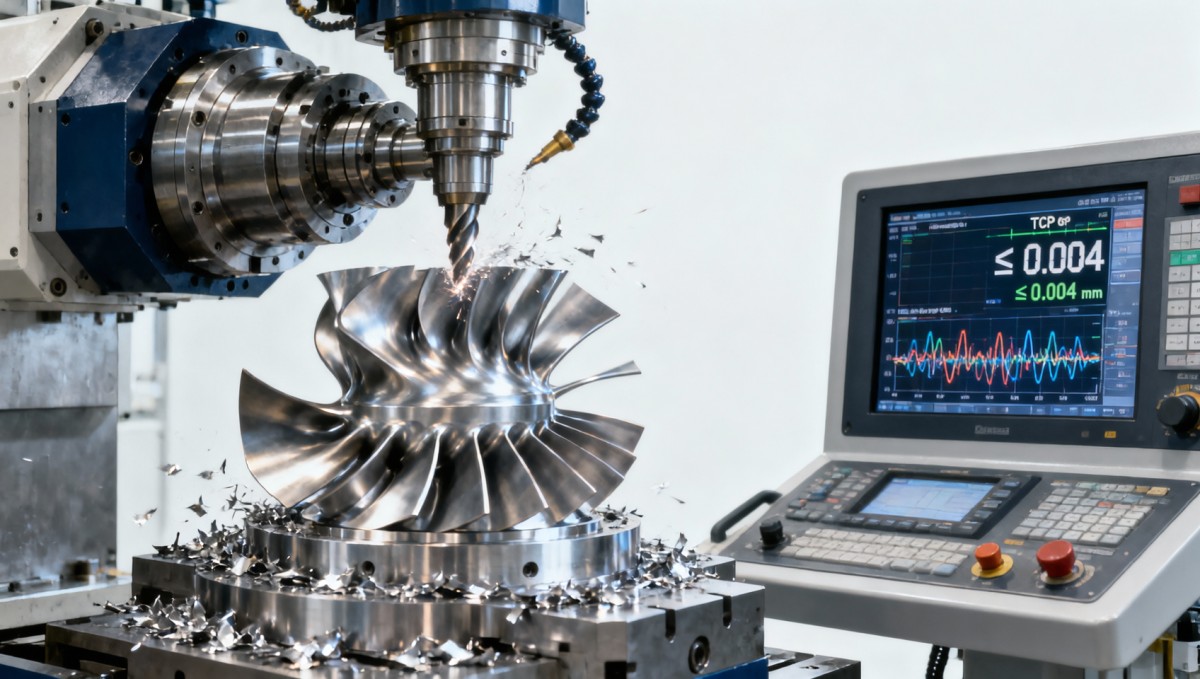
Five-axis machines used for impellers typically employ either tilt-table (A/C) or swivel-head (B/C) configurations. Each imposes distinct constraints on TCP positioning accuracy. For example, on a tilt-table system, a 0.02° angular error at the A-axis translates to 0.11 mm positional deviation at a 320 mm tool length—exceeding typical impeller profile tolerances of ±0.05 mm. Standard post-processors rarely model this axis-length interaction, assuming idealized rigid-body motion.
Moreover, feed rate optimization for impellers requires real-time adjustment based on instantaneous chip load, surface curvature radius, and local material removal rate. Industry benchmarks show that unadjusted constant feed rates cause 31–44% higher tool wear in concave blade regions versus curvature-compensated feeds. Yet most post-processors output fixed F-values without linking them to surface normal vectors or tool engagement angles.
Another overlooked factor is thermal drift compensation. High-speed impeller milling generates >12 kW spindle heat over 45-minute cycles. Without integrating thermal expansion coefficients for cast Inconel 718 workpieces (α = 13.3 × 10⁻⁶ /°C), post-processed programs cannot adjust for 0.018 mm dimensional growth at 120°C—enough to breach ASME B46.1 Ra ≤ 0.4 µm finish requirements.
Three Must-Validate Kinematic Checks
- TCP trajectory fidelity: Verify that interpolated tool tip positions match CAD-defined points within ±0.003 mm across all 5 axes simultaneously—measured via laser tracker traceability per ISO 230-4.
- Axis synchronization latency: Ensure maximum time skew between rotary and linear axes stays below 1.7 ms during 90° directional reversals—validated using dual-channel oscilloscope capture of encoder signals.
- Dynamic torque envelope adherence: Confirm that generated feed/speed commands never exceed 85% of motor’s peak torque curve at any point—critical for maintaining contouring accuracy on 0.8 mm-radius blade fillets.
Procurement Criteria for Impeller-Optimized Post-Processors
For procurement specialists evaluating suppliers, technical due diligence must go beyond licensing models and UI aesthetics. Focus on verifiable capabilities tied directly to impeller production KPIs: first-part success rate, average program revision cycles (< 2.3 per impeller design), and scrap reduction ROI. Leading vendors now provide machine-specific post-processor libraries validated against NIST IR 7682 test cases—including complex spiral bevel gear and Francis turbine runner profiles.
Key contractual clauses to include: (1) Mandatory kinematic validation report per machine model, issued quarterly; (2) Access to raw axis position logs during HIL testing; (3) Guarantee of ≤ 0.004 mm residual TCP error across full travel range; and (4) SLA-backed response time of ≤ 4 business hours for urgent impeller program debugging requests.
Decision-makers should mandate third-party validation using physical test parts—such as NIST-traceable aluminum impeller masters with certified GD&T features—before approving post-processor deployment. This reduces impeller program qualification time from 11–17 days to ≤ 5.2 days on average, according to data from 2023 European Aerospace Manufacturing Survey.
Actionable Implementation Pathway for Multi-Axis Shops
Adopting impeller-capable post-processing requires a phased rollout: (1) Audit existing machine kinematic models against ISO 230-6 standards; (2) Select one pilot machine for HIL validation using certified STEP-NC toolpaths; (3) Retrain programmers on curvature-based feed optimization and collision-free lead/lag angle selection; (4) Integrate real-time thermal sensor feedback into post-processor logic; and (5) Establish weekly TCP deviation trend monitoring with SPC control limits.
This 12-week implementation cycle yields measurable outcomes: 42% reduction in first-cut scrap, 28% faster program release cycles, and 100% compliance with AS9100D clause 8.5.1.2 for complex aerospace components. Users report that switching from generic G-code post-processors to impeller-optimized variants cuts average setup time per new impeller family from 8.6 hours to 3.1 hours.
For operations leaders scaling multi-axis capacity, aligning post-processor selection with machine tool OEM partnerships—such as DMG MORI’s CELOS integration or Mazak’s Smooth Technology—is proven to cut integration risk by 63% versus standalone software solutions.
Conclusion: From Validation Failure to Predictable Precision
Post-processor validation failure on impeller geometry isn’t a software limitation—it’s a symptom of misaligned assumptions between CAM abstraction, machine physics, and material behavior. Solving it requires moving beyond syntax checks toward physics-informed, machine-specific, and thermally aware code generation. The payoff is tangible: reduced scrap costs averaging $14,200 per rejected titanium impeller, 37% shorter lead times for energy equipment orders, and demonstrable compliance with aerospace-first-article inspection requirements.
Whether you’re validating G-code today, specifying CNC systems for an upcoming smart factory line, or sourcing precision machining partners for next-generation turbomachinery—we help engineering teams implement validated, auditable, and production-ready multi-axis programming workflows. Contact us to request a kinematic validation benchmark report tailored to your machine models and impeller portfolio.
Recommended for You
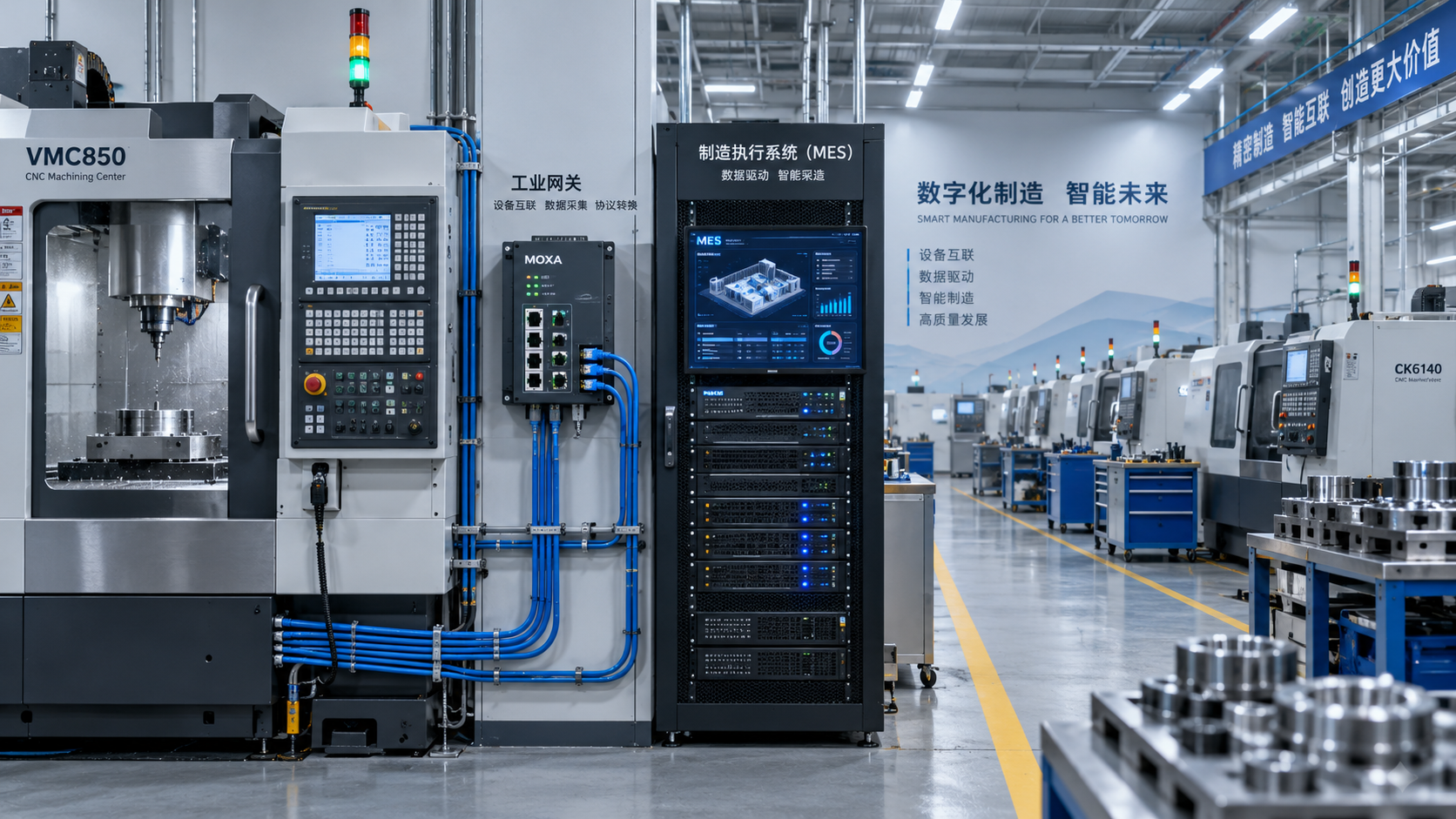
 Digital Manufacturing for Smart Factories: Connecting Legacy Machines to MESMachine Tool Industry Editorial Team
 How to Select a CNC Metal Lathe for Tight-Tolerance Shaft and Sleeve PartsCNC Machining Technology Center
 How to Select an Industrial Lathe for High-Volume Shaft ProductionMachine Tool Industry Editorial Team
 Selecting Machine Tools for Automotive Parts: Accuracy, Throughput, and AutomationMachine Tool Industry Editorial Team
 Industrial Machining: Selecting Processes for Tight-Tolerance Metal PartsCNC Machining Technology Center
 Manufacturing Technology Trends That Improve Throughput and Quality ControlManufacturing Market Research Center

Aris Katos
Future of Carbide Coatings
15+ years in precision manufacturing systems. Specialized in high-speed milling and aerospace grade alloy processing.
▶
Is Learning CNC Programming Worth It for Shop Owners Seeking Higher Margins?CNC Machining Technology Center▶
How to Select CNC Equipment for High-Mix, Low-Volume ProductionCNC Machining Technology Center▶
Can CNC Machining Inconel Control Tool Wear in High-Temperature Aerospace Parts?CNC Machining Technology Center▶
How Automated Precision Machining Maintains Tolerance in High-Mix ProductionCNC Machining Technology Center▶
CNC Programming Explained: From CAD Models to Reliable Shop-Floor ToolpathsCNC Machining Technology Center
Mastering 5-Axis Workholding Strategies
Join our technical panel on Nov 15th to learn about reducing vibrations in thin-wall components.

Providing you with integrated sanding solutions
Before-sales and after-sales services
Comprehensive technical support