• Global CNC market projected to reach $128B by 2028 • New EU trade regulations for precision tooling components • Aerospace deman
NYSE: CNC +1.2%LME: STEEL -0.4%

CNC Lathe Quick Installation Guide: How to Align, Wire, and Test a New Machine

This CNC Lathe Quick Installation Guide helps operators set up a new machine with confidence, covering the essential steps for alignment, wiring, and initial testing. Whether you are installing equipment in a busy workshop or preparing for first production, a correct setup is critical for accuracy, safety, and long-term performance.
For operators, maintenance teams, and workshop supervisors, the first 24 to 72 hours after delivery often determine how quickly a CNC lathe can move from installation to stable output. A rushed setup can lead to spindle vibration, axis deviation, electrical faults, and poor dimensional repeatability.
This guide focuses on practical installation steps used across precision manufacturing environments, including automotive parts production, energy components, electronics housings, and general metalworking. It explains how to align the machine base, connect power and support systems, and complete initial testing without overlooking the details that protect accuracy and service life.
Pre-Installation Checks Before the Machine Is Powered On
A reliable CNC Lathe Quick Installation Guide always begins before lifting, wiring, or leveling. Most installation delays come from site issues rather than machine defects. Floor condition, incoming voltage, coolant planning, and compressed air quality should be checked at least 1 to 3 days before the machine arrives.
Workshop Foundation and Space Requirements
The machine should be placed on a stable floor with adequate load-bearing capacity. For many mid-size CNC lathes, the total installed weight can range from 2,500 kg to 8,000 kg. Uneven concrete, weak expansion joints, or vibration from nearby presses can reduce machining consistency and shorten component life.
Leave enough service clearance on all sides. A common planning range is 800 mm to 1,200 mm for maintenance access, electrical cabinet opening, coolant tank removal, and chip conveyor cleaning. In crowded workshops, poor access often turns simple service work into a multi-hour shutdown.
Recommended site checklist
- Floor level variation ideally controlled within 3 mm across the installation zone
- Ambient temperature typically maintained between 10°C and 35°C
- Relative humidity preferably below 75% to reduce electrical moisture risk
- Stable lighting for panel reading, tool setting, and inspection work
- Safe path for forklift, crane, or roller movement during unloading
Power, Air, and Utility Preparation
Before installation, confirm the machine nameplate voltage, phase requirement, and total connected load. Many CNC lathes used in industrial production require 380V to 480V three-phase power, while smaller systems may use lower input values depending on market region and transformer setup.
Compressed air is also critical for chuck actuation, turret functions, lubrication systems, and protective air purge circuits. Typical air pressure demand is around 0.5 MPa to 0.8 MPa. Air that contains water, oil, or heavy particles can cause valves to stick and pneumatic seals to wear early.
The table below summarizes the most common workshop preparation points that should be confirmed before a new machine is unpacked and positioned.
If these items are confirmed early, installation time can often be reduced by several hours. More importantly, the operator can focus on machine readiness instead of troubleshooting site problems that should have been solved before delivery.
How to Align a New CNC Lathe Correctly
Alignment is one of the most important parts of any CNC Lathe Quick Installation Guide. Even a high-precision machine can lose performance if the bed twists during setup. Improper leveling affects axis motion, tailstock relation, cutting load distribution, and the surface finish of turned components.
Positioning and Rough Leveling
After the machine is placed on its foundation pads or leveling screws, remove transport locks according to the manufacturer’s instructions. Do not force axis movement before this step is complete. Use a precision level on the specified bed surfaces, not on cosmetic covers or chip guard panels.
A common sequence is front-to-back adjustment first, followed by left-to-right correction. Make changes in small increments, usually less than one-quarter turn per leveling point. After each adjustment, wait 2 to 3 minutes for the machine structure to settle before taking another reading.
Fine Alignment for Machining Accuracy
For many production environments, installers target a bed level tolerance within 0.02 mm/1000 mm to 0.04 mm/1000 mm, depending on machine size and application. Precision parts for aerospace, hydraulic systems, or bearing seats may require tighter control during commissioning.
Once the machine is level, check turret indexing, spindle rotation smoothness, and tailstock alignment if equipped. A short test cut on a mild steel or aluminum bar can reveal taper issues. If the diameter difference across a test length exceeds the acceptable range for the job, recheck leveling before changing offsets or suspecting software errors.
Alignment mistakes to avoid
- Leveling the machine before final floor contact is stable
- Ignoring temperature stabilization after moving the machine indoors
- Adjusting only one end of the bed and creating structural twist
- Using non-calibrated levels or measuring on painted surfaces
- Skipping a recheck after coolant filling or accessory installation
A practical rule is to reverify machine level after 8 to 24 hours, especially for heavier lathes. Machine mass, floor compression, and utility hose tension can slightly change the final position after initial setup.
Wiring the Machine Safely and Efficiently
Electrical work in a CNC Lathe Quick Installation Guide must be handled carefully because control systems, servo drives, spindle inverters, and safety circuits all depend on clean and correct connections. A wiring error may not only stop production but also damage expensive electrical components.
Main Power Connection
Confirm that the disconnect switch is locked out before connecting the incoming cable. Match phase sequence, grounding points, cable size, and protective breaker settings to the machine documentation. In many facilities, a dedicated power line is preferred to reduce interference from welding units, compressors, or stamping equipment.
Grounding should never be treated as a secondary step. Poor earthing can cause unstable control signals, communication alarms, and greater sensitivity to electrical noise. For digitally integrated workshops using automation interfaces or robot loading, reliable grounding becomes even more important.
Secondary Connections and Support Systems
After main power, connect the supporting utilities in a controlled sequence. These may include coolant pumps, hydraulic units, lubrication modules, chip conveyors, bar feeders, mist collectors, and signal cables to upstream or downstream equipment. Labeling cables during installation saves time during future troubleshooting.
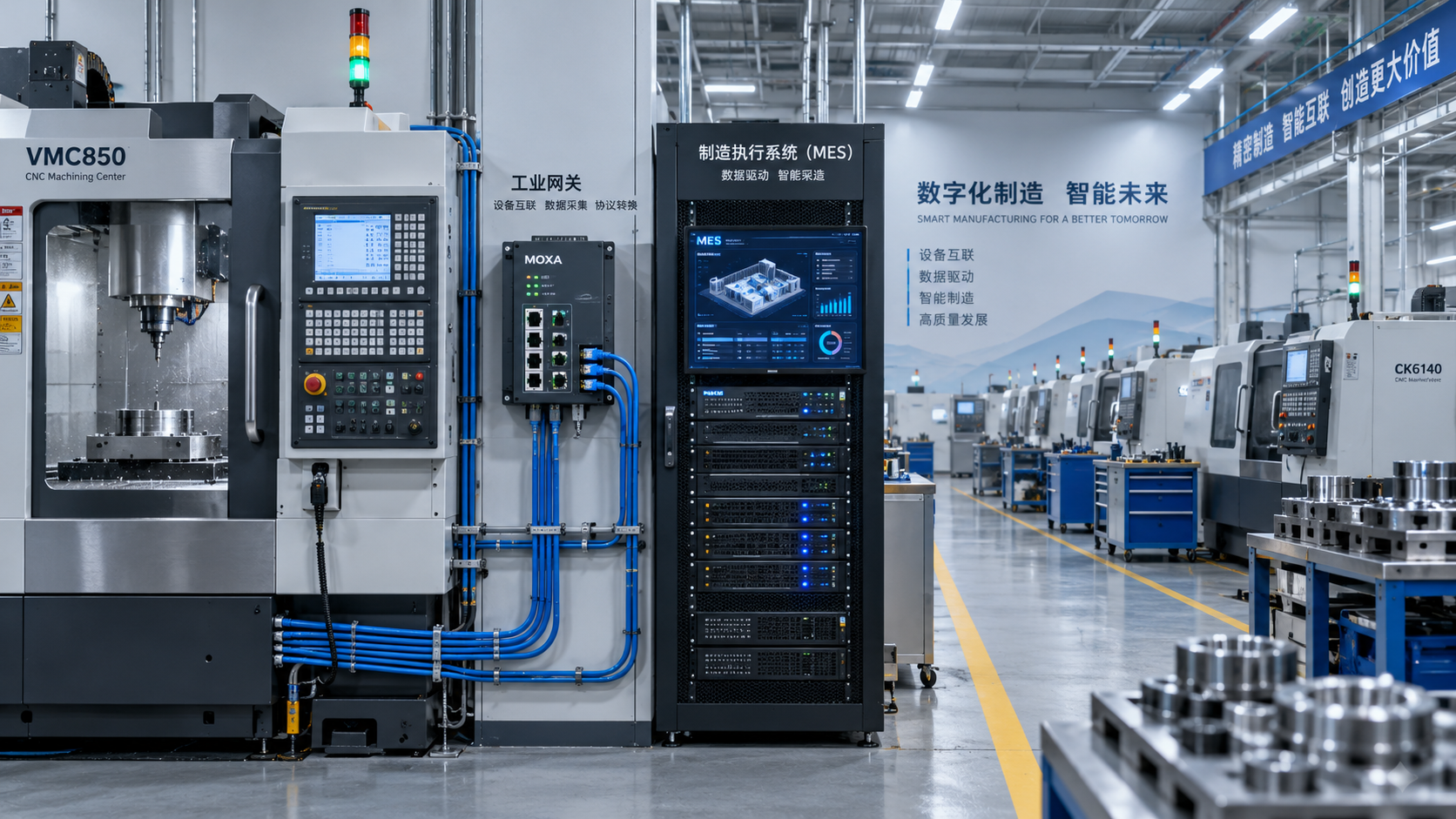
If the machine is part of a flexible production line, verify I/O mapping before the first startup. A single incorrect signal on door interlock, chuck clamp confirmation, or cycle-ready output can stop integration with gantry loaders or robot cells.
The following table outlines the core electrical and utility checks that operators and technicians should complete before pressing the main power button.
Completing these checks methodically reduces the risk of startup alarms and protects components that are costly to replace. In B2B manufacturing operations, preventing even one day of installation delay can have a meaningful effect on scheduling and delivery commitments.
Initial Startup and Functional Testing
Once alignment and wiring are complete, the next phase of this CNC Lathe Quick Installation Guide is controlled startup. The goal is not simply to turn the machine on, but to confirm that motion, lubrication, safety interlocks, and cutting functions perform in the correct order.
First Power-On Sequence
Start with a visual inspection of guards, cable routing, hydraulic oil level, coolant level, and lubrication reservoir. Power on the control and allow the system to complete its diagnostics. Many machines need several minutes for control boot, servo ready status, and reference return preparation.
Return each axis to reference position at low speed. Listen for abnormal sounds from the linear guides, ball screws, turret mechanism, or spindle motor. Operators should also verify emergency stop response, door switch logic, chuck clamp confirmation, and lubrication cycle indicators before any tool touches material.
Dry Run and Test Cutting
A dry run should be completed before live cutting. Execute a simple program with no workpiece to confirm axis direction, turret indexing, feed behavior, and spindle commands. Use reduced rapid override, often 25% to 50%, during the first run to limit the impact of unexpected motion.
For the first cut, use a standard material and a simple geometry such as facing and straight turning. Measure diameter, taper, roundness, and surface finish. Repeat the same cycle 3 to 5 times to assess basic repeatability. This is especially important when the machine will be used for batch production of shafts, sleeves, connectors, or precision threaded parts.
Core acceptance points after startup
- No unexplained alarm history after initial homing and basic movement
- Stable spindle acceleration and deceleration across low and medium speed ranges
- Normal lubrication delivery within the programmed cycle interval
- Consistent chuck clamping and release action
- Repeatable dimensions across several trial parts
Common Installation Problems and Fast Corrections
Even with a strong CNC Lathe Quick Installation Guide, some issues may appear during the first shift or first week. Fast diagnosis helps operators protect machine accuracy and avoid blaming cutting tools, programs, or raw material when the root cause is still installation related.
Typical Symptoms During Early Operation
If the machine produces taper on straight turning, the first checkpoints are leveling, foundation stability, and tailstock condition. If alarms appear during turret motion or chuck action, check air pressure, wiring terminals, and sensor confirmation. If surface finish changes between parts, inspect spindle load variation, tool clamping, and bed twist.
Another common issue is thermal drift during long cycles. In shops with large temperature swings, dimensional variation may increase after 1 to 2 hours of continuous running. Warming up the spindle and axes before precision production can reduce this effect.
Operator Response Priorities
- Stop production if a safety interlock, clamp signal, or lubrication alarm appears
- Record the alarm code, machine state, and recent command sequence
- Check simple physical causes first: pressure, oil level, loose connectors, obstruction
- Reconfirm level and test cut results before changing multiple parameters
- Escalate to service support when electrical faults repeat or motion behavior is unclear
This disciplined approach prevents unnecessary downtime and reduces the risk of creating new problems while trying to solve the original one. In production workshops where one machine supports multiple part numbers, a structured response process is often more valuable than a quick guess.
How to Keep the Machine Stable After Installation
Installation is only complete when the CNC lathe performs consistently over time. The first 7 to 30 days should include follow-up checks on level, electrical tightness, lubrication delivery, and machining repeatability. This post-installation period is where many workshops either secure long-term stability or drift into recurring accuracy complaints.
Early Maintenance Routine
Inspect coolant concentration, chip evacuation, hydraulic level, and air filter condition daily during the startup phase. Recheck anchor points and cable strain after several production cycles. Fine metal chips, coolant mist, and floor vibration can expose small issues that were not visible on installation day.
Operators should also maintain a basic startup log for at least the first 2 weeks. Record spindle warm-up time, alarm history, test cut measurements, and any unusual sound or temperature rise. This simple record helps maintenance teams identify trends before they become failures.
When to Request Technical Support
Request support if repeatability shifts continue after releveling, if electrical alarms return under normal load, or if pneumatic and hydraulic actions remain inconsistent after supply checks. Precision manufacturing depends on machine stability, and delaying support can increase scrap, tool wear, and missed delivery dates.
A well-executed CNC Lathe Quick Installation Guide reduces startup risk, but ongoing technical communication remains important when the machine is integrated into automated production lines, robotic loading cells, or multi-machine workshops with demanding cycle-time targets.
Correct alignment, safe wiring, and disciplined testing create the foundation for reliable CNC lathe performance. For operators and production teams, these steps directly affect accuracy, safety, machine life, and the speed of moving from delivery to qualified parts. If you are preparing to install a new CNC lathe or upgrade your workshop with precision turning equipment, contact us now to get a tailored setup plan, discuss technical details, or explore more machine tool solutions for your production needs.
Recommended for You
 Digital Manufacturing for Smart Factories: Connecting Legacy Machines to MESMachine Tool Industry Editorial Team
 How to Select a CNC Metal Lathe for Tight-Tolerance Shaft and Sleeve PartsCNC Machining Technology Center
 How to Select an Industrial Lathe for High-Volume Shaft ProductionMachine Tool Industry Editorial Team
 Selecting Machine Tools for Automotive Parts: Accuracy, Throughput, and AutomationMachine Tool Industry Editorial Team
 Industrial Machining: Selecting Processes for Tight-Tolerance Metal PartsCNC Machining Technology Center
 Manufacturing Technology Trends That Improve Throughput and Quality ControlManufacturing Market Research Center



Aris Katos
Future of Carbide Coatings
15+ years in precision manufacturing systems. Specialized in high-speed milling and aerospace grade alloy processing.
▶
CNC Machine Arrival Inspection: Check Shipping Damage, Accuracy, Safety, and DocumentsCNC Machining Technology Center▶
What Should You Check When a CNC Machine Arrives at Your Factory?CNC Machining Technology Center▶
What Safety Checks Are Required for CNC Cutting Operations?CNC Machining Technology Center▶
What Are Machine Tools? Common Types, Functions, and Typical Shop ApplicationsCNC Machining Technology Center▶
CNC Industrial Machines Maintenance Checklist: How to Reduce Downtime and Tool WearCNC Machining Technology Center
Mastering 5-Axis Workholding Strategies
Join our technical panel on Nov 15th to learn about reducing vibrations in thin-wall components.

Providing you with integrated sanding solutions
Before-sales and after-sales services
Comprehensive technical support