• Global CNC market projected to reach $128B by 2028 • New EU trade regulations for precision tooling components • Aerospace deman
NYSE: CNC +1.2%LME: STEEL -0.4%

What Is a Compact Machine Tool Best For? Shop Floor Applications and Limits
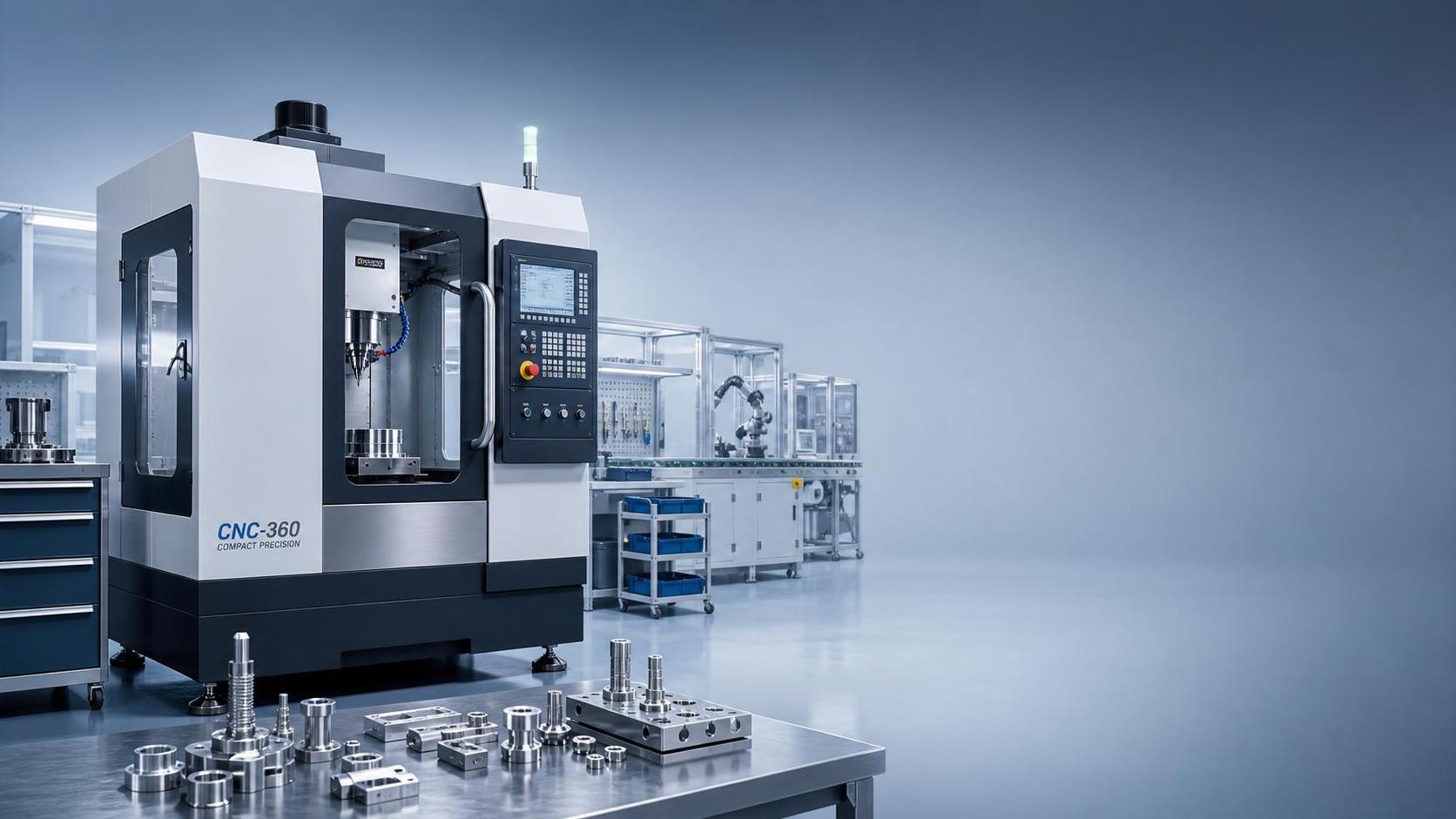
A compact machine tool makes the most sense when production needs are real, but floor space, budget, or part size do not justify a full-scale machine. Its value is easier to see on the shop floor than in a catalog.
In today’s CNC environment, where automation, precision, and flexible manufacturing continue to shape investment decisions, the compact machine tool has become a practical option for many operations.
It is not a universal replacement for larger machining systems. Still, it can solve specific production problems with surprising efficiency, especially in prototyping, secondary operations, and small-part work.
Where a compact machine tool fits in modern manufacturing
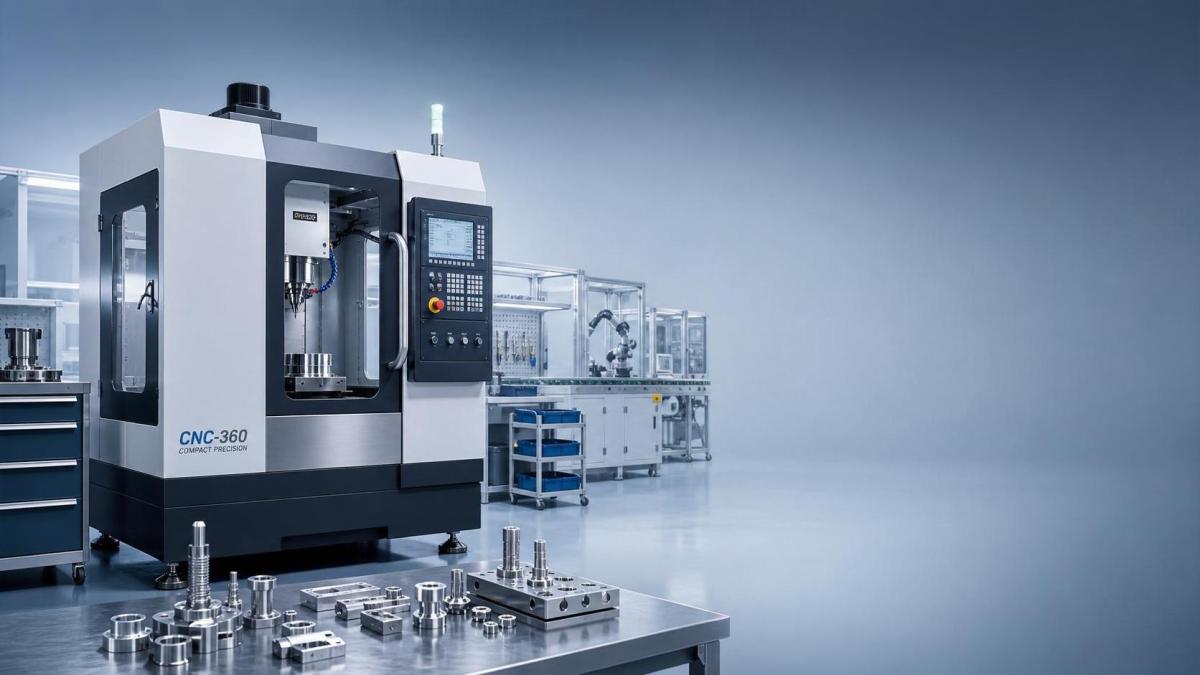
Machine tool development has been moving toward higher accuracy, digital integration, and flexible output. That shift matters because not every production task needs a large machining center or a heavy-duty turning platform.
A compact machine tool usually refers to a CNC lathe, mill, machining center, or hybrid unit with a smaller footprint, lighter structure, and more focused working envelope.
The key point is not just size. It is how efficiently the machine supports a certain mix of part dimensions, volumes, and process complexity.
That matters across industries. Electronics, medical components, precision hardware, automotive subcomponents, and energy-related suppliers often run work that benefits from compact equipment in targeted areas.
As smart factories expand, many facilities also need distributed machining capacity. A compact machine tool can be easier to place near inspection, assembly, or cell-based production lines.
What a compact machine tool is best for
The best applications are usually defined by constraints. Limited space, quick changeovers, smaller parts, and frequent job variation often create the strongest case.
Tight floor space
Some facilities cannot expand easily. In those cases, the compact machine tool offers productive capacity without major layout changes or new building investment.
This is especially relevant in mature factories, urban production sites, and workshops balancing machining with inspection, storage, and light assembly.
Small-batch and mixed production
When order sizes vary, a large machine can become underused. A compact machine tool often gives better economics for short runs and mixed part schedules.
Setup time, fixture simplicity, and operator accessibility may matter more than maximum metal removal rate in this context.
Prototyping and process development
Prototype work rarely follows the rhythm of volume production. A compact machine tool can support testing, design changes, and trial cutting without disrupting larger production assets.
It is also useful when validating tooling paths, tolerance strategies, or fixture concepts before scaling to larger platforms.
Secondary operations
Not every part needs a full machining cycle on the main production machine. Deburring, finishing cuts, spot drilling, reworking, or adding minor features can often be handled more efficiently elsewhere.
That is where a compact machine tool can reduce bottlenecks and protect primary equipment for higher-value operations.
Precision work on smaller parts
Smaller machines can be well suited to smaller components. Shorter travels and a tighter work zone may support stable, repeatable results when the workpiece size is modest.
This can be relevant for connectors, housings, bushings, miniature shafts, sensor parts, and precision inserts.
Why the topic matters now
The global machine tool industry is changing in ways that make equipment right-sizing more important. Higher energy costs, labor pressure, and automation goals have shifted attention from sheer machine size to overall process fit.
In parallel, suppliers across China, Germany, Japan, and South Korea continue to expand compact CNC options with better controls, smarter monitoring, and more consistent precision.
That means the compact machine tool is no longer only a workshop solution. It can be part of digital manufacturing, flexible cells, and globally competitive production strategies.
It also reflects a broader trend in precision manufacturing: matching machine capability to actual process need, rather than overbuying capacity that remains idle.
Typical shop floor scenarios
In practice, the strongest use cases are specific. The table below shows where a compact machine tool often performs well and where caution is needed.
The limits that should not be ignored
A compact machine tool creates value when expectations are realistic. Problems usually appear when it is asked to perform like a larger, more rigid production system.
Work envelope and part size
This is the most obvious limit. Travel range, swing, and table capacity can quickly rule out larger structural parts or long shafts.
Rigidity and material removal
A compact machine tool may struggle with aggressive cutting in hard materials or heavy roughing cycles. Lower mass can affect vibration behavior and surface finish under demanding loads.
Tool capacity and automation depth
Some compact platforms have fewer tool stations, smaller magazines, or reduced integration options. For multi-process parts, this can increase changeovers or require external support.
Thermal stability over long cycles
For ultra-tight tolerances across extended runs, thermal control, machine structure, and environmental conditions become more critical. Not every compact machine tool is designed for that level of consistency.
How to judge whether it is the right choice
The most useful evaluation starts with the process, not the brochure. A compact machine tool should be judged by fit, not by its smallest footprint alone.
- Check actual part dimensions, not average dimensions.
- Review material type, roughing load, and spindle demand.
- Map setup frequency and tool change requirements.
- Consider whether the machine supports inspection, automation, or data integration goals.
- Compare total floor-space value, including operator access and material flow.
- Assess whether the machine fills a bottleneck or simply duplicates existing capacity.
This approach is especially important in shops adding robotics, flexible cells, or digital production tracking. A compact machine tool should fit the process chain, not sit outside it.
A practical way to move forward
The question is not whether a compact machine tool is better than a large machine. The better question is whether it solves the right production problem at the right scale.
A clear next step is to sort current work by part size, batch pattern, setup burden, and machine congestion. That often reveals where compact equipment can add measurable value.
After that, compare candidate machines against real jobs, tooling needs, and layout constraints. In many cases, the best answer appears when application limits are viewed as carefully as application benefits.
For anyone tracking CNC machining, precision manufacturing, and shop floor strategy, that balance is what makes the compact machine tool worth serious attention.
Recommended for You
 Digital Manufacturing for Smart Factories: Connecting Legacy Machines to MESMachine Tool Industry Editorial Team
 How to Select a CNC Metal Lathe for Tight-Tolerance Shaft and Sleeve PartsCNC Machining Technology Center
 How to Select an Industrial Lathe for High-Volume Shaft ProductionMachine Tool Industry Editorial Team
 Selecting Machine Tools for Automotive Parts: Accuracy, Throughput, and AutomationMachine Tool Industry Editorial Team
 Industrial Machining: Selecting Processes for Tight-Tolerance Metal PartsCNC Machining Technology Center
 Manufacturing Technology Trends That Improve Throughput and Quality ControlManufacturing Market Research Center

Aris Katos
Future of Carbide Coatings
15+ years in precision manufacturing systems. Specialized in high-speed milling and aerospace grade alloy processing.
▶
CNC Machine Arrival Inspection: Check Shipping Damage, Accuracy, Safety, and DocumentsCNC Machining Technology Center▶
What Should You Check When a CNC Machine Arrives at Your Factory?CNC Machining Technology Center▶
What Safety Checks Are Required for CNC Cutting Operations?CNC Machining Technology Center▶
What Are Machine Tools? Common Types, Functions, and Typical Shop ApplicationsCNC Machining Technology Center▶
CNC Industrial Machines Maintenance Checklist: How to Reduce Downtime and Tool WearCNC Machining Technology Center
Mastering 5-Axis Workholding Strategies
Join our technical panel on Nov 15th to learn about reducing vibrations in thin-wall components.

Providing you with integrated sanding solutions
Before-sales and after-sales services
Comprehensive technical support