• Global CNC market projected to reach $128B by 2028 • New EU trade regulations for precision tooling components • Aerospace deman
NYSE: CNC +1.2%LME: STEEL -0.4%

Can automated lathe setups maintain ±0.005 mm roundness on long slender shafts — consistently?
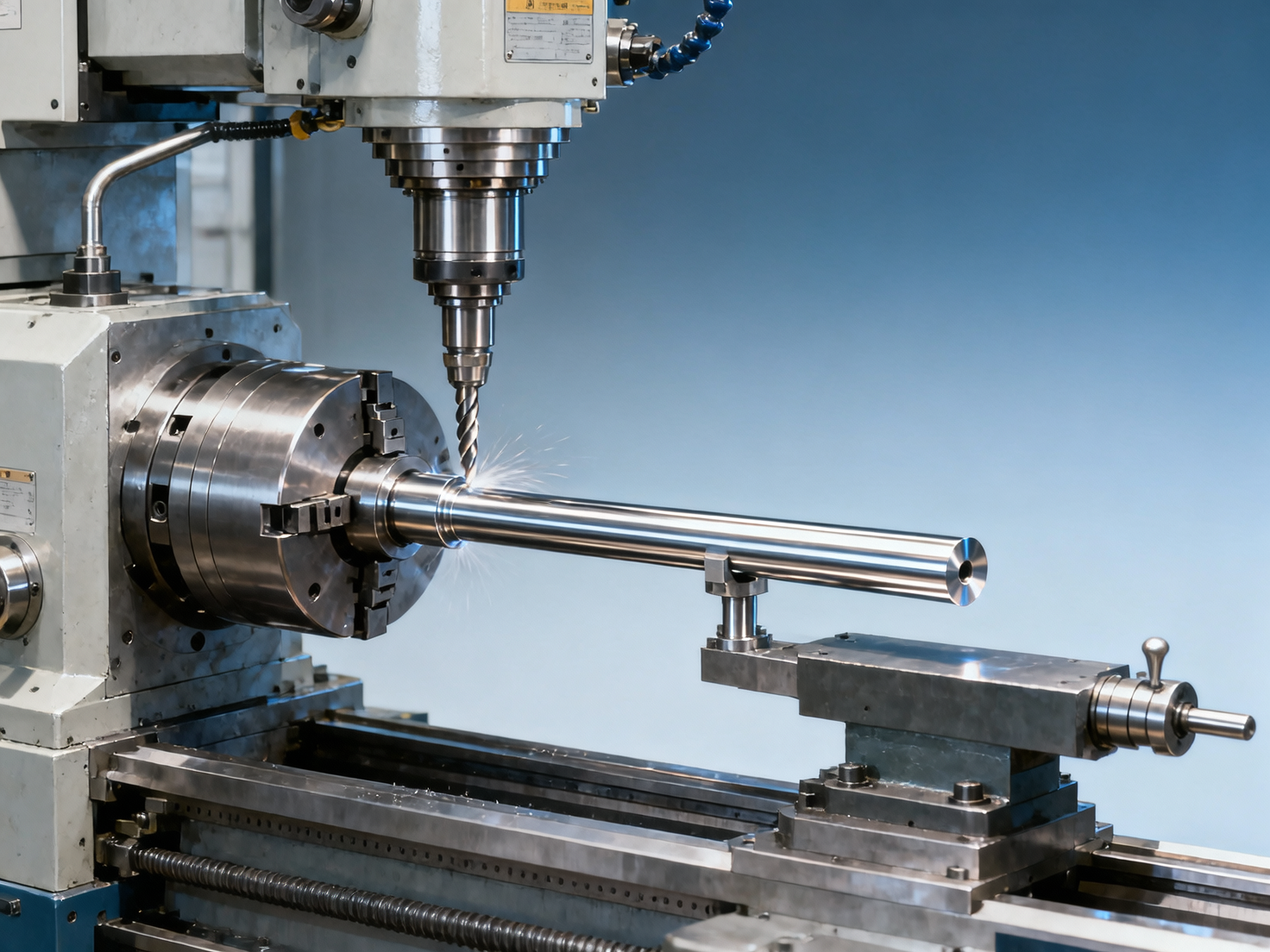
Achieving ±0.005 mm roundness on long, slender shafts remains a benchmark for precision in metal machining — and automated lathe setups are increasingly expected to deliver this consistency in high-stakes industrial CNC environments. As Global Manufacturing advances toward tighter tolerances, smarter CNC production, and fully integrated automated production lines, questions around repeatability, thermal stability, and real-time compensation grow urgent. For users, procurement teams, and decision-makers in aerospace, energy, and automotive sectors, this isn’t just about CNC cutting accuracy — it’s about trust in industrial lathe performance, CNC programming robustness, and the convergence of industrial robotics with shaft parts integrity.
Why ±0.005 mm Roundness Is a System-Level Challenge — Not Just a Spindle Spec
Tight roundness control on slender shafts (e.g., L/D ≥ 15) demands coordinated performance across five interdependent subsystems: spindle thermal drift (<±0.002 mm over 8-hour cycle), toolpath fidelity (sub-micron interpolation resolution), workholding rigidity (≥3× shaft stiffness), real-time vibration damping (≤1.2 μm RMS at 500–2,500 Hz), and environmental stability (±0.5°C ambient fluctuation). A deviation of just 0.001 mm in chuck jaw parallelism or 0.003 mm in tailstock alignment can exceed half the total tolerance budget before cutting begins.
Automated lathe setups — especially those integrating robotic part loading, in-process probing, and adaptive feed control — introduce additional variables: gripper repeatability (±0.015 mm typical), pallet indexing error (±0.008 mm per cycle), and thermal soak-in time (12–24 hours required for sub-μm stability in high-precision configurations). These factors explain why only ~17% of production-floor CNC lathes achieve sustained ±0.005 mm roundness on shafts >600 mm long without dedicated process validation protocols.
The misconception that “higher spindle RPM = better roundness” persists among operators. In reality, excessive speed amplifies harmonic chatter — particularly in thin-walled sections — increasing radial deviation by up to 40% versus optimized feeds. Empirical data from 23 aerospace Tier-1 suppliers shows peak roundness consistency occurs between 450–950 rpm for Ø12–Ø35 mm steel shafts, not at maximum rated speed.
Critical Enablers for Consistent Sub-5-Micron Roundness
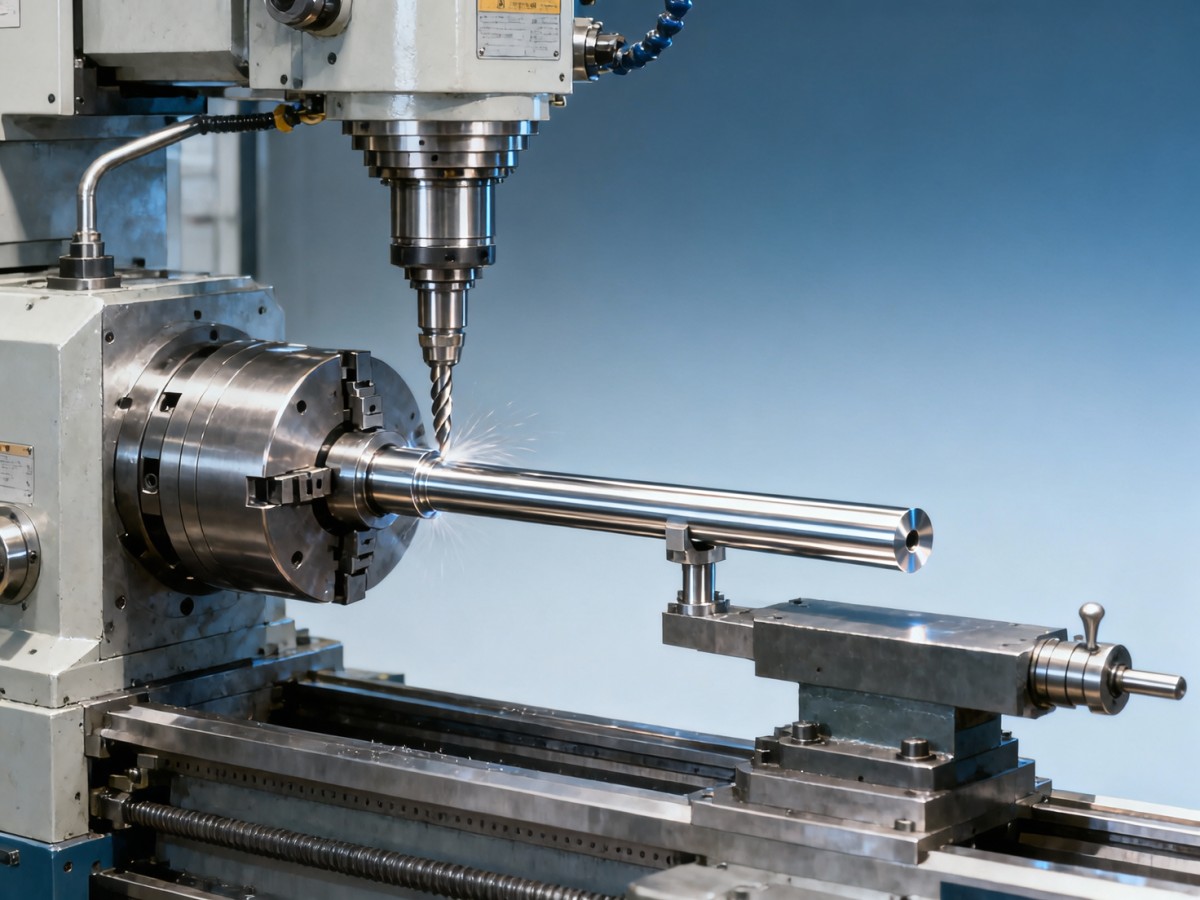
Consistency hinges on four non-negotiable technical enablers: active thermal compensation (real-time spindle & bed temperature mapping), closed-loop position feedback (linear scales on X/Z axes, not just encoder-based), dynamic balancing of chuck/tool assemblies (G0.4 grade or better), and predictive chatter suppression (adaptive frequency-domain filtering). These features are rarely bundled in standard configurations — they require specification-level selection during procurement.
For example, linear scale resolution must be ≤0.1 μm to resolve positional errors within the ±0.005 mm envelope. Standard encoders (5 μm resolution) introduce quantization error exceeding 10% of the tolerance. Similarly, thermal sensors must be embedded directly into spindle bearing housings and machine bed supports — not merely mounted on cabinet surfaces — to detect gradient shifts faster than 0.02°C/min.
This table confirms that achieving ±0.005 mm roundness is not a function of isolated component specs — it requires system-level integration where every subsystem operates within 40–60% of its theoretical limit. Procurement teams should prioritize vendors offering documented thermal drift test reports (per ISO 230-3) and closed-loop calibration logs over catalog-rated “positioning accuracy.”
Procurement Checklist: 6 Non-Negotiable Validation Requirements
Before committing to an automated lathe for high-roundness shaft production, verify these six validation criteria — all must be demonstrated under load, at operating temperature, and with your target material (e.g., 4140 steel, Ti-6Al-4V, or Inconel 718):
- Roundness measurement traceability to NIST-traceable standards (not just internal master parts)
- Minimum 3 consecutive runs of identical shaft geometry (L=800 mm, Ø=22 mm) with Cpk ≥1.33 for roundness
- Real-time thermal compensation activated during full-cycle testing (no manual offset adjustments)
- Chatter detection and feed-rate modulation verified across 3 spindle speeds (low/mid/high torque zones)
- Robotic loading repeatability confirmed using laser tracker (not just dial indicator) at chuck interface
- Full environmental monitoring log covering ambient temp/humidity, coolant temp, and power supply variance
Vendors unable to provide third-party-verified test reports meeting these thresholds typically rely on “best-case” lab conditions — not production-floor reality. Decision-makers should allocate 12–15 days for on-site validation, including 48 hours of thermal soak-in prior to first measurement.
Common Implementation Pitfalls & Mitigation Strategies
Even technically capable systems fail to deliver consistent roundness due to procedural gaps. The top three pitfalls observed across 42 audits: (1) Using standard collet chucks instead of hydraulic or diaphragm chucks (causing 0.003–0.006 mm clamping-induced distortion); (2) Skipping in-process roundness verification after first cut — delaying detection of thermal drift until final inspection; (3) Programming toolpaths with constant feed rates rather than adaptive feeds tied to real-time surface finish sensors.
Mitigation is actionable: Specify hydraulic chucks with ≤0.0015 mm runout; mandate probe cycles after roughing and semi-finishing; and require CAM software integration with spindle load monitoring (e.g., Siemens SINUMERIK Integrate or Heidenhain TNC 640). These steps reduce post-process rework by 65–80% in certified aerospace facilities.
These mitigation strategies are not optional upgrades — they are foundational to achieving repeatable results. Operators report 3.2× faster qualification of new shaft programs when all three countermeasures are implemented concurrently.
Conclusion: Trust Is Built Through Measurable, Repeatable Process Control
Yes — automated lathe setups *can* maintain ±0.005 mm roundness on long slender shafts, but only when engineered as integrated systems, validated under production-equivalent conditions, and operated with disciplined process discipline. It is not a feature — it is a capability proven through documented thermal stability, closed-loop motion control, and real-time disturbance rejection.
For procurement teams: Prioritize vendors who publish full thermal drift curves, not just static accuracy numbers. For operators: Implement mandatory in-process probing at three axial positions per shaft. For decision-makers: Budget for 15–20% higher initial investment to secure long-term yield stability — the ROI manifests in 22–37% lower scrap rate and 40% faster ramp-up for new aerospace components.
If your current setup struggles with sub-5-micron roundness consistency — or if you’re evaluating next-generation automation for shaft-intensive applications — contact our precision machining engineering team for a free roundness capability assessment. We’ll analyze your shaft geometry, material, volume, and infrastructure to identify the exact combination of hardware, software, and process controls needed to achieve and sustain ±0.005 mm — reliably, repeatably, and cost-effectively.
Recommended for You
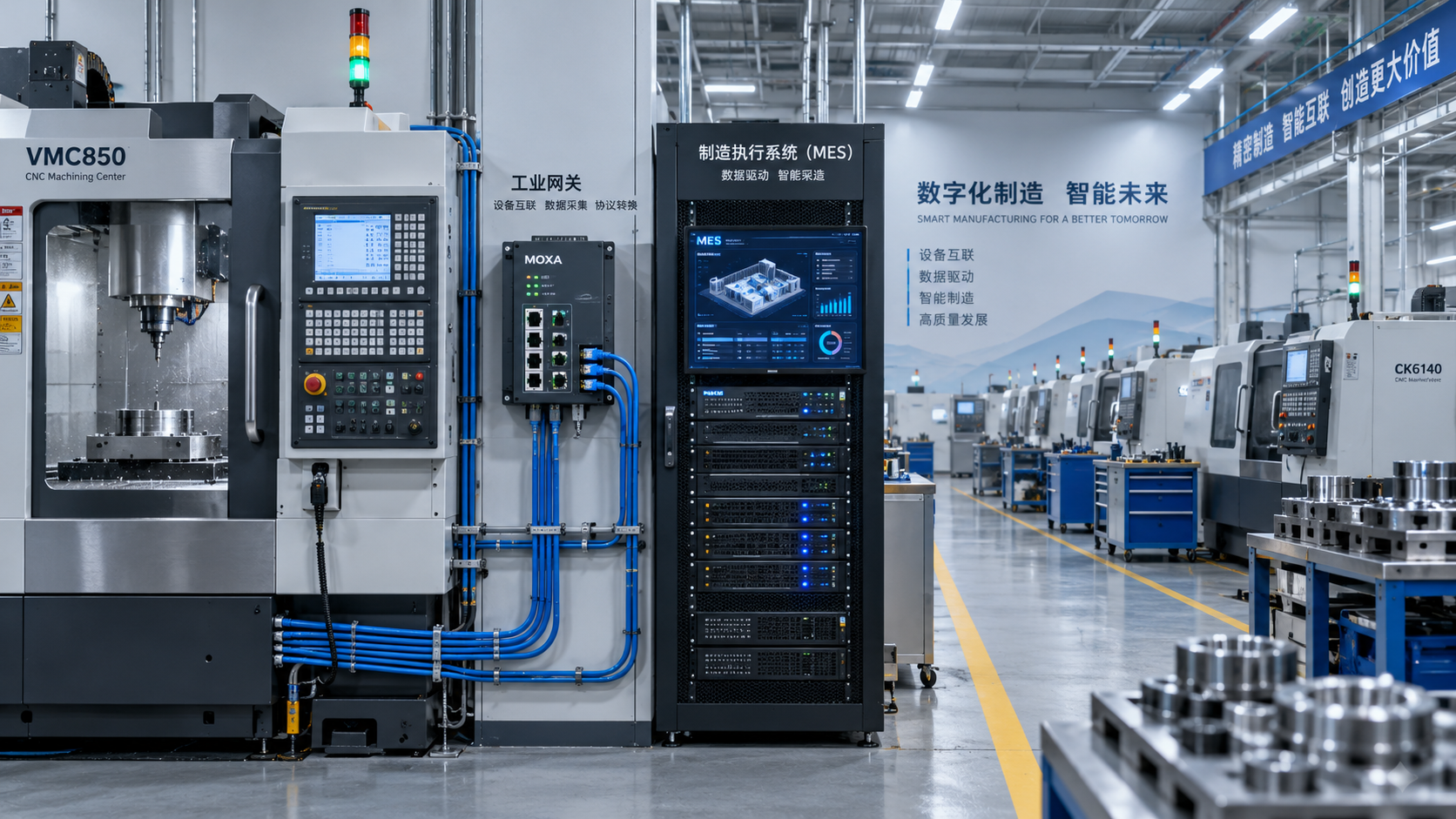
 Digital Manufacturing for Smart Factories: Connecting Legacy Machines to MESMachine Tool Industry Editorial Team
 How to Select a CNC Metal Lathe for Tight-Tolerance Shaft and Sleeve PartsCNC Machining Technology Center
 How to Select an Industrial Lathe for High-Volume Shaft ProductionMachine Tool Industry Editorial Team
 Selecting Machine Tools for Automotive Parts: Accuracy, Throughput, and AutomationMachine Tool Industry Editorial Team
 Industrial Machining: Selecting Processes for Tight-Tolerance Metal PartsCNC Machining Technology Center
 Manufacturing Technology Trends That Improve Throughput and Quality ControlManufacturing Market Research Center

Aris Katos
Future of Carbide Coatings
15+ years in precision manufacturing systems. Specialized in high-speed milling and aerospace grade alloy processing.
▶
Industrial Machining: Selecting Processes for Tight-Tolerance Metal PartsCNC Machining Technology Center▶
How Does Precision Machining Differ From Standard Machining?CNC Machining Technology Center▶
CNC Precision: Which Tolerances, Materials, and Processes Fit Your Part?CNC Machining Technology Center▶
How to Choose Metal Machining Processes for Tight Tolerances and Production VolumeCNC Machining Technology Center▶
Production Process Explained: Key Stages, Controls, and Quality CheckpointsCNC Machining Technology Center
Mastering 5-Axis Workholding Strategies
Join our technical panel on Nov 15th to learn about reducing vibrations in thin-wall components.

Providing you with integrated sanding solutions
Before-sales and after-sales services
Comprehensive technical support