• Global CNC market projected to reach $128B by 2028 • New EU trade regulations for precision tooling components • Aerospace deman
NYSE: CNC +1.2%LME: STEEL -0.4%

What slows metal machining even when machines look busy?
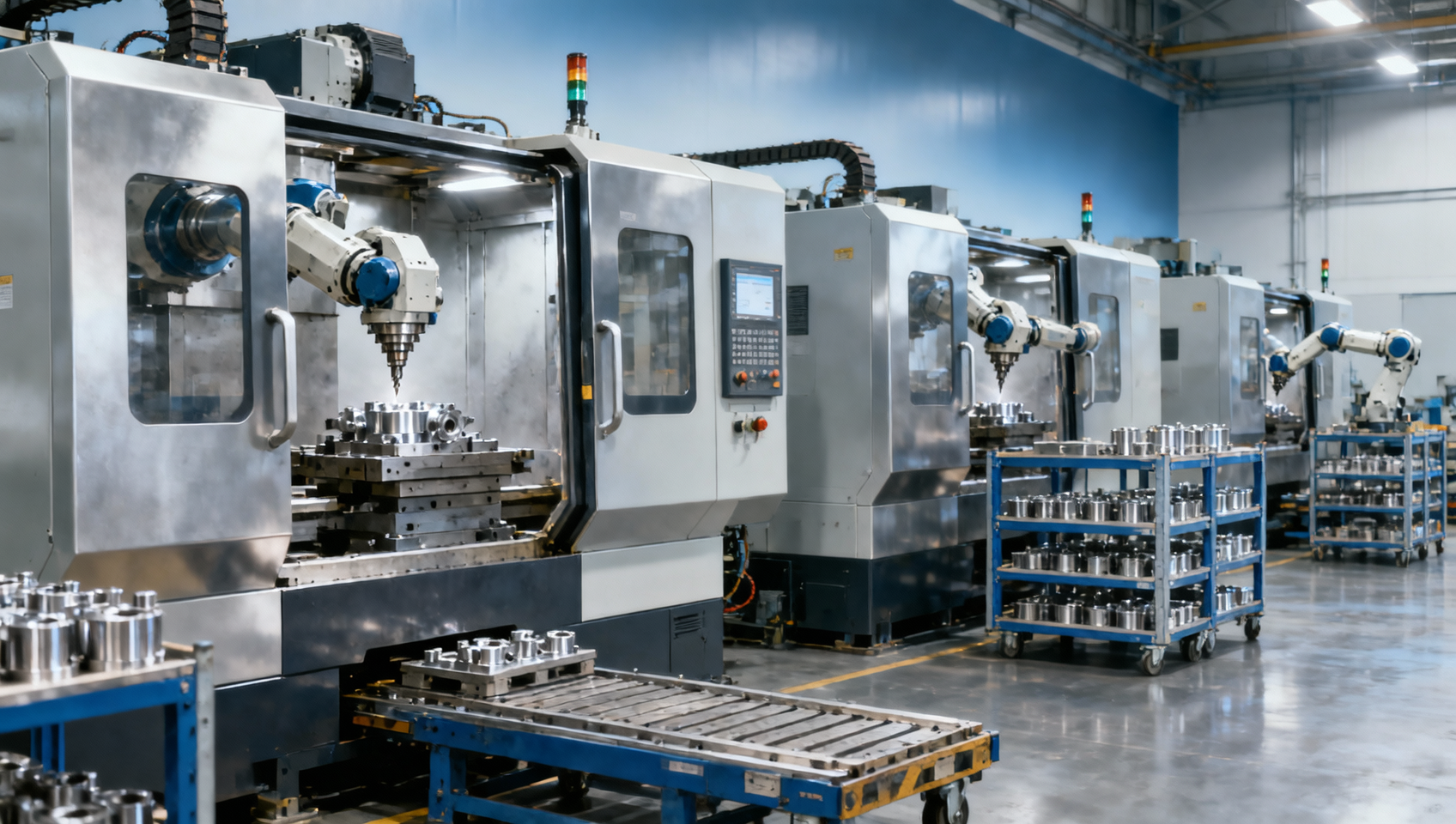
Metal machining can slow down even when an industrial CNC shop looks fully occupied. Hidden losses in CNC production, CNC programming, tool changes, setup time, material flow, and automated production line coordination often reduce real output. This article explores what limits CNC metalworking efficiency across the Manufacturing Industry and how operators, buyers, and decision-makers can improve the production process.
For shop-floor teams, the issue often appears as late jobs, unstable cycle times, or overtime without a matching rise in shipped parts. For buyers and managers, the problem shows up in unit cost, delivery risk, machine utilization gaps, and poor return on automation investments. In CNC machining, a machine that is powered on for 16 hours per day may still deliver only 8 to 10 hours of real cutting value.
The root causes are rarely limited to spindle speed or machine age. Throughput is affected by setup strategy, fixture design, CAM programming quality, tool life consistency, in-process inspection, material availability, and how well cells, robots, and people work together. Understanding these hidden losses is the first step toward a more profitable and predictable production process.
Why a Busy CNC Shop Can Still Produce Too Few Parts
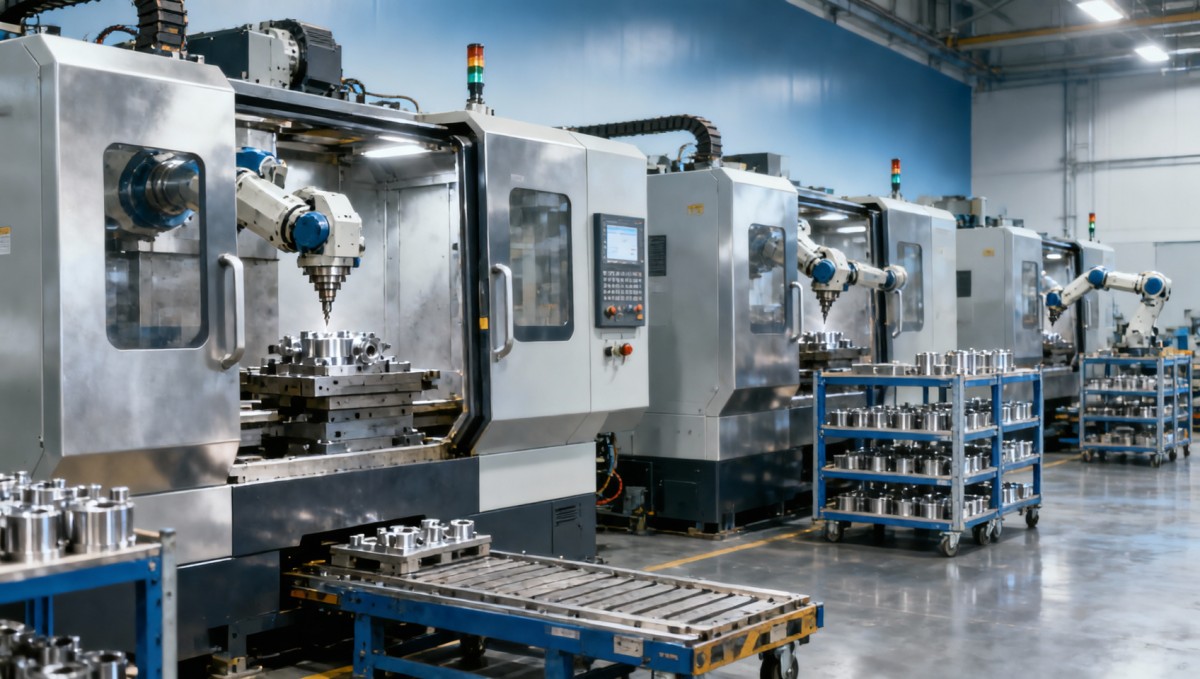
A machine can look busy while doing low-value work. In many metal machining shops, productive cutting time accounts for only 30% to 60% of the total available shift. The rest is consumed by warm-up routines, part loading, offset correction, probing, tool replacement, chip removal, waiting for material, or idle time between jobs. This is why spindle uptime alone is not a reliable performance indicator.
Another common problem is confusing utilization with output. A machining center may run three jobs in one day, but if each changeover takes 45 to 90 minutes, the line loses several hours before the first good part is completed. In high-mix, low-volume production, setup discipline often matters more than nominal machine speed. This is especially true in aerospace, energy equipment, and precision component manufacturing where tolerances can fall within ±0.01 mm to ±0.05 mm.
Operators also face interruptions that are not visible in planning reports. Tool wear alarms, fixture misalignment, coolant concentration issues, and in-process quality checks can break cycle rhythm. Even a 2-minute pause repeated 20 times in one shift removes 40 minutes of capacity. Across 5 machines and 22 working days per month, that small delay becomes a significant hidden loss.
For procurement and leadership teams, this distinction matters because the correct investment may not be another machine. In many cases, a shop with 70% visual occupancy but weak process coordination can gain 10% to 25% more output through workflow improvement, tooling strategy, and scheduling control before adding capital equipment.
Visible activity versus real throughput
The table below separates common “busy” signals from the metrics that actually define machining efficiency. This helps information researchers and factory managers evaluate where production is really slowing down.
The key conclusion is simple: visual busyness does not equal production efficiency. Shops that track cutting time, first-pass yield, setup duration, and tool-change frequency typically identify more actionable improvement points than shops that rely only on machine occupancy.
Early warning signs of hidden loss
- Average setup time exceeds 30 to 60 minutes for repeat jobs with stable fixtures.
- Tool life varies by more than 15% to 20% between shifts on the same material and program.
- Schedule attainment falls below 85% even when machine availability appears high.
- Operators spend more than 10% of shift time searching for tools, gauges, clamps, or material.
The Main Bottlenecks That Slow Metal Machining
In most CNC environments, slow output comes from a chain of small constraints rather than one dramatic failure. Programming choices can add unnecessary air cuts, over-conservative feeds, or too many tool changes. Setup planning can create repeated offset adjustment and long first-piece approval. Material handling can delay machines that are technically ready to run. When these losses happen together, total equipment effectiveness drops quickly.
Tooling is one of the most underestimated variables. If insert grades, holder rigidity, runout control, or tool presetting are inconsistent, operators may lower cutting parameters to protect surface finish and dimensional stability. A cycle that should run in 6.5 minutes may stretch to 8 or 9 minutes. Across batches of 300 to 500 parts, the cost impact becomes larger than many buyers expect when evaluating machine-tool investments.
Programming and setup are especially critical in multi-axis machining. A 4-axis or 5-axis center can reduce fixturing steps, but poor post-processing, collision avoidance strategy, or fixture access planning may remove the intended productivity gain. In some cases, a simpler 3-axis process with better workholding and standardized tooling beats a more advanced machine that is under-optimized.
Material flow adds another layer of delay. If raw stock is not cut, labeled, inspected, and delivered to the right machine at the right time, expensive equipment waits for low-cost logistics tasks. In automated production lines, robot handoff timing, pallet availability, and buffer zone capacity often determine line output more than the nominal speed of any single machine.
Common bottlenecks and their production impact
The following table shows frequent sources of slowdown in CNC metalworking and the practical effect each one has on throughput, quality, and delivery.
For most factories, the largest gains come from attacking the first 2 or 3 bottlenecks in sequence rather than launching a broad but shallow improvement program. A targeted approach usually produces measurable results within 4 to 8 weeks.
Mistakes that keep bottlenecks hidden
- Measuring output only by machine hours instead of good parts per shift and setup-adjusted capacity.
- Changing cutting parameters without checking fixturing rigidity, coolant delivery, and spindle condition.
- Buying higher-end equipment before standardizing tools, fixtures, and program libraries.
- Automating loading while leaving inspection, deburring, or material staging unmanaged.
How Operators and Engineers Can Recover Lost Capacity
The fastest way to improve machining efficiency is usually not a full factory redesign. It starts with a disciplined review of cycle time structure, setup sequence, tooling readiness, and machine-to-machine variability. In many shops, reducing setup time by 20 minutes on a job repeated 3 times per week creates more annual capacity than increasing spindle speed by a small percentage.
Standard work is central. Tool carts, preset tools, fixture kits, and digital setup sheets reduce operator dependency and help maintain repeatability across shifts. When a shop documents zero-point fixture locations, tool offsets, probe routines, and first-article checkpoints, changeover becomes more predictable. For repeat families of parts, this can reduce setup from 60 minutes to 25 to 35 minutes.
Programming improvement is equally important. CAM teams should review non-cutting moves, redundant roughing paths, and unnecessary tool calls. In practical terms, shaving 8% to 12% from cycle time through better toolpath logic can outperform more aggressive feed increases that may raise vibration, burr formation, or tool breakage. The goal is stable metal removal, not only faster numbers on paper.
On the shop floor, preventive attention to coolant concentration, chip evacuation, spindle warm-up, and tool-holder cleanliness prevents many “small” interruptions. A poor coolant mix or packed chip conveyor may not stop a machine immediately, but it can shorten tool life, distort thermal stability, and force rework within the same shift.
A practical 5-step improvement sequence
- Measure one full week of real cutting time, setup time, waiting time, and first-pass yield by machine and by part family.
- Separate repeat jobs from unstable jobs, then prioritize the top 20% of parts that consume the most machine hours.
- Standardize fixtures, tool assemblies, preset values, and setup sheets for those high-impact jobs.
- Run a CAM review focused on air cutting, tool count reduction, and safe but shorter approach and retract motion.
- Recheck output after 2 to 4 weeks and compare results using good parts per labor hour and on-time completion rate.
This type of staged improvement is effective because it balances productivity with process control. It is also easier for purchasing teams to support, since investments can be linked to visible problems such as fixture repeatability, tool presetting capacity, or probing equipment rather than broad claims about automation.
What to monitor weekly
Useful weekly indicators include average setup time, first-pass yield, tool changes per 100 parts, unplanned stoppage minutes, and queue time before secondary processes. If two of these metrics drift for more than 2 consecutive weeks, it usually signals a process issue larger than operator performance alone.
What Buyers and Decision-Makers Should Evaluate Before Investing
For procurement teams and plant leaders, the biggest mistake is buying capacity without diagnosing flow. If a shop suffers from 90-minute setups, poor fixture repeatability, or fragmented material staging, adding another machining center may increase utility cost and floor congestion more than shipped output. Investment decisions should begin with the actual source of delay: machine capability, process discipline, or production coordination.
A useful evaluation framework includes at least 4 dimensions: machine suitability, tooling and fixture ecosystem, digital integration, and labor readiness. A machine may offer high spindle power and rapid traverse, but if tool magazine capacity is too low for part families requiring 25 to 40 tools, or if probing and pallet systems are missing, throughput gains will be limited in real production.
Decision-makers should also compare capital investment with recoverable internal losses. For example, if process improvements can release 12% to 18% more output within 8 weeks, a new machine purchase may be deferred or resized. On the other hand, if demand is stable, part complexity is increasing, and current equipment lacks axis count, rigidity, or automation interfaces, the right upgrade can reduce lead time and improve quoting confidence.
Supplier evaluation should go beyond base machine price. Delivery lead time, local service response, spare parts availability, training quality, and post-installation support strongly affect ramp-up speed. In international trade, a lower purchase price may be offset by a 10 to 14 week delay in tooling packages or difficult commissioning support across time zones.
Procurement checklist for machining efficiency
The table below helps buyers compare where to spend budget first when output is constrained. It is especially relevant for automotive suppliers, aerospace component shops, energy equipment manufacturers, and precision metalworking plants expanding automation.
A sound purchasing decision aligns hardware, tooling, software, and process discipline. In many factories, the best result comes from combining a moderate equipment upgrade with stronger setup systems and better data visibility rather than from a single high-cost machine purchase alone.
Questions buyers should ask suppliers
- What is the normal delivery window for the machine, tooling package, and commissioning support: 6–8 weeks, 10–14 weeks, or longer?
- How many hours of operator and programmer training are included, and is follow-up support available within the first 30 days?
- What preventive maintenance tasks are required weekly, monthly, and every 1,000 operating hours?
- Can the system integrate with robots, pallet pools, bar feeders, or MES platforms without major custom rework?
Implementation, Risk Control, and Frequently Asked Questions
Even the right improvement plan can fail if implementation is rushed. Shops should phase changes in a controlled sequence: measure baseline, stabilize one part family, validate tooling and quality, then scale. A practical rollout usually spans 3 stages over 4 to 12 weeks, depending on whether the change involves setup standardization only or a broader automation and digital integration project.
Risk control matters because throughput gains that damage quality are not true gains. Before increasing feed rates, reducing tool count, or changing fixtures, teams should define acceptance limits for dimensions, surface finish, burr level, and tool wear. For precision parts, first-piece and last-piece checks within the same batch are often necessary to verify thermal and wear stability across the run.
Cross-functional communication is also essential. Operators, programmers, quality staff, maintenance personnel, and procurement teams each see a different part of the slowdown. When only one function acts alone, factories often fix symptoms rather than root causes. A short weekly review of the top 5 delays by minutes lost is usually more effective than long monthly meetings with generic utilization charts.
Below are common questions raised by researchers, machine users, and decision-makers when evaluating CNC machining efficiency in modern manufacturing environments.
How do you know whether the real problem is setup or machining time?
Track one complete week by splitting every job into setup minutes, first-piece approval, actual cutting time, and waiting time. If setup and verification consume more than 20% to 30% of total job time on repeat work, the largest opportunity is usually not faster machining but better fixtures, preset tools, and standard setup sheets.
When does automation improve throughput the most?
Automation performs best when part families are stable, cycle times are predictable, and loading or unloading creates a labor bottleneck. If the shop changes part numbers every few hours or depends on frequent manual inspection, the return on automation may be weaker until process variation is reduced first.
What are common rollout risks?
- Standardizing only machine programs while leaving fixtures and tool assemblies inconsistent.
- Reducing cycle time before validating chip evacuation and coolant coverage on deep or complex cuts.
- Installing automation without enough buffer capacity, spare grippers, or fault recovery logic.
- Skipping operator training, which often adds 2 to 6 weeks of avoidable ramp-up delay.
What is a realistic target for efficiency improvement?
For many established CNC shops, a realistic first target is 8% to 15% more output from setup reduction, toolpath optimization, and workflow control. More complex projects involving fixture redesign, palletization, or robotic handling may deliver 15% to 30%, but only when quality control, material flow, and maintenance routines are upgraded at the same time.
Metal machining slows down not only because of machine limits, but because of hidden losses across programming, setup, tooling, quality checks, and production coordination. Shops that measure real cutting time, shorten repeat setups, stabilize tool life, and improve material flow usually unlock capacity faster and with less risk than shops focused only on adding equipment.
Whether you are comparing CNC machine tools, reviewing automation options, or diagnosing bottlenecks in precision manufacturing, a structured process review can reveal the most cost-effective next step. To discuss your production scenario, evaluate machining efficiency, or get a tailored solution for CNC metalworking and automated production lines, contact us today and learn more about practical solutions for higher output and better delivery control.
PREVIOUS ARTICLE
NEXT ARTICLE
Recommended for You
 Digital Manufacturing for Smart Factories: Connecting Legacy Machines to MESMachine Tool Industry Editorial Team
 How to Select a CNC Metal Lathe for Tight-Tolerance Shaft and Sleeve PartsCNC Machining Technology Center
 How to Select an Industrial Lathe for High-Volume Shaft ProductionMachine Tool Industry Editorial Team
 Selecting Machine Tools for Automotive Parts: Accuracy, Throughput, and AutomationMachine Tool Industry Editorial Team
 Industrial Machining: Selecting Processes for Tight-Tolerance Metal PartsCNC Machining Technology Center
 Manufacturing Technology Trends That Improve Throughput and Quality ControlManufacturing Market Research Center

Aris Katos
Future of Carbide Coatings
15+ years in precision manufacturing systems. Specialized in high-speed milling and aerospace grade alloy processing.
▶
Industrial Machining: Selecting Processes for Tight-Tolerance Metal PartsCNC Machining Technology Center▶
How Does Precision Machining Differ From Standard Machining?CNC Machining Technology Center▶
CNC Precision: Which Tolerances, Materials, and Processes Fit Your Part?CNC Machining Technology Center▶
How to Choose Metal Machining Processes for Tight Tolerances and Production VolumeCNC Machining Technology Center▶
Production Process Explained: Key Stages, Controls, and Quality CheckpointsCNC Machining Technology Center
Mastering 5-Axis Workholding Strategies
Join our technical panel on Nov 15th to learn about reducing vibrations in thin-wall components.

Providing you with integrated sanding solutions
Before-sales and after-sales services
Comprehensive technical support