• Global CNC market projected to reach $128B by 2028 • New EU trade regulations for precision tooling components • Aerospace deman
NYSE: CNC +1.2%LME: STEEL -0.4%

Why Aerospace CNC Manufacturing Demands More Than Accuracy
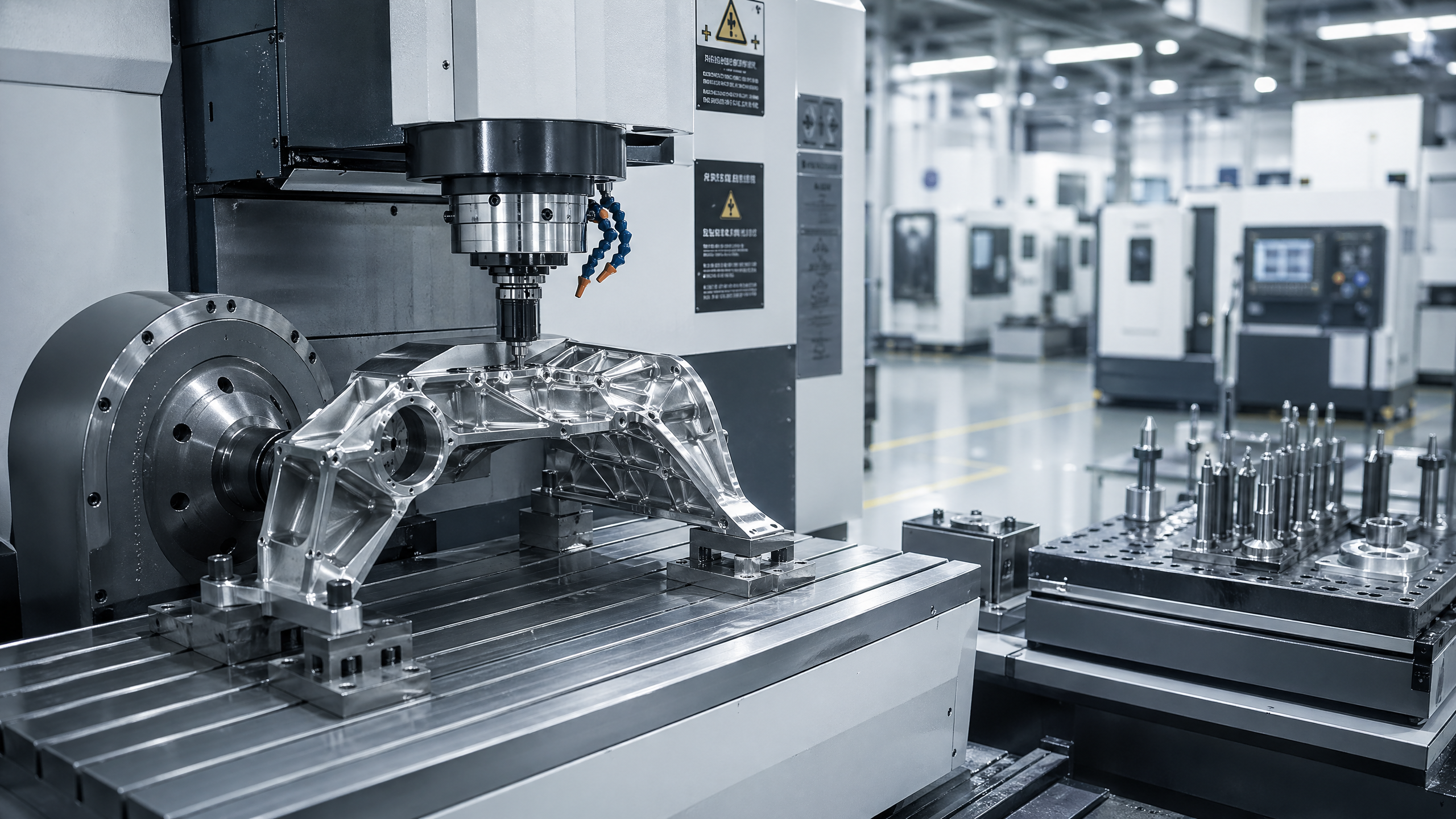
In aerospace, accuracy alone is not enough. CNC manufacturing for aerospace must combine high precision CNC manufacturing, multi-axis CNC manufacturing, and automated CNC manufacturing to meet strict material, traceability, and safety demands. From efficient machining process control to digital manufacturing technology for smart factory integration, today’s CNC manufacturing manufacturer and machine tool supplier must deliver reliability, repeatability, and performance far beyond basic tolerance.
For engineers, operators, sourcing teams, and commercial evaluators, this creates a very different decision framework from general industrial machining. A part that holds ±0.01 mm may still fail an aerospace program if its process history is incomplete, if material segregation is weak, or if production stability drops after the first 20 pieces.
That is why aerospace CNC manufacturing is best understood as a system capability rather than a single machining capability. Machine accuracy matters, but so do fixture strategy, tool path consistency, process validation, inspection discipline, operator control, and supply chain responsiveness across low-volume, high-mix production.
This article explains why aerospace programs demand more than nominal precision, what buyers should evaluate in a CNC manufacturing manufacturer, and how machine tool suppliers, process teams, and procurement managers can reduce risk while improving delivery confidence.
Why Aerospace CNC Manufacturing Is Different from Standard Precision Machining
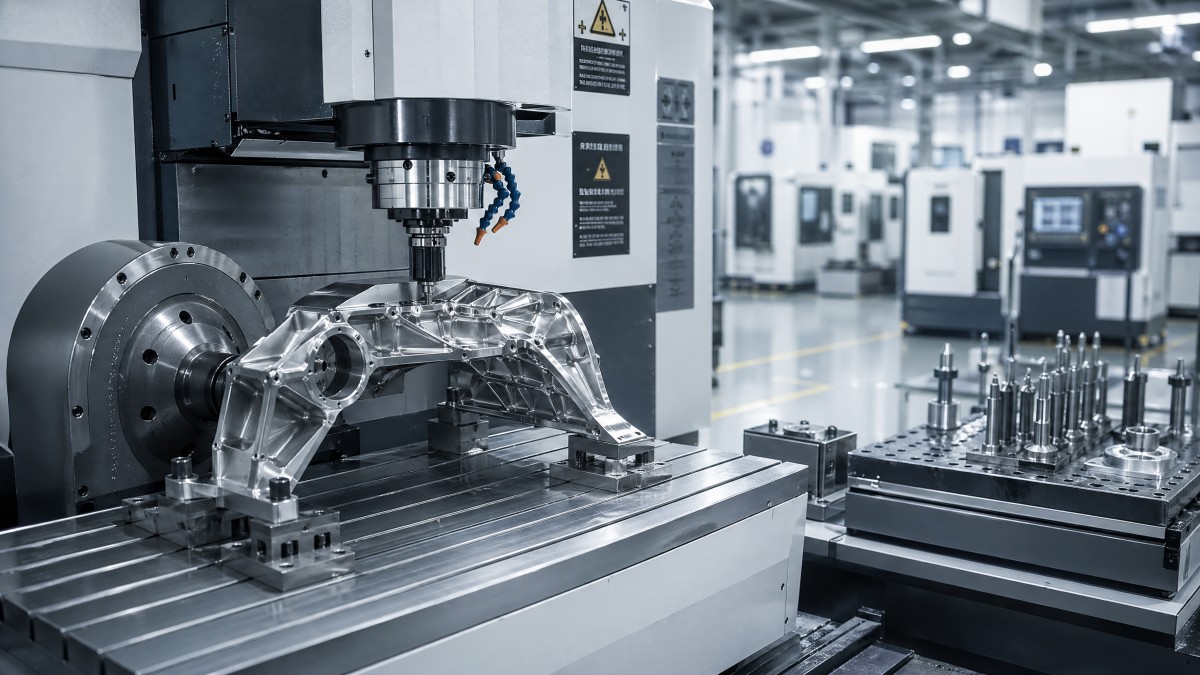
In many industrial sectors, dimensional accuracy is the headline metric. In aerospace, it is only one layer of a broader qualification requirement. Components often operate under high load, thermal cycling, vibration, pressure variation, or fatigue conditions over service lives that can extend beyond 10,000 flight hours. That means machining quality must support mechanical integrity, not just geometric compliance.
Aerospace parts also use demanding materials such as titanium alloys, Inconel, stainless steel, and high-strength aluminum. These materials behave very differently during cutting. Heat concentration, tool wear, burr formation, and residual stress can increase quickly within a single batch of 10 to 50 pieces if machining process control is not stable.
Another difference is the level of documentation expected. Operators and buyers are not only asking whether a part passed final inspection, but also whether each process step was controlled, recorded, and repeatable. A reliable CNC manufacturing manufacturer should be able to show revision tracking, tool life management, in-process inspection records, and lot traceability from raw material to finished shipment.
This is where automated CNC manufacturing and digital manufacturing technology become especially valuable. Automation reduces manual variability, while digital records improve accountability. In aerospace, even a 2% scrap reduction or a 1-day improvement in inspection turnaround can have meaningful impact on program cost and delivery reliability.
Key factors that raise the aerospace machining threshold
- Material sensitivity: titanium and nickel alloys typically require tighter heat and tool wear control than common carbon steel parts.
- Complex geometry: 5-axis or multi-axis CNC manufacturing is often needed for impellers, housings, brackets, and thin-wall structures.
- Low-volume repeatability: many aerospace orders run in batches of 5, 20, or 100 rather than continuous mass production.
- Documentation burden: route cards, revision control, inspection records, and raw material traceability must remain consistent across the full order cycle.
For buyers evaluating suppliers, this means a machine list alone is not enough. A shop with modern equipment but weak process discipline may struggle more than a slightly smaller operation with stronger control over first article inspection, setup repeatability, and nonconformance handling.
Accuracy vs. Repeatability vs. Process Reliability
One common sourcing mistake is to treat tolerance capability and production capability as the same thing. A machine can produce one perfect sample part under ideal conditions, but aerospace buyers need confidence that parts number 1, 25, and 200 will all remain within the specified process window. In practical terms, repeatability often matters more than peak demonstration accuracy.
Repeatability depends on multiple variables: thermal stability, tool wear monitoring, clamping consistency, datum strategy, program verification, and operator discipline. If these variables drift, the part may remain “close” to target dimensions but still become unstable in profile, hole position, surface condition, or edge quality. That creates hidden risk in assembly and service performance.
Process reliability adds another level. It includes how quickly a supplier detects deviation, how nonconforming parts are isolated, and how corrective action is implemented. In aerospace CNC manufacturing, a response time of 4 hours to identify a process drift can be far more valuable than a supplier that only discovers the issue during final inspection 2 days later.
The table below shows why aerospace decision-makers should compare machining capability across three dimensions instead of focusing on tolerance alone.
The key takeaway is simple: aerospace machining success depends on sustained control. High precision CNC manufacturing is necessary, but only when combined with repeatable fixturing, controlled environments, and robust inspection routines does it become commercially dependable for aerospace supply programs.
What operators and engineers should monitor
Setup stability
Verify clamping force, datum consistency, and part distortion risk before releasing production. On thin-wall components, even a small clamping change can shift results by 0.02 mm to 0.08 mm.
Tool wear trend
Do not wait until visible edge breakdown appears. In hard-to-machine alloys, tool life windows can shorten significantly after the first 15% to 20% of wear progression.
Inspection timing
Use in-process checks at defined intervals such as first-off, every 5 to 10 pieces, and post-tool-change review where the part risk justifies it.
The Role of Multi-Axis CNC Manufacturing, Automation, and Digital Control
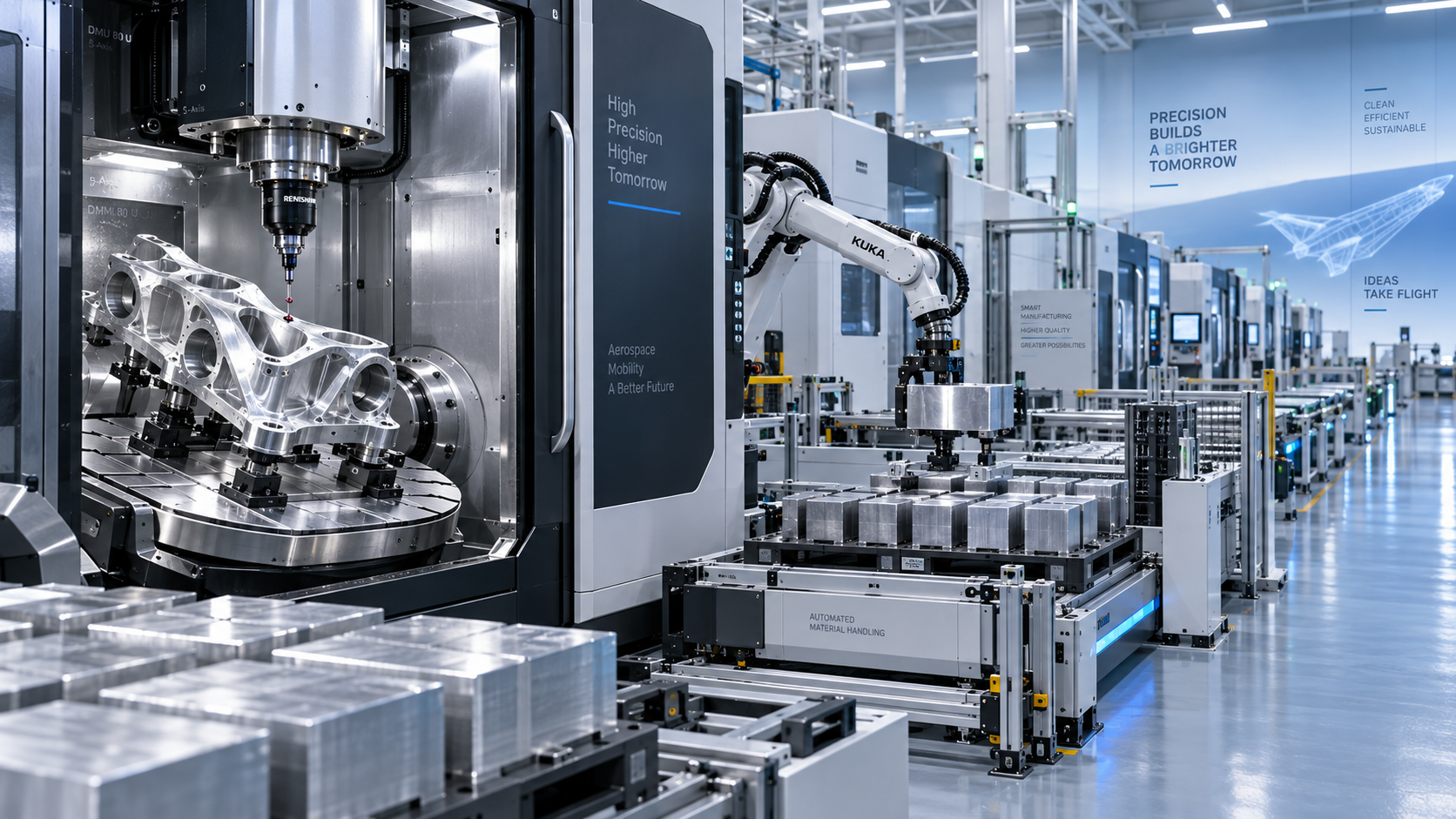
Aerospace components increasingly require complex contours, deep cavities, compound angles, and demanding surface transitions. Multi-axis CNC manufacturing is often the only practical way to machine these features efficiently while reducing repositioning error. In 5-axis work, fewer setups can lower cumulative alignment risk and shorten cycle time by 15% to 30% on suitable parts.
However, multi-axis capability by itself does not guarantee better outcomes. The shop must also manage post-processing accuracy, collision prevention, fixture accessibility, and tool length strategy. When tool paths are poorly optimized, the theoretical advantage of 5-axis machining can be lost through chatter, uneven finish, or excessive cycle time.
Automated CNC manufacturing supports aerospace programs by improving consistency and throughput in repeatable operations. Examples include automatic tool measurement, palletized loading, probe-based in-machine verification, and linked work instructions. These systems are especially useful where lead times are tight, such as 2- to 4-week replenishment windows for structural brackets or housings.
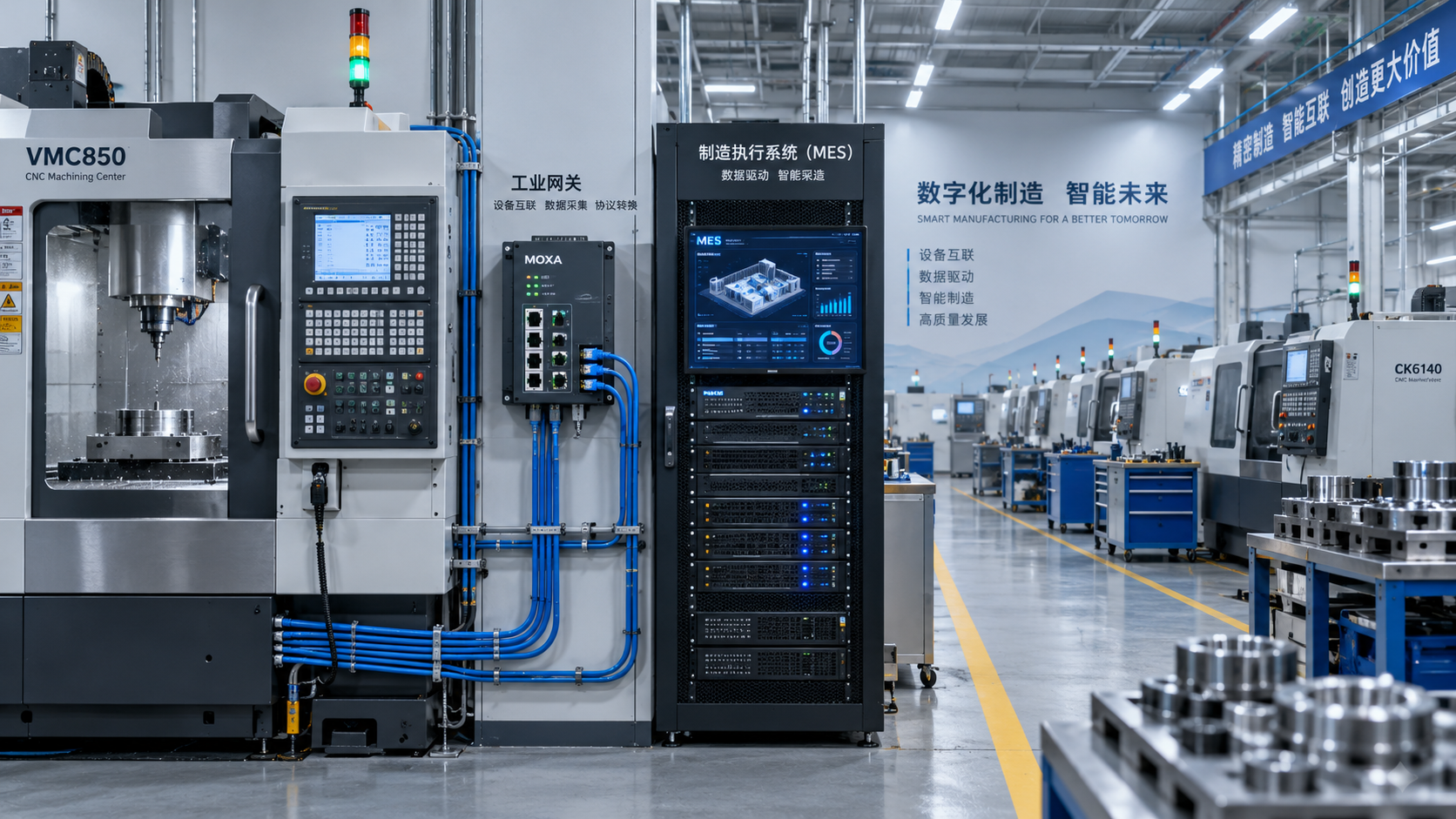
Digital manufacturing technology adds visibility. Process data, machine status, program revision, and inspection outcomes can be connected across planning and production. For procurement and business evaluation teams, this improves supplier transparency. For operators, it reduces the chance of running the wrong revision or skipping a critical process checkpoint.
Where advanced CNC capability creates measurable value
The following comparison helps buyers identify when standard 3-axis machining is enough and when more advanced production architecture is justified.
For machine tool suppliers and manufacturing planners, the message is not to push maximum complexity on every project. Instead, align equipment architecture with geometry complexity, part volume, and control requirements. In some cases, a stable 4-axis process with robust probing delivers more value than an under-optimized 5-axis route.
A practical implementation sequence
- Classify part families by geometry, tolerance level, and annual demand.
- Match each family to 3-axis, 4-axis, or multi-axis CNC manufacturing based on setup risk and feature accessibility.
- Introduce automated tool setting, probing, or pallet handling where repeat orders exceed predictable thresholds.
- Connect process records to digital manufacturing technology for revision control and quality traceability.
How Buyers Should Evaluate an Aerospace CNC Manufacturing Manufacturer
Procurement teams often receive quotations that look similar on paper: same material, same drawing, same nominal tolerance. Yet the real delivery risk can vary significantly. A more reliable sourcing approach is to evaluate supplier capability through a balanced scorecard that includes production control, engineering communication, inspection readiness, and responsiveness under schedule pressure.
Start by understanding the supplier’s process maturity. Ask how first article review is handled, how revisions are released to the floor, and what happens when a process drifts out of control. A supplier that can explain its workflow in 4 to 6 clear steps is usually easier to manage than one relying on informal tribal knowledge.
Next, assess fit with your order profile. Aerospace sourcing is not always about the lowest piece price. If your project includes 12 prototype parts now, 80 validation parts next quarter, and annual reorders later, the right partner should support both low-volume flexibility and medium-scale repeatability without rebuilding the process each time.
Lead time transparency is another major factor. Buyers should separate machining time from total order time. Raw material release, fixture preparation, program prove-out, first article approval, finishing, and final inspection can each add 1 to 5 working days depending on part complexity.
Supplier evaluation checklist
The table below provides a practical framework for sourcing and business evaluation teams comparing CNC manufacturing manufacturers for aerospace work.
A well-qualified supplier should not resist these questions. On the contrary, strong aerospace machining partners usually welcome structured evaluation because it allows them to differentiate through process stability rather than price alone.
Four signs of a stronger sourcing candidate
- They discuss risk points before quoting, not after production starts.
- They can explain expected lead times by stage, such as 3 days for programming, 5 days for machining, and 2 days for inspection.
- They distinguish prototype routing from repeat production routing.
- They communicate change control clearly when drawings, finishes, or quantities shift.
Common Aerospace CNC Risks, Implementation Priorities, and FAQ
Even capable shops face predictable aerospace machining risks. The problem is rarely one dramatic failure. More often, performance erodes through small gaps: a tool life rule that is not updated, a fixture that works for 8 parts but not 80, or a traceability step that is handled manually and becomes inconsistent under schedule pressure. These issues can add 5% to 15% hidden cost through rework, delays, and quality containment.
The best implementation priority is to control the production chain in sequence. First secure process definition, then measurement discipline, then automation, then broader digital integration. Companies that try to digitize unstable machining processes too early often document noise rather than improve performance.
For operators and manufacturing managers, the priority should be practical: lock in setup repeatability, monitor wear-sensitive features, and verify revision control on every order release. For procurement and business teams, the priority is supplier transparency: know what is being controlled, how often, and by whom.
Below are focused answers to common sourcing and implementation questions that frequently arise in aerospace CNC manufacturing discussions.
How do you know if multi-axis CNC manufacturing is necessary?
It is usually justified when the part requires access from 4 or more orientations, when repositioning would stack tolerance error, or when surface continuity and angled features are critical. If a component needs more than 3 setups in standard machining, a multi-axis route often deserves evaluation.
What is a realistic aerospace CNC lead time?
For straightforward machined parts, prototype lead times often fall in the 2- to 4-week range. More complex parts involving hard materials, special fixtures, or extensive inspection may require 4 to 8 weeks. Repeat orders can be shorter if tooling, programs, and process plans are already validated.
What should buyers prioritize besides price?
Focus on 5 areas: process repeatability, traceability discipline, inspection coverage, schedule realism, and engineering communication. A lower quote can become more expensive if it creates one late delivery, one rejected batch, or one undocumented material substitution issue.
What are the most common operational mistakes?
The biggest mistakes are assuming a good first-off part guarantees batch stability, underestimating tool wear in titanium or nickel alloys, and treating digital records as optional. In aerospace, the missing record can be as serious as the missing dimension.
Aerospace CNC manufacturing succeeds when machining accuracy is supported by stable process control, multi-axis capability where needed, automated CNC manufacturing for consistency, and digital manufacturing technology for traceability and decision visibility. For research teams, operators, buyers, and business evaluators, the right question is not simply “Can this supplier machine the part?” but “Can this supplier deliver the part repeatedly, transparently, and on schedule?”
If you are comparing CNC manufacturing manufacturers or evaluating a machine tool supplier for aerospace-related production, now is the right time to review capability beyond tolerance alone. Contact us to discuss your application, request a tailored production assessment, or explore more precision manufacturing solutions for complex aerospace programs.
PREVIOUS ARTICLE
Recommended for You
 Digital Manufacturing for Smart Factories: Connecting Legacy Machines to MESMachine Tool Industry Editorial Team
 How to Select a CNC Metal Lathe for Tight-Tolerance Shaft and Sleeve PartsCNC Machining Technology Center
 How to Select an Industrial Lathe for High-Volume Shaft ProductionMachine Tool Industry Editorial Team
 Selecting Machine Tools for Automotive Parts: Accuracy, Throughput, and AutomationMachine Tool Industry Editorial Team
 Industrial Machining: Selecting Processes for Tight-Tolerance Metal PartsCNC Machining Technology Center
 Manufacturing Technology Trends That Improve Throughput and Quality ControlManufacturing Market Research Center

Aris Katos
Future of Carbide Coatings
15+ years in precision manufacturing systems. Specialized in high-speed milling and aerospace grade alloy processing.
▶
Industrial Machining: Selecting Processes for Tight-Tolerance Metal PartsCNC Machining Technology Center▶
How Does Precision Machining Differ From Standard Machining?CNC Machining Technology Center▶
CNC Precision: Which Tolerances, Materials, and Processes Fit Your Part?CNC Machining Technology Center▶
How to Choose Metal Machining Processes for Tight Tolerances and Production VolumeCNC Machining Technology Center▶
Production Process Explained: Key Stages, Controls, and Quality CheckpointsCNC Machining Technology Center
Mastering 5-Axis Workholding Strategies
Join our technical panel on Nov 15th to learn about reducing vibrations in thin-wall components.

Providing you with integrated sanding solutions
Before-sales and after-sales services
Comprehensive technical support