• Global CNC market projected to reach $128B by 2028 • New EU trade regulations for precision tooling components • Aerospace deman
NYSE: CNC +1.2%LME: STEEL -0.4%

What to Ask a Machine Tool Exporter Before Importing
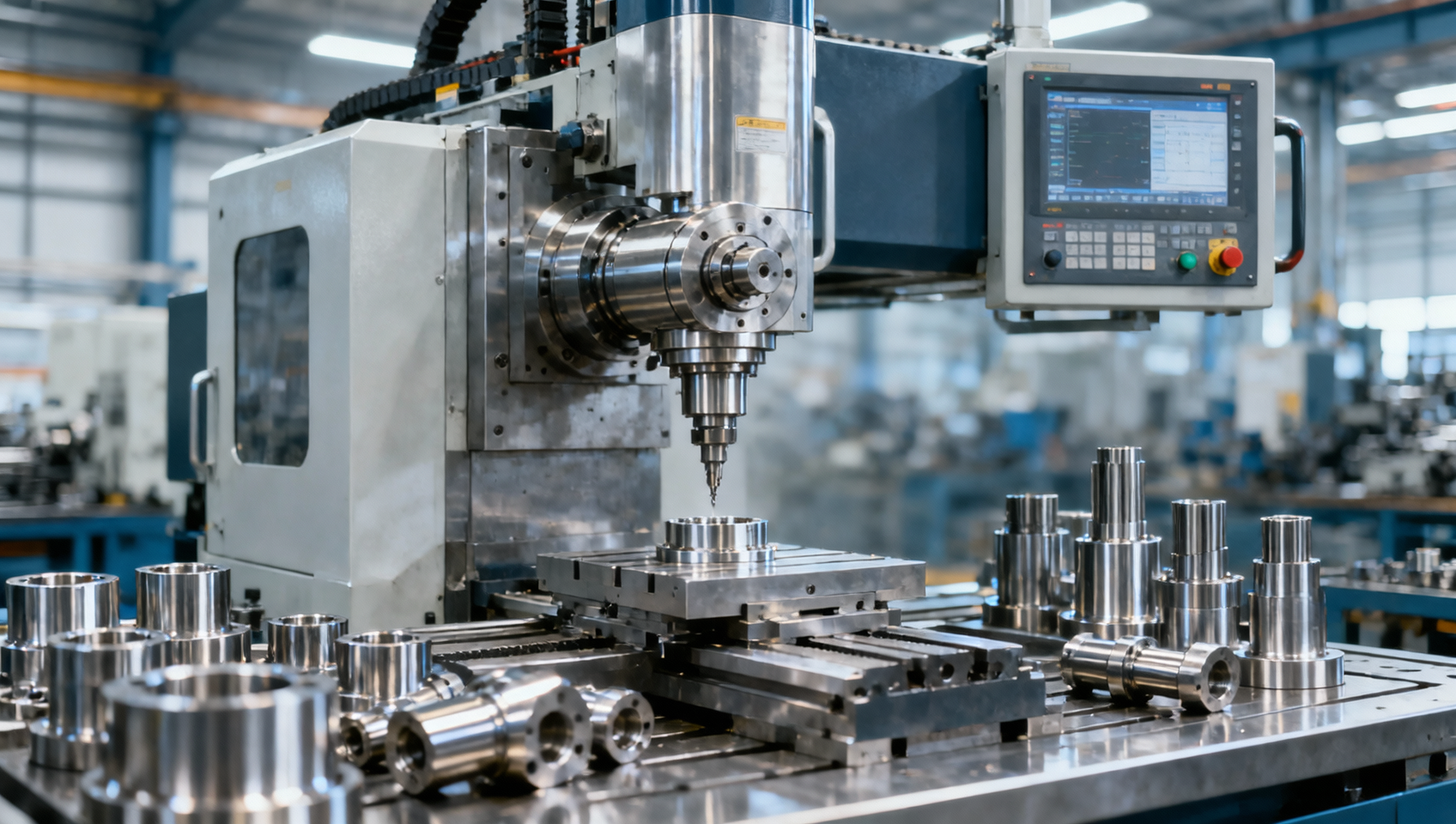
Before choosing a CNC manufacturing exporter or machine tool supplier, buyers should ask the right questions about quality control, lead times, certifications, after-sales support, and application fit. Whether you need high precision CNC manufacturing for aerospace, a compact machine tool for electronics manufacturing, or cost-effective CNC manufacturing for automotive industry projects, the answers will shape import risk, performance, and long-term value.
What should you verify first before importing from a machine tool exporter?
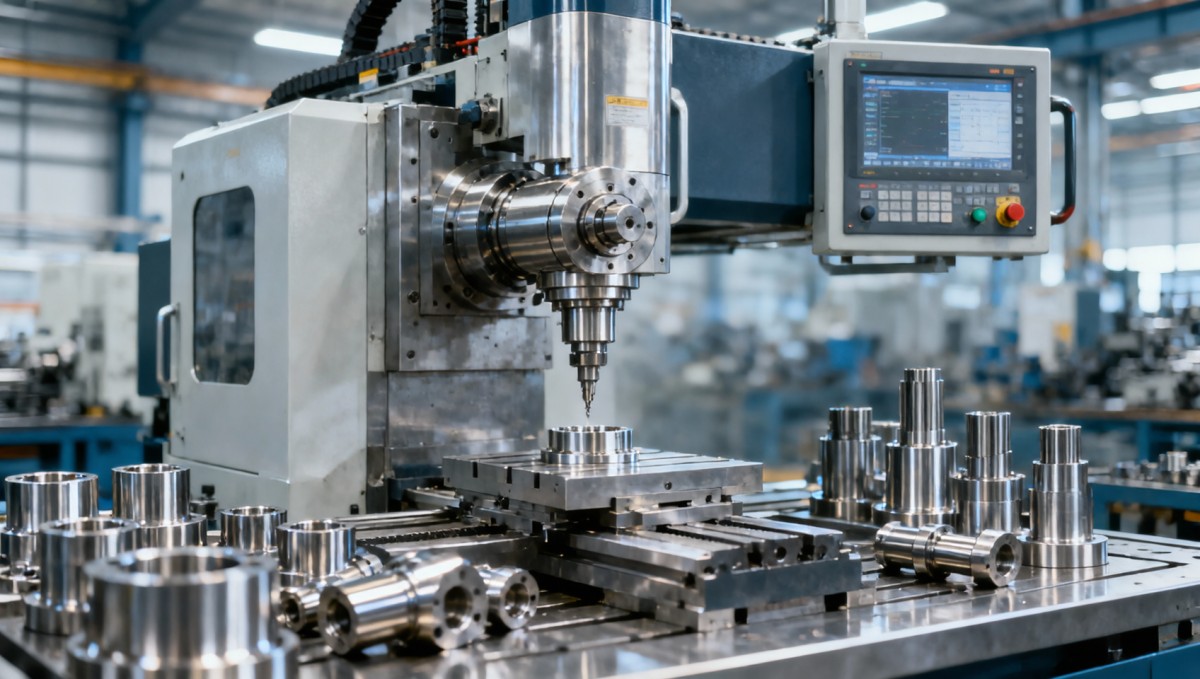
In the CNC machine tool industry, the first screening step is not price. It is exporter capability. A qualified machine tool exporter should be able to explain what types of CNC lathes, machining centers, or multi-axis systems it supplies, which industries it serves, and how it manages production quality from component sourcing to final inspection. For buyers comparing suppliers across China, Germany, Japan, or South Korea, these questions reduce uncertainty early.
Ask whether the exporter is a manufacturer, a trading company, or a hybrid operation. This affects engineering depth, communication speed, spare parts control, and problem resolution. In many B2B purchasing cases, a factory-direct exporter can respond faster on tooling compatibility, spindle options, or controller integration, while a specialized trade partner may offer broader sourcing across 3–5 categories of equipment and accessories.
You should also confirm whether the supplier understands your application environment. A machine suitable for automotive batch production may not be ideal for aerospace prototyping or electronics machining. The right exporter should ask about materials, tolerance ranges, part dimensions, target output per shift, operator skill level, and local power conditions before recommending a machine. If those questions never come up, the selection process is too shallow.
A practical first-round review usually covers 5 checkpoints: company type, product scope, application experience, export documentation ability, and post-sale support structure. These are basic, but they reveal whether the exporter is prepared for international machine tool trade or only focused on closing a quick order.
First-round supplier screening checklist
- Ask which machine categories the exporter handles regularly, such as CNC lathes, vertical machining centers, horizontal machining centers, grinding systems, or flexible automation cells.
- Request a typical export workflow, including quotation, technical confirmation, production, factory acceptance, packing, shipping, and remote or on-site commissioning.
- Confirm whether the supplier supports voltage customization, controller language settings, chip conveyor options, coolant systems, and fixture adaptation for your parts.
- Check response timing. In many industrial purchases, a serious exporter can answer technical questions within 24–72 hours after receiving drawings or processing requirements.
Which technical and production questions matter most?
When importing a machine tool, buyers often focus on machine size or spindle power first. That is not enough. A better approach is to ask how the exporter matches machine capability with your parts, materials, and target tolerances. For example, if you process aluminum housings, alloy steel shafts, or stainless steel discs, the machine’s rigidity, spindle speed range, tool magazine capacity, and coolant setup all affect cycle time and surface finish.
You should ask for typical configuration ranges rather than generic statements. Common evaluation items include spindle power, travel, table load, repeatability, axis count, and controller brand. If the exporter cannot describe the difference between a 3-axis system and a 4-axis or 5-axis configuration in relation to your production plan, the recommendation may not be dependable.
Lead time also needs technical context. A standard machine may ship in 4–8 weeks, while a customized CNC manufacturing solution with special fixtures, probing, or robot loading may require 8–16 weeks or longer depending on sourcing and test requirements. Ask what portion of the lead time is used for assembly, software setup, test cutting, export packing, and spare parts preparation.
The table below helps procurement teams compare key technical questions before choosing a machine tool exporter. It is especially useful when your project involves precision manufacturing, automated production, or multi-shift operation.
This comparison framework shifts the conversation from brochure language to production logic. A capable machine tool exporter should answer with process-oriented detail, not just catalog values. That is especially important in industries where tolerance, repeatability, and uptime directly affect scrap cost and delivery performance.
Technical questions that reveal supplier depth
Ask about test conditions
Find out whether machine accuracy is checked at the factory under unloaded conditions only, or whether the exporter can arrange trial cutting with materials close to your own. For precision CNC manufacturing, this difference is significant.
Ask about maintenance intervals
Good exporters can explain daily, weekly, and quarterly maintenance points. This matters to users and operators because stable machining depends not just on installation, but on lubrication, alignment checks, coolant management, and wear monitoring over time.
Ask about expansion possibilities
If your production may move from manual loading to semi-automatic or robotic loading within 12–24 months, ask whether the machine platform supports interface expansion, signal ports, guarding modifications, or software integration.
How do quality control, certification, and compliance affect import risk?
Quality claims are easy to make, but buyers need process visibility. Ask the machine tool exporter to describe incoming inspection, in-process checks, final assembly verification, and pre-shipment testing. In practical terms, you want to know who inspects key components, what records are kept, and whether the machine receives a documented run test before export. A vague answer is a warning sign.
Certification is another major point. Depending on destination market, buyers may need conformity documentation, electrical safety information, manuals in the required language, or support for local customs and import procedures. The exporter does not need to promise every certification in the world, but it should clearly state what documents it can provide and what remains the importer’s responsibility.
For many industrial projects, compliance review has at least 3 layers: machine safety, electrical compatibility, and import documentation. If your facility serves aerospace, energy equipment, or electronics manufacturing, internal supplier approval requirements may add another layer related to traceability, calibration records, or acceptance procedures.
Before signing a purchase order, it helps to map compliance questions in a structured way. The table below summarizes the areas most buyers should discuss with a CNC manufacturing exporter before payment and shipment.
The goal is not to overcomplicate every transaction. It is to avoid preventable surprises. In global machine tool trade, compliance gaps often surface late, after deposit payment or even after shipment. Asking these questions earlier protects schedule, budget, and production startup.
Common quality and compliance mistakes
- Accepting a quotation without a defined acceptance standard for accuracy, noise, vibration, tooling, and machine accessories.
- Assuming that all export machines include the same manuals, labels, electrical setup, and packing protection.
- Failing to confirm whether installation support is remote, on-site, or provided through a local service partner within a realistic time window such as 48 hours, 7 days, or 30 days.
What should procurement teams ask about price, lead time, and after-sales support?
A low machine price can hide high ownership cost. Buyers should ask what is included in the quotation and what is not. Important items include tooling, fixtures, training, software options, coolant units, chip handling, packing type, spare parts kits, and commissioning support. In many machine tool projects, the price gap between two offers reflects scope differences rather than true cost savings.
Lead time should also be broken down. Ask for milestone visibility: quotation confirmation, engineering review, production start, factory acceptance test, packing, and shipping handover. Even a rough 5-step schedule is better than a single promised date. For urgent import projects, buyers should ask what can be completed in parallel, such as document preparation during final assembly.
After-sales support is where many purchasing decisions succeed or fail. A machine tool exporter should state whether support includes remote diagnostics, spare parts dispatch, video guidance, training documents, and escalation procedures for electrical or mechanical issues. For operators, the key concern is recovery speed. For decision-makers, it is downtime cost. Ask how service requests are handled in the first 12 months and beyond.
A practical procurement review usually includes 4 dimensions: total scope, payment terms, lead time control, and service response. If one of these is undefined, the purchase risk rises even when the machine itself looks competitive.
Questions that improve quote comparison
- What exactly is included in the base machine and what is optional? This prevents mismatch between technical expectation and commercial offer.
- What is the usual spare parts support period, and which wear parts are recommended for the first 6–12 months of operation?
- How long does remote troubleshooting usually take after a service ticket is opened, and what information should the buyer provide to speed up diagnosis?
- Can the exporter provide operator training content for startup, daily checks, alarm handling, and basic preventive maintenance?
How buyers can evaluate service maturity
Documentation quality
Clear manuals, parts lists, lubrication schedules, and alarm references reduce the burden on operators and maintenance teams during the first 30–90 days of machine use.
Spare parts logic
A strong exporter can identify critical consumables and wear components in advance instead of waiting for an emergency order. This matters for plants running two shifts or continuous production.
Communication discipline
Look for suppliers that summarize changes, confirm drawings, and track actions in writing. In international purchasing, disciplined communication often prevents more delays than technical capability alone.
Which questions are different for aerospace, automotive, energy, and electronics applications?
Application fit is one of the most overlooked parts of machine tool import decisions. A machine selected for one sector may underperform in another because part geometry, material type, batch size, and cleanliness standards vary widely. A reliable machine tool exporter should be able to discuss sector-specific requirements instead of offering one generic recommendation.
For aerospace, ask about stability in high precision CNC manufacturing, support for complex contours, and compatibility with difficult-to-machine materials. For automotive industry projects, throughput, repeatability, fixture change speed, and line integration may be more important than ultra-flexible geometry. For electronics manufacturing, compact footprint, thermal behavior, and fine-feature machining often matter more.
Energy equipment applications may require larger work envelopes, stronger cutting capability, and robust support for medium-batch or heavy-duty processing. In each case, the exporter should explain why a specific CNC lathe, machining center, or automated production line is a fit. If the answer does not change by sector, the analysis is not detailed enough.
A useful way to compare exporter recommendations is to link machine type to production scenario. The following table shows how buyer questions should shift depending on application priorities.
This scenario-based view helps different stakeholders align. Operators care about usability. Procurement cares about fit and service. Decision-makers care about long-term return. The right exporter should support all three viewpoints, not just the purchase transaction.
FAQ: what do buyers ask most before choosing a CNC manufacturing exporter?
How many suppliers should I compare before importing a machine tool?
In most B2B purchasing situations, comparing 3 suppliers is a practical minimum. This gives you a meaningful view of price structure, technical scope, and support level without creating too much internal review work. If your project involves automation, strict compliance, or multi-machine deployment, expanding to 4–5 suppliers may be useful.
Is factory acceptance testing necessary for imported CNC machines?
For many buyers, yes. Factory acceptance testing helps verify configuration, movement, core functions, and often sample machining before shipment. Even if you cannot visit in person, remote review through video, inspection sheets, and live technical meetings is often better than relying only on a final photo set.
What lead time is normal for a machine tool export order?
There is no single answer, but standard machine tool orders commonly fall in the 4–8 week range for simpler configurations, while customized solutions may require 8–16 weeks or more. Shipping time, customs clearance, and site preparation should be reviewed separately from factory production time.
What is the biggest mistake when choosing a machine tool exporter?
The biggest mistake is evaluating only the machine price and not the full export support system. Many problems come from missing documents, unclear acceptance criteria, weak service communication, or poor application matching. A lower initial quote can become more expensive if startup is delayed or output targets are not met.
Why contact us when evaluating a machine tool exporter?
If you are comparing CNC manufacturing exporters, machine tool suppliers, or precision manufacturing solutions for automotive, aerospace, energy, or electronics projects, we can help you organize the decision around real purchasing criteria. Instead of starting with a generic catalog, we focus on application fit, technical questions, compliance points, and delivery feasibility.
You can contact us for support with parameter confirmation, machine type selection, configuration comparison, expected lead time, spare parts planning, and import documentation questions. If your team is still in the early research stage, we can also help define the 3–5 most important decision variables before formal quotation.
For procurement teams with drawings or process requirements ready, we can discuss suitable CNC lathes, machining centers, multi-axis systems, or automated production line options based on material, tolerance, and output goals. For users and operators, we can also outline startup considerations such as training scope, maintenance items, and common accessory choices.
Send your part information, target application, annual volume range, required certifications, and expected delivery window. With that, the conversation becomes more precise, the quotation becomes more relevant, and the risk of choosing the wrong machine tool exporter becomes much lower.
Recommended for You
 Digital Manufacturing for Smart Factories: Connecting Legacy Machines to MESMachine Tool Industry Editorial Team
 How to Select a CNC Metal Lathe for Tight-Tolerance Shaft and Sleeve PartsCNC Machining Technology Center
 How to Select an Industrial Lathe for High-Volume Shaft ProductionMachine Tool Industry Editorial Team
 Selecting Machine Tools for Automotive Parts: Accuracy, Throughput, and AutomationMachine Tool Industry Editorial Team
 Industrial Machining: Selecting Processes for Tight-Tolerance Metal PartsCNC Machining Technology Center
 Manufacturing Technology Trends That Improve Throughput and Quality ControlManufacturing Market Research Center

Aris Katos
Future of Carbide Coatings
15+ years in precision manufacturing systems. Specialized in high-speed milling and aerospace grade alloy processing.
▶
日本高端机床出口管制生效,五轴CNC审批趋严Global Machine Tool Trade Research Center▶
Japan Tightens Controls on High-End Machine Tool ExportsGlobal Machine Tool Trade Research Center▶
US Proposes 25% Tariff on China CNC Servo DrivesGlobal Machine Tool Trade Research Center▶
US Adds 37 Chinese Machine Tool Firms to Export ListGlobal Machine Tool Trade Research Center▶
US Tightens CNC Export Curbs, Adds 52 China EntitiesGlobal Machine Tool Trade Research Center
Mastering 5-Axis Workholding Strategies
Join our technical panel on Nov 15th to learn about reducing vibrations in thin-wall components.

Providing you with integrated sanding solutions
Before-sales and after-sales services
Comprehensive technical support