• Global CNC market projected to reach $128B by 2028 • New EU trade regulations for precision tooling components • Aerospace deman
NYSE: CNC +1.2%LME: STEEL -0.4%

Industrial Automation mistakes that raise operating costs
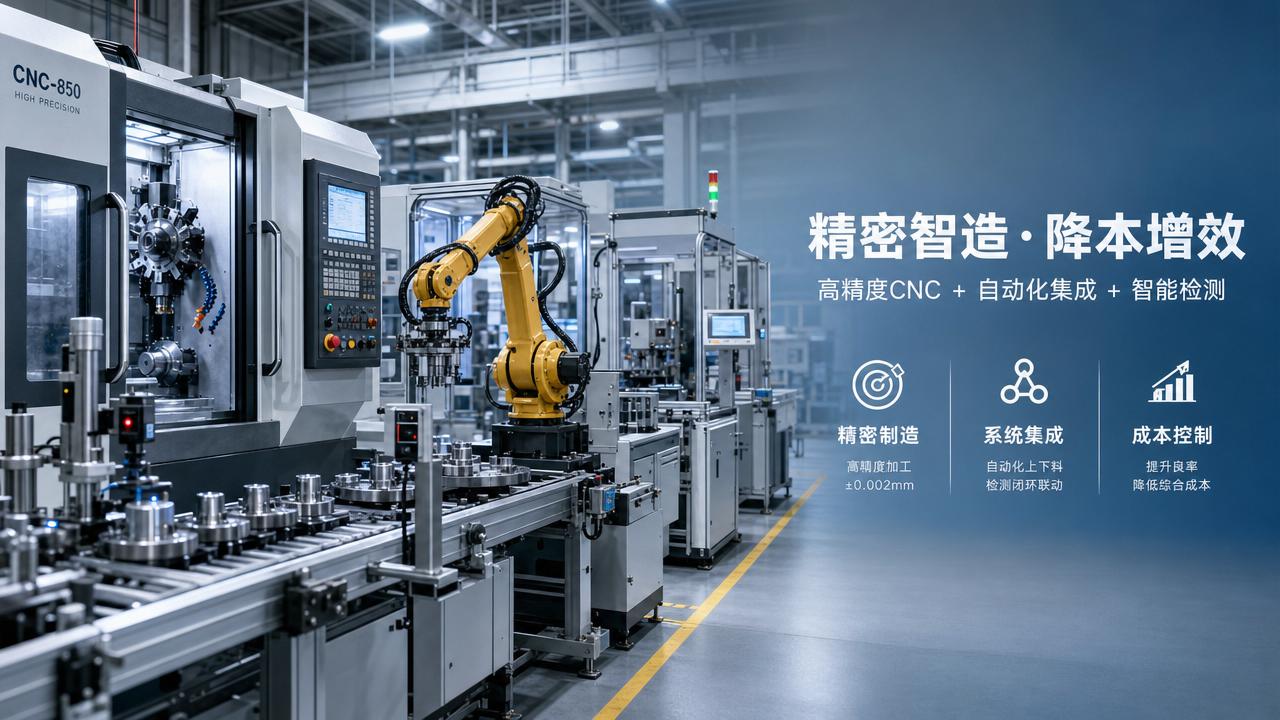
Industrial Automation can reduce labor intensity, improve consistency, and support faster throughput across modern manufacturing. Yet many automation projects fail to deliver expected savings because early decisions ignore process reality, integration complexity, and lifecycle cost.
In CNC machining, precision manufacturing, and connected production lines, Industrial Automation is no longer optional. It shapes cost control, quality stability, delivery speed, and digital competitiveness across automotive, aerospace, electronics, and energy equipment production.
The problem is not automation itself. The problem is poor implementation. When equipment selection, software architecture, maintenance planning, or operator readiness are misaligned, operating costs rise through downtime, scrap, idle capacity, and expensive rework.
Understanding these mistakes helps evaluate real project value. It also creates a better path for scaling Industrial Automation in machine tool environments where precision, uptime, and flexible output matter most.
Core meaning of Industrial Automation in cost-sensitive production
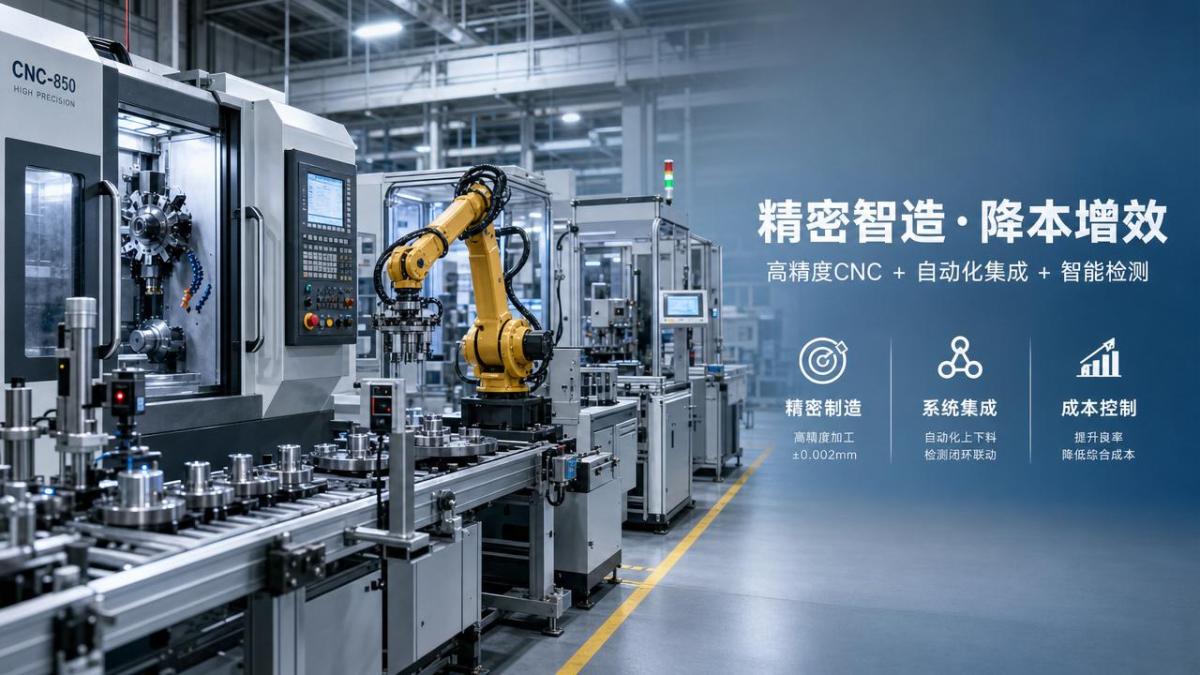
Industrial Automation combines machines, sensors, controls, software, and data flows to execute production tasks with limited manual intervention. In CNC workshops, this includes robotic loading, tool monitoring, automated measurement, pallet systems, and MES connectivity.
Its value is not simply replacing labor. Effective Industrial Automation improves cycle stability, machine utilization, scheduling visibility, traceability, and energy efficiency. These gains become meaningful only when the system matches production mix and process maturity.
A common misunderstanding is treating automation as a standalone equipment purchase. In reality, cost performance depends on the full chain: machine capability, tool life, fixture design, software integration, maintenance response, and production planning discipline.
Current industry signals shaping automation decisions
Global manufacturing is moving toward higher precision, greater digital visibility, and more resilient production networks. This trend is especially visible in CNC machine tools, flexible machining cells, and smart factory programs.
Several signals explain why Industrial Automation projects receive strong attention:
- Mixed product runs require faster changeovers and more adaptive control.
- Skilled labor shortages increase pressure for stable automated processes.
- Energy and material costs make scrap and idle time more expensive.
- Customers demand traceability, repeatability, and shorter delivery windows.
- Digital integration is becoming essential for forecasting, quality, and service.
However, these pressures can trigger rushed investments. Without disciplined evaluation, Industrial Automation may lock a factory into rigid systems, high service dependence, and weak cost recovery.
Industrial Automation mistakes that raise operating costs
1. Automating a weak process
If setup variation, unstable tooling, or poor fixture repeatability already exist, automation scales the problem. Faster throughput then creates faster scrap, more alarms, and repeated intervention that undermines projected savings.
2. Buying equipment before defining production goals
Many projects begin with impressive hardware rather than target metrics. When desired OEE, cycle time, part mix, and changeover frequency are unclear, Industrial Automation often becomes oversized or operationally mismatched.
3. Ignoring system integration cost
Controls, ERP, MES, inspection software, and machine interfaces rarely connect seamlessly. Hidden engineering work, middleware, and custom communication can exceed budget and delay deployment long after equipment installation.
4. Underestimating downtime sources
Automated cells can stop for minor sensor faults, jammed parts, tool breakage, or software errors. Without root-cause monitoring and spare part planning, a small fault can disable several linked assets at once.
5. Poor matching between robots and CNC machine tools
A fast robot does not guarantee a productive cell. If loading speed, door cycle, probe routines, tool change time, and chip evacuation are unbalanced, expensive assets wait instead of producing.
6. Treating maintenance as an afterthought
Industrial Automation needs preventive care, software backups, calibration, and wear tracking. Neglecting maintenance increases emergency service calls, shortens component life, and causes unpredictable stoppages during critical production periods.
7. Inadequate operator and technician training
Advanced systems still depend on people. Weak training leads to unsafe overrides, poor changeovers, incorrect recovery actions, and low confidence in the system, all of which increase support costs.
8. Focusing only on purchase price
Low upfront cost can hide expensive consumables, limited upgrade paths, vendor lock-in, and poor service coverage. Total cost of ownership matters far more than the quoted machine price.
Why these mistakes matter in CNC and precision manufacturing
In precision machining, cost inflation appears quickly because tolerances are tight and process windows are narrow. A minor control issue can trigger part rejection, spindle interruption, or inspection backlog across the line.
Industrial Automation in CNC environments also involves high-value assets. Machining centers, multi-axis systems, tooling packages, and probing systems require coordinated uptime. When one element fails, capital efficiency drops sharply.
The business impact usually appears in five areas:
- Higher scrap from unstable unattended machining
- More overtime to recover delayed orders
- Lower machine utilization due to fault dependency
- Rising spare parts and service contract expenses
- Reduced flexibility for short-run or complex parts
Typical cost-risk scenarios across manufacturing settings
Practical ways to control Industrial Automation costs
A better approach begins with process discipline before capital expansion. Stable machining, clear part families, and measurable bottlenecks should guide every Industrial Automation decision.
- Define baseline KPIs such as OEE, scrap rate, setup time, and labor hours.
- Map material flow, data flow, and intervention points before equipment selection.
- Prioritize modular systems that support phased scaling and easier upgrades.
- Test real production variability, not only ideal cycle conditions.
- Include maintenance tools, spare parts, and training in the initial budget.
- Review integration standards for CNC controls, robots, and factory software early.
It is also useful to separate must-have automation from attractive features. A simpler and stable cell often outperforms a highly complex system that remains underused.
Evaluation checkpoints for stronger long-term returns
Before committing to Industrial Automation, review whether the proposal improves business resilience as well as machine output. Strong projects usually satisfy technical, operational, and financial checkpoints together.
- Can the system handle current and future part variation?
- Are integration responsibilities clearly assigned across vendors?
- Is recovery from faults fast and simple for onsite teams?
- Does ROI include software, service, energy, tooling, and downtime?
- Will the data produced support quality control and planning decisions?
Industrial Automation delivers the best results when it supports a mature process, not when it tries to compensate for an unstable one. In CNC machining and precision manufacturing, that distinction determines whether automation lowers costs or quietly increases them.
The next practical step is to audit one production cell in detail. Measure losses, identify manual intervention causes, and compare them against realistic automation options. That fact-based review creates stronger returns and more reliable modernization decisions.
PREVIOUS ARTICLE
Recommended for You
 Digital Manufacturing for Smart Factories: Connecting Legacy Machines to MESMachine Tool Industry Editorial Team
 How to Select a CNC Metal Lathe for Tight-Tolerance Shaft and Sleeve PartsCNC Machining Technology Center
 How to Select an Industrial Lathe for High-Volume Shaft ProductionMachine Tool Industry Editorial Team
 Selecting Machine Tools for Automotive Parts: Accuracy, Throughput, and AutomationMachine Tool Industry Editorial Team
 Industrial Machining: Selecting Processes for Tight-Tolerance Metal PartsCNC Machining Technology Center
 Manufacturing Technology Trends That Improve Throughput and Quality ControlManufacturing Market Research Center

Aris Katos
Future of Carbide Coatings
15+ years in precision manufacturing systems. Specialized in high-speed milling and aerospace grade alloy processing.
▶
Digital Manufacturing for Smart Factories: Connecting Legacy Machines to MESMachine Tool Industry Editorial Team▶
Selecting Machine Tools for Automotive Parts: Accuracy, Throughput, and AutomationMachine Tool Industry Editorial Team▶
Smart Manufacturing for Small Businesses: Where Automation Delivers the Fastest ROIMachine Tool Industry Editorial Team▶
How Smart Manufacturing Technology Improves OEE Across Industry 4.0 Production LinesMachine Tool Industry Editorial Team▶
How to Evaluate an Automation Line for Electronics Production Before InvestmentMachine Tool Industry Editorial Team
Mastering 5-Axis Workholding Strategies
Join our technical panel on Nov 15th to learn about reducing vibrations in thin-wall components.

Providing you with integrated sanding solutions
Before-sales and after-sales services
Comprehensive technical support