• Global CNC market projected to reach $128B by 2028 • New EU trade regulations for precision tooling components • Aerospace deman
NYSE: CNC +1.2%LME: STEEL -0.4%

When an Automated Production Line becomes hard to maintain
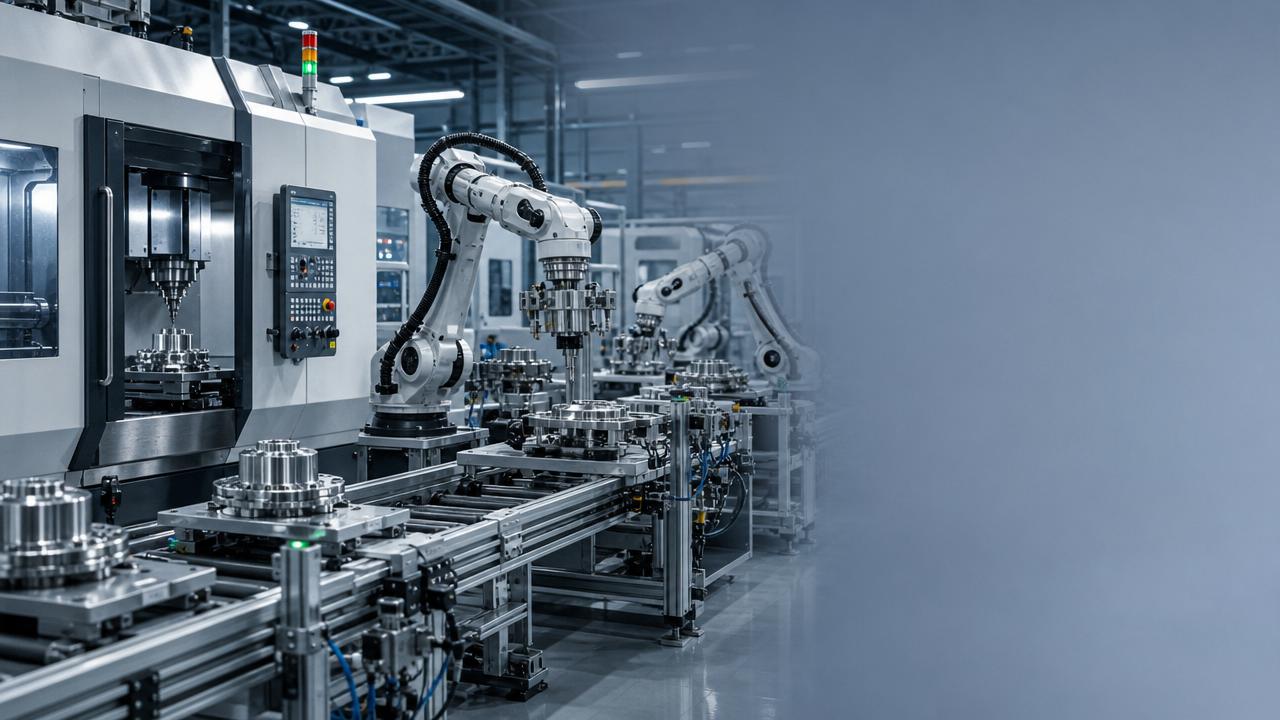
When an Automated Production Line becomes hard to maintain, after-sales service teams are often the first to face rising downtime, unstable output, and frustrated operators. In modern CNC and precision manufacturing environments, maintenance is no longer just about fixing faults—it requires faster diagnostics, better coordination, and a deeper understanding of automation systems. This article explores the key causes behind maintenance complexity and what support teams can do to respond more effectively.
For after-sales maintenance personnel in CNC machining, flexible manufacturing, and automated assembly, the challenge is rarely a single machine failure. It is more often a chain reaction across PLC logic, servo systems, sensors, robot units, HMIs, tooling stations, and data interfaces. When one link becomes unstable, line availability can fall from above 85% to below 70% within a few shifts.
That is why an Automated Production Line must be evaluated not only by output capacity, but also by maintainability. In practical terms, maintainability means how quickly a fault can be identified, how easily spare parts can be sourced, how clearly software logic is documented, and how safely service actions can be performed under production pressure.
Why an Automated Production Line Becomes Hard to Maintain
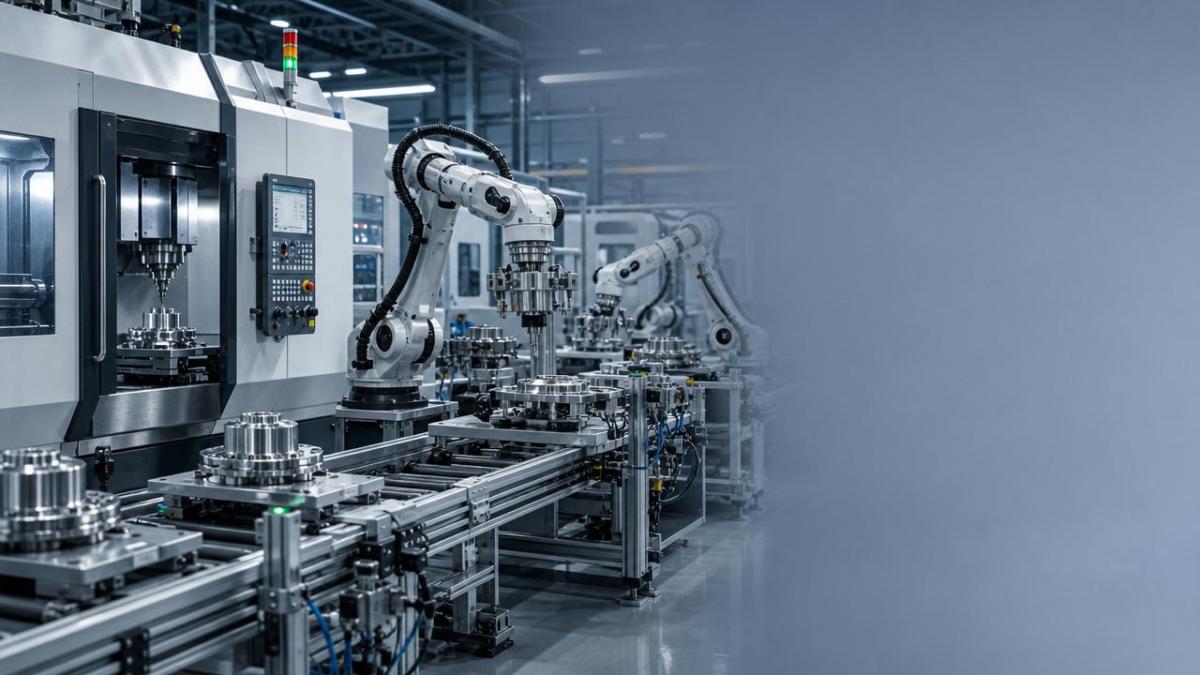
In the CNC machine tool industry, maintenance complexity tends to rise in 3 stages. The first stage appears during commissioning, when mechanical, electrical, and software teams use different standards. The second stage comes after 12 to 24 months, when wear, process drift, and operator adjustments begin to accumulate. The third stage emerges when upgrades are added without a full review of system compatibility.
1. Multi-vendor integration creates diagnostic blind spots
A typical Automated Production Line may include 5 to 12 equipment categories from different suppliers: CNC lathes, machining centers, industrial robots, conveyors, pallet systems, vision units, gauges, and centralized control cabinets. Each subsystem may have its own alarm logic, communication protocol, and maintenance manual.
When documentation is fragmented, after-sales technicians spend more time locating root causes than repairing them. A 15-minute sensor error can turn into 2 hours of downtime if signal routing, I/O mapping, and interlock conditions are not clearly documented.
Common integration pain points
- PLC and robot controller alarms do not use the same fault naming logic.
- Servo drives and spindles may require different software tools and cable interfaces.
- Peripheral equipment often lacks complete backup files for recipes, parameters, or motion sequences.
- Communication failures in Profinet, EtherCAT, or Modbus networks can stop the whole line even when only one node is unstable.
2. Higher precision means narrower maintenance tolerance
In precision manufacturing, a minor deviation can produce major maintenance consequences. Positional repeatability issues of ±0.02 mm to ±0.05 mm may not immediately stop a line, but they can trigger part rejection, fixture overload, abnormal tool wear, or repeated robot retries.
For after-sales teams, this means maintenance is no longer limited to replacing failed components. It includes checking backlash, thermal drift, lubrication conditions, spindle vibration, gripper force, and clamping consistency. In multi-axis systems, one unstable axis can compromise the output of an entire cell.
3. Frequent product changes increase service difficulty
Many manufacturers now run small-batch, multi-SKU production. A line that handled 1 or 2 part families may now switch between 6 to 10 variants in one week. That flexibility improves commercial competitiveness, but it also increases the chance of setup errors, recipe mismatch, and sensor misalignment.
An Automated Production Line becomes especially hard to maintain when changeover procedures are not standardized. If fixture replacement takes 20 minutes but software confirmation takes another 40 minutes, the service burden grows even without hardware failure.
The comparison below shows how common technical factors affect maintenance workload in real manufacturing environments.
The key message is simple: an Automated Production Line becomes difficult to maintain when complexity grows faster than service visibility. For after-sales teams, better transparency is often more valuable than adding more emergency spare parts.
Operational Symptoms That Maintenance Teams Should Not Ignore
Most difficult lines do not fail all at once. They show warning signs over days or weeks. Recognizing these symptoms early can reduce unplanned stoppage by one full shift or more, especially in CNC transfer lines, automated loading cells, and robot-assisted machining systems.
Repeated micro-stops
If the line stops for 30 seconds to 3 minutes several times per shift, the issue is often underestimated. Yet 12 short interruptions in an 8-hour shift can remove 6% to 10% of effective production time. These events usually point to unstable sensors, timing conflicts, air pressure fluctuation, or weak fixture confirmation logic.
Growing dependence on experienced individuals
A healthy Automated Production Line should be maintainable by trained personnel using standard procedures. If only 1 or 2 senior engineers can restore operation after a stop, the line already has a maintainability problem. Knowledge concentrated in individuals is a major service risk during night shifts, holidays, and high-output periods.
Unclear fault history
When alarm logs are incomplete, overwritten, or disconnected from actual repair records, teams lose the ability to identify recurring patterns. In many plants, the same actuator, cable chain, or proximity switch fails 3 times in 6 months without being classified as a systemic issue.
Fast field checks for after-sales personnel
- Review the last 20 to 50 alarms, not only the latest one.
- Compare downtime events by shift, operator group, and product model.
- Check whether recovery depends on manual override or reset repetition.
- Confirm whether spare parts used in the last 90 days match the failure pattern.
The table below can help service teams separate surface symptoms from likely root causes before escalating to electrical, mechanical, or software specialists.
By treating these symptoms as early maintenance signals rather than isolated incidents, after-sales teams can shorten troubleshooting cycles and avoid repeated emergency visits.
How After-Sales Teams Can Improve Maintainability in Practice
When an Automated Production Line is already in operation, most service improvements must be practical, low-disruption, and measurable within 2 to 8 weeks. The goal is not to redesign the entire line at once, but to improve fault visibility, response speed, and repeatability of maintenance actions.
Build a layered troubleshooting framework
A useful method is to divide faults into 4 layers: process, mechanical, electrical, and software. This prevents teams from jumping directly into controller changes when the actual problem is a worn stop block, unstable pneumatic pressure, or improper part presentation.
In many machining and assembly cells, 60% to 70% of stoppages can be narrowed down within the first 10 minutes if this layered logic is consistently used. That result depends on standard checklists, accessible logs, and clear decision thresholds.
Suggested 5-step service workflow
- Confirm production condition: part model, cycle stage, alarm timestamp.
- Isolate fault domain: machine, robot, transfer, fixture, or communication.
- Compare live values with baseline ranges such as pressure, current, or axis position.
- Restore operation using the least invasive action first.
- Record root cause, corrective action, and prevention point within the same shift.
Standardize software and backup discipline
One of the most avoidable causes of maintenance delay is incomplete backup control. Every Automated Production Line should have version-controlled backups for PLC programs, HMI projects, robot files, servo parameters, and key recipes. In high-mix production, a weekly backup cycle is often more suitable than a monthly one.
It is equally important to label changes. If parameter edits are made during urgent recovery but not recorded, the next failure may become harder to trace. Good service discipline reduces hidden variability that slowly undermines reliability.
Upgrade spare-parts strategy from stockkeeping to criticality ranking
Not every component deserves immediate local stock. After-sales teams should rank parts by 3 factors: failure frequency, replacement time, and procurement lead time. A low-cost sensor with a 24-hour lead time may be less critical than a servo amplifier with a 3 to 6 week supply cycle.
For critical CNC and automation systems, a practical target is to define 10 to 20 A-class parts that can stop the line completely, 20 to 40 B-class parts that reduce output, and a broader C-class list for routine wear items. This structure helps both service planning and customer communication.
What Buyers and Plant Managers Should Ask Before Accepting a Line
Many maintainability problems begin before production starts. If plant managers, technical buyers, and after-sales teams are not involved during acceptance, the delivered system may meet takt time targets but fail daily service requirements. A well-performing Automated Production Line should be easy to support, not only easy to sell.
Acceptance criteria should include service readiness
Beyond output rate and dimensional accuracy, line acceptance should verify at least 6 service items: complete electrical drawings, software backups, spare-parts list, fault code description, maintenance schedule, and operator recovery instructions. Without these deliverables, response time will remain dependent on supplier availability.
Check whether the line supports practical maintenance access
Maintenance access is often overlooked during layout design. Technicians need safe space to inspect drives, replace sensors, align fixtures, and test actuators. If a 5-minute component replacement requires 45 minutes of guarding removal and lockout preparation, the system is functionally difficult to maintain.
Key questions during pre-acceptance or retrofit review
- Can a first-level technician identify the fault location within 10 to 15 minutes?
- Are all controller backups verified on external media and not only stored inside the machine?
- Does the alarm history keep enough records for at least 30 days of operation?
- Are consumables, wear parts, and critical components clearly separated in the spare-parts list?
- Can product changeover be completed with step-by-step confirmation instead of informal operator memory?
These questions are especially relevant for suppliers and users in China, Germany, Japan, South Korea, and other major machine tool markets where global sourcing, software diversity, and multi-site support are common.
Long-Term Service Strategy for a More Stable Automated Production Line
The most resilient maintenance model combines preventive, predictive, and response-based actions. Preventive work covers lubrication, inspection, and scheduled replacement. Predictive work focuses on temperature trend, vibration change, cycle-count wear, and alarm recurrence. Response-based work addresses the unexpected but should become less dominant over time.
For after-sales organizations supporting CNC machine tools and precision manufacturing customers, a strong long-term strategy usually includes quarterly line reviews, a documented issue database, remote support capability, and annual training refreshers. Even a 10% improvement in mean time to repair can create visible gains in output stability.
Train for systems thinking, not only component replacement
Modern lines are increasingly digital and interconnected. A technician who can replace a sensor but cannot interpret signal dependencies may solve symptoms rather than causes. Training should cover mechanical motion logic, I/O flow, recipe management, communication basics, and process interaction with machining quality.
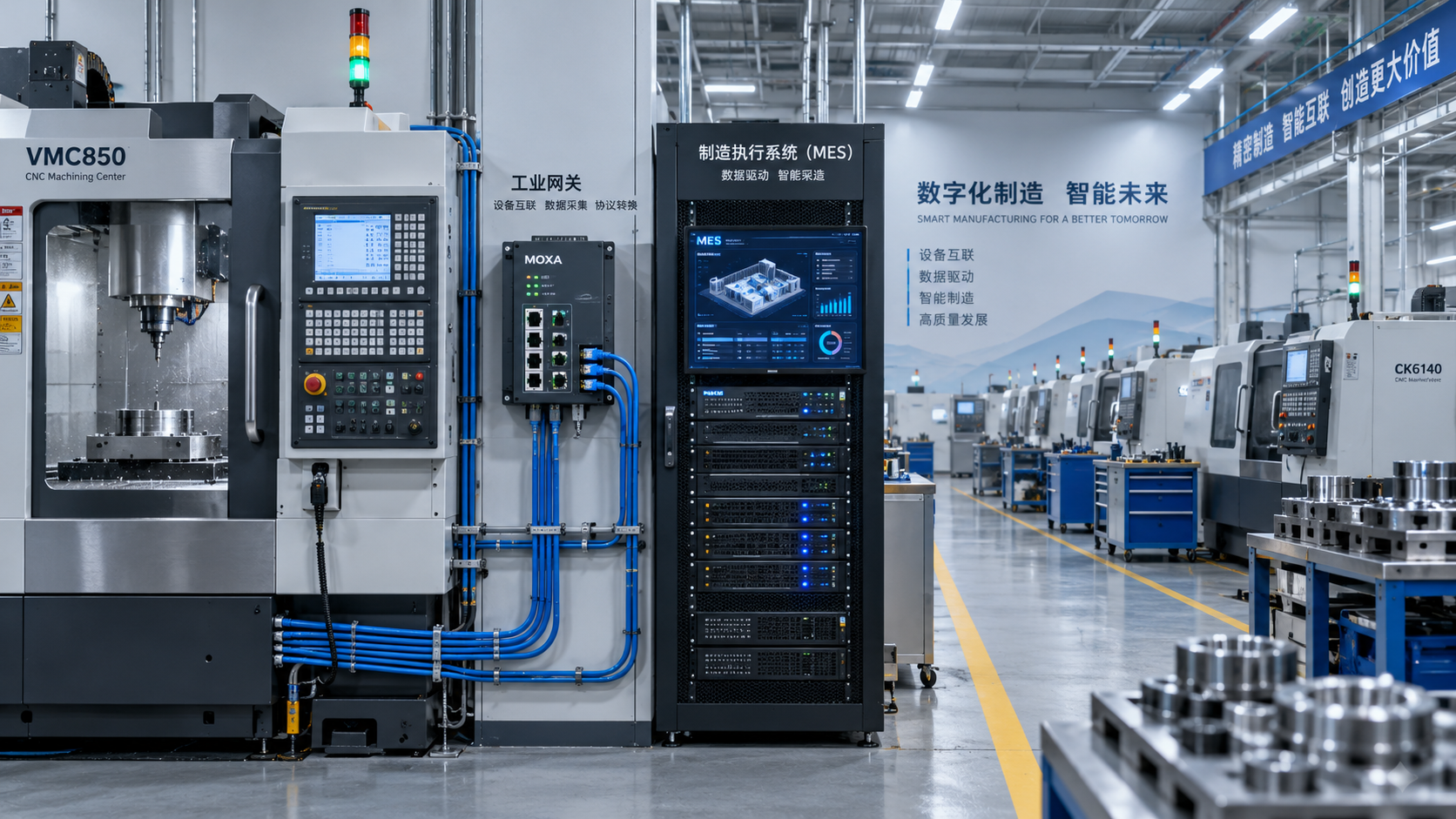
This is particularly important in smart factory environments where CNC machines, robots, MES links, and automated material handling systems exchange data continuously. Service competence now depends on cross-functional understanding as much as hands-on repair skill.
When an Automated Production Line becomes hard to maintain, the solution is rarely a single spare part or one emergency visit. The real improvement comes from clearer architecture, stronger documentation, faster diagnosis, smarter spare-parts planning, and better cooperation between supplier, plant, and after-sales teams. If you are evaluating a new line, upgrading an existing CNC automation cell, or trying to reduce repeat downtime, now is the right time to review maintainability as a core performance factor. Contact us today to discuss your maintenance challenges, get a tailored support plan, and learn more about practical solutions for stable automated production.
PREVIOUS ARTICLE
Recommended for You
 Digital Manufacturing for Smart Factories: Connecting Legacy Machines to MESMachine Tool Industry Editorial Team
 How to Select a CNC Metal Lathe for Tight-Tolerance Shaft and Sleeve PartsCNC Machining Technology Center
 How to Select an Industrial Lathe for High-Volume Shaft ProductionMachine Tool Industry Editorial Team
 Selecting Machine Tools for Automotive Parts: Accuracy, Throughput, and AutomationMachine Tool Industry Editorial Team
 Industrial Machining: Selecting Processes for Tight-Tolerance Metal PartsCNC Machining Technology Center
 Manufacturing Technology Trends That Improve Throughput and Quality ControlManufacturing Market Research Center

Aris Katos
Future of Carbide Coatings
15+ years in precision manufacturing systems. Specialized in high-speed milling and aerospace grade alloy processing.
▶
Digital Manufacturing for Smart Factories: Connecting Legacy Machines to MESMachine Tool Industry Editorial Team▶
Selecting Machine Tools for Automotive Parts: Accuracy, Throughput, and AutomationMachine Tool Industry Editorial Team▶
Smart Manufacturing for Small Businesses: Where Automation Delivers the Fastest ROIMachine Tool Industry Editorial Team▶
How Smart Manufacturing Technology Improves OEE Across Industry 4.0 Production LinesMachine Tool Industry Editorial Team▶
How to Evaluate an Automation Line for Electronics Production Before InvestmentMachine Tool Industry Editorial Team
Mastering 5-Axis Workholding Strategies
Join our technical panel on Nov 15th to learn about reducing vibrations in thin-wall components.

Providing you with integrated sanding solutions
Before-sales and after-sales services
Comprehensive technical support