• Global CNC market projected to reach $128B by 2028 • New EU trade regulations for precision tooling components • Aerospace deman
NYSE: CNC +1.2%LME: STEEL -0.4%

Industrial Automation saves labor, but when does it pay?
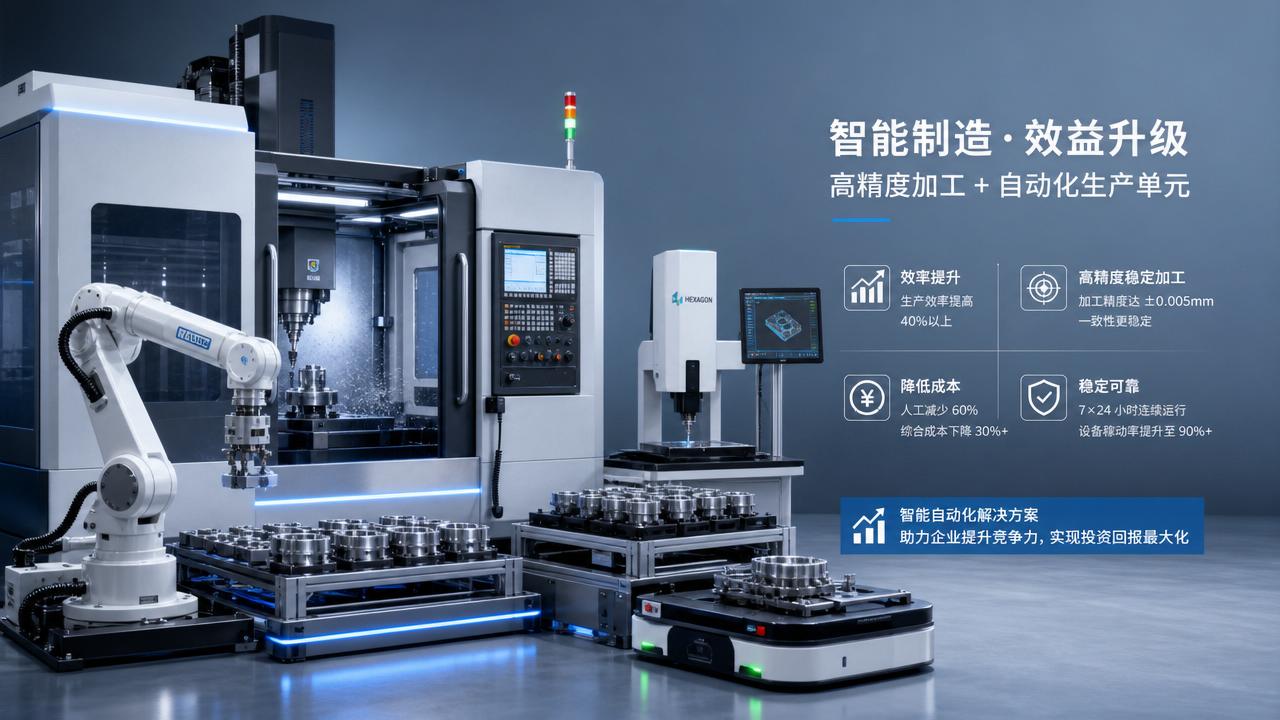
Industrial Automation can cut labor costs, improve consistency, and raise output, but for financial decision-makers, the real question is timing: when does the investment start delivering measurable returns? In capital-intensive manufacturing, from CNC machining to automated production lines, understanding payback periods, utilization rates, and long-term efficiency gains is essential before approving the next automation project.
What does Industrial Automation really change in CNC and precision manufacturing economics?
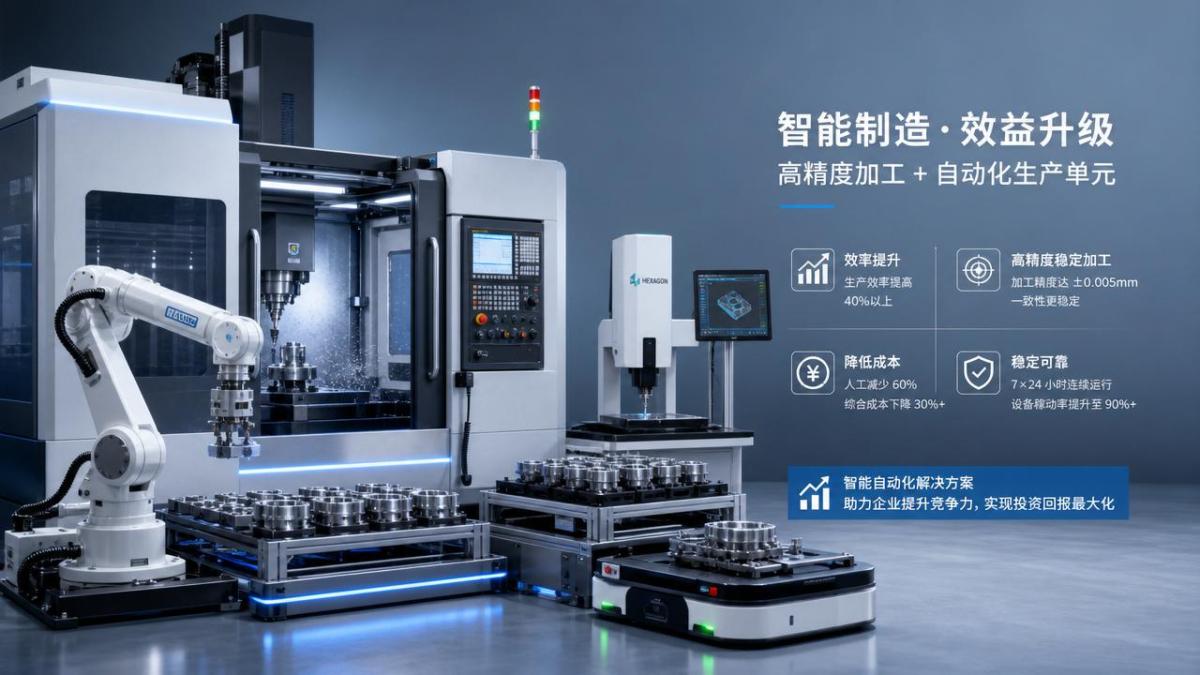
In the CNC machine tool industry, Industrial Automation is not just about replacing operators with robots. It changes the cost structure of production by shifting spending from variable labor toward fixed capital, software, tooling integration, and process control.
For a financial approver, that shift matters because the project only makes sense when higher machine utilization, lower scrap, reduced setup time, and more stable throughput offset depreciation, financing, maintenance, and integration risk.
This is especially relevant in sectors such as automotive components, aerospace parts, energy equipment, and electronics production, where tolerances are tight, production continuity is critical, and late delivery can cost more than direct labor alone.
- Manual production depends heavily on operator skill, shift availability, and training consistency.
- Semi-automated cells improve output but may still carry bottlenecks in loading, unloading, or inspection.
- Integrated Industrial Automation can connect machine tools, robots, fixtures, sensors, and software into a repeatable production system.
The financial question is therefore not whether automation saves labor in theory. It is whether your production mix, order stability, quality targets, and machine loading profile are strong enough to convert technical capability into measurable return.
When does Industrial Automation usually pay back?
Payback depends on the baseline you are improving. In CNC and precision manufacturing, the return often comes from a combination of labor reduction, longer unattended runtime, lower scrap, fewer changeover losses, and better delivery performance.
The table below gives a practical view of which operating conditions tend to support faster ROI for Industrial Automation investments.
As a rule, Industrial Automation pays earlier when machine uptime is already constrained by labor availability, when part quality is sensitive to human variation, and when orders are stable enough to justify process standardization.
A practical ROI view for approval teams
Financial reviewers should look beyond simple headcount replacement. A robust business case should include direct labor, overtime, quality loss, missed delivery penalties, machine idle time, and the cost of recruiting and retaining skilled operators.
- Direct savings: fewer operators per shift, lower overtime, lower scrap, lower rework.
- Indirect savings: more predictable scheduling, better spindle utilization, less dependence on scarce labor.
- Strategic gains: ability to quote higher precision jobs, faster response to capacity peaks, and better auditability for customers.
Which automation scenarios deliver the strongest financial case?
Not all automation projects produce the same economic result. In machine tool environments, some applications are naturally more finance-friendly because they remove repetitive labor from high-frequency operations while protecting quality and throughput.
High-value use cases in manufacturing
- Robot loading and unloading for CNC lathes and machining centers handling repeat parts across long production runs.
- Automated pallet systems that extend spindle-on time during shift changes, breaks, and unattended night operation.
- In-line gauging or inspection for precision parts where scrap cost is high and nonconformance risks customer claims.
- Flexible cells that combine machine tools, fixtures, and material handling for medium-volume families with predictable geometry.
These applications align well with the direction of the global machine tool market, where higher precision, greater automation, and digital integration are becoming standard expectations rather than optional upgrades.
Scenarios that require more caution
Finance teams should be more cautious when part variation is extreme, engineering changes are frequent, or fixtures and programs require constant modification. In such cases, a lighter automation layer may deliver better returns than a fully integrated system.
Manual, semi-automated, or fully automated: which option makes financial sense?
A good approval process compares alternatives instead of assuming full Industrial Automation is always the best answer. Sometimes the highest return comes from solving the biggest bottleneck first.
The comparison below helps finance leaders evaluate labor impact, flexibility, and capital exposure across common production models.
This comparison shows why approval should start with utilization and process fit, not with technology excitement. The most advanced line is not automatically the most profitable line.
What numbers should financial decision-makers check before approving Industrial Automation?
A strong capital review needs more than a vendor quote. It should test the assumptions that drive return and expose the conditions under which payback could slip.
Core approval metrics
- Current and projected machine utilization, including actual spindle-on time rather than scheduled hours alone.
- Labor cost per part, including overtime, supervision, training, absenteeism, and shift premiums.
- Scrap and rework cost by part family, especially for expensive alloys or precision components.
- Setup frequency and changeover duration, because these directly affect automation utilization.
- Expected maintenance cost, spare parts planning, and software or integration support requirements.
In high-precision machining, the best projects often show a blended benefit profile. Labor savings start the discussion, but quality stability and output expansion usually determine whether the project clears the investment hurdle.
Questions worth asking vendors and internal teams
- What cycle time assumptions are based on proven operation rather than ideal simulation?
- How much unattended runtime is realistic for our part mix and tooling life?
- What happens to ROI if order volume drops by 15% or if a key part family changes?
- Can the solution be expanded in stages instead of funding the full system on day one?
How do procurement and implementation decisions affect payback?
Industrial Automation projects do not fail only because of equipment choice. They also lose value through poor scope control, weak fixture planning, unclear acceptance criteria, and long commissioning delays.
The procurement side should therefore evaluate the complete production solution: machine compatibility, robot handling logic, fixture repeatability, tooling life, safety integration, and data visibility.
A practical procurement checklist
- Confirm whether the target machines, such as CNC lathes or machining centers, already support the required automation interfaces.
- Review fixture and gripper suitability for part geometry, surface protection, and repeat positioning accuracy.
- Check whether process capability targets and acceptance standards are defined before installation begins.
- Include training, spare parts, and service response expectations in the commercial review, not as afterthoughts.
For global manufacturing groups sourcing across China, Germany, Japan, South Korea, and other industrial clusters, supplier evaluation should also consider documentation quality, export coordination, and long-term technical support.
What standards and compliance points should not be ignored?
For finance, compliance is not just a legal box. It protects uptime, customer acceptance, and future audit costs. In machine tool and automated cell projects, safety and documentation quality can influence installation speed and operational risk.
The table below summarizes common compliance areas that should be reviewed when assessing Industrial Automation in precision manufacturing.
Even where no special certification is mandated by the project brief, these checks can prevent expensive delays during acceptance, customer qualification, or cross-border equipment deployment.
Common mistakes that make Industrial Automation look cheaper or faster than it is
Many automation proposals look attractive because the labor savings are clear and easy to present. Yet disappointing returns often come from hidden assumptions rather than from the technology itself.
Frequent approval mistakes
- Assuming every planned hour becomes productive hour, without accounting for setup, tool change, and maintenance time.
- Ignoring fixture redesign, programming effort, and operator training in the initial budget.
- Approving a rigid solution for a product mix that changes too often to support stable automation.
- Using labor reduction as the only value driver while overlooking quality, throughput, and delivery economics.
A disciplined review process should test downside scenarios. If volume softens, can the system still be redeployed? If a part family changes, can fixtures and robot handling be adapted without major reinvestment?
FAQ: what finance teams often ask about Industrial Automation
How should we estimate a realistic payback period?
Start with current labor and output, then add scrap reduction, machine uptime improvement, and expected unattended production hours. Use conservative assumptions for utilization during the first months after commissioning, because ramp-up almost never reaches peak performance immediately.
Is Industrial Automation only suitable for very large factories?
No. Smaller manufacturers can benefit if they have repeat parts, labor shortages, or expensive quality failures. The key is matching the level of automation to the production reality. A modular cell or pallet solution may be more appropriate than a full line.
What should procurement prioritize: lowest price or fastest return?
Fastest return is usually the stronger criterion. A lower purchase price can still become a more expensive decision if integration quality is weak, commissioning takes longer, or the system cannot sustain target uptime under real production conditions.
How long does implementation usually take?
It depends on machine readiness, tooling complexity, fixture design, controls integration, and acceptance scope. Finance teams should ask for a staged timeline covering engineering review, build, installation, trial production, and operator training rather than relying on a single delivery date.
Why choose us when evaluating Industrial Automation for CNC and precision manufacturing?
We focus on the global CNC machining and precision manufacturing industry, where investment decisions are shaped by machine capability, automation fit, process stability, and international supply considerations. That industry focus helps turn technical information into procurement-ready and finance-relevant guidance.
If you are reviewing an Industrial Automation project, you can contact us for support on specific decision points rather than broad sales language. We can help structure discussions around machine matching, application scenarios, sourcing regions, and practical evaluation criteria.
- Parameter confirmation for CNC machines, automation cells, or production line configurations.
- Product selection guidance based on part type, batch size, shift model, and target utilization.
- Delivery cycle discussion for imported or cross-border equipment sourcing and integration planning.
- Custom solution review for fixtures, loading methods, flexible cell layouts, and process compatibility.
- Certification and compliance topic review, including documentation expectations and acceptance preparation.
- Quotation communication support to compare alternatives on lifecycle value, not purchase price alone.
For financial approvers, the best Industrial Automation decision is rarely the fastest yes or no. It is the decision backed by credible utilization assumptions, a realistic implementation path, and a sourcing strategy aligned with long-term manufacturing performance.
PREVIOUS ARTICLE
Recommended for You
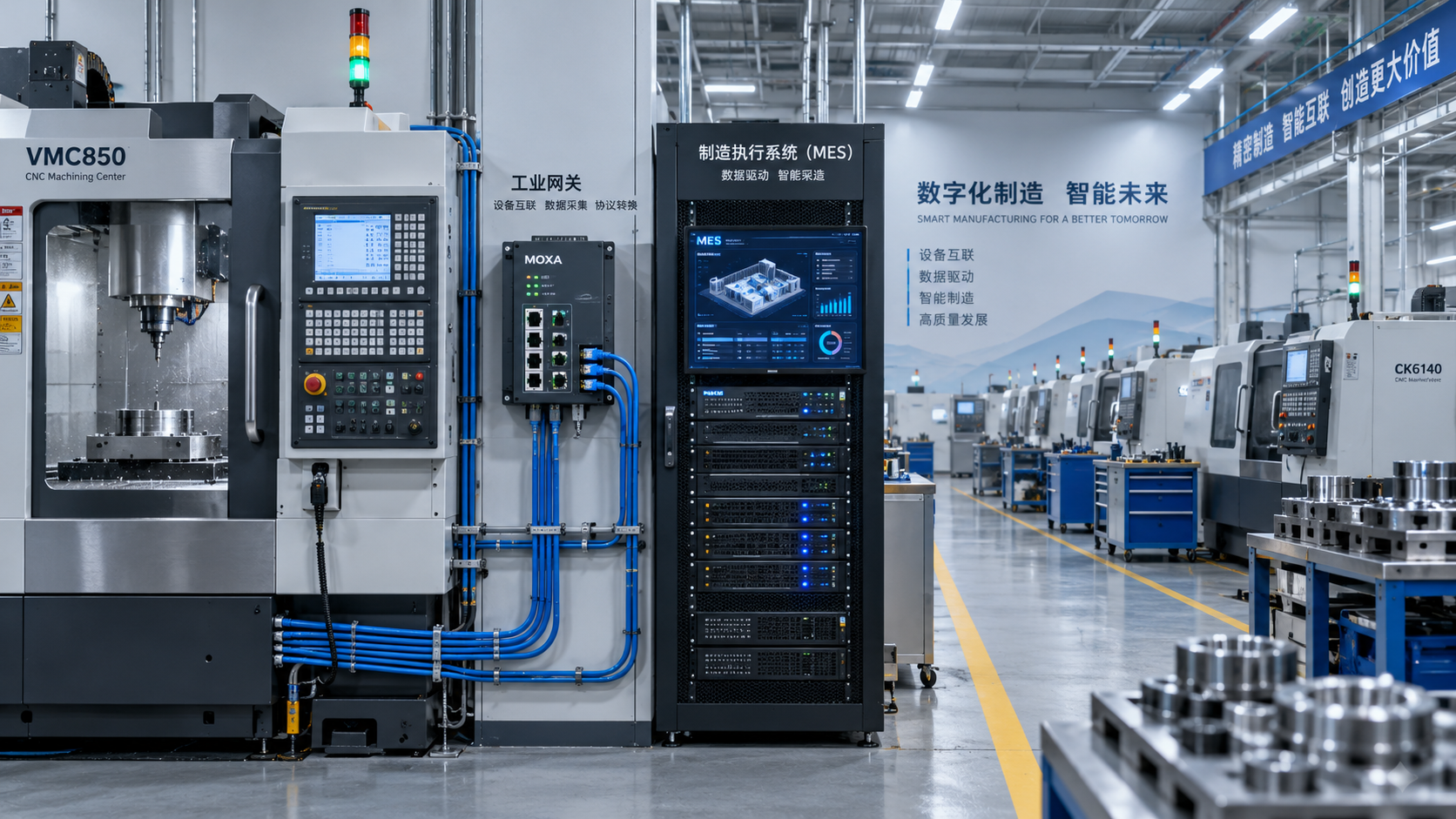
 Digital Manufacturing for Smart Factories: Connecting Legacy Machines to MESMachine Tool Industry Editorial Team
 How to Select a CNC Metal Lathe for Tight-Tolerance Shaft and Sleeve PartsCNC Machining Technology Center
 How to Select an Industrial Lathe for High-Volume Shaft ProductionMachine Tool Industry Editorial Team
 Selecting Machine Tools for Automotive Parts: Accuracy, Throughput, and AutomationMachine Tool Industry Editorial Team
 Industrial Machining: Selecting Processes for Tight-Tolerance Metal PartsCNC Machining Technology Center
 Manufacturing Technology Trends That Improve Throughput and Quality ControlManufacturing Market Research Center

Aris Katos
Future of Carbide Coatings
15+ years in precision manufacturing systems. Specialized in high-speed milling and aerospace grade alloy processing.
▶
Digital Manufacturing for Smart Factories: Connecting Legacy Machines to MESMachine Tool Industry Editorial Team▶
Selecting Machine Tools for Automotive Parts: Accuracy, Throughput, and AutomationMachine Tool Industry Editorial Team▶
Smart Manufacturing for Small Businesses: Where Automation Delivers the Fastest ROIMachine Tool Industry Editorial Team▶
How Smart Manufacturing Technology Improves OEE Across Industry 4.0 Production LinesMachine Tool Industry Editorial Team▶
How to Evaluate an Automation Line for Electronics Production Before InvestmentMachine Tool Industry Editorial Team
Mastering 5-Axis Workholding Strategies
Join our technical panel on Nov 15th to learn about reducing vibrations in thin-wall components.

Providing you with integrated sanding solutions
Before-sales and after-sales services
Comprehensive technical support