• Global CNC market projected to reach $128B by 2028 • New EU trade regulations for precision tooling components • Aerospace deman
NYSE: CNC +1.2%LME: STEEL -0.4%

When an Automated Production Line pays off faster
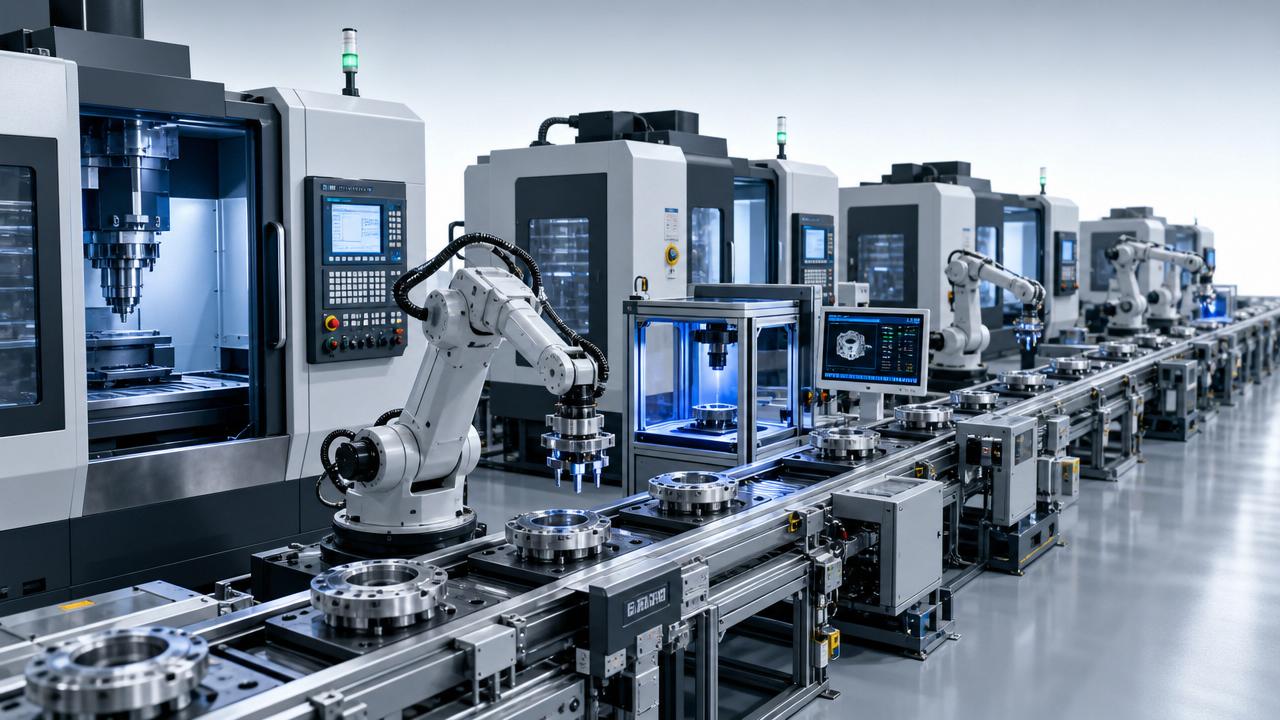
For business decision-makers, knowing when an Automated Production Line pays off faster is critical to balancing investment and competitiveness.
In modern manufacturing, higher precision, shorter lead times, and stable output are now baseline requirements.
That is why an Automated Production Line is no longer only about labor reduction.
It affects quality consistency, machine utilization, delivery reliability, and the ability to scale profitable production.
The fastest payback usually appears in specific operating scenarios, not in every factory at the same time.
When production bottlenecks make an Automated Production Line the logical next step
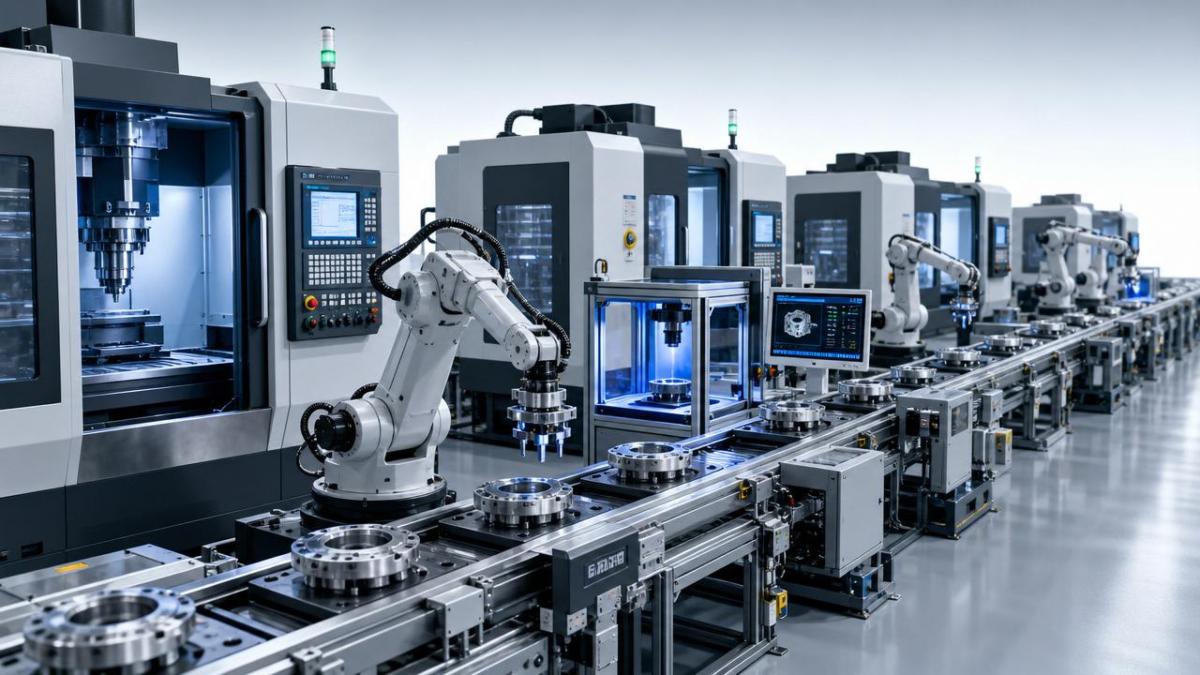
An Automated Production Line pays off faster when current processes already run near capacity.
In CNC machining, repeated setups, manual transfer, and inspection delays often become the real profit drain.
If machines wait for operators more than operators wait for machines, automation deserves serious evaluation.
This is common in automotive parts, electronics housings, valve bodies, shaft components, and precision structural parts.
In these settings, an Automated Production Line reduces idle time between machining, loading, unloading, gauging, and sorting.
The return accelerates because each saved minute repeats across thousands of cycles.
Signals that manual flow is already too expensive
- Frequent overtime is needed to keep up with stable demand.
- Scrap rises during shift changes or operator turnover.
- WIP inventory grows between machining cells.
- Cycle time variation disrupts delivery commitments.
- Traceability and in-process quality checks are inconsistent.
When several of these issues appear together, an Automated Production Line often produces measurable savings within a shorter horizon.
Which manufacturing scenarios see faster payback first
Not every operation benefits equally from the same automation strategy.
Payback speed depends on part mix, quality risk, labor intensity, and the cost of production interruptions.
Scenario 1: High-volume, low-variation parts
This is the strongest case for an Automated Production Line.
Examples include brake components, motor housings, pump parts, connectors, and standardized energy equipment fittings.
Stable geometry allows optimized fixtures, robotic handling, predictable tool life, and balanced takt time.
Because changeovers are limited, the line can run longer with fewer interruptions.
Scenario 2: Quality-critical precision machining
A faster payoff also appears when defects are expensive.
In aerospace subcomponents, medical-grade parts, and high-tolerance industrial assemblies, consistency matters more than simple throughput.
An Automated Production Line can integrate probing, tool monitoring, torque control, and digital data capture.
That reduces hidden costs from rework, inspection backlog, warranty exposure, and shipment delays.
Scenario 3: Labor-constrained multi-shift operations
Where staffing is unstable, automation often pays back faster than expected.
Night shifts, repetitive loading tasks, and hard-to-fill machining roles create uneven performance.
An Automated Production Line supports unattended or lightly attended production windows.
That improves spindle utilization without depending entirely on labor availability.
Scenario 4: Mixed-model production with digital control maturity
Automation can still work in flexible environments, but only under the right conditions.
If CNC programs, fixtures, part identification, and scheduling systems are already standardized, flexible automation becomes practical.
Here, an Automated Production Line pays off through faster switching, lower planning friction, and stronger production visibility.
How different scenarios change the ROI of an Automated Production Line
The same equipment can create very different financial outcomes across industries and production models.
This comparison shows why an Automated Production Line should be judged by operational context, not headline automation trends.
What to evaluate before investing in an Automated Production Line
A smart decision starts with production data, not vendor claims.
Three questions usually determine whether the business case is strong.
- Is demand stable enough to keep the line loaded?
- Are upstream and downstream processes ready for synchronized flow?
- Can digital controls support traceability, maintenance, and scheduling?
For CNC machining and precision manufacturing, readiness also includes tooling discipline, fixture repeatability, and reliable process capability.
Without these basics, an Automated Production Line may simply automate instability.
Useful metrics for faster investment decisions
- Current OEE and target OEE after automation
- Cycle time per part and non-cutting time share
- Scrap, rework, and containment costs
- Labor cost per shift and turnover impact
- Changeover time and fixture standardization rate
- Planned maintenance maturity and spare parts access
Common mistakes that delay Automated Production Line payback
The most expensive error is treating automation as a machine purchase instead of a system redesign.
A second mistake is ignoring part family selection.
If unsuitable parts enter the line, downtime and exceptions quickly erase projected savings.
Another frequent oversight is underestimating software integration.
An Automated Production Line performs best when machine data, quality checkpoints, and material flow speak the same language.
Maintenance planning is also critical.
Unplanned stoppages can damage ROI more than the original labor problem.
Finally, some facilities aim for full automation too early.
A phased Automated Production Line often reaches payback faster than an oversized all-at-once deployment.
Practical steps to identify whether an Automated Production Line will pay off faster
Start with one part family, one bottleneck, and one measurable objective.
Map the current process from raw input to finished output.
Then isolate manual touches, waiting time, inspection loops, and quality escapes.
Estimate the value of removing those losses over twelve to thirty-six months.
Next, compare a basic cell, a flexible robotic unit, and a full Automated Production Line configuration.
The best answer is often the option that solves the exact constraint with the least complexity.
In global CNC and precision manufacturing, competitiveness increasingly depends on throughput, repeatability, and digital control.
When stable demand, repeatable processes, and costly bottlenecks align, an Automated Production Line can pay off much faster than expected.
The next step is simple: review actual production data, define the target scenario, and test automation where ROI is easiest to prove.
PREVIOUS ARTICLE
Recommended for You
 Digital Manufacturing for Smart Factories: Connecting Legacy Machines to MESMachine Tool Industry Editorial Team
 How to Select a CNC Metal Lathe for Tight-Tolerance Shaft and Sleeve PartsCNC Machining Technology Center
 How to Select an Industrial Lathe for High-Volume Shaft ProductionMachine Tool Industry Editorial Team
 Selecting Machine Tools for Automotive Parts: Accuracy, Throughput, and AutomationMachine Tool Industry Editorial Team
 Industrial Machining: Selecting Processes for Tight-Tolerance Metal PartsCNC Machining Technology Center
 Manufacturing Technology Trends That Improve Throughput and Quality ControlManufacturing Market Research Center

Aris Katos
Future of Carbide Coatings
15+ years in precision manufacturing systems. Specialized in high-speed milling and aerospace grade alloy processing.
▶
Digital Manufacturing for Smart Factories: Connecting Legacy Machines to MESMachine Tool Industry Editorial Team▶
Selecting Machine Tools for Automotive Parts: Accuracy, Throughput, and AutomationMachine Tool Industry Editorial Team▶
Smart Manufacturing for Small Businesses: Where Automation Delivers the Fastest ROIMachine Tool Industry Editorial Team▶
How Smart Manufacturing Technology Improves OEE Across Industry 4.0 Production LinesMachine Tool Industry Editorial Team▶
How to Evaluate an Automation Line for Electronics Production Before InvestmentMachine Tool Industry Editorial Team
Mastering 5-Axis Workholding Strategies
Join our technical panel on Nov 15th to learn about reducing vibrations in thin-wall components.

Providing you with integrated sanding solutions
Before-sales and after-sales services
Comprehensive technical support