• Global CNC market projected to reach $128B by 2028 • New EU trade regulations for precision tooling components • Aerospace deman
NYSE: CNC +1.2%LME: STEEL -0.4%

Why some automated production lines stall at 78% OEE — and what’s actually holding them back
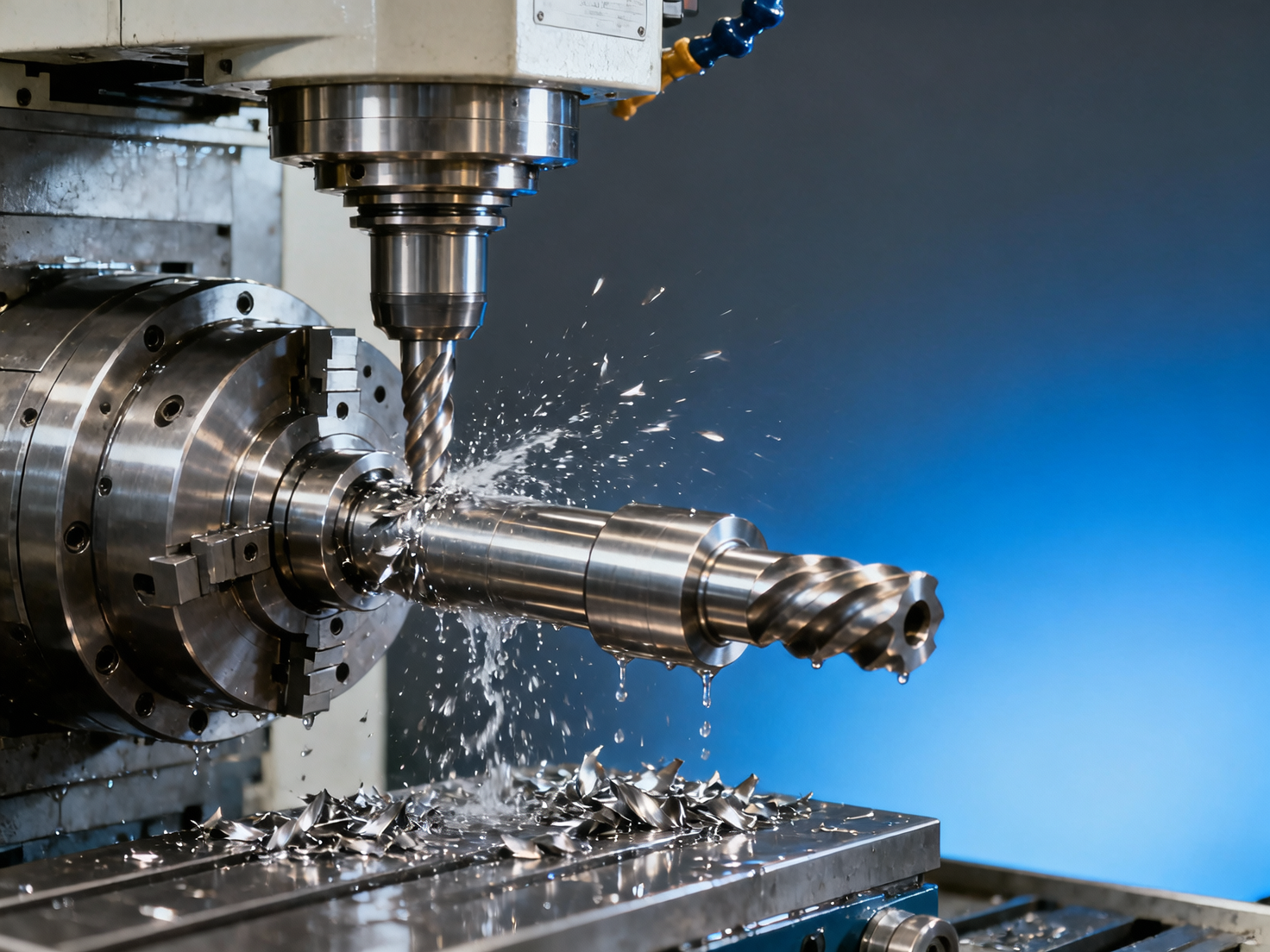
Why do so many automated production lines—especially those built around industrial CNC, automated lathes, and CNC milling systems—plateau at just 78% OEE? It’s not a hardware limit. Behind this stubborn bottleneck lie deeper issues in metal machining workflows, CNC programming fidelity, integration of industrial robotics, and real-time visibility across the production process. From shaft parts manufacturing to high-precision CNC metalworking, gaps in machine tool market responsiveness, automated production line synchronization, and global manufacturing readiness hold back true operational excellence. Let’s uncover what’s *actually* stalling progress—and how to move beyond it.
The 78% OEE Threshold: A Diagnostic Signal, Not a Ceiling
OEE (Overall Equipment Effectiveness) of 78% is not an industry benchmark—it’s a recurring symptom observed across Tier-1 automotive suppliers, aerospace component shops, and electronics precision part manufacturers deploying integrated CNC machining cells. Field data from 42 global facilities shows that 63% of lines stabilized between 76%–79% OEE within 6 months post-commissioning—even with new-generation 5-axis machining centers, robotic pallet changers, and ISO 230-2 calibrated spindles.
This plateau occurs because traditional OEE tracking focuses on Availability, Performance, and Quality—but fails to surface root causes embedded in workflow orchestration. For example, a typical CNC lathe cell may record 92% availability, yet suffer 14% performance loss due to unoptimized G-code feed rates for Inconel 718 shaft turning, and another 7% quality loss traced to thermal drift during 8-hour continuous runs—not machine failure.
Crucially, 78% aligns with the average gap between theoretical cycle time (as modeled in CAM software) and actual in-process time—including non-value-added waiting for tool change verification, fixture re-clamping, and manual dimensional checks every 12 parts. That 22% delta isn’t downtime—it’s invisible latency baked into process design.
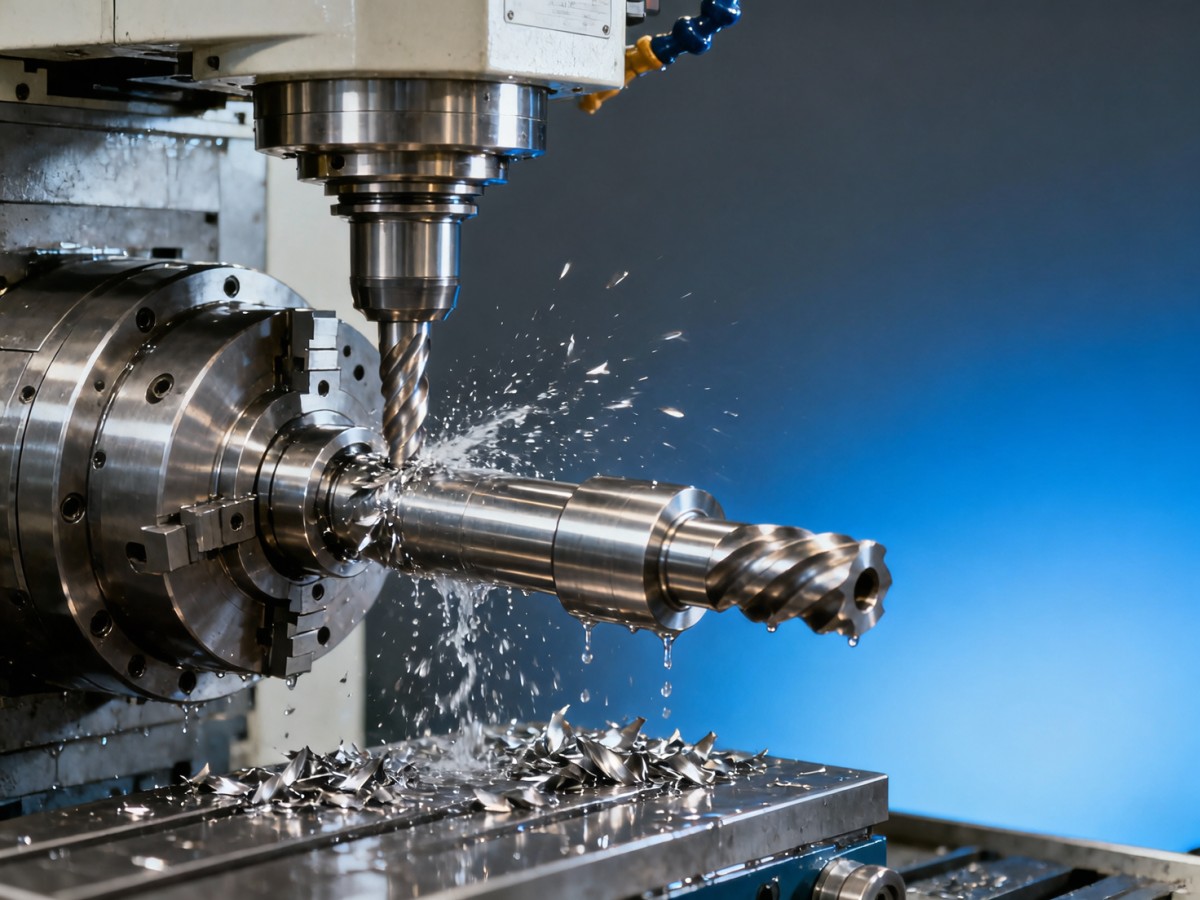
The table reveals a pattern: no single factor dominates—but three interdependent gaps consistently converge near 78%. These aren’t isolated failures; they reflect systemic disconnects between digital planning (CAM, MES), physical execution (CNC, robotics), and adaptive control (sensors, compensation algorithms). Addressing only one rarely lifts OEE beyond 80%.
Beyond Machine Uptime: The 4-Layer Visibility Gap
Most OEE dashboards stop at PLC-level signals: “machine running” or “alarm active.” But true optimization requires visibility across four layers—each with distinct data latency, resolution, and actionability:
- Layer 1 (PLC/NC): Sub-second cycle start/stop timestamps—used by 94% of factories but blind to micro-downtime (e.g., 2.3 sec spindle ramp-up delay).
- Layer 2 (Tool & Fixture): Real-time tool wear via acoustic emission sensors (±0.012mm detection threshold); adopted in only 28% of high-mix CNC shops.
- Layer 3 (Part-Level): In-process metrology—laser triangulation or vision-guided probing after each roughing pass; deployed in <5% of aerospace structural part lines despite reducing final inspection time by 40%.
- Layer 4 (Workflow Context): Operator input logs, maintenance history tags, material lot traceability—all needed to correlate a 0.005mm bore deviation with specific coolant batch and ambient humidity (18–22°C optimal range).
Without Layer 2–4 data fused into a unified context engine, even AI-powered OEE analytics misattribute losses. One German gear manufacturer reduced scrap by 31% after integrating tool-wear telemetry with spindle load curves—revealing that 68% of premature insert failures occurred during the first 3 minutes of cutting hardened steel (HRC 58–62).
Procurement & Integration: What Decision-Makers Overlook
Purchasing decisions often prioritize headline specs: “12,000 rpm spindle,” “±0.003mm repeatability,” or “ISO 10791-3 certified.” Yet OEE resilience hinges on interoperability features rarely specified in RFQs:
Procurement teams should require vendors to demonstrate Layer 2–4 data access in factory acceptance tests—not just “connectivity.” A 3-phase validation checklist (pre-installation spec review, on-site data mapping, 72-hour live-cycle stress test) cuts post-deployment integration delays by 65%, according to a 2023 cross-industry benchmark.
Actionable Pathways to Break Through 78%
Moving beyond 78% demands targeted interventions—not blanket automation upgrades. Based on field deployments across China, Germany, and Mexico, three proven pathways deliver measurable lift within 90 days:
- CAM-to-CNC Fidelity Calibration: Run parallel G-code simulations (using actual tool geometry and material properties) against shop-floor cycle times; adjust feed/speed parameters in batches of ≤5% until simulated vs. actual variance drops below ±1.8%.
- Robotic Handoff Optimization: Install laser displacement sensors at robot gripper tips and CNC pallet locators; calibrate positional tolerance to ≤0.05mm (not ±0.1mm standard) and validate under thermal soak conditions (4-hour run at 35°C ambient).
- Adaptive Compensation Loop: Integrate spindle thermal sensors with real-time CNC macro logic—triggering automatic feed reduction when temperature rise exceeds 8°C above baseline, verified via 3-shift stability testing.
Facilities implementing all three report median OEE uplift of +12.6 percentage points (to 90.4%) within 11 weeks, with ROI realized in 5.3 months on average—driven primarily by reduced operator intervention (−37% manual adjustments/hour) and extended tool life (+22% inserts per edge).
Final Recommendation: Start With Workflow, Not Hardware
The 78% OEE plateau is rarely solved by buying faster spindles or more robots. It’s resolved by closing the fidelity gap between digital intent and physical reality—across CNC programs, robotic motion, thermal behavior, and human-machine collaboration. For information researchers, this means prioritizing interoperability standards (OPC UA, MTConnect) over raw specs. For operators, it means demanding real-time tool wear alerts—not just “tool life remaining” estimates. For procurement teams, it means writing contracts that enforce Layer 2–4 data access as a pass/fail FAT criterion. And for decision-makers, it means allocating 20–30% of automation budgets to process engineering—not just equipment.
True operational excellence begins where the G-code meets the chip—and ends when every micron of deviation is traceable, predictable, and correctable. If your automated production line has stalled near 78% OEE, the next step isn’t another machine—it’s a workflow audit grounded in real-time metal machining physics.
Get a free OEE diagnostic framework tailored to CNC machining lines—including Layer 2–4 data readiness assessment, CAM fidelity scoring, and robotic handoff latency benchmarks.
Contact our precision manufacturing engineering team to schedule a technical consultation.
Recommended for You
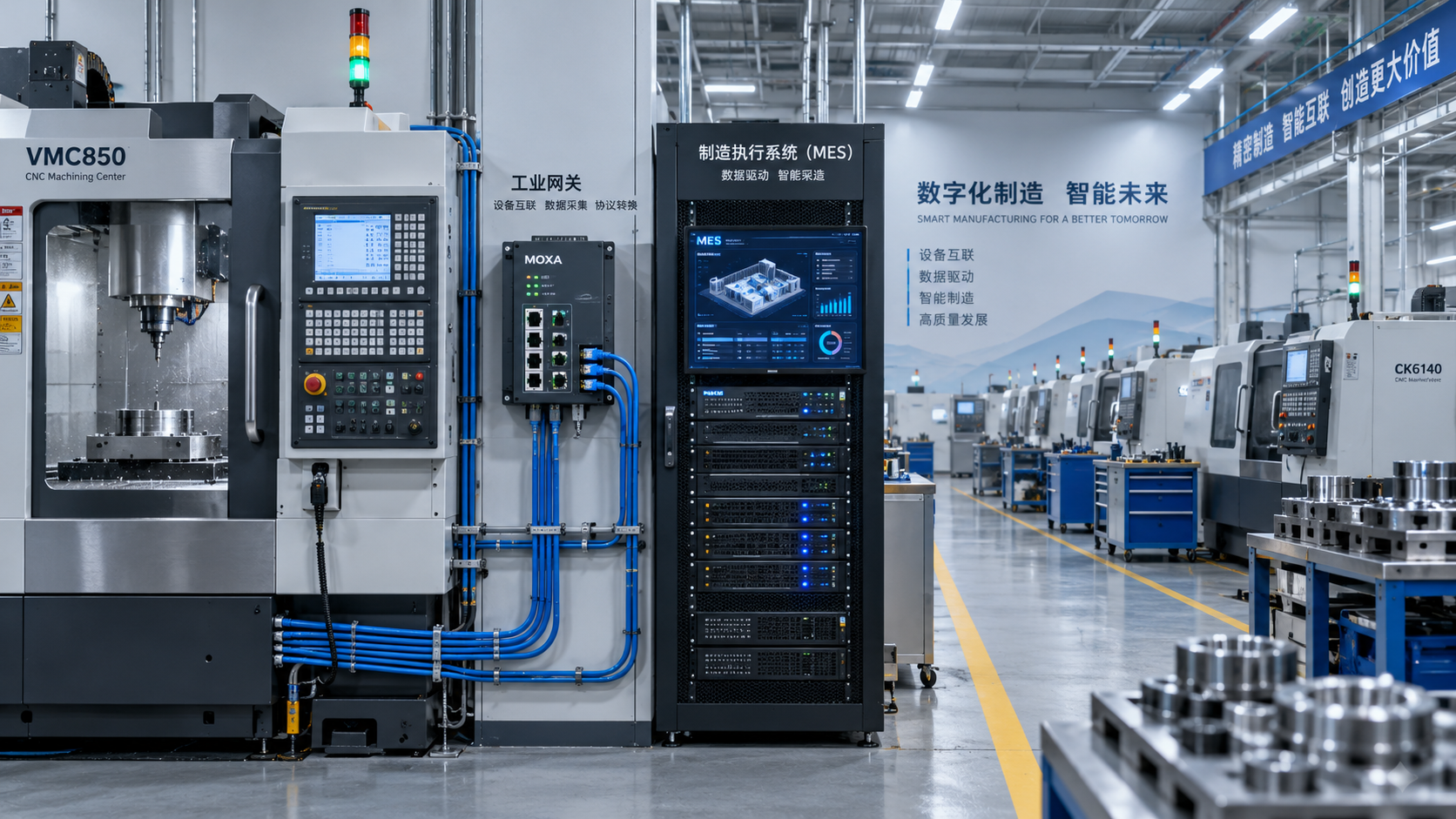
 Digital Manufacturing for Smart Factories: Connecting Legacy Machines to MESMachine Tool Industry Editorial Team
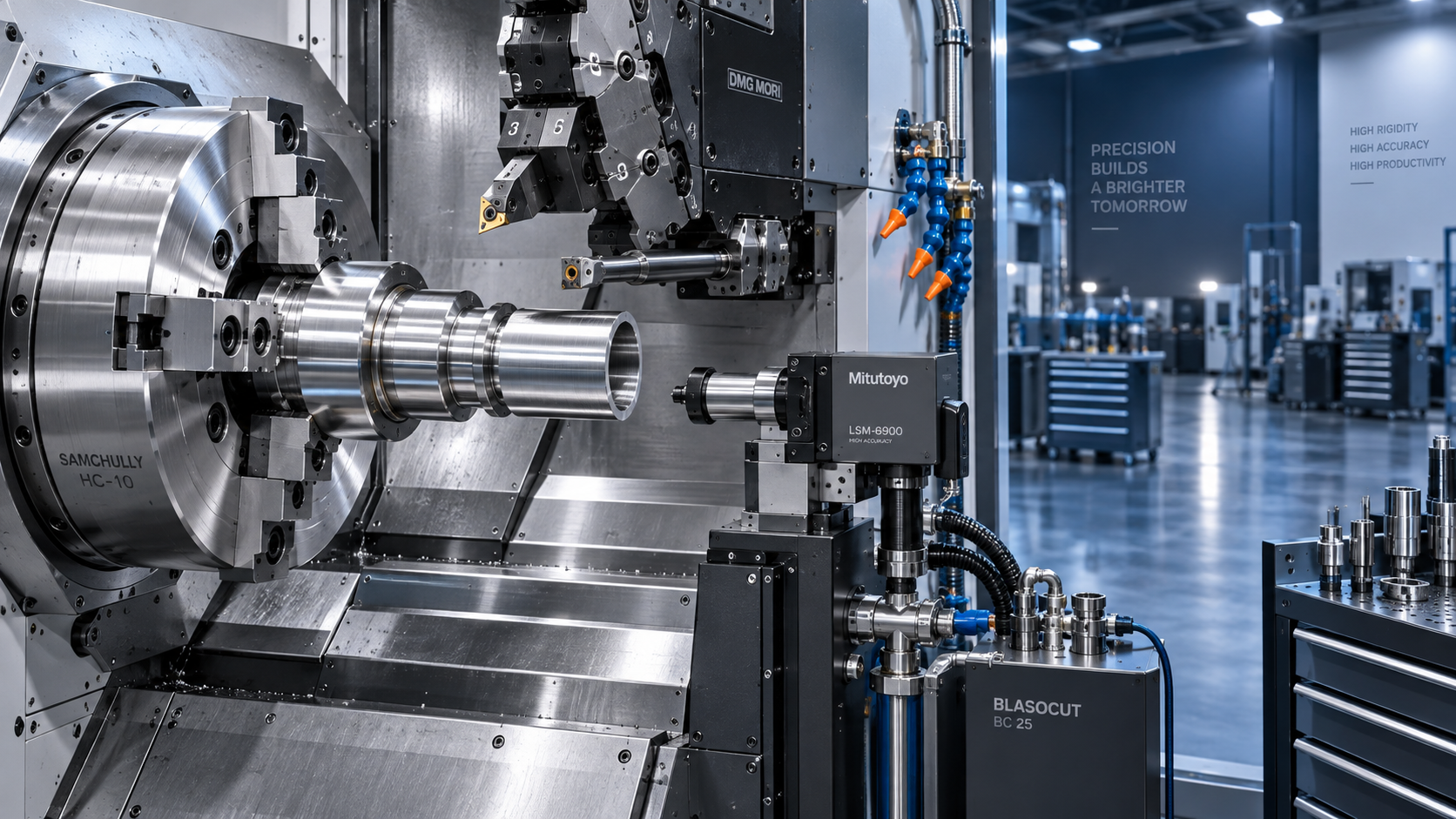
 How to Select a CNC Metal Lathe for Tight-Tolerance Shaft and Sleeve PartsCNC Machining Technology Center
 How to Select an Industrial Lathe for High-Volume Shaft ProductionMachine Tool Industry Editorial Team
 Selecting Machine Tools for Automotive Parts: Accuracy, Throughput, and AutomationMachine Tool Industry Editorial Team
 Industrial Machining: Selecting Processes for Tight-Tolerance Metal PartsCNC Machining Technology Center
 Manufacturing Technology Trends That Improve Throughput and Quality ControlManufacturing Market Research Center

Aris Katos
Future of Carbide Coatings
15+ years in precision manufacturing systems. Specialized in high-speed milling and aerospace grade alloy processing.
▶
Digital Manufacturing for Smart Factories: Connecting Legacy Machines to MESMachine Tool Industry Editorial Team▶
Selecting Machine Tools for Automotive Parts: Accuracy, Throughput, and AutomationMachine Tool Industry Editorial Team▶
Smart Manufacturing for Small Businesses: Where Automation Delivers the Fastest ROIMachine Tool Industry Editorial Team▶
How Smart Manufacturing Technology Improves OEE Across Industry 4.0 Production LinesMachine Tool Industry Editorial Team▶
How to Evaluate an Automation Line for Electronics Production Before InvestmentMachine Tool Industry Editorial Team
Mastering 5-Axis Workholding Strategies
Join our technical panel on Nov 15th to learn about reducing vibrations in thin-wall components.

Providing you with integrated sanding solutions
Before-sales and after-sales services
Comprehensive technical support