• Global CNC market projected to reach $128B by 2028 • New EU trade regulations for precision tooling components • Aerospace deman
NYSE: CNC +1.2%LME: STEEL -0.4%

A metal lathe can lose accuracy long before it fails
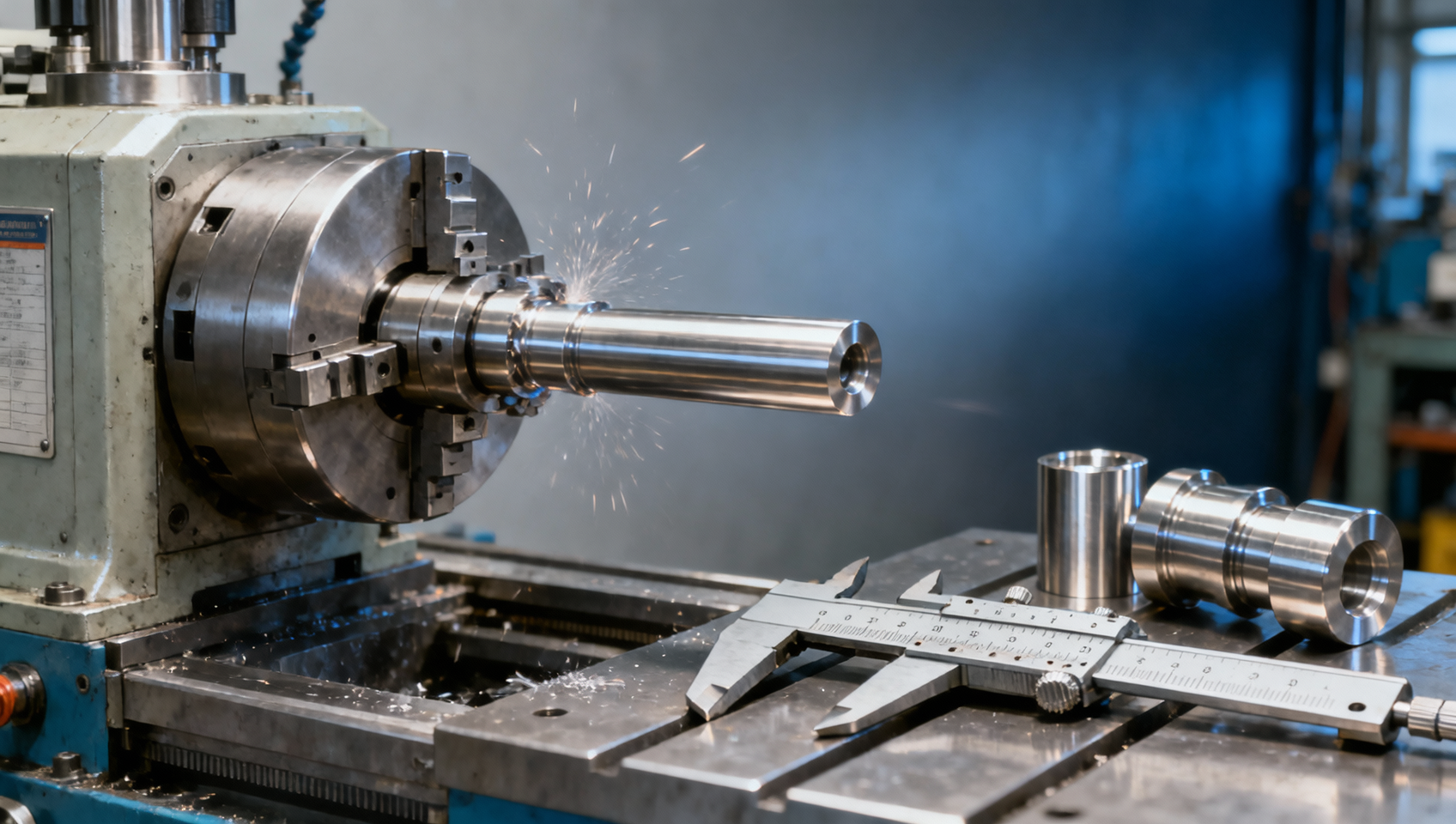
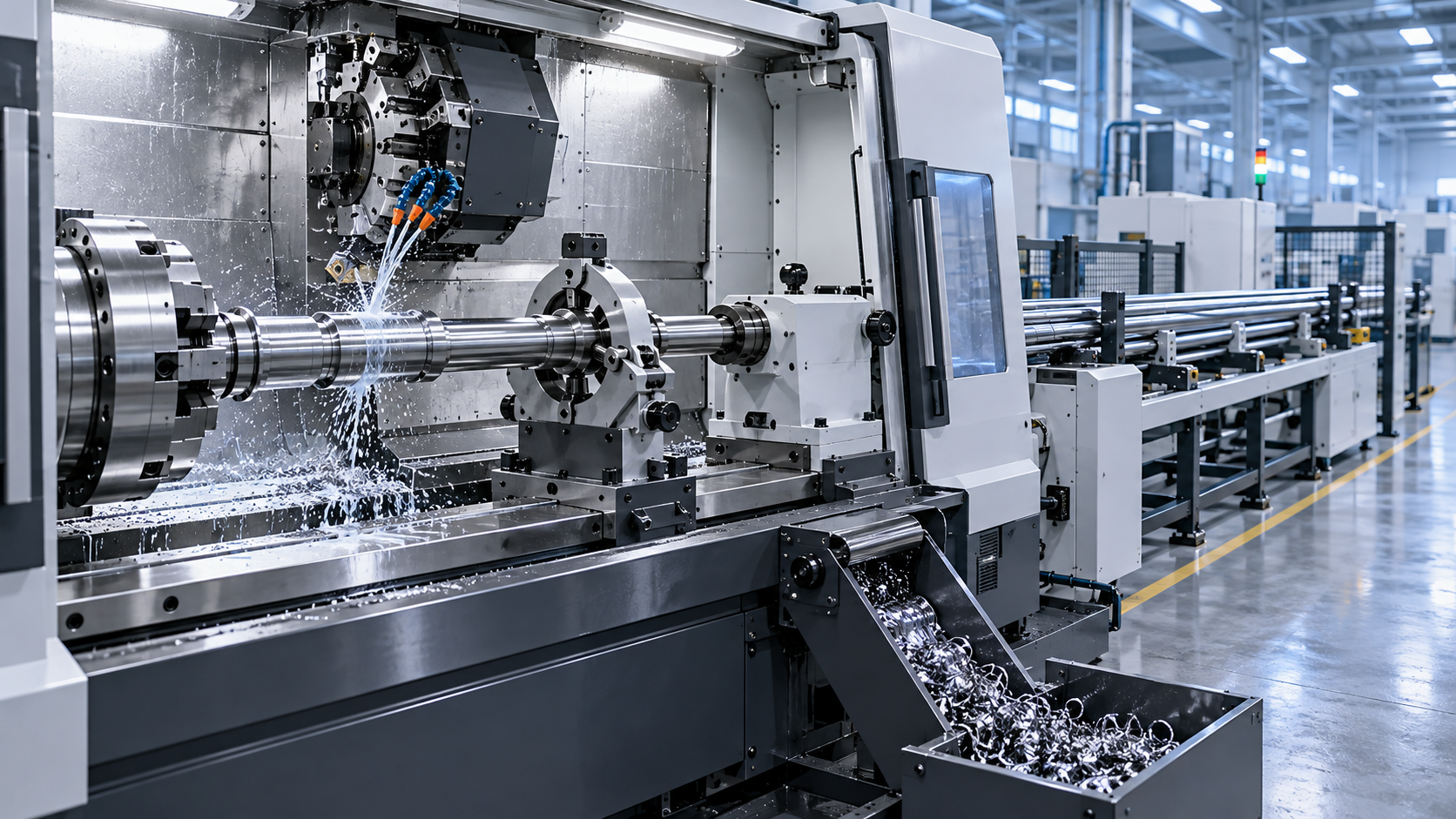
A metal lathe can lose accuracy long before it breaks down, affecting metal machining quality, CNC production stability, and the overall production process. For buyers, operators, and manufacturing decision-makers, understanding early precision loss in industrial CNC and automated lathe systems is essential to reducing costs, protecting shaft parts quality, and improving performance across today’s Manufacturing Industry.
In precision manufacturing, failure is easy to see, but gradual accuracy loss is far more expensive because it often stays hidden for weeks or even months. A machine may still run 8 to 16 hours per day, complete every cycle, and show no obvious alarm, while dimensional drift, thermal growth, spindle runout, backlash, and alignment changes quietly reduce part consistency.
This matters across automotive, aerospace, electronics, energy equipment, and subcontract machining because modern CNC turning is expected to hold tighter tolerances, reduce rework, and support predictable throughput. When a lathe starts losing accuracy before a visible breakdown, operators face unstable offsets, quality teams see more variation, purchasers compare maintenance cost against replacement cost, and managers risk missed delivery dates.
The practical question is not only whether a metal lathe still works, but whether it still machines within the tolerance, repeatability, and surface finish required by the process. The sections below explain why early precision loss happens, how to detect it, what decision-makers should check, and which maintenance and procurement actions reduce long-term production risk.
Why Accuracy Declines Before Mechanical Failure
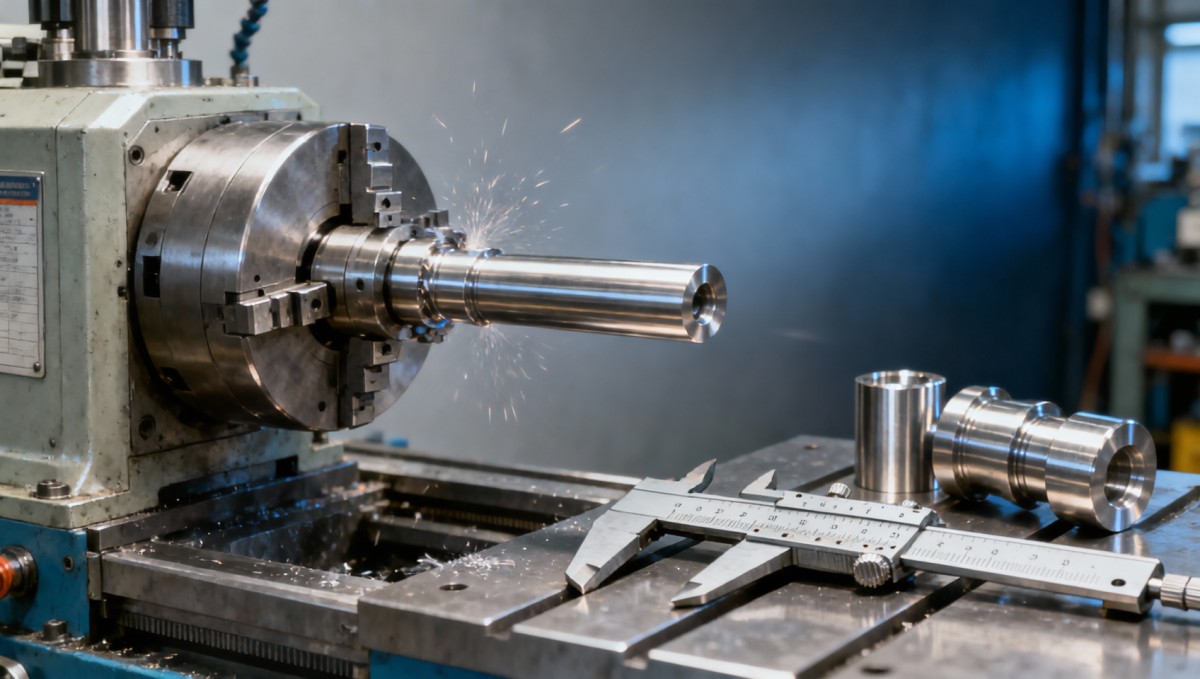
A metal lathe does not usually move from “healthy” to “failed” in one step. In most workshops, accuracy degrades in stages. During the first stage, the machine still completes parts but may begin showing a repeatability shift of 0.005 mm to 0.02 mm on critical diameters. In the second stage, offset corrections become more frequent, surface finish becomes less stable, and cycle capability drops. Only in the later stage do vibration, alarms, or obvious component failure become unavoidable.
The most common causes are wear and process stress rather than sudden damage. Guideways wear over thousands of traverses. Ball screws develop backlash. Spindle bearings lose stiffness. Tailstock alignment changes. Turret indexing can drift. On CNC lathes running mixed batches, thermal changes also matter. A machine that starts cold at 8:00 a.m. and reaches steady heat after 60 to 120 minutes may cut differently during each phase unless compensation is controlled.
Cutting conditions accelerate the problem. Hard materials, interrupted cuts, long overhang tools, poor chip evacuation, and overloaded spindle duty all increase stress. If coolant concentration drops below the recommended range, thermal control and lubrication performance may suffer. Even a 2% to 3% variation in coolant concentration can contribute to more unstable cutting in high-precision turning operations.
Environmental factors are often underestimated. A shop-floor temperature swing of 5°C to 8°C over one shift can influence machine geometry, measuring instruments, and workpiece expansion. In facilities without stable foundations or vibration isolation, nearby presses, forklifts, or heavy machining centers may introduce additional vibration that affects fine turning tolerance and roundness.
Common sources of early precision loss
- Spindle wear: reduced rigidity, rising runout, and unstable surface finish on shafts and discs.
- Axis backlash: inconsistent reversal accuracy, especially on short turning cycles and fine finishing passes.
- Thermal drift: offset changes after 30 to 90 minutes of continuous production.
- Turret or toolholder wear: repeatability loss between stations and irregular tool center position.
- Improper leveling or foundation movement: geometry change that affects taper and concentricity.
For operators and production engineers, the warning sign is rarely a complete stop. It is more often a pattern: more offset edits per shift, a rising scrap ratio from 1% to 3% or 4%, more first-piece adjustments, and greater dependency on one experienced technician to keep production stable. Those signals should be treated as asset health data, not as isolated shop-floor inconvenience.
How to Recognize the Hidden Signs of Lathe Inaccuracy
Identifying accuracy loss early requires looking beyond simple machine uptime. A lathe can report no major alarm and still fail to meet the process window for diameter, cylindricity, taper, or repeatability. The better approach is to combine part inspection, machine behavior, and maintenance observations into a routine review cycle. Weekly checks are useful for high-volume lines, while lower-utilization workshops may use biweekly or monthly reviews.
For shaft components, several indicators should be tracked together: size drift over a 20-piece batch, roundness stability, surface roughness trend, and tool life variation. If roughness changes from Ra 0.8 to Ra 1.6 without material or tool changes, or if a finishing insert that normally lasts 200 pieces now lasts 120 to 140 pieces, the root cause may be machine condition rather than tool quality alone.
Operators should also observe process behavior. Excessive correction of X-axis or Z-axis offsets, changing tailstock pressure to compensate for chatter, or repeated adjustment of clamping force can indicate machine wear. When a setup that once stabilized in 2 trial parts now needs 5 or 6 pieces before approval, hidden geometry loss is a realistic possibility.
The table below summarizes practical warning signs that are visible in daily CNC turning operations and explains what each signal usually means for production control.
The key conclusion is that production instability appears before catastrophic failure. A machine that still “works” may already be creating hidden cost through inspection time, scrap, unstable cycle time, and emergency intervention. Monitoring those signs is especially important for contract manufacturers and plants producing precision shaft parts where tolerances may be within ±0.01 mm to ±0.02 mm.
A simple 4-step shop-floor check
- Measure 10 to 20 consecutive parts after machine warm-up and record dimensional spread.
- Compare current offset correction frequency with the previous 4 to 8 weeks.
- Check spindle runout, turret repeatability, and lubrication condition during planned downtime.
- Review whether machine behavior changes by shift, ambient temperature, or operator.
What Buyers and Decision-Makers Should Evaluate Before Repair or Replacement
When accuracy loss is confirmed, the next decision is whether to recalibrate, rebuild, repair, or replace the lathe. This is where procurement teams and plant managers need a structured approach. The best decision depends on machine age, output value, tolerance requirement, spare parts access, and the gap between current and required capability. A 6-year-old CNC lathe serving medium-tolerance work may justify repair, while a 15-year-old machine serving tight aerospace or hydraulic shaft production may create more long-term risk than value.
Cost should not be assessed only as service invoice versus new machine price. A more realistic evaluation includes hidden quality costs over 6 to 12 months: scrap, operator intervention, delivery delay, slower setup, and customer complaints. In many factories, the accumulated cost of poor repeatability can exceed a major repair budget even when direct maintenance invoices look manageable.
The table below provides a practical decision framework for B2B buyers comparing repair and replacement paths. It is designed for industrial CNC lathes and automated turning systems used in repetitive or mixed-model production.
This comparison shows why decision quality improves when buyers include manufacturing engineering, maintenance, quality, and production planning in the same discussion. A machine that looks cheap to keep may be expensive to rely on. On the other hand, not every inaccuracy issue justifies full replacement. Alignment correction, spindle service, ball screw replacement, or thermal compensation tuning can extend useful life if the basic machine platform remains sound.
Four procurement questions to ask suppliers or service partners
- What geometric inspections and acceptance checks will be performed before handover?
- What repeatability level can be expected after repair, and under which operating conditions?
- How long is the service lead time, and which components have the longest procurement cycle?
- Can the solution support future automation, digital monitoring, or higher-volume production?
For international buyers, another important factor is support coverage. A lower purchase price loses appeal if spare parts require 6 to 10 weeks of waiting or if commissioning support is limited. For strategic lines, service response time, training, and remote diagnostics are often as important as machine specifications.
Maintenance, Calibration, and Process Controls That Protect Precision
The most effective way to prevent hidden accuracy loss is not emergency repair but disciplined maintenance combined with process control. In practical terms, that means separating three layers of protection: daily operator care, scheduled mechanical inspection, and periodic calibration against actual production tolerances. Each layer catches a different type of risk before it becomes a customer-facing problem.
Daily care should include lubrication checks, coolant concentration checks, chip removal, abnormal noise observation, and spindle warm-up routines. For many CNC lathes, a controlled warm-up of 10 to 20 minutes can reduce cold-start dimensional variation. Shops running precision batches first thing in the morning should avoid assuming that a cold machine behaves like a thermally stabilized machine.
Mechanical inspection should be planned by operating hours, not only by calendar date. For example, a lathe running 2 shifts may need guideway, backlash, and turret checks every 1,000 to 1,500 spindle hours, while a lower-utilization machine may use a quarterly interval. The same logic applies to spindle vibration trending and chuck or collet condition review.
Calibration and verification should connect directly to the parts being produced. If your line machines long shafts with tight concentricity demands, test routines must evaluate taper, axial alignment, and workholding stability rather than relying only on generic axis movement checks. Precision protection is strongest when maintenance data and quality data are reviewed together every month or every production quarter.
Recommended control points by time interval
The operational takeaway is clear: precision protection should be planned, measured, and documented. Shops that rely only on reactive repair usually discover inaccuracy after customer complaints or line disruption. Shops that use interval-based checks can often slow wear progression, improve setup repeatability, and extend asset life by several years.
Common maintenance mistakes
- Treating quality drift as a tooling issue without checking machine geometry.
- Skipping warm-up and expecting immediate micron-level stability.
- Using calendar-based maintenance only, regardless of actual spindle hours.
- Ignoring environmental variation in shops with large day-night temperature swings.
FAQ for Operators, Buyers, and Manufacturing Managers
How can I tell whether the problem is machine accuracy or tool wear?
Start by controlling one variable at a time. Replace the insert, keep cutting parameters unchanged, and run a short test batch of 10 to 15 pieces after thermal stabilization. If size drift, taper, or roughness instability remains, the machine is a likely contributor. If results return to normal, tooling and setup are stronger suspects. For repeated issues, compare several operators and several shifts to rule out handling differences.
At what point should a factory consider replacement instead of repair?
Replacement becomes more attractive when three conditions appear together: the machine can no longer hold required tolerance reliably, repair intervals become shorter than 6 to 12 months, and downtime risk threatens delivery performance. It is also a stronger option when production strategy has shifted toward automation, lights-out operation, or digital traceability that the old platform cannot support efficiently.
Does machine accuracy loss affect only high-precision industries?
No. Aerospace and medical machining feel it sooner, but even general industrial turning is affected. A small shift in repeatability can reduce assembly fit, increase balancing problems, shorten tool life, and create hidden bottlenecks in downstream inspection. In medium-volume production, even a scrap increase from 1% to 2.5% can materially affect margin.
What should purchasers request from machine tool suppliers or rebuild providers?
Request a clear acceptance scope: geometry checks, spindle and axis verification, sample machining criteria, expected service lead time, and post-installation support. It is also wise to confirm training hours, spare parts availability, and whether remote diagnostics are supported. For international sourcing, after-sales response within 24 to 72 hours is often more valuable than a low headline price.
A metal lathe that still runs is not necessarily a metal lathe that still produces efficiently, consistently, or profitably. Early accuracy loss affects part quality, setup time, production scheduling, and procurement decisions across the CNC machine tool industry. By watching for hidden warning signs, using structured maintenance intervals, and evaluating repair-versus-replacement decisions with real production data, manufacturers can reduce scrap, protect precision, and extend the useful value of critical turning assets.
If you are reviewing CNC lathe performance, planning a machine upgrade, or comparing solutions for precision shaft and disc production, now is the right time to assess your process risk and capability gap. Contact us to discuss your application, get a tailored equipment or maintenance strategy, and explore more solutions for stable, high-precision manufacturing.
PREVIOUS ARTICLE
NEXT ARTICLE
Recommended for You
 Digital Manufacturing for Smart Factories: Connecting Legacy Machines to MESMachine Tool Industry Editorial Team
 How to Select a CNC Metal Lathe for Tight-Tolerance Shaft and Sleeve PartsCNC Machining Technology Center
 How to Select an Industrial Lathe for High-Volume Shaft ProductionMachine Tool Industry Editorial Team
 Selecting Machine Tools for Automotive Parts: Accuracy, Throughput, and AutomationMachine Tool Industry Editorial Team
 Industrial Machining: Selecting Processes for Tight-Tolerance Metal PartsCNC Machining Technology Center
 Manufacturing Technology Trends That Improve Throughput and Quality ControlManufacturing Market Research Center


Aris Katos
Future of Carbide Coatings
15+ years in precision manufacturing systems. Specialized in high-speed milling and aerospace grade alloy processing.
▶
How to Select an Industrial Lathe for High-Volume Shaft ProductionMachine Tool Industry Editorial Team▶
When Does CNC Turning Pay Off? A Break-Even Guide by Annual Part VolumeMachine Tool Industry Editorial Team▶
How to Compare CNC Metal Lathe Brands ObjectivelyMachine Tool Industry Editorial Team▶
CNC Lathe Quick Installation Guide: How to Avoid Alignment and Wiring MistakesMachine Tool Industry Editorial Team▶
CNC Lathe Quick Installation Guide: Common Setup Mistakes and How to Avoid ThemMachine Tool Industry Editorial Team
Mastering 5-Axis Workholding Strategies
Join our technical panel on Nov 15th to learn about reducing vibrations in thin-wall components.

Providing you with integrated sanding solutions
Before-sales and after-sales services
Comprehensive technical support