• Global CNC market projected to reach $128B by 2028 • New EU trade regulations for precision tooling components • Aerospace deman
NYSE: CNC +1.2%LME: STEEL -0.4%

How to spot waste early in the Production Process
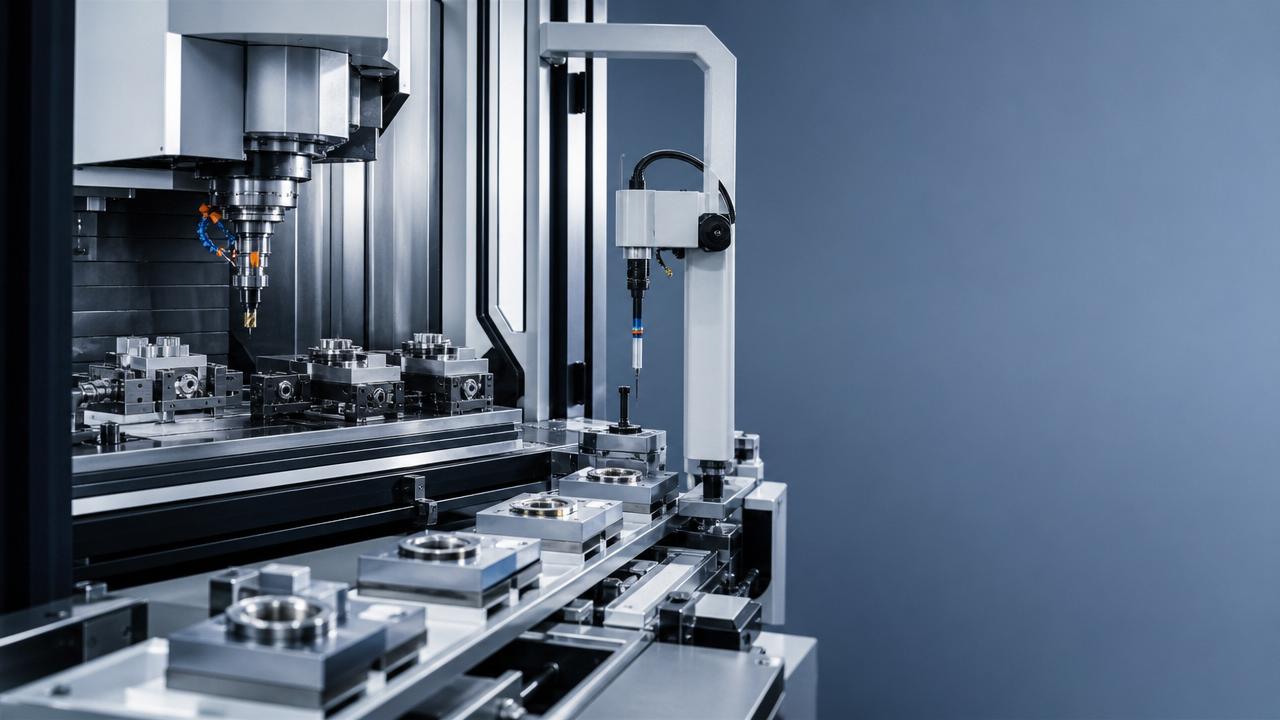
In modern manufacturing, spotting waste early in the Production Process is one of the fastest ways to protect delivery schedules, margins, and product quality.
For project managers and engineering leaders, the main challenge is not understanding that waste exists. It is identifying where it starts, how it spreads, and which signals matter most.
In CNC machining, precision manufacturing, and automated production, waste rarely appears as one obvious event. It usually starts as small deviations in cycle time, tool life, changeovers, inventory flow, or rework.
If those early signs are ignored, they grow into late deliveries, unstable output, rising scrap rates, urgent maintenance, and planning conflicts across teams.
This article explains how to spot waste early in the Production Process, what indicators deserve management attention first, and how to build a practical response system.
What project managers should look for first in the Production Process
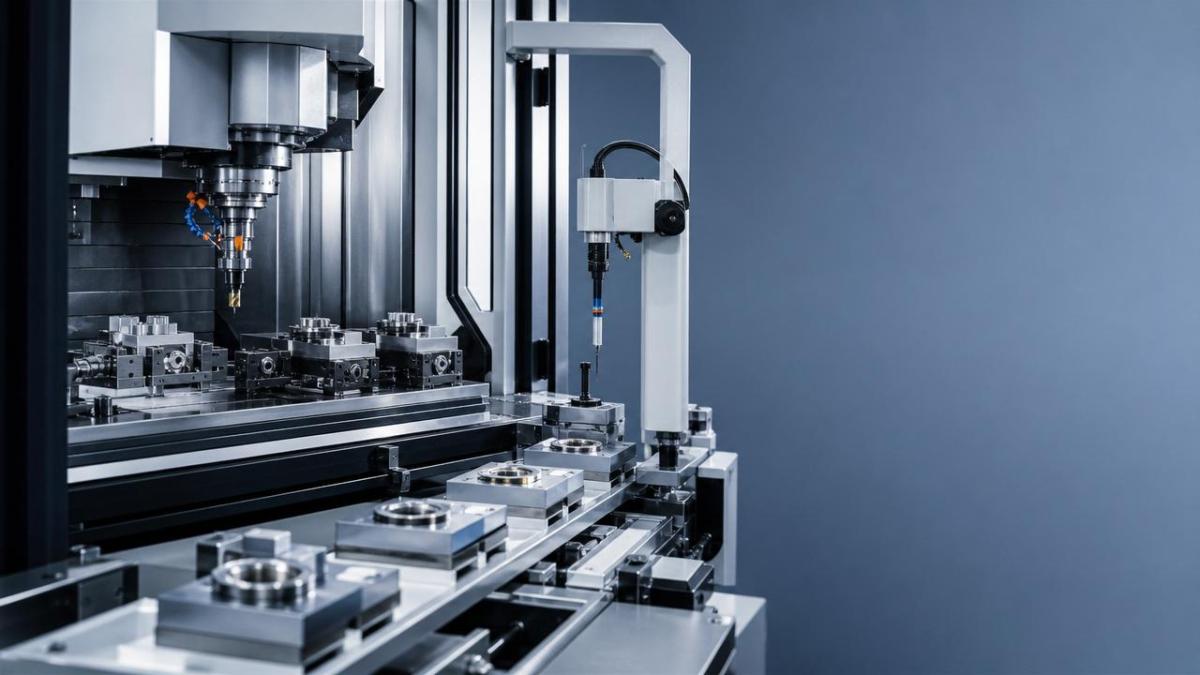
When people discuss waste, they often jump straight to lean theory. In practice, project managers need a simpler starting point: where is value slowing down, leaking, or being distorted?
The most useful early-warning view is to examine the Production Process through four lenses: flow, quality, equipment, and coordination.
Flow waste appears when work stops moving at the expected pace. Machines wait for material, operators wait for instructions, and downstream teams wait for approved parts.
Quality waste appears before scrap becomes visible. It starts with dimensional drift, repeated adjustments, unstable surface finish, or inspection trends that show narrowing process capability.
Equipment waste appears when assets are technically available but practically unreliable. A machine may be running, but frequent micro-stoppages, extended setups, or tooling instability reduce real output.
Coordination waste appears between departments. Planning, engineering, purchasing, quality, and production may all be working hard, yet poor synchronization creates delay and duplication.
For engineering leaders, the key insight is this: early waste is usually hidden in variation, not failure. By the time failure is obvious, cost has already accumulated.
The earliest signs of waste are usually small operational changes
In many factories, major waste events are preceded by subtle changes that teams normalize. A few extra minutes on setup, a few more tool offsets, or one more inspection hold may seem harmless.
However, these small changes often reveal a process that is becoming less stable. Stability matters because unstable processes consume management time, labor hours, material, and machine capacity.
One common sign is cycle time drift. If a CNC cell was designed around a repeatable takt or output target, rising cycle time indicates friction somewhere in the workflow.
The source may be conservative machine settings, worn cutting tools, fixture inconsistency, chip evacuation issues, operator workarounds, or poor upstream material preparation.
Another early sign is unplanned intervention. When operators, setters, or engineers must frequently “save” a process, waste is already entering the system.
These interventions may include repeated parameter tuning, extra deburring, manual measurement, temporary quality sorting, or informal sequencing changes to keep production moving.
Inventory behavior also gives strong clues. If work-in-progress builds up between stations, the Production Process is not flowing at a balanced rate.
Excess work-in-progress often hides deeper problems such as bottlenecks, scheduling uncertainty, quality concerns, or uneven machine availability.
Where waste hides most often in machining and precision manufacturing
In CNC and precision manufacturing environments, waste tends to hide in places that look operationally normal. That is why it is often missed during routine reporting.
Setup and changeover are major examples. If product mix changes frequently, long setup times quietly reduce available capacity even when utilization reports appear acceptable.
Tool management is another common source. Premature tool replacement raises cost, but delayed replacement increases scrap risk, dimensional variation, and machine stoppage.
Fixture performance is equally important. A fixture that allows slight inconsistency can create repeatability problems that lead to rework, inspection delays, and customer risk.
Programming and process planning can also introduce waste early. A toolpath may produce acceptable parts, yet still create unnecessary cycle time, excessive tool wear, or unstable cutting conditions.
Material handling deserves close attention as well. Operators walking for tools, waiting for forklifts, or searching for correct part containers create lost time that is rarely captured accurately.
Inspection processes may also become waste points. If measurement methods are too slow, duplicated, or poorly integrated, quality control starts acting as a delay mechanism rather than a control mechanism.
Finally, engineering change management often creates hidden waste. A late revision, unclear drawing note, or delayed release can disrupt the Production Process far beyond the original issue.
How to build an early-warning system that managers can actually use
Many factories collect large amounts of data, but early detection fails because data is not translated into management decisions. A useful warning system must be selective, visible, and actionable.
Start with a small set of indicators tied directly to delivery, cost, and quality performance. More metrics do not automatically create more control.
For most project-driven manufacturing environments, five signals are especially valuable: cycle time variance, first-pass yield, unplanned downtime, changeover duration, and work-in-progress accumulation.
Cycle time variance shows whether process flow is becoming less predictable. First-pass yield reveals whether quality problems are entering the line before full failure appears.
Unplanned downtime shows equipment reliability pressure. Changeover duration highlights lost productive time and weak standardization. Work-in-progress accumulation reveals flow imbalance across stations or cells.
These indicators should be reviewed at a cadence that matches operational speed. In fast-turn machining environments, daily review is often necessary.
Visual management helps. A dashboard, shift board, or digital production panel should make abnormalities visible without forcing managers to interpret raw reports line by line.
Most importantly, every metric needs a clear response rule. If changeover exceeds target by a set threshold, who investigates, by when, and using what method?
Without defined action ownership, measurement becomes observation only. Early waste detection works only when data leads to intervention before losses compound.
Questions that quickly reveal whether a process is creating waste
Project managers do not always need complex analysis to find risk. Asking a few disciplined questions during production reviews can expose hidden inefficiencies early.
First, where are teams relying on heroics? If output depends on one experienced operator, one engineer, or one planner constantly solving exceptions, the process is fragile.
Second, where are actual conditions different from standard conditions? If documented cycle times, setup steps, or quality controls differ from reality, waste is already embedded.
Third, where do people wait? Waiting is one of the clearest signs of waste in any Production Process, whether the delay affects machines, materials, tools, approvals, or transport.
Fourth, where is rechecking happening? Repeated measurement, duplicated inspection, or extra confirmation often means the team does not trust process capability.
Fifth, where do handoffs break down? If production, maintenance, quality, and planning describe the same issue differently, coordination waste is likely increasing response time.
Sixth, what problems recur without structural correction? Repeated temporary fixes are strong evidence that an early warning sign has been noticed but not solved at root cause level.
How digital tools and shop-floor observation work best together
Smart manufacturing systems can significantly improve visibility, but digitalization alone does not guarantee early waste detection. Managers still need direct process understanding.
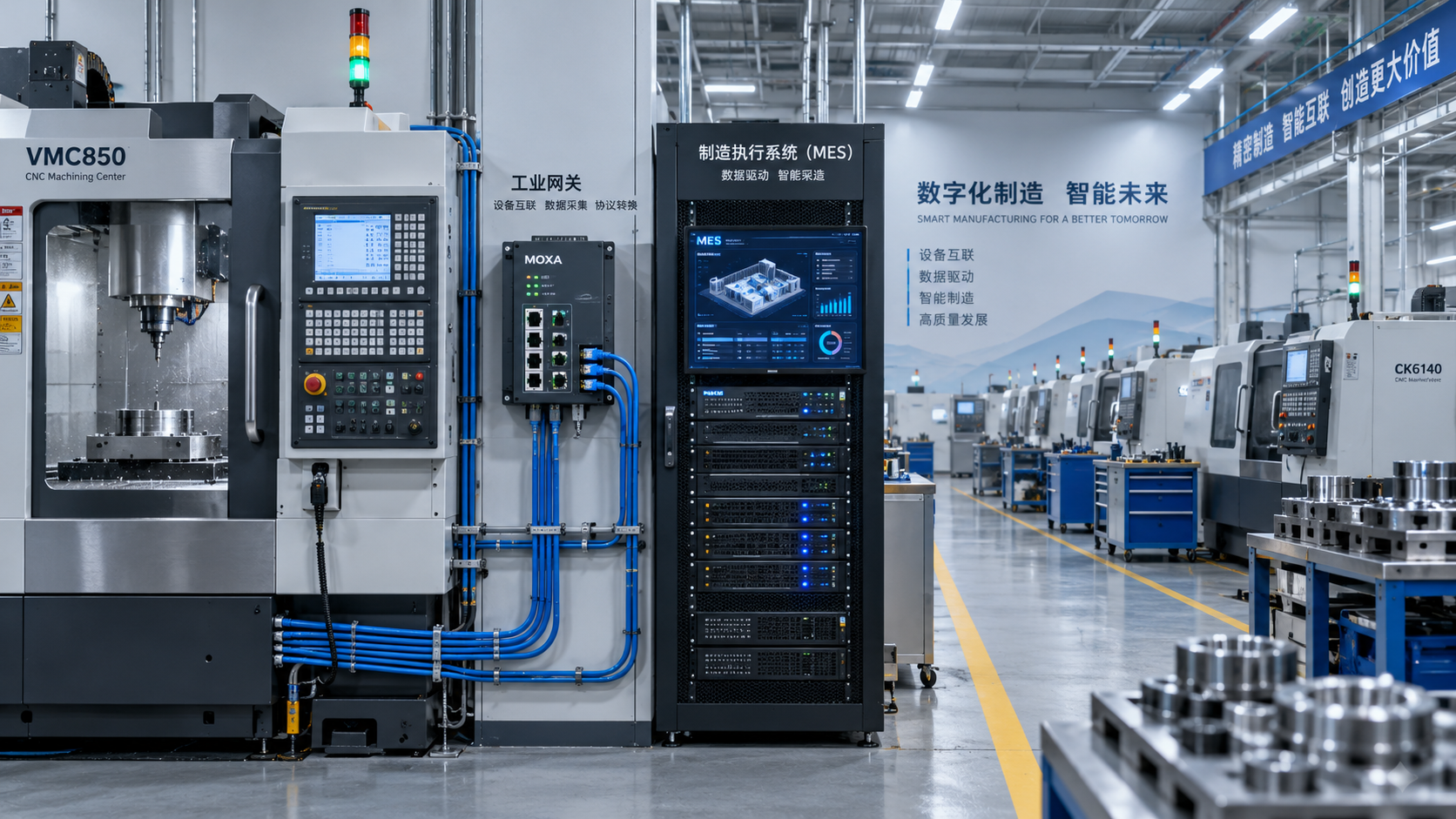
Machine monitoring platforms can show spindle utilization, alarm frequency, idle time, and throughput trends. MES and ERP systems can reveal order delays, work-in-progress patterns, and schedule slippage.
Quality software can identify recurring nonconformities, measurement trends, and process capability shifts before defect rates become severe.
These tools are valuable because they shorten the time between abnormality and awareness. Yet they work best when combined with regular shop-floor observation.
Walking the process remains essential. Managers can see physical congestion, operator motion waste, unclear staging areas, tool access problems, and communication gaps that systems may not capture well.
In advanced CNC facilities, the strongest approach is often hybrid: digital tools identify where variability is growing, and floor observation explains why it is happening.
This combination helps project leaders avoid two common mistakes: reacting too late because issues stayed invisible, or reacting incorrectly because data lacked operational context.
How to prioritize waste reduction when everything looks urgent
In real production settings, managers rarely face one isolated problem. They face multiple inefficiencies competing for attention at the same time.
To prioritize effectively, focus on waste that has the highest combined impact on delivery risk, margin loss, and repeatability. Not every inefficiency deserves the same urgency.
For example, a minor motion waste issue may be worth improving, but it should not outrank a setup problem that is reducing weekly output across a critical machine group.
A practical way to rank problems is to ask three questions: how often does it happen, how much capacity or cost does it consume, and how directly does it affect customer commitments?
Problems that occur frequently, consume constrained capacity, and threaten deadlines should move to the top of the action list.
In project-based manufacturing, bottlenecks deserve special attention. Waste at a non-bottleneck machine may be inconvenient, but waste at the bottleneck delays the whole system.
That is why the best waste reduction plans are linked to the current production constraint, not just to whichever issue is most visible or easiest to fix.
What a strong response looks like after waste is detected
Early detection only creates value if the organization responds in a disciplined way. The goal is not to document waste. The goal is to remove it before it becomes structural.
Start by separating symptom from source. Rising scrap may be the visible problem, but the real cause could be tool wear inconsistency, unstable fixturing, program strategy, or incoming material variation.
Use root cause methods that fit the issue. For many production problems, a simple layered approach works well: confirm the abnormality, contain the impact, analyze the cause, standardize the correction, and monitor recurrence.
Cross-functional involvement is important. Waste in the Production Process is often created by interactions between departments, not by one team acting alone.
Engineering may need to revise process parameters. Maintenance may need to improve preventive action. Planning may need to smooth sequencing. Quality may need to adjust control methods.
Once a fix is proven, convert it into standard work. If improvements remain informal, the same waste will usually return during schedule pressure or staffing changes.
Finally, review whether the issue should update future project planning assumptions. The strongest organizations use detected waste to improve the next launch, not just the current order.
Conclusion: early visibility is a competitive advantage
Spotting waste early in the Production Process is not just an operational discipline. It is a management advantage that protects lead time, cost control, and customer confidence.
For project managers and engineering leaders, the most important shift is to stop waiting for obvious failure. Waste starts earlier, in small deviations, repeated workarounds, and weak flow signals.
By tracking the right indicators, asking sharper process questions, combining digital visibility with direct observation, and acting quickly on root causes, teams can prevent minor inefficiencies from becoming major losses.
In modern manufacturing, especially in CNC machining and precision production, early waste detection is one of the most practical ways to improve performance without waiting for large capital investment.
The organizations that do this well are not simply more efficient. They are more predictable, more resilient, and better prepared to compete in increasingly demanding global markets.
PREVIOUS ARTICLE
Recommended for You
 Digital Manufacturing for Smart Factories: Connecting Legacy Machines to MESMachine Tool Industry Editorial Team
 How to Select a CNC Metal Lathe for Tight-Tolerance Shaft and Sleeve PartsCNC Machining Technology Center
 How to Select an Industrial Lathe for High-Volume Shaft ProductionMachine Tool Industry Editorial Team
 Selecting Machine Tools for Automotive Parts: Accuracy, Throughput, and AutomationMachine Tool Industry Editorial Team
 Industrial Machining: Selecting Processes for Tight-Tolerance Metal PartsCNC Machining Technology Center
 Manufacturing Technology Trends That Improve Throughput and Quality ControlManufacturing Market Research Center

Aris Katos
Future of Carbide Coatings
15+ years in precision manufacturing systems. Specialized in high-speed milling and aerospace grade alloy processing.
▶
CNC Machine Arrival Inspection: Check Shipping Damage, Accuracy, Safety, and DocumentsCNC Machining Technology Center▶
What Should You Check When a CNC Machine Arrives at Your Factory?CNC Machining Technology Center▶
What Safety Checks Are Required for CNC Cutting Operations?CNC Machining Technology Center▶
What Are Machine Tools? Common Types, Functions, and Typical Shop ApplicationsCNC Machining Technology Center▶
CNC Industrial Machines Maintenance Checklist: How to Reduce Downtime and Tool WearCNC Machining Technology Center
Mastering 5-Axis Workholding Strategies
Join our technical panel on Nov 15th to learn about reducing vibrations in thin-wall components.

Providing you with integrated sanding solutions
Before-sales and after-sales services
Comprehensive technical support