• Global CNC market projected to reach $128B by 2028 • New EU trade regulations for precision tooling components • Aerospace deman
NYSE: CNC +1.2%LME: STEEL -0.4%

What slows a Production Process more than teams expect?
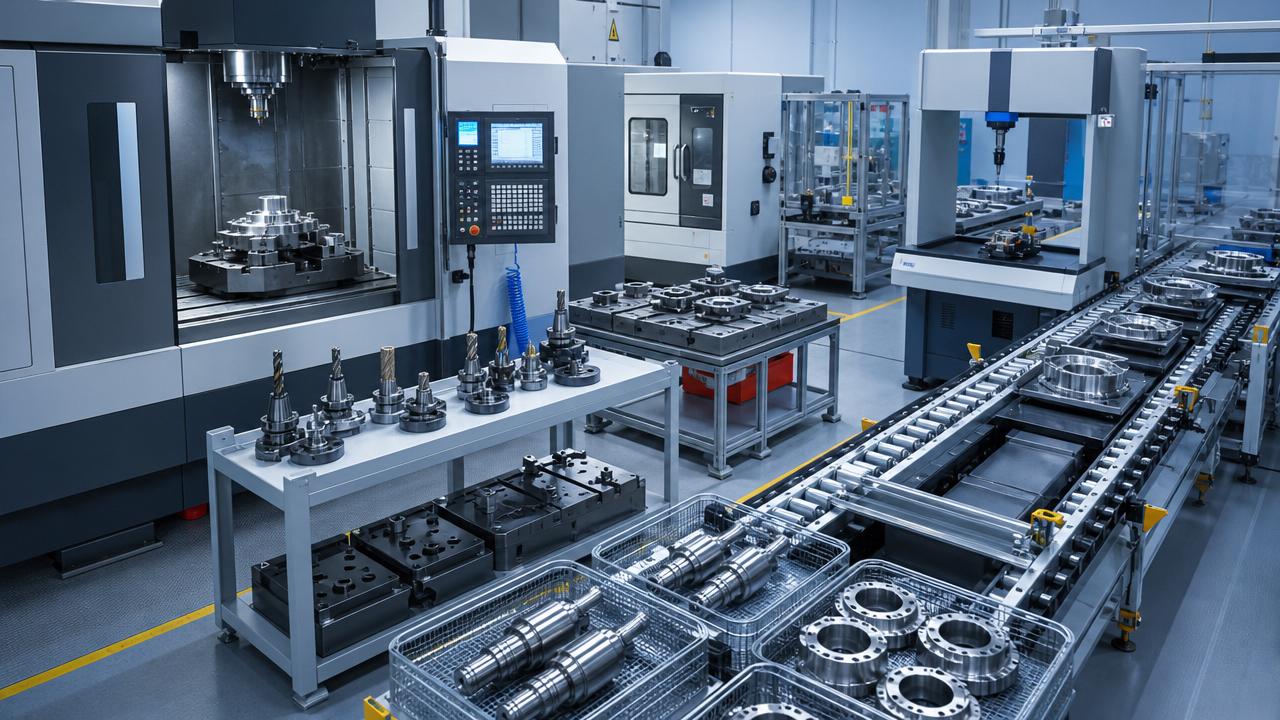
In modern manufacturing, a Production Process is rarely delayed only by machine failure. More often, performance drops because small inefficiencies compound across planning, setup, tooling, inspection, communication, and scheduling.
Across CNC machining, precision manufacturing, and automated production lines, these hidden slowdowns are becoming more visible. As factories pursue higher precision and digital integration, overlooked friction points now have a larger impact on throughput, cost, and delivery stability.
The key shift is clear: a Production Process no longer depends only on equipment capability. It depends on how well data, people, materials, tools, and machines move together in real time.
The biggest Production Process delays often come from what teams do not measure
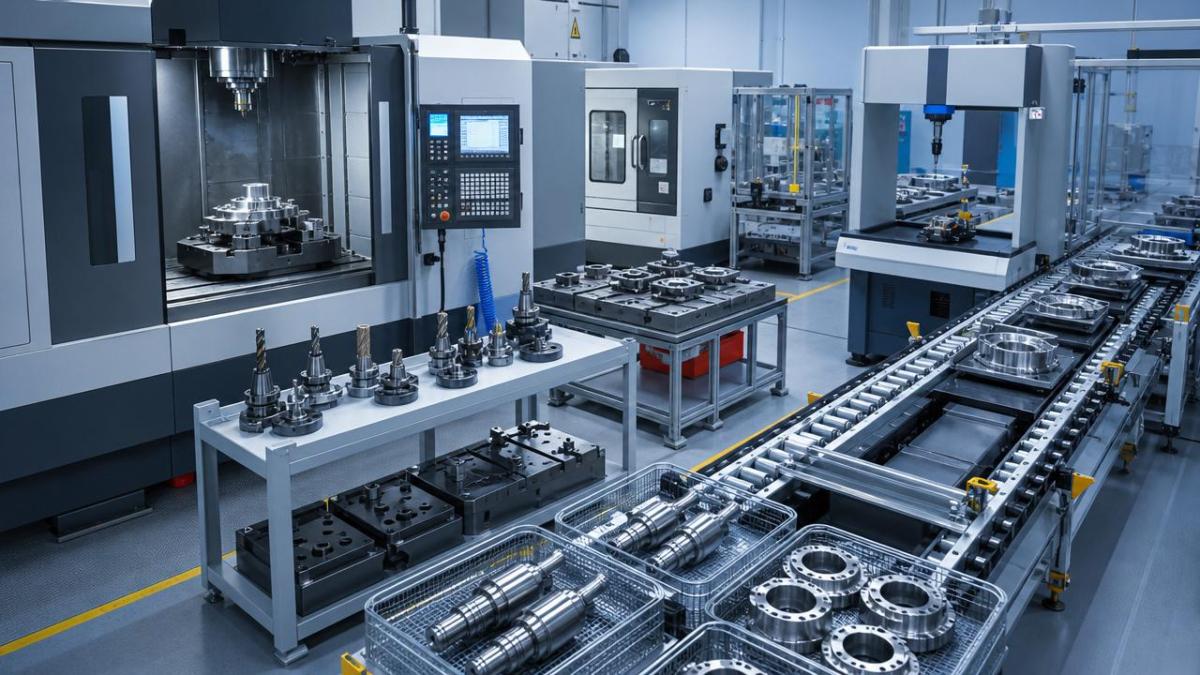
In many facilities, downtime is tracked carefully, but micro-delays are not. A few extra minutes during tool presetting, fixture alignment, program verification, or material movement can slow the entire Production Process.
These delays are underestimated because they rarely trigger alarms. Machines still run, operators stay busy, and output looks acceptable. Yet overall cycle efficiency gradually falls below expected levels.
This matters even more in CNC environments producing complex shaft parts, precision discs, housings, and structural components. Tight tolerances increase the cost of inconsistency, especially when production must scale across multiple shifts or lines.
Why hidden friction is increasing across modern manufacturing
The Production Process is changing because manufacturing systems are becoming more connected, more customized, and more sensitive to variation. Speed now depends on coordination, not only machine power.
Several trend signals explain why slowdowns feel more frequent today, even in advanced facilities with CNC lathes, machining centers, robots, and flexible production lines.
- Shorter product cycles increase setup frequency and reduce tolerance for planning errors.
- Higher part complexity creates more program checks, fixture changes, and inspection steps.
- Automation exposes upstream weaknesses instead of hiding them.
- Global supply chain variation affects material readiness and tooling availability.
- Digital systems generate more data, but not always better decisions.
As a result, a Production Process can appear technically advanced while remaining operationally uneven. The bottleneck may no longer be machine capacity. It may be the interface between systems, teams, and decisions.
The causes slowing a Production Process are usually operational, not dramatic
The most common barriers are rarely surprising on their own. Their real impact comes from repetition across shifts, part families, and work cells.
Each issue seems manageable alone. Together, they slow the Production Process far more than many teams expect, especially in mixed-volume or precision-critical production.
Where the Production Process loses time first in CNC and precision environments
CNC and precision manufacturing reveal hidden losses quickly because cutting performance is only one part of overall efficiency. The full Production Process includes preparation, validation, handoff, and recovery time.
Before machining starts
Production often slows before the spindle turns. Missing tools, unclear work instructions, unstable NC programs, or late material release create silent delays that never appear in pure machine utilization reports.
During changeover
Changeover is a major pressure point. If fixture preparation, offset management, clamping consistency, or verification steps vary by person or shift, the Production Process becomes unpredictable.
During quality control
Inspection protects quality, but disconnected inspection can slow output. When measurement data is delayed, machining continues without feedback or pauses while waiting for confirmation.
Between operations
A Production Process also loses momentum between departments. Handoffs between machining, deburring, cleaning, assembly, and packaging often create waiting time that no single team owns.
The impact reaches cost, quality, delivery, and investment decisions
When hidden delays persist, the first visible symptom is often missed output. However, the broader impact on the Production Process extends beyond volume.
- Cost rises because labor and machine hours produce less finished value.
- Quality risk grows as rushed recovery actions increase variation.
- Delivery reliability falls when schedules depend on unstable assumptions.
- Capital planning becomes distorted because delay is mistaken for lack of equipment.
This is why some factories invest in additional machines but still struggle. The Production Process may need better flow discipline before more capacity can deliver meaningful returns.
What deserves closer attention now as manufacturing trends evolve
As industrial automation and smart factory technologies expand, the most effective improvements come from identifying friction that repeats daily. Several focus areas deserve immediate review.
- Measure setup time at task level, not only job level.
- Track waiting time for tools, programs, approvals, and materials.
- Compare actual cycle consistency across shifts and machines.
- Link inspection feedback more directly to machining decisions.
- Standardize successful methods for fixtures, offsets, and first-piece release.
- Use digital monitoring to reveal causes, not just display status.
These steps help reveal where the Production Process is slowed by routine variation rather than unavoidable complexity.
A practical way to judge what is slowing the Production Process
Improvement starts with a structured review. Instead of asking why one machine stopped, ask where time is repeatedly lost from order release to completed part.
This review method exposes whether the Production Process is slowed by capacity, coordination, or control. That distinction is critical for accurate improvement spending.
The next competitive advantage is a cleaner, more visible Production Process
The future of manufacturing is not only faster equipment. It is a more transparent Production Process where variation is detected early, handoffs are smoother, and setup knowledge is easier to repeat.
In CNC machining and precision manufacturing, the strongest gains often come from reducing hidden waiting, standardizing changeovers, improving data flow, and aligning automation with real shop-floor conditions.
A useful next step is simple: examine one part family, one work cell, or one shift in detail. Measure the small delays teams usually ignore. That is often where the Production Process is slowed most.
Once those losses are visible, better throughput, stronger quality stability, and smarter investment choices become much easier to achieve.
PREVIOUS ARTICLE
Recommended for You
 Digital Manufacturing for Smart Factories: Connecting Legacy Machines to MESMachine Tool Industry Editorial Team
 How to Select a CNC Metal Lathe for Tight-Tolerance Shaft and Sleeve PartsCNC Machining Technology Center
 How to Select an Industrial Lathe for High-Volume Shaft ProductionMachine Tool Industry Editorial Team
 Selecting Machine Tools for Automotive Parts: Accuracy, Throughput, and AutomationMachine Tool Industry Editorial Team
 Industrial Machining: Selecting Processes for Tight-Tolerance Metal PartsCNC Machining Technology Center
 Manufacturing Technology Trends That Improve Throughput and Quality ControlManufacturing Market Research Center

Aris Katos
Future of Carbide Coatings
15+ years in precision manufacturing systems. Specialized in high-speed milling and aerospace grade alloy processing.
▶
CNC Machine Arrival Inspection: Check Shipping Damage, Accuracy, Safety, and DocumentsCNC Machining Technology Center▶
What Should You Check When a CNC Machine Arrives at Your Factory?CNC Machining Technology Center▶
What Safety Checks Are Required for CNC Cutting Operations?CNC Machining Technology Center▶
What Are Machine Tools? Common Types, Functions, and Typical Shop ApplicationsCNC Machining Technology Center▶
CNC Industrial Machines Maintenance Checklist: How to Reduce Downtime and Tool WearCNC Machining Technology Center
Mastering 5-Axis Workholding Strategies
Join our technical panel on Nov 15th to learn about reducing vibrations in thin-wall components.

Providing you with integrated sanding solutions
Before-sales and after-sales services
Comprehensive technical support