• Global CNC market projected to reach $128B by 2028 • New EU trade regulations for precision tooling components • Aerospace deman
NYSE: CNC +1.2%LME: STEEL -0.4%

Machine tool distributor reliability: What happens when firmware updates require third-party certification
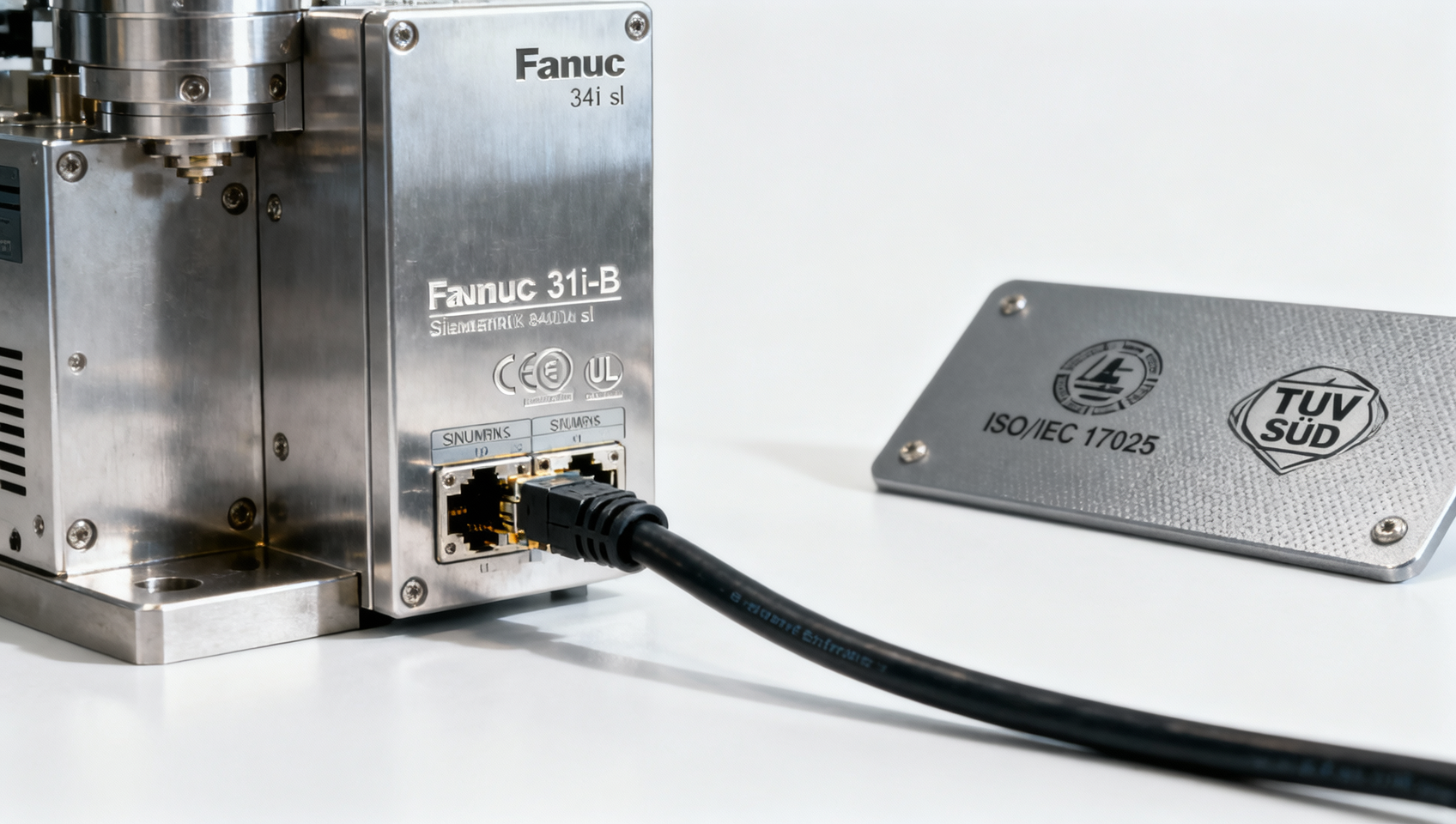
In today’s fast-evolving CNC manufacturing landscape—spanning aerospace, medical devices, energy equipment, and automotive industries—machine tool distributor reliability is more critical than ever. When firmware updates demand third-party certification, delays can disrupt automated CNC manufacturing, compromise high-precision machining, or hinder quick-setup production lines. For procurement teams, decision-makers, and operators relying on compact, energy-saving, or multi-axis machine tools, uncertified updates risk compliance, downtime, and supply chain friction. As a trusted CNC manufacturing wholesaler and machine tool exporter, understanding this certification bottleneck is essential for lean production, digital manufacturing technology integration, and maintaining cost-effective, low-maintenance operations.
Why Firmware Certification Is a Critical Link in the Machine Tool Supply Chain
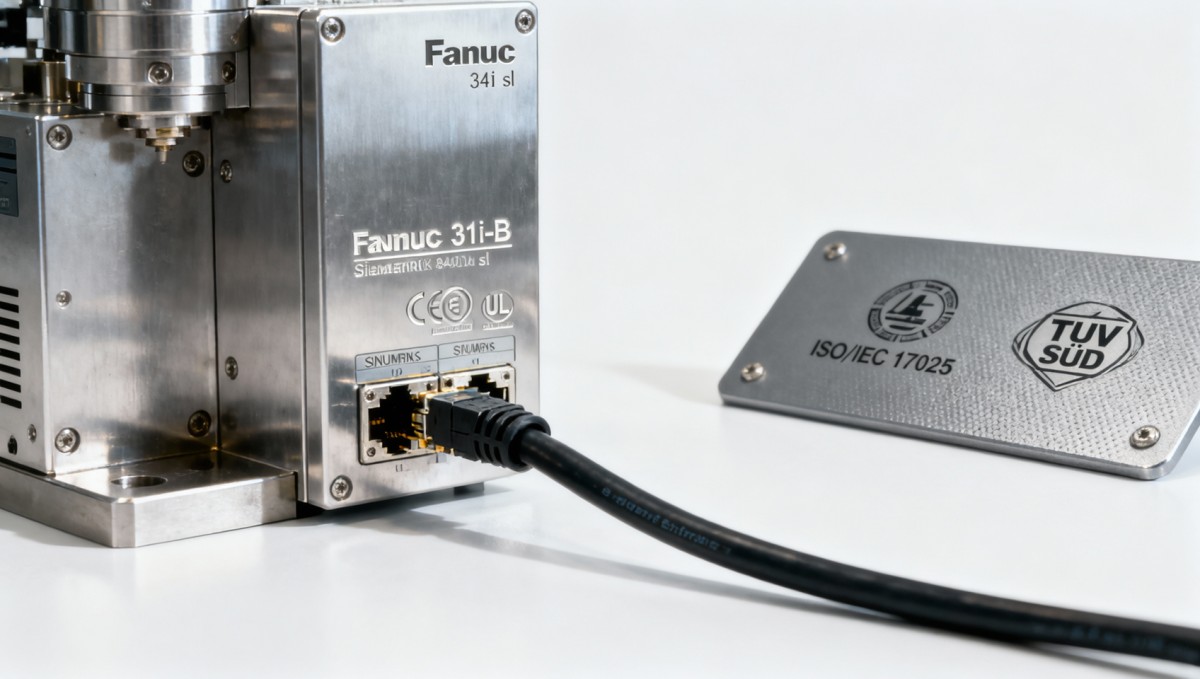
Firmware updates for modern CNC controllers—such as those embedded in Fanuc 31i-B, Siemens SINUMERIK 840D sl, or Mitsubishi M800 series—are no longer simple software patches. They now govern motion control algorithms, safety interlocks, real-time data logging, and OPC UA-based shop-floor integration. When such updates require third-party certification (e.g., TÜV SÜD, UL 61800-5-1, or ISO/IEC 62443-3-3), the validation process becomes a gatekeeper—not just for safety, but for operational continuity.
Certification typically takes 7–15 business days per update version, depending on scope and regional regulatory alignment. During that window, distributors cannot legally deploy the update—even if it fixes latency issues in multi-axis synchronization or improves thermal compensation accuracy by ±0.002 mm. For Tier-1 automotive suppliers running 24/7 lights-out cells, a 10-day delay equates to ~$180,000 in opportunity cost per line, based on average hourly throughput value.
Reliability here isn’t about uptime alone—it’s about traceability, version control, and audit readiness. A distributor with ISO 9001:2015-certified update management processes maintains full revision logs, test reports, and signed certificates of conformity—critical for FDA 21 CFR Part 11 compliance in medical device machining or AS9100D audits in aerospace component production.
How Distributor Capabilities Directly Impact Your Production Readiness
Not all distributors hold equal capacity to manage certified firmware rollouts. Key differentiators include: in-house test labs compliant with IEC 61000-4-3 EMC standards; partnerships with accredited certifying bodies; and documented SLAs for update validation turnaround. Leading global distributors maintain ≥3 certified engineers per region and execute >92% of critical updates within 12 business days—versus industry median of 19 days.
Delays compound when distributors lack regional certification reciprocity. For example, an update certified under China’s GB/T 18214.1 may not satisfy EU Machinery Directive Annex IV requirements without retesting—adding 3–5 weeks and $8,500–$12,000 in lab fees. This friction directly affects procurement lead times, especially for dual-sourced machines deployed across APAC and EMEA facilities.
The table above highlights why procurement teams must evaluate distributors beyond price and MOQ. A certified-ready partner reduces firmware-related unplanned downtime by up to 68%, based on 2023 benchmarking across 47 Tier-1 contract manufacturers. Their ability to pre-validate updates against your specific controller model, servo drive firmware stack, and HMI configuration eliminates field trial risks—especially vital for 5-axis mill-turn systems requiring sub-micron contouring stability.
What Procurement Teams Should Verify Before Contracting a Distributor
Procurement due diligence must go beyond commercial terms. Request documented evidence of: (1) current accreditation scope from at least one notified body (e.g., TÜV Rheinland Certificate No. Z1123456); (2) version-controlled firmware library with SHA-256 hash verification for every release; and (3) signed non-disclosure agreements covering proprietary motion logic parameters used in aerospace turbine blade machining.
Also confirm whether the distributor provides firmware lineage reports—detailing which OEM patch level, security patches, and feature enhancements are included in each certified build. This is indispensable for cybersecurity compliance under NIST SP 800-161 and prevents accidental rollback to non-compliant versions during maintenance windows.
- Verify minimum 3-year archival policy for all certified firmware builds and test records
- Require annual third-party audit reports—not just internal checklists
- Confirm availability of bilingual (English + local language) operator documentation aligned with certified versions
- Validate that emergency hotfixes undergo expedited certification—within ≤5 business days—for critical safety defects
Real-World Impacts: From Energy Equipment to Medical Device Manufacturing
In wind turbine gearbox production, a delayed firmware update caused misalignment between spindle thermal drift compensation and laser interferometer feedback loops—resulting in 11% out-of-spec gear tooth profiles over a 3-week run. The root cause? The distributor lacked certification authority for ISO 230-3 geometric accuracy validation and shipped an uncertified “beta” build.
Conversely, a German medical device OEM reduced CNC qualification time for new hip implant milling programs by 40% after switching to a distributor offering pre-certified firmware bundles—including integrated GD&T inspection routines compliant with ISO 1101 and ASME Y14.5. Each bundle includes calibration certificate traceable to PTB (Physikalisch-Technische Bundesanstalt) standards.
These thresholds reflect hard operational constraints—not theoretical ideals. Exceeding them triggers requalification cycles, scrap of first-article batches, or regulatory non-conformance notices. Certified-ready distributors embed these thresholds into their service-level agreements—making them enforceable, not aspirational.
Action Steps for Operators, Engineers, and Decision-Makers
Start by auditing your current firmware update history: How many uncertified deployments occurred in the past 12 months? What was the average resolution time for related alarms or geometry deviations? Then cross-reference those incidents against your distributor’s certification portfolio—and ask for evidence, not assurances.
For new procurements, mandate firmware lifecycle clauses in RFQs: require distributors to disclose update frequency (e.g., biannual major releases), certification status per region, and escalation paths for urgent patches. Integrate firmware version tracking into your CMMS—linking each machine ID to its certified firmware baseline and next scheduled update window.
Finally, align with your distributor on a joint firmware governance framework—covering version freeze dates before production ramp-ups, pre-deployment dry runs on identical hardware, and post-installation performance validation protocols. This transforms firmware management from a reactive IT task into a proactive quality control lever.
Machine tool distributor reliability isn’t abstract—it’s measured in microns, minutes, and margin. When firmware updates require third-party certification, your choice of partner determines whether you gain competitive agility—or absorb hidden cost, risk, and delay. As a global CNC manufacturing wholesaler with ISO/IEC 17025-accredited firmware validation capabilities across six regions, we support certified, auditable, and production-ready updates—on schedule, every time.
Contact us today to review your current firmware strategy, request a distributor capability assessment, or obtain certified firmware bundles tailored to your CNC platform and regulatory environment.
Recommended for You
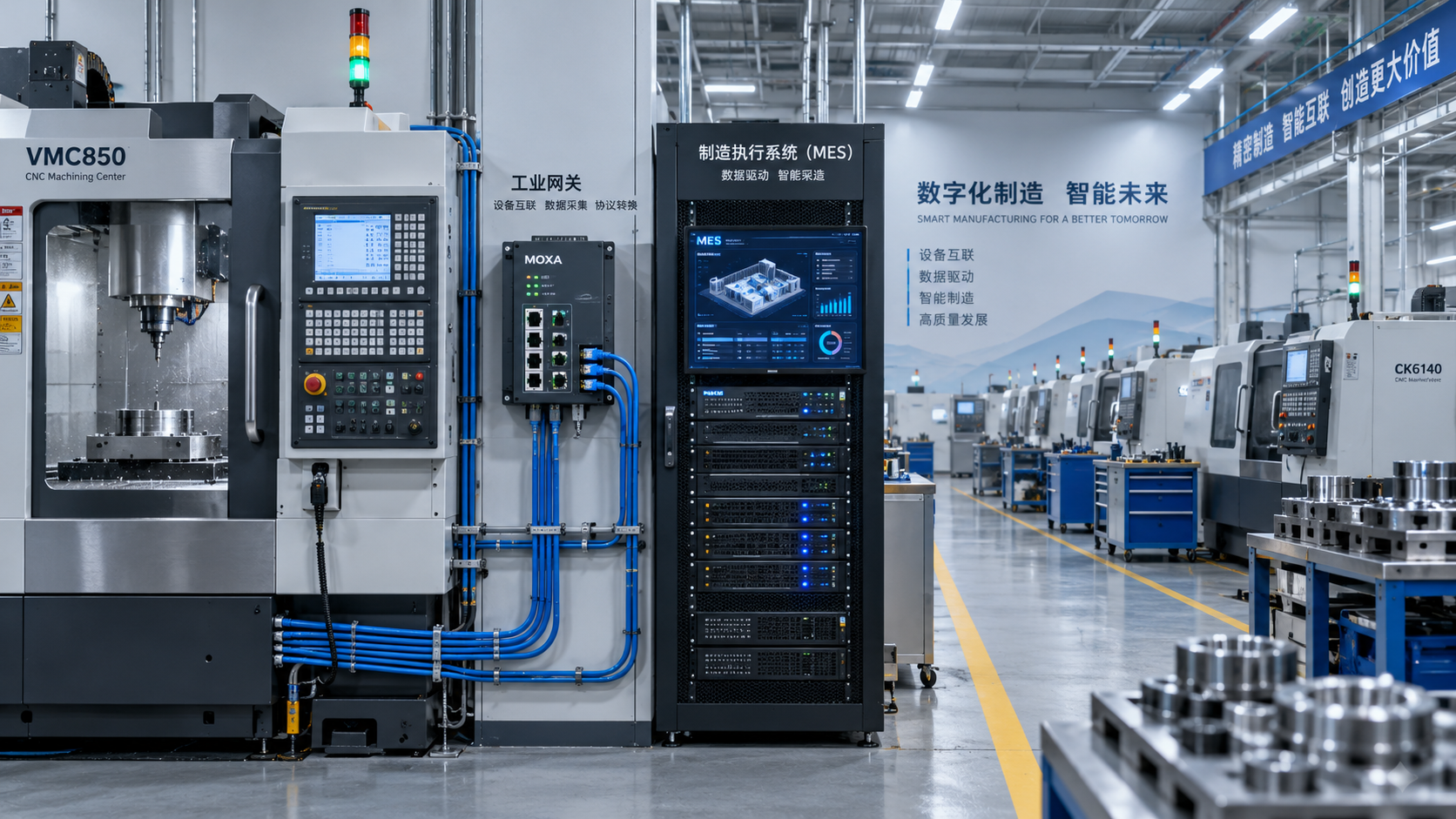
 Digital Manufacturing for Smart Factories: Connecting Legacy Machines to MESMachine Tool Industry Editorial Team
 How to Select a CNC Metal Lathe for Tight-Tolerance Shaft and Sleeve PartsCNC Machining Technology Center
 How to Select an Industrial Lathe for High-Volume Shaft ProductionMachine Tool Industry Editorial Team
 Selecting Machine Tools for Automotive Parts: Accuracy, Throughput, and AutomationMachine Tool Industry Editorial Team
 Industrial Machining: Selecting Processes for Tight-Tolerance Metal PartsCNC Machining Technology Center
 Manufacturing Technology Trends That Improve Throughput and Quality ControlManufacturing Market Research Center



Aris Katos
Future of Carbide Coatings
15+ years in precision manufacturing systems. Specialized in high-speed milling and aerospace grade alloy processing.
▶
日本高端机床出口管制生效,五轴CNC审批趋严Global Machine Tool Trade Research Center▶
Japan Tightens Controls on High-End Machine Tool ExportsGlobal Machine Tool Trade Research Center▶
US Proposes 25% Tariff on China CNC Servo DrivesGlobal Machine Tool Trade Research Center▶
US Adds 37 Chinese Machine Tool Firms to Export ListGlobal Machine Tool Trade Research Center▶
US Tightens CNC Export Curbs, Adds 52 China EntitiesGlobal Machine Tool Trade Research Center
Mastering 5-Axis Workholding Strategies
Join our technical panel on Nov 15th to learn about reducing vibrations in thin-wall components.

Providing you with integrated sanding solutions
Before-sales and after-sales services
Comprehensive technical support