• Global CNC market projected to reach $128B by 2028 • New EU trade regulations for precision tooling components • Aerospace deman
NYSE: CNC +1.2%LME: STEEL -0.4%

Automated production looks efficient, but where do delays start?
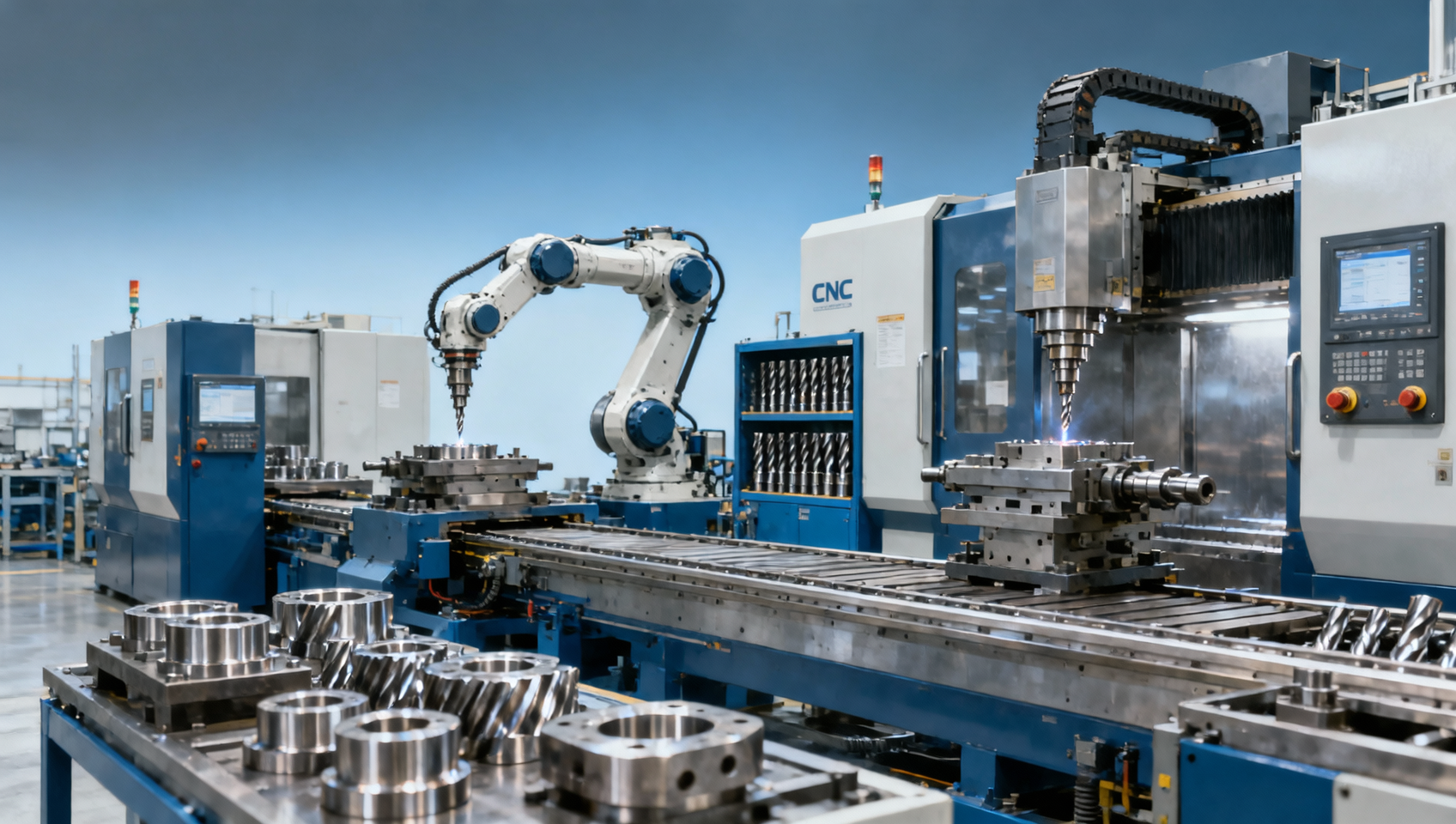
Automated production may promise speed, but delays often begin long before the machine starts cutting. In today’s Global Manufacturing and Manufacturing Industry, bottlenecks in CNC production, CNC Programming, tooling setup, and the Automated Production Line can quietly reduce efficiency. For buyers, operators, and decision-makers, understanding where industrial CNC and CNC metalworking slow down is the first step toward a stronger Production Process.
In CNC machining and precision manufacturing, a delay is rarely caused by only one machine. It usually starts in the handoff between design, programming, fixturing, material preparation, inspection planning, and line balancing. A machining center may have a rated spindle speed of 12,000 rpm or 20,000 rpm, but if tooling data is incomplete or setups take 45 minutes instead of 15, the promised throughput disappears quickly.
For research-oriented readers, this topic helps explain why high automation does not always produce high output. For operators, it clarifies where recurring downtime often begins. For procurement teams and business leaders, it offers a practical framework for evaluating machine tools, automation cells, and production planning before delays turn into cost, missed delivery windows, or unstable quality.
Where Automated Production Delays Usually Begin
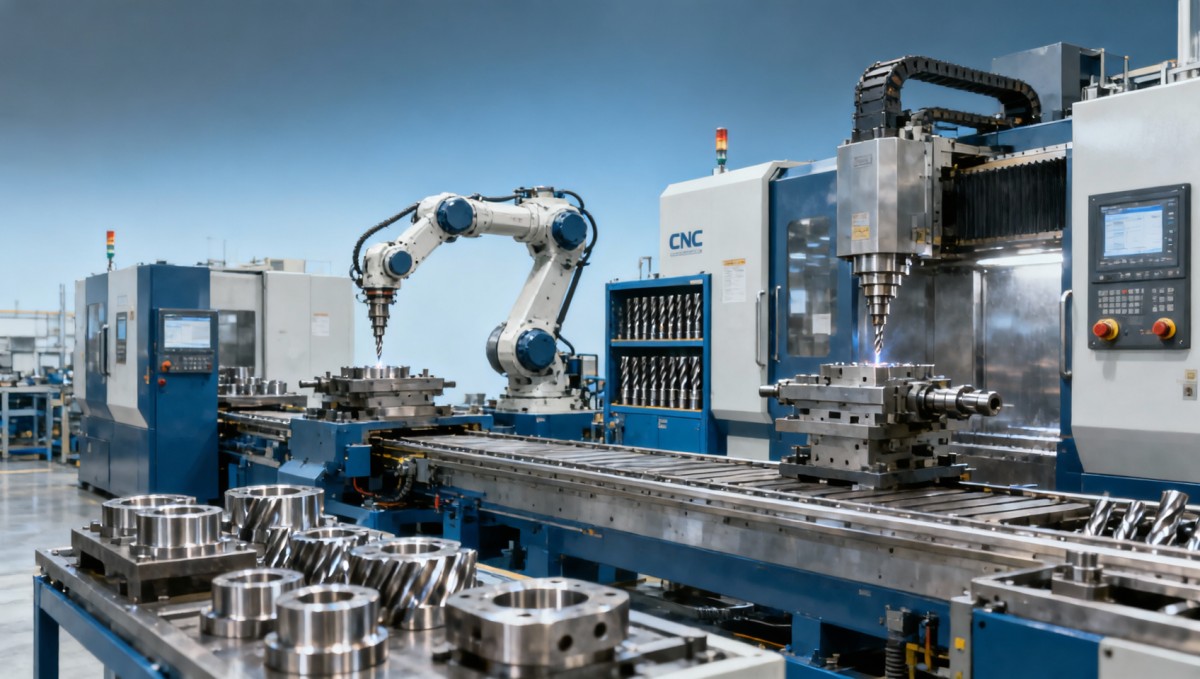
The first source of delay often appears upstream, before any cycle starts on the CNC machine. In many factories, CAD files, process sheets, and CNC Programming instructions are created by different teams with different priorities. A missing datum, an unclear tolerance stack, or an unverified toolpath can add 2–6 hours to first-article preparation, especially for multi-axis machining or parts with tight tolerances such as ±0.01 mm to ±0.02 mm.
The second source is setup readiness. An automated production line may include CNC lathes, machining centers, robotic loading, fixtures, and in-process measurement. If even one element is not prepared on time, the entire line can idle. In mixed-part production, fixture changeover can take 20–40 minutes per batch. Across 6 to 10 changeovers in one shift, that can remove several hours of productive time.
Material flow is another underestimated bottleneck. Precision manufacturing depends on stable raw material dimensions, traceability, and staging. If bar stock, castings, or pre-machined blanks arrive late or outside expected tolerance windows, operators must stop to remeasure, re-clamp, or even reprogram offsets. In sectors such as automotive and aerospace, a single mismatch in incoming material condition can affect 50 to 500 parts in one run.
The final hidden delay often comes from inspection planning. If CMM routines, gauges, or sampling plans are not aligned with the production process, completed parts wait in queues. In a line designed for 90-second cycle time, a 5-minute inspection bottleneck can destabilize the entire production rhythm.
Typical early-stage bottlenecks
- Incomplete CNC Programming verification for complex contours, threading, or 4-axis/5-axis moves.
- Tool list mismatch between process planning and actual machine magazine capacity, such as 24 tools planned for a machine holding only 20.
- Fixture design not validated for part family variation, causing clamp interference or unstable repeatability.
- No defined buffer for raw material, inserts, coolant, or inspection capacity during peak demand.
The table below shows where delays commonly start and how they affect CNC production in practical terms.
The key takeaway is that machine speed alone does not determine production speed. In industrial CNC environments, delays often begin in preparation, coordination, and process discipline. That is why line design, programming review, and material control deserve as much attention as spindle power or axis count.
Why CNC Programming, Tooling, and Setup Create Hidden Downtime
CNC Programming is one of the biggest leverage points in automated production. A highly capable machining center can still underperform if the toolpath is conservative, the cutting parameters are copied from a different material, or the program does not consider actual fixture reach and evacuation of chips. Even a 7% to 12% mismatch in feeds and speeds can lengthen cycle time significantly across thousands of parts.
Tooling decisions also influence uptime more than many buyers expect. Insert grade, holder rigidity, stick-out length, and tool life predictability determine whether a machine runs unattended for 30 minutes or 4 hours. In CNC metalworking, excessive variation in tool wear often leads to unplanned stoppages for offset adjustment or insert replacement. This is especially critical in multi-shift production where one unstable tool can interrupt an entire automated production line.
Setup quality is another hidden factor. If operators spend too much time checking work offsets, confirming clamp pressure, or aligning jaws and soft fixtures, the benefits of automation drop quickly. For high-mix production, setup reduction from 30 minutes to 10 minutes may create more annual capacity than adding another machine.
Poor chip control and coolant management should also be considered setup-related risks. Deep cavities, stainless materials, and high-speed roughing can generate chips that affect sensors, surface finish, and probing accuracy. Without proper nozzle positioning, pressure range, and chip evacuation strategy, unattended machining becomes unreliable.
Three practical checks before releasing a production program
- Validate cycle time against actual spindle load, tool change count, and non-cutting motion rather than simulation alone.
- Confirm magazine capacity, spare tool policy, and expected tool life for each critical operation.
- Run a first-off setup checklist covering datum, clamp repeatability, probing sequence, coolant delivery, and chip clearance.
Programming and setup priorities for different users
Operators usually focus on repeatability, clear setup sheets, and manageable tool offsets. Procurement teams tend to compare machine specifications. Decision-makers often look at output and payback. In reality, all three groups should review the same operational details because downtime usually comes from their intersection, not from one department alone.
The following matrix helps connect technical issues with purchasing and operational decisions.
A reliable production process requires more than advanced software and machine tools. It needs disciplined setup engineering, tool management, and program validation that reflect actual shop floor conditions. That is where hidden downtime is either prevented or allowed to grow.
How Buyers and Decision-Makers Should Evaluate Delay Risk Before Purchase
Procurement decisions in the machine tool industry should go beyond price, spindle speed, and brochure-level automation claims. A faster machine can still create slower output if supporting systems are weak. Buyers should assess at least 4 dimensions: process compatibility, setup efficiency, service response, and digital integration. This approach is especially important when comparing CNC lathes, vertical machining centers, horizontal machining centers, and robotic loading cells.
Process compatibility means asking whether the machine fits actual part families. If a factory produces shafts, discs, housings, and precision structural parts with tolerance bands from ±0.005 mm to ±0.05 mm, one platform may not suit all. Travel range, torque curve, chuck size, pallet strategy, and tool capacity should be reviewed against the top 20% of the most demanding jobs, not just average parts.
Service response matters because every hour of downtime on an automated production line can affect delivery commitments. Buyers should define realistic expectations such as remote troubleshooting within 2 hours, critical spare part guidance within 24 hours, and preventive maintenance intervals every 3 to 6 months depending on operating load. These are practical control points, not marketing promises.
Digital integration is equally relevant. If machine data, tool monitoring, and line status cannot connect to MES, ERP, or basic production dashboards, delay analysis becomes reactive rather than preventive. Even simple integration such as machine state codes, alarm logging, and tool consumption tracking can reduce repeated stoppages over a 6–12 month period.
A procurement checklist for automated CNC production
- Check if standard setup time for the target part family is below 15–20 minutes or requires custom fixturing each time.
- Confirm whether the tool magazine, pallet pool, or robot loading system supports the planned shift pattern and part mix.
- Review spare parts and service structure for 12-month operating continuity, not just installation acceptance.
- Ask for realistic acceptance conditions covering accuracy, cycle time, and unattended run stability.
The comparison table below can help buyers structure their evaluation process before investing in industrial CNC equipment or an automated production line.
For many enterprises, the real difference between a good purchase and a costly one is not machine ownership cost alone. It is the total delay risk embedded in daily operation. The more accurately a buyer maps process flow before purchase, the lower the chance of discovering bottlenecks after installation.
Practical Ways to Reduce Delays Across the Production Process
Reducing delays in CNC production requires action at process, equipment, and management level. The first improvement is standardization. Factories that use standardized setup sheets, tool assemblies, offset logic, and fixture references typically recover time faster than those relying on individual operator memory. Even a 5-step setup discipline can reduce variation across shifts and improve first-pass stability.
The second improvement is to separate internal and external setup tasks. Tool presetting, jaw preparation, material staging, and program verification should be completed before the machine stops. This simple principle, often associated with quick changeover methods, can cut setup loss by 30% to 50% in part-family production. For high-volume CNC metalworking, that translates directly into more available spindle hours.
The third improvement is in-process monitoring. Basic alarm capture, spindle load trend tracking, and tool life warnings help identify developing problems before they become line stoppages. In smart manufacturing environments, this does not need to start with a complex platform. A phased approach over 3 stages is often more practical: first machine data visibility, then tool and quality correlation, then line-level optimization.
The fourth improvement is workforce alignment. Operators, programmers, maintenance staff, and production planners should review recurring delays together at least weekly. A 20-minute review focused on top 3 stoppage causes can be more effective than broad monthly reporting that does not result in action.
A workable 5-step delay reduction framework
- Map the full production process from order release to final inspection and identify the 3 most frequent waiting points.
- Measure actual setup, cycle, inspection, and material transfer times for at least 2 weeks.
- Standardize tooling, fixtures, and program release procedures for the highest-volume part groups.
- Add monitoring for alarms, tool wear, and machine idle reasons to separate technical issues from planning issues.
- Review outcomes every 30 days and update the control plan based on actual bottleneck movement.
Common implementation mistakes
One common mistake is chasing machine utilization without addressing setup and logistics losses. Another is buying automation before confirming process stability. If tool life varies widely, if material batches are inconsistent, or if workholding is not repeatable, adding robots may automate interruption rather than eliminate it.
A better strategy is to stabilize the production process first, then scale automation. In global manufacturing, the factories that sustain output are usually those that treat delay prevention as a system issue involving programming, tooling, material, inspection, and support response, not just one piece of equipment.
FAQ for Operators, Buyers, and Manufacturing Managers
How can I tell whether delays come from the machine or the process?
Start by separating cutting time, setup time, waiting time, alarm time, and inspection hold time over a 7–14 day period. If actual cutting time is less than 60% of available shift time, the problem usually sits in process organization rather than machine capability alone. Machine alarms should then be ranked by frequency and duration to see whether the issue is technical or procedural.
What setup time is considered reasonable in CNC batch production?
It depends on part complexity and fixture strategy. For repeat jobs with standardized fixtures, 10–20 minutes may be realistic. For complex multi-face parts or new part introduction, 30–90 minutes may still be acceptable. The key is consistency. If the same job varies from 15 minutes to 50 minutes between shifts, setup discipline needs attention.
What should procurement teams ask suppliers before buying an automated production line?
Ask about acceptance conditions, recommended part families, setup assumptions, service response, spare part planning, data interface capability, and operator training scope. It is also wise to request clarity on conditions for unattended runtime, such as tool life assumptions, material consistency, and chip management requirements.
Is a more automated line always better for precision manufacturing?
Not always. Higher automation works best when part mix, workholding, and process control are already stable. In high-mix, low-volume environments, flexible cells with fast changeover may outperform heavily automated lines that need long setup or revalidation. The right solution depends on output target, product variation, and the factory’s ability to maintain process discipline.
Automated production becomes truly efficient only when the full chain around the machine is engineered for flow. In CNC machining, delays typically begin in programming control, setup preparation, tooling stability, material readiness, inspection planning, and weak integration between line elements. Addressing these points improves throughput, protects quality, and supports more reliable delivery performance.
For information researchers, this creates a clearer way to evaluate production systems. For operators, it provides practical control points on the shop floor. For buyers and enterprise decision-makers, it offers a better basis for equipment selection, line planning, and long-term manufacturing investment. If you want to explore more solutions for CNC production, automated production lines, or precision manufacturing process improvement, contact us to discuss your application, request a tailored plan, or learn more about suitable machine tool and automation strategies.
PREVIOUS ARTICLE
Recommended for You
 Digital Manufacturing for Smart Factories: Connecting Legacy Machines to MESMachine Tool Industry Editorial Team
 How to Select a CNC Metal Lathe for Tight-Tolerance Shaft and Sleeve PartsCNC Machining Technology Center
 How to Select an Industrial Lathe for High-Volume Shaft ProductionMachine Tool Industry Editorial Team
 Selecting Machine Tools for Automotive Parts: Accuracy, Throughput, and AutomationMachine Tool Industry Editorial Team
 Industrial Machining: Selecting Processes for Tight-Tolerance Metal PartsCNC Machining Technology Center
 Manufacturing Technology Trends That Improve Throughput and Quality ControlManufacturing Market Research Center

Aris Katos
Future of Carbide Coatings
15+ years in precision manufacturing systems. Specialized in high-speed milling and aerospace grade alloy processing.
▶
Digital Manufacturing for Smart Factories: Connecting Legacy Machines to MESMachine Tool Industry Editorial Team▶
Selecting Machine Tools for Automotive Parts: Accuracy, Throughput, and AutomationMachine Tool Industry Editorial Team▶
Smart Manufacturing for Small Businesses: Where Automation Delivers the Fastest ROIMachine Tool Industry Editorial Team▶
How Smart Manufacturing Technology Improves OEE Across Industry 4.0 Production LinesMachine Tool Industry Editorial Team▶
How to Evaluate an Automation Line for Electronics Production Before InvestmentMachine Tool Industry Editorial Team
Mastering 5-Axis Workholding Strategies
Join our technical panel on Nov 15th to learn about reducing vibrations in thin-wall components.

Providing you with integrated sanding solutions
Before-sales and after-sales services
Comprehensive technical support