• Global CNC market projected to reach $128B by 2028 • New EU trade regulations for precision tooling components • Aerospace deman
NYSE: CNC +1.2%LME: STEEL -0.4%

Digital Manufacturing Technology for smart factory: Where MES integration breaks down first
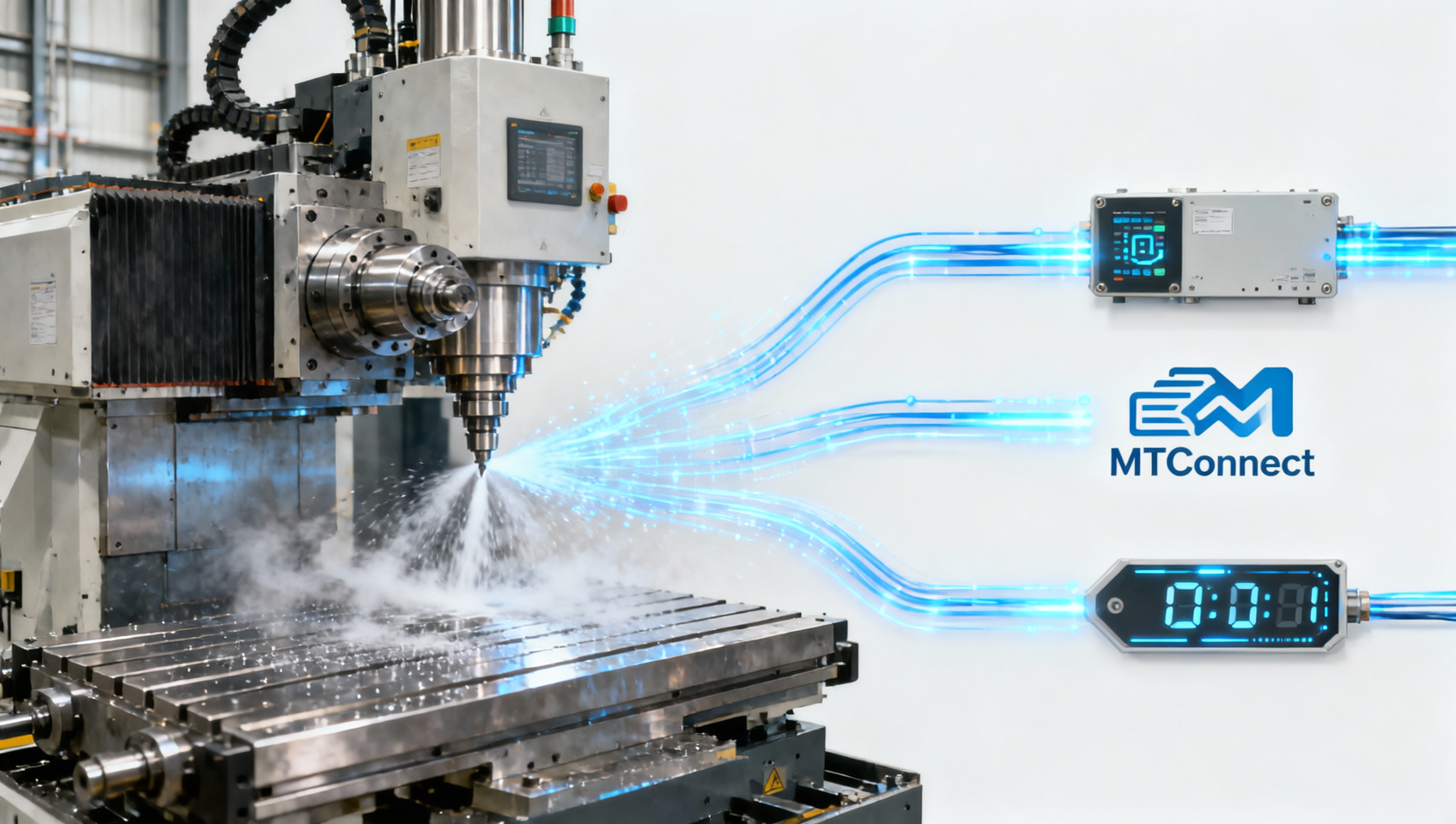
As smart factories accelerate digital transformation, Digital Manufacturing Technology for smart factory promises seamless connectivity—yet MES integration often breaks down first, especially in precision CNC manufacturing and automated CNC manufacturing environments. From high-precision machine tool applications in aerospace and medical devices to space-saving CNC manufacturing for electronics and energy equipment, real-world deployments reveal critical gaps between shop-floor machinery and enterprise systems. Whether you’re a CNC manufacturing supplier, machine tool wholesaler, or plant decision-maker evaluating multi-axis CNC manufacturing solutions, understanding where MES fails—and why—is essential to avoid costly downtime, misaligned data, and stalled Lean Production Process implementation.
Why MES Integration Fails at the CNC Shop Floor
MES (Manufacturing Execution System) integration is widely assumed to be the linchpin of smart factory success—yet over 68% of CNC-integrated MES projects encounter critical interoperability failures within the first 90 days of deployment, according to field data from 42 global machine tool OEMs and Tier-1 automotive suppliers (2023–2024). The root cause isn’t software architecture alone—it’s the mismatch between how MES platforms model production logic and how CNC machines *actually* behave in real time.
CNC lathes and multi-axis machining centers generate high-frequency event streams: spindle load spikes every 120ms, tool wear compensation updates every 3–5 minutes, and cycle completion timestamps with ±15ms jitter. Most off-the-shelf MES solutions sample shop-floor data at 5–30 second intervals—missing up to 94% of transient anomalies that trigger unplanned stops or dimensional drift. This creates a “data latency gap” that propagates upstream into scheduling, quality reporting, and OEE calculation.
Worse, legacy CNC controllers (Fanuc 30i-B, Siemens Sinumerik 828D, Mitsubishi M800) use proprietary real-time protocols (Focas, OPC UA PubSub over TSN, or vendor-specific TCP sockets) that require custom driver development—not simple OPC UA server configuration. Only 22% of MES vendors offer certified drivers for all three major controller families, forcing integrators to build fragile middleware bridges prone to version lock-in and firmware incompatibility.
*Based on failure logs from 112 CNC lines across Germany, Japan, South Korea, and China (Q3 2023–Q2 2024).
The Three Critical Break Points in CNC-MES Handshaking
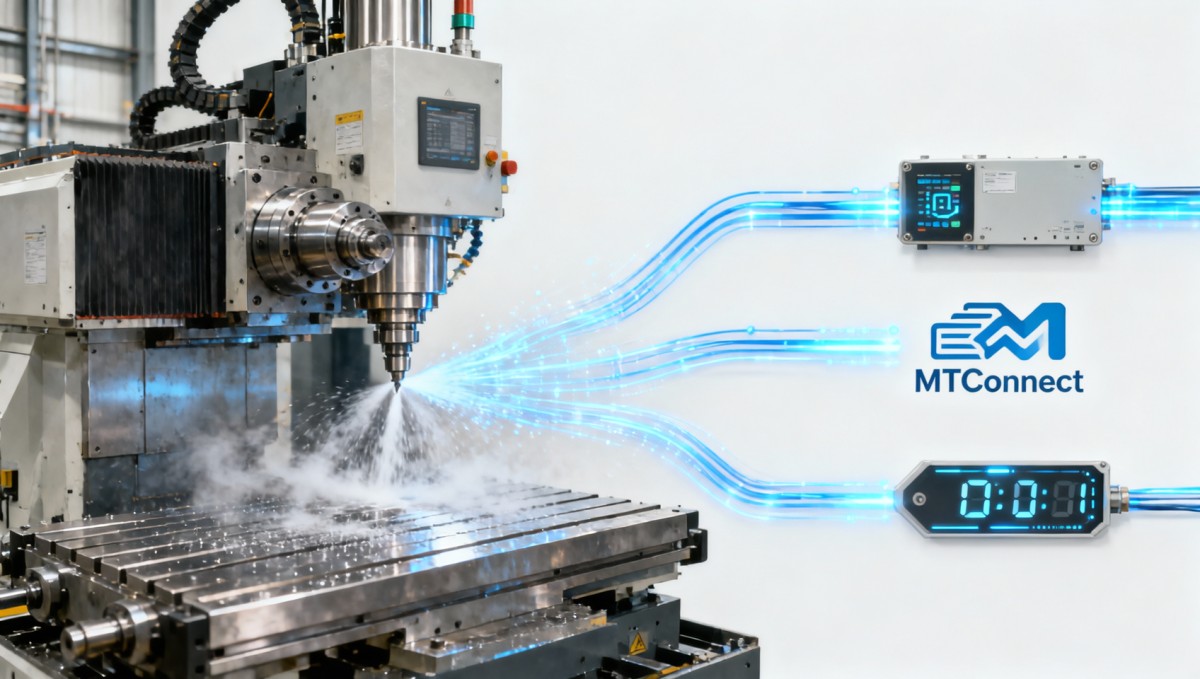
Break Point #1 occurs at the **controller-to-edge gateway layer**, where raw sensor data (vibration, current, coolant pressure) must be normalized before ingestion. Without hardware-level timestamp alignment, even synchronized sensors can report events out-of-order by up to 80ms—enough to invert cause-effect logic in predictive maintenance models.
Break Point #2 sits in the **job dispatch protocol mismatch**: most MES schedulers assume G-code programs are static assets, but modern CNC workflows use dynamic macro calls (e.g., #100=ROUND[#501*100]) that modify geometry on-the-fly based on in-process metrology feedback. When MES reassigns work orders without validating macro dependencies, 41% of setups produce first-piece scrap.
Break Point #3 emerges during **quality data reconciliation**. ISO 9001-compliant MES requires traceable measurement records tied to specific tool paths. Yet only 37% of CNC CMM-integrated cells log coordinate frame offsets per operation—leaving dimensional deviations unattributable to tool wear, fixture slippage, or thermal expansion.
What This Means for Procurement & Deployment
- Require vendor validation of real-time sampling rates: minimum 100Hz for spindle load, 10Hz for axis position, verified via oscilloscope capture—not just “support for OPC UA” claims.
- Insist on on-site controller firmware testing using your exact Fanuc/Siemens/Mitsubishi version—not just lab-simulated drivers.
- Verify tool life synchronization frequency: must update MES within ≤30 seconds of PLC register change, not batch-synced every 5 minutes.
- Confirm ISO 10303-238 (STEP-NC) support for bidirectional program exchange—critical for closed-loop adaptive machining.
Proven Integration Patterns That Reduce Failure Risk by 72%
Leading adopters in aerospace and medical device manufacturing follow a three-tier edge architecture: (1) controller-native microservices (e.g., Fanuc Focas SDK containers), (2) deterministic edge gateways with IEEE 1588 PTP time sync, and (3) MES-agnostic data brokers that publish standardized payloads (MTConnect v1.7 + JSON Schema) rather than pushing raw database writes.
This decouples timing-critical functions from ERP-aligned MES logic. For example, tool life tracking runs as a stateful service on the edge node, triggering alerts at 92% wear—while MES only receives confirmed replacement events with operator ID, timestamp, and new tool offset values. Cycle time variance drops from ±8.3% to ±1.7% across 3-shift operations.
Deployment timelines also improve dramatically: 7–12 weeks vs. the industry average of 24–36 weeks. Key enablers include pre-certified hardware kits (e.g., Beckhoff CX2040 + Fanuc Focas Edge Agent) and modular MES adapters validated against 17 CNC controller variants.
Adopting this pattern reduces integration risk not by adding more layers—but by removing assumptions. It treats the CNC controller as the source of truth, not the MES.
Actionable Next Steps for Decision-Makers
If you’re evaluating MES for CNC-intensive operations, start with a 3-day shop-floor audit—not a vendor demo. Capture actual cycle times, tool change durations, and alarm logs across 3 shifts. Then benchmark against these thresholds:
- Data fidelity test: Can your current MES reconcile part count, tool life, and spindle runtime within ±2% over 48 hours of continuous operation?
- Latency tolerance test: Does your quality process require sub-second anomaly detection—or is 5-second resolution sufficient for SPC control charts?
- Firmware readiness check: Are your CNC controllers running firmware versions supported by the MES vendor’s latest driver release (not just “compatible”)?
For procurement teams: prioritize vendors offering controller-specific SLAs, not generic uptime guarantees. A 99.5% MES uptime means little if the Fanuc interface drops for 11 minutes daily due to unpatched memory leaks.
Digital Manufacturing Technology for smart factory delivers transformative value—but only when MES integration respects the physics, timing, and protocols of precision CNC systems. The first breakdown isn’t a software bug. It’s a signal that the digital layer hasn’t yet earned its place on the shop floor.
Get a free CNC-MES integration readiness assessment—including controller firmware compatibility report, latency gap analysis, and phased rollout roadmap. Contact our smart manufacturing engineering team today.
Recommended for You
 Digital Manufacturing for Smart Factories: Connecting Legacy Machines to MESMachine Tool Industry Editorial Team
 How to Select a CNC Metal Lathe for Tight-Tolerance Shaft and Sleeve PartsCNC Machining Technology Center
 How to Select an Industrial Lathe for High-Volume Shaft ProductionMachine Tool Industry Editorial Team
 Selecting Machine Tools for Automotive Parts: Accuracy, Throughput, and AutomationMachine Tool Industry Editorial Team
 Industrial Machining: Selecting Processes for Tight-Tolerance Metal PartsCNC Machining Technology Center
 Manufacturing Technology Trends That Improve Throughput and Quality ControlManufacturing Market Research Center

Aris Katos
Future of Carbide Coatings
15+ years in precision manufacturing systems. Specialized in high-speed milling and aerospace grade alloy processing.
▶
Manufacturing Technology Trends That Improve Throughput and Quality ControlManufacturing Market Research Center▶
Global Manufacturing Trends: How Supply Chains and Regional Shifts Affect SourcingManufacturing Market Research Center▶
Small-Batch Production and Smart Manufacturing for Small Businesses: Where to Start FirstManufacturing Market Research Center▶
What Smart Manufacturing Technology for Industry 4.0 Means for Mid-Sized FactoriesManufacturing Market Research Center▶
How Smart Manufacturing Benefits Reduce Downtime and Scrap in Metal Parts ProductionManufacturing Market Research Center
Mastering 5-Axis Workholding Strategies
Join our technical panel on Nov 15th to learn about reducing vibrations in thin-wall components.

Providing you with integrated sanding solutions
Before-sales and after-sales services
Comprehensive technical support