• Global CNC market projected to reach $128B by 2028 • New EU trade regulations for precision tooling components • Aerospace deman
NYSE: CNC +1.2%LME: STEEL -0.4%

Huawei Launches First AI Glasses with Industrial AR Engine

On May 15, 2026, Huawei launched its first AI glasses—priced from USD 2,499—with an in-house industrial augmented reality (AR) engine. The device enables millimeter-level spatial anchoring, direct multi-source equipment protocol connectivity (including FANUC and Siemens PLCs), and real-time 3D visualization of fixture deviation. This development is particularly relevant for CNC machine tool manufacturing, industrial automation integration, and global technical support service providers—marking a shift toward lightweight, on-site AR-assisted remote maintenance infrastructure.
Event Overview
On May 15, 2026, Huawei officially released its first AI glasses, starting at USD 2,499. The product features a proprietary industrial AR engine supporting millimeter-level spatial anchoring, native connectivity to industrial control protocols (e.g., FANUC and Siemens PLCs), and real-time 3D annotation of fixture alignment deviations. It has been integrated into the remote service platforms of multiple Chinese CNC machine tool manufacturers and is positioned as a lightweight hardware solution to reduce cross-border technical support costs for overseas customers.
Industries Affected
CNC Machine Tool Manufacturers
These manufacturers are directly impacted because the glasses are already deployed on their remote service platforms. The integration introduces new requirements for software compatibility, real-time data streaming architecture, and standardized AR annotation workflows—potentially affecting post-sale service delivery timelines and documentation protocols.
Industrial Automation System Integrators
Integrators handling PLC-based control systems (especially those working with FANUC or Siemens hardware) may face increased demand for AR-ready commissioning and troubleshooting modules. Compatibility testing with the glasses’ protocol stack—and potential adjustments to HMI/SCADA data export formats—could become part of pre-deployment validation.
Global Technical Support & After-Sales Service Providers
Providers delivering cross-border field support may see reduced reliance on physical dispatch for certain calibration and diagnostic tasks. However, this also raises new operational questions: training requirements for AR-guided interventions, liability frameworks for remote-assisted actions, and synchronization between AR annotations and existing CMMS/EAM systems.
What Enterprises and Practitioners Should Monitor and Act On
Track official interoperability documentation and firmware update cadence
Since direct protocol support for FANUC and Siemens PLCs is confirmed, practitioners should monitor Huawei’s published SDK documentation, API versioning, and firmware release notes—particularly for updates affecting data latency, coordinate system alignment, or security authentication flows.
Assess integration readiness for existing remote service platforms
Companies operating remote monitoring or predictive maintenance platforms should evaluate whether their current data pipelines (e.g., OPC UA endpoints, MQTT brokers, or edge gateway configurations) align with the glasses’ ingestion requirements—especially regarding timestamped spatial metadata and real-time geometry updates.
Distinguish between pilot deployment signals and scalable adoption
The current rollout involves “multiple Chinese machine tool manufacturers” but no disclosed volume or geographic scope. Enterprises should treat early integrations as proof-of-concept engagements—not evidence of broad industrial standardization—until third-party validation or IEC/ISO alignment initiatives emerge.
Prepare internal competency mapping for AR-assisted workflows
Engineering teams involved in fixture setup, CNC commissioning, or preventive maintenance should begin documenting current manual verification steps (e.g., dial indicator checks, laser tracker alignments) to identify high-value candidates for AR overlay—prioritizing tasks where visual spatial deviation feedback delivers measurable time or error-reduction benefits.
Editorial Perspective / Industry Observation
Observably, this launch functions less as a standalone product milestone and more as an infrastructure signal: it reflects growing industry attention to closing the gap between digital twin fidelity and physical intervention precision. Analysis shows that the emphasis on millimeter-level anchoring and protocol-native connectivity—not just generic AR overlays—suggests Huawei is targeting functional use cases in regulated industrial settings, not consumer-facing novelty. From an industry perspective, the glasses are better understood as an enabling component within broader remote operations ecosystems, rather than a drop-in replacement for traditional field service tools. Its relevance will depend less on unit sales and more on how widely OEMs and platform providers adopt its spatial data model and API design patterns.
Conclusion: This announcement signifies an incremental but structurally meaningful step in industrial AR hardware deployment—focused specifically on CNC-related remote maintenance and fixture calibration. It does not indicate immediate market transformation, nor does it replace conventional metrology or PLC programming tools. Instead, it introduces a new hardware interface layer whose practical utility hinges on ecosystem coordination, not just device capability. Current understanding should emphasize compatibility evaluation and workflow mapping—not wholesale process redesign.
Source Attribution:
• Official Huawei product announcement (May 15, 2026)
• Confirmed integration with multiple Chinese CNC machine tool manufacturers’ remote service platforms
Note: Ongoing observation is warranted for future disclosures regarding international certification status (e.g., CE, UL), enterprise SLA terms, and third-party developer adoption metrics—none of which have been publicly confirmed as of the launch date.
PREVIOUS ARTICLE
Recommended for You
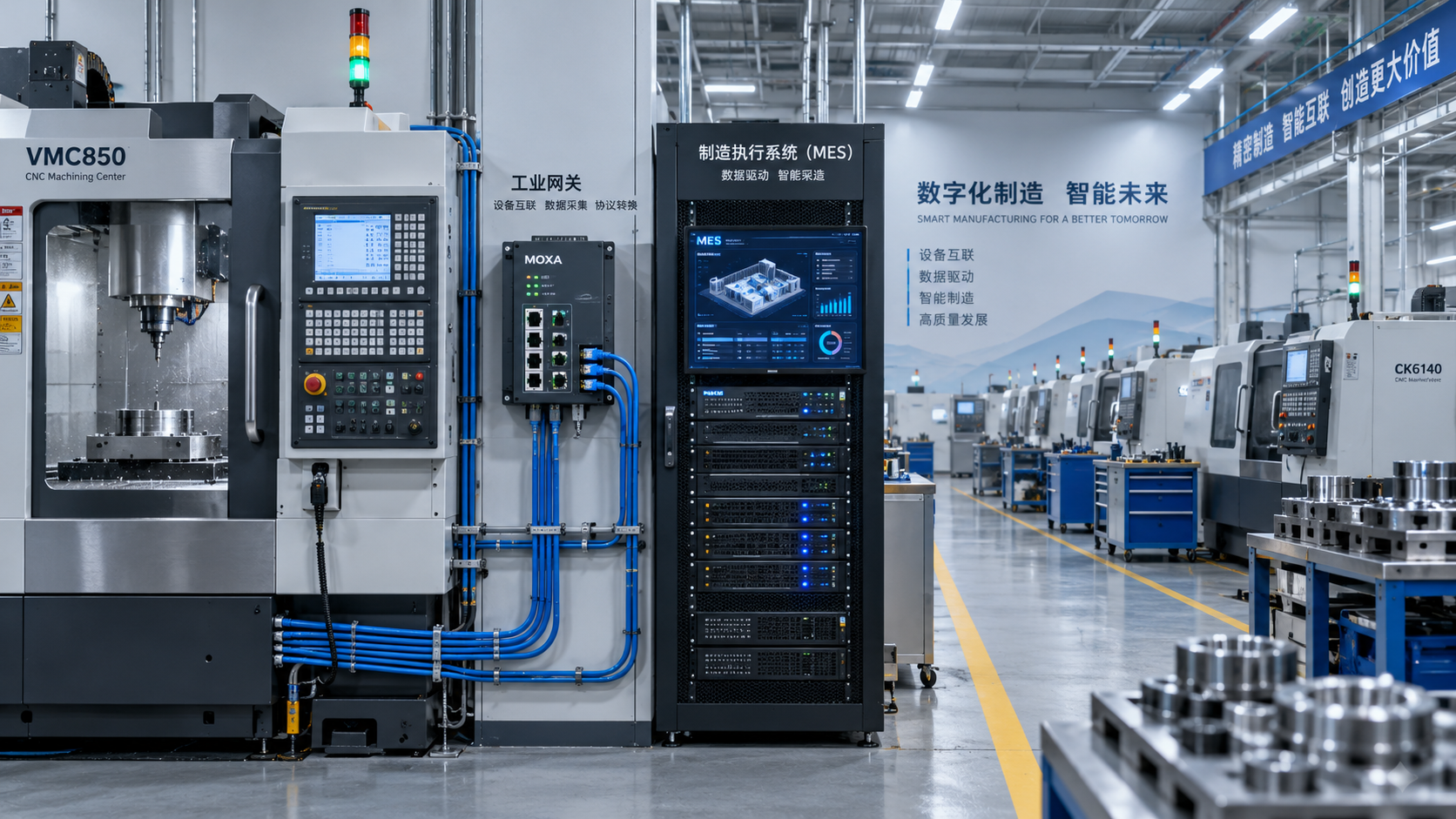
 Digital Manufacturing for Smart Factories: Connecting Legacy Machines to MESMachine Tool Industry Editorial Team
 How to Select a CNC Metal Lathe for Tight-Tolerance Shaft and Sleeve PartsCNC Machining Technology Center
 How to Select an Industrial Lathe for High-Volume Shaft ProductionMachine Tool Industry Editorial Team
 Selecting Machine Tools for Automotive Parts: Accuracy, Throughput, and AutomationMachine Tool Industry Editorial Team
 Industrial Machining: Selecting Processes for Tight-Tolerance Metal PartsCNC Machining Technology Center
 Manufacturing Technology Trends That Improve Throughput and Quality ControlManufacturing Market Research Center

Aris Katos
Future of Carbide Coatings
15+ years in precision manufacturing systems. Specialized in high-speed milling and aerospace grade alloy processing.
▶
Is Learning CNC Programming Worth It for Shop Owners Seeking Higher Margins?CNC Machining Technology Center▶
How to Select CNC Equipment for High-Mix, Low-Volume ProductionCNC Machining Technology Center▶
Can CNC Machining Inconel Control Tool Wear in High-Temperature Aerospace Parts?CNC Machining Technology Center▶
How Automated Precision Machining Maintains Tolerance in High-Mix ProductionCNC Machining Technology Center▶
CNC Programming Explained: From CAD Models to Reliable Shop-Floor ToolpathsCNC Machining Technology Center
Mastering 5-Axis Workholding Strategies
Join our technical panel on Nov 15th to learn about reducing vibrations in thin-wall components.

Providing you with integrated sanding solutions
Before-sales and after-sales services
Comprehensive technical support