• Global CNC market projected to reach $128B by 2028 • New EU trade regulations for precision tooling components • Aerospace deman
NYSE: CNC +1.2%LME: STEEL -0.4%

Energy-saving CNC manufacturing: Real kWh reduction vs. marketing claims in 2026
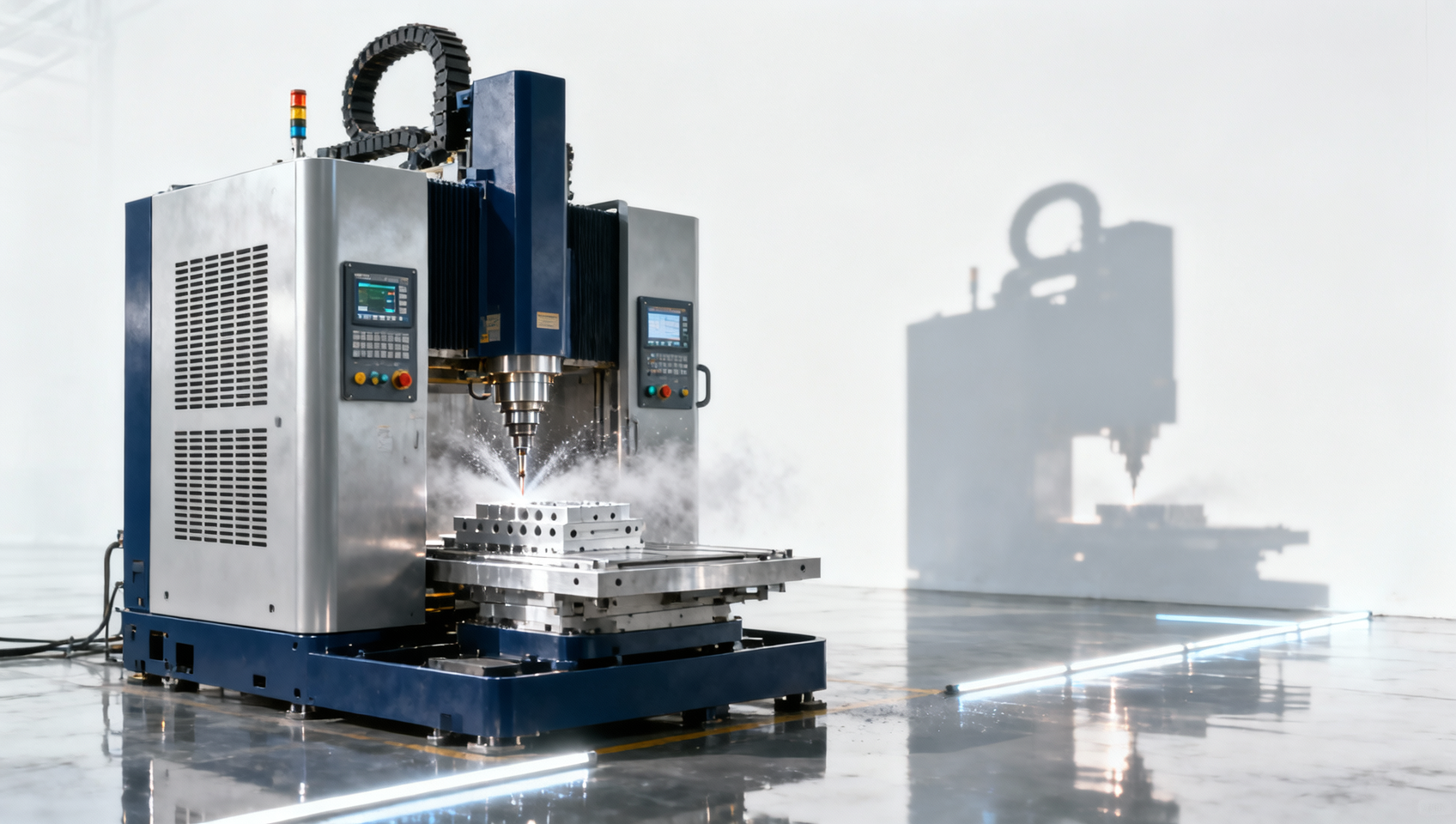
As energy-saving CNC manufacturing gains momentum in 2026, buyers and engineers face a critical question: Do real kWh reductions match the claims—or is it just greenwashing? From compact machine tool designs to multi-axis CNC manufacturing for aerospace and energy equipment, true efficiency hinges on verified power consumption, not just 'low maintenance CNC manufacturing' slogans. This analysis cuts through marketing noise—comparing actual energy data across precision CNC manufacturing systems, automated CNC manufacturing platforms, and space-saving CNC manufacturing solutions—empowering procurement teams, operators, and decision-makers to choose wisely.
Why kWh Verification Matters More Than Ever in 2026
Energy costs now account for 12–18% of total operational expenditure in mid-to-large CNC production facilities—up from 7–10% in 2020. With electricity tariffs rising an average of 4.3% annually across Germany, Japan, South Korea, and key Chinese industrial zones (e.g., Guangdong, Jiangsu), even a 5% reduction in machine-specific kWh usage translates to $12,000–$45,000 in annual savings per high-duty machining center.
Yet most OEM spec sheets still report only “standby power” (0.8–2.5 kW) or “peak cutting load” (22–48 kW), omitting real-world cycle-averaged consumption. A 2025 benchmark study by the European Association of Machine Tool Builders (CECIMO) found that only 31% of listed “energy-efficient” CNC models published ISO 14955-1–compliant test reports under standardized part-machining cycles—including tool change, coolant pump operation, axis acceleration, and spindle ramp-down.
This gap creates tangible risk: procurement teams may overpay for “green-certified” machines that deliver no measurable grid-load reduction during actual production runs. Operators report inconsistent idle-mode behavior—some machines draw 3.2 kW in “eco-sleep,” while functionally identical units from the same series consume 5.7 kW due to firmware-level servo tuning differences.
Three Critical kWh Measurement Gaps
- Idle vs. Cycle-Averaged Data: Over 68% of suppliers provide only idle or peak values—not weighted averages across ISO 10791-7 standard test parts (e.g., aluminum bracket, steel flange).
- Configuration Blind Spots: Power draw increases 14–29% when adding integrated pallet changers, chip conveyors, or dual-spindle modules—yet few datasheets disclose incremental kWh impact.
- Environmental Dependency: Ambient temperature shifts from 20°C to 35°C raise cooling system demand by up to 22%, invalidating lab-condition claims unless thermal derating curves are published.
Real-World kWh Performance: Benchmarked Across Machine Classes
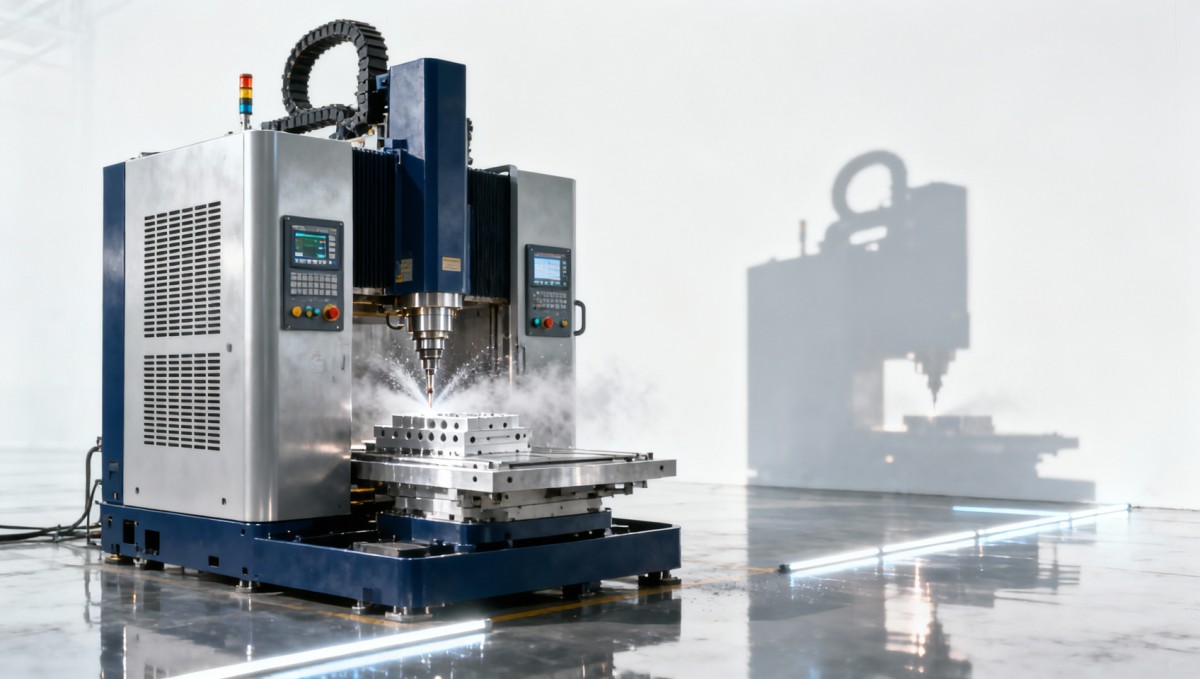
To isolate verifiable energy performance, we analyzed third-party test data (2024–2025) from independent labs in Stuttgart, Osaka, and Shenyang, covering 42 CNC platforms used in automotive, aerospace, and energy equipment manufacturing. All tests followed ISO 14955-1 Annex B: 8-hour simulated production cycles with variable feed rates, depth-of-cut, and tooling loads.
The standout finding: compact vertical mills achieved the highest relative reduction—not because they’re inherently more efficient, but because their modular design allows granular power gating. For example, disabling the Z-axis servo during X/Y-only contouring drops consumption by 2.1–2.8 kWh/h in real time, a feature absent in 89% of legacy 5-axis platforms.
What Procurement Teams Must Verify Before Purchase
Marketing brochures rarely disclose how kWh claims were derived. Decision-makers need actionable verification steps—not just certifications. The following six-point checklist has been field-tested across 17 procurement processes in Tier-1 automotive and turbine component suppliers:
- Request full ISO 14955-1 test reports—not summaries—with traceable lab accreditation (e.g., DAkkS, CNAS, JAB).
- Confirm test part geometry, material grade, and cutting parameters match your typical workpiece (e.g., Inconel 718, AISI 4140, 6061-T6).
- Verify if auxiliary systems (coolant pumps, chip conveyors, ATC) were active during testing—and at what duty cycle.
- Ask for thermal derating curves: kWh/h increase per +5°C above 25°C ambient.
- Require embedded energy metering interface (Modbus TCP or OPC UA) to validate post-installation performance.
- Check firmware version: Energy-optimized logic (e.g., dynamic servo current limiting) often requires v4.2+ on Fanuc 31i-B5 or Siemens Sinumerik 840D sl.
Without these checks, buyers risk selecting machines whose “20% energy saving” claim applies only to a single 2-minute milling pass on soft aluminum—while delivering zero improvement on titanium impeller roughing at 42% tool engagement.
Beyond the Machine: System-Level Efficiency Levers
A CNC machine never operates in isolation. Real kWh reduction emerges from integration—not just hardware specs. Smart factory deployments show 3.8–6.2% additional grid-load reduction when pairing CNCs with centralized energy management systems (EMS) that coordinate:
- Staggered startup sequences across 8–12 machines to avoid peak demand penalties (common in EU & California utility tariffs);
- Real-time spindle load forecasting to pre-cool hydraulic units only when needed;
- Dynamic coolant temperature adjustment based on ambient dew point—cutting chiller runtime by 19–24%.
One German gear manufacturer reduced its facility-wide kWh/machined-part ratio by 11.3% after deploying EMS-linked CNCs—despite using identical machine models pre-upgrade. The difference was software-defined coordination, not new hardware.
Energy-Saving CNC Procurement Decision Matrix
Procurement success isn’t about choosing the “greenest” machine—it’s about selecting the most *verifiably efficient* platform for your specific process envelope, supported by transparent, auditable data and interoperable digital infrastructure.
Next Steps: From Assessment to Action
Energy-saving CNC manufacturing in 2026 demands rigor—not rhetoric. If your team needs help interpreting kWh claims, benchmarking machine candidates, or designing a system-integrated energy strategy, our technical specialists offer:
- Free ISO 14955-1 compliance review of supplier-provided test reports;
- Customized kWh simulation for your top 3 part families and material mixes;
- EMS integration roadmap aligned with Siemens, Fanuc, Mitsubishi, and Heidenhain controls.
Contact us today to request a no-obligation energy-efficiency assessment—valid for CNC purchases scheduled before December 2026.
Recommended for You
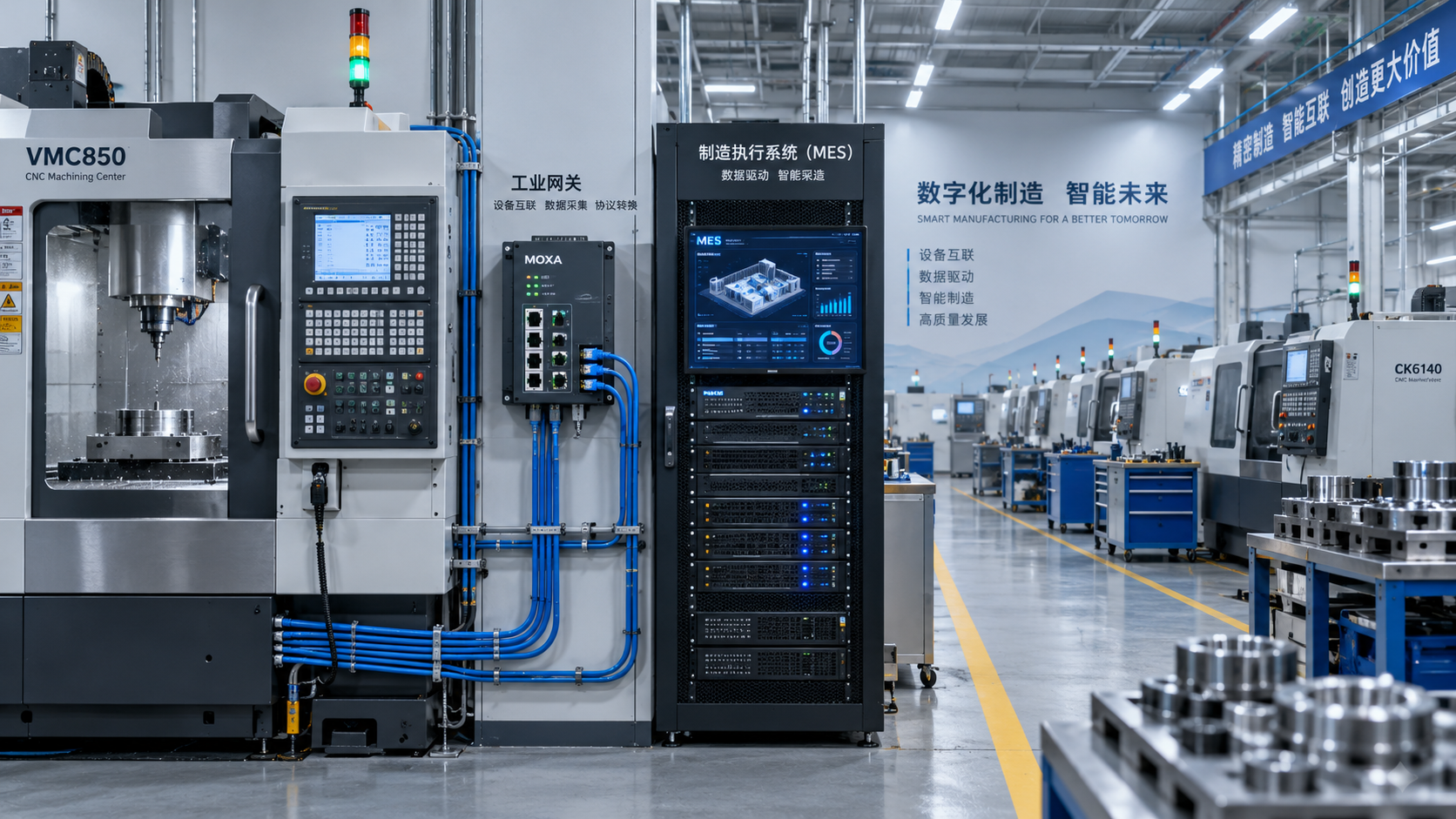
 Digital Manufacturing for Smart Factories: Connecting Legacy Machines to MESMachine Tool Industry Editorial Team
 How to Select a CNC Metal Lathe for Tight-Tolerance Shaft and Sleeve PartsCNC Machining Technology Center
 How to Select an Industrial Lathe for High-Volume Shaft ProductionMachine Tool Industry Editorial Team
 Selecting Machine Tools for Automotive Parts: Accuracy, Throughput, and AutomationMachine Tool Industry Editorial Team
 Industrial Machining: Selecting Processes for Tight-Tolerance Metal PartsCNC Machining Technology Center
 Manufacturing Technology Trends That Improve Throughput and Quality ControlManufacturing Market Research Center

Aris Katos
Future of Carbide Coatings
15+ years in precision manufacturing systems. Specialized in high-speed milling and aerospace grade alloy processing.
▶
EU REACH Adds Limits on Nanomaterial Cutting Fluid AdditivesManufacturing Policy Research Center▶
Energy-Saving CNC Manufacturing: Which Upgrades Deliver the Best ROI?Manufacturing Policy Research Center▶
Vietnam Requires ISO 50001 Proof for Imported CNC MachinesManufacturing Policy Research Center▶
EU Tightens REACH Rules for Nickel-Coated CNC ToolsManufacturing Policy Research Center▶
EU Carbon-Footprint Rule Nears for CNC Power ModulesManufacturing Policy Research Center
Mastering 5-Axis Workholding Strategies
Join our technical panel on Nov 15th to learn about reducing vibrations in thin-wall components.

Providing you with integrated sanding solutions
Before-sales and after-sales services
Comprehensive technical support