• Global CNC market projected to reach $128B by 2028 • New EU trade regulations for precision tooling components • Aerospace deman
NYSE: CNC +1.2%LME: STEEL -0.4%

Heavy-duty Machining Center for mold making: Why hydrostatic guideways outperform linear rails under sustained load
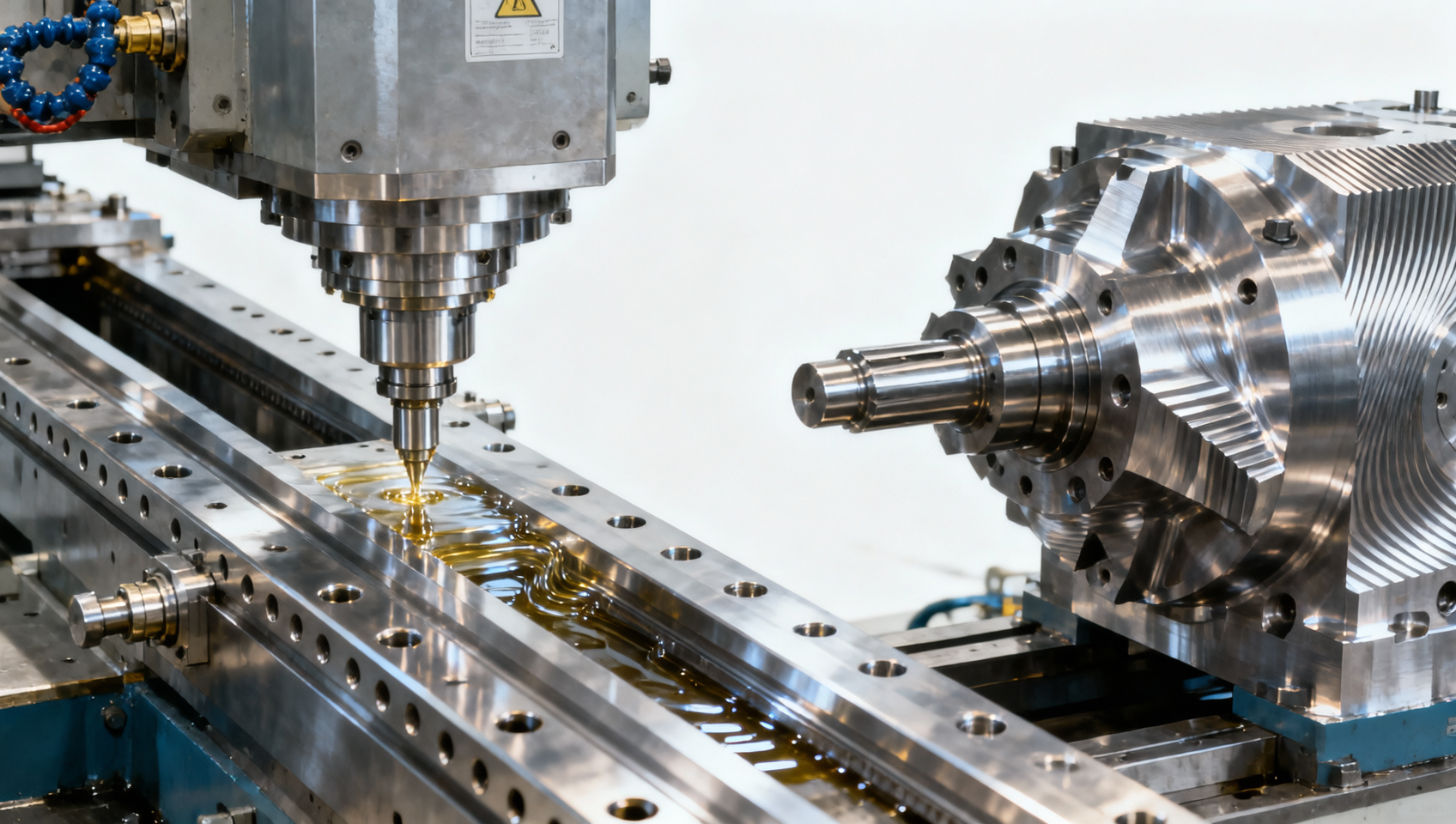
For mold makers demanding uncompromising stability under sustained heavy loads, the choice between hydrostatic guideways and linear rails isn’t just technical—it’s strategic. Heavy-duty machining centers with hydrostatic guideways deliver superior load distribution, minimal thermal drift, and ultra-high precision over time—critical for energy-saving CNC manufacturing, high-precision CNC manufacturing, and CNC manufacturing for aerospace or medical devices. Unlike conventional linear rails that wear and deflect under continuous stress, hydrostatic systems maintain micron-level accuracy with low maintenance CNC manufacturing benefits. Whether you’re a CNC manufacturing supplier, machine tool wholesaler, or automotive/aerospace OEM, this performance edge translates to longer tool life, quicker setup CNC manufacturing, and true cost-effective CNC manufacturing—especially in compact, space-saving CNC manufacturing environments.
Why Sustained Load Performance Defines Mold-Making Success
Mold making for automotive die-casting, injection molding, and aerospace composite tooling demands more than peak cutting force—it requires dimensional stability across multi-hour, uninterrupted cycles. A typical large-scale cavity milling operation may impose 8–12 tons of static and dynamic load on the X/Y/Z axes for 10–16 hours per shift. Under such conditions, linear rail systems experience measurable elastic deformation (up to ±3.2 µm per meter at 10 kN preload) and progressive wear-induced backlash (>0.015 mm after 12,000 operating hours without recalibration).
Hydrostatic guideways eliminate metal-to-metal contact entirely. Instead, they float the carriage on a pressurized oil film (typically 5–15 MPa), achieving near-zero friction coefficient (<0.001) and eliminating stick-slip phenomena. This results in repeatable positioning accuracy of ±0.5 µm over 24-hour thermal cycles—a threshold linear rails rarely sustain beyond 4–6 hours without active thermal compensation.
Moreover, hydrostatic systems inherently dampen vibration: their oil-film stiffness (1–3 GN/m) is 3–5× higher than preloaded linear rails (0.4–0.8 GN/m), suppressing chatter frequencies above 800 Hz—crucial when machining hardened H13 or Maraging steel at surface finishes < Ra 0.4 µm.
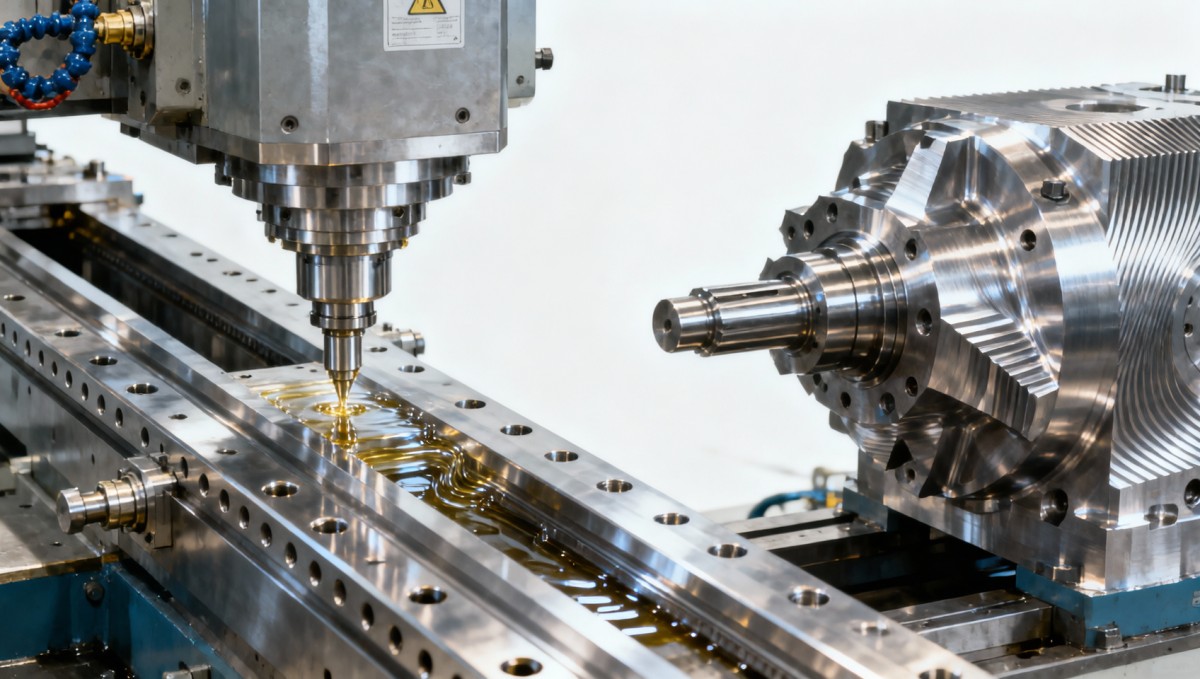
Load Distribution & Thermal Behavior: A Comparative Breakdown
Thermal growth remains the dominant source of geometric error in heavy-duty machining centers. Linear rails concentrate heat at localized contact zones—especially where recirculating ball nuts engage raceways—causing asymmetric expansion. In contrast, hydrostatic guideways distribute thermal energy uniformly via oil circulation, maintaining temperature gradients below ±0.8°C across the entire guideway length (measured over 3 m span at ambient 20±2°C).
This difference directly impacts part qualification rates. A Tier-1 automotive mold supplier reported 92% first-article pass rate using hydrostatic-based machining centers versus 74% with high-end linear-rail alternatives—attributed primarily to reduced Z-axis droop during deep cavity roughing (depth > 320 mm).
The table confirms that hydrostatic systems not only withstand higher loads but also decouple mechanical performance from ambient fluctuations—making them ideal for facilities lacking full climate control or operating across shifting shifts.
Operational Impact: From Setup Time to Total Cost of Ownership
Setup time reduction is one of the most immediate ROI drivers. Hydrostatic machines require no periodic rail tensioning or backlash adjustment. Operators report average setup time savings of 22 minutes per mold changeover—translating to ~14 additional productive hours per week in high-mix shops running 3+ mold families daily.
From a TCO perspective, hydrostatic systems extend tool life by 18–25% due to consistent feedrate stability and reduced micro-vibrations. Carbide end mills used in hardened steel milling last an average of 47 minutes vs. 38 minutes on comparable linear-rail platforms (tested at 120 m/min, ap = 4 mm, ae = 12 mm).
Maintenance labor costs drop significantly: annual preventive maintenance for hydrostatic guideways averages 12 man-hours versus 48–62 man-hours for linear rail recalibration, grease replenishment, and wear inspection. Oil filtration and pressure monitoring are fully automated in modern systems, requiring only quarterly filter replacement (every 2,000 operating hours).
- Zero downtime for rail reconditioning (linear rails typically require 3–5 days every 18–24 months)
- No consumable rail inserts or recirculation components subject to fatigue failure
- Integrated oil-film thickness sensors provide real-time health diagnostics (threshold alert at < 12 µm)
Who Benefits Most—and When to Prioritize Hydrostatic Technology
Hydrostatic guideways are not universally optimal—but they deliver decisive value in three well-defined scenarios:
- Molds exceeding 3,000 kg gross weight, where gravity-induced deflection compromises cavity symmetry (e.g., large automotive bumper dies)
- Continuous production runs > 8 hours without thermal reset, common in medical implant mold manufacturing with tight ±2 µm GD&T tolerances
- Facilities with limited HVAC capacity, where ambient variation exceeds ±3°C across shifts—hydrostatic systems retain sub-micron repeatability even at ±5°C fluctuation
Conversely, linear rails remain cost-effective for lower-load applications (≤ 5,000 kg molds), shorter cycle times (< 4 hours), or prototyping cells where flexibility outweighs long-term precision retention.
Procurement teams should evaluate based on these objective thresholds—not vendor claims. For mold makers producing ≥30 large dies annually, hydrostatic technology typically achieves payback within 14–18 months through reduced rework, extended tool life, and faster qualification cycles.
Final Considerations for Procurement and Integration
When specifying a heavy-duty machining center for mold making, verify these five non-negotiable integration points:
- Oil supply system must include dual-pressure regulation (high-pressure lift + low-pressure bearing mode) with redundant pumps
- Guideway oil temperature must be actively controlled within ±0.5°C (not just monitored)
- Machine foundation requirements: reinforced concrete slab ≥ 1,200 mm thick with isolation trenches (minimum 300 mm depth)
- Electrical interface must support ISO 230-2 Annex B thermal error mapping for real-time compensation
- Warranty coverage must include 36 months on hydrostatic manifold assemblies—not just standard 12-month mechanical warranty
Leading global suppliers now offer modular hydrostatic upgrade kits for existing heavy-duty frames—reducing capital outlay by up to 35% versus full-machine replacement. Delivery lead time averages 12–16 weeks for custom-configured hydrostatic machining centers, versus 8–10 weeks for equivalent linear-rail models.
In summary, hydrostatic guideways are not a luxury—they are an engineering necessity for mold makers confronting escalating precision, durability, and sustainability demands. Their superiority under sustained load delivers measurable gains in part quality, operational uptime, and long-term ownership economics.
If your shop produces molds weighing over 2,000 kg, runs >6-hour continuous cycles, or targets < 0.5% first-article rejection, request a comparative feasibility analysis—including thermal simulation, TCO modeling, and installation readiness assessment.
Contact our application engineering team today to explore configuration options, review reference installations in your region, and receive a tailored performance benchmark report.
Recommended for You
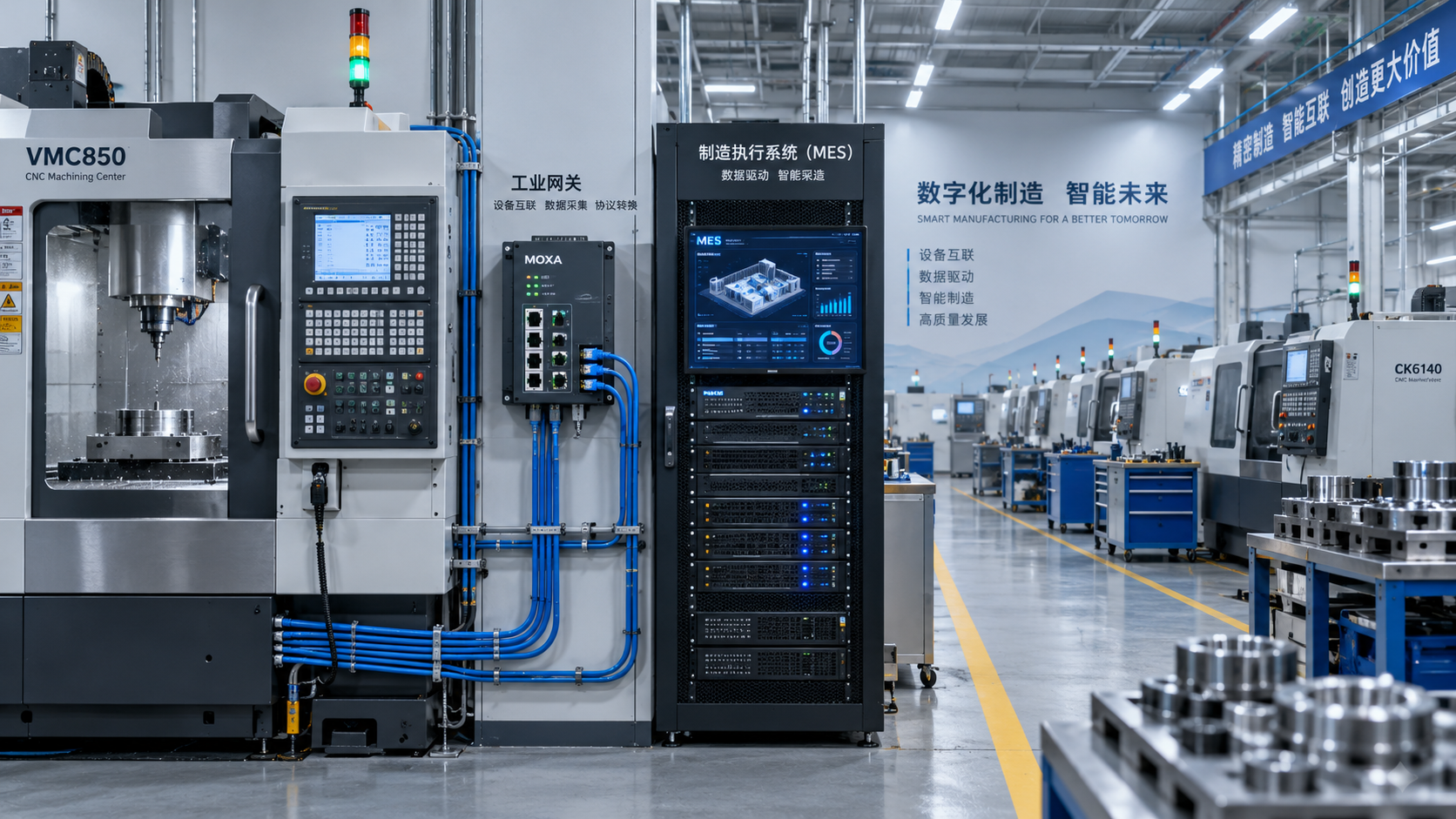
 Digital Manufacturing for Smart Factories: Connecting Legacy Machines to MESMachine Tool Industry Editorial Team
 How to Select a CNC Metal Lathe for Tight-Tolerance Shaft and Sleeve PartsCNC Machining Technology Center
 How to Select an Industrial Lathe for High-Volume Shaft ProductionMachine Tool Industry Editorial Team
 Selecting Machine Tools for Automotive Parts: Accuracy, Throughput, and AutomationMachine Tool Industry Editorial Team
 Industrial Machining: Selecting Processes for Tight-Tolerance Metal PartsCNC Machining Technology Center
 Manufacturing Technology Trends That Improve Throughput and Quality ControlManufacturing Market Research Center

Aris Katos
Future of Carbide Coatings
15+ years in precision manufacturing systems. Specialized in high-speed milling and aerospace grade alloy processing.
▶
How to Select a Machine Tool for Aerospace Parts with Tight Tolerances?Machine Tool Industry Editorial Team▶
How to Compare Machine Tools for Small-Batch vs Mass Production JobsMachine Tool Industry Editorial Team▶
Multi-Axis Machine Tool Selection Guide: Travel, Spindle, Accuracy, and Control SystemMachine Tool Industry Editorial Team▶
How to Evaluate Precision Equipment for Tight-Tolerance Parts and Stable OutputMachine Tool Industry Editorial Team▶
KATS Tightens CNC Grinder Import Test RulesMachine Tool Industry Editorial Team
Mastering 5-Axis Workholding Strategies
Join our technical panel on Nov 15th to learn about reducing vibrations in thin-wall components.

Providing you with integrated sanding solutions
Before-sales and after-sales services
Comprehensive technical support