• Global CNC market projected to reach $128B by 2028 • New EU trade regulations for precision tooling components • Aerospace deman
NYSE: CNC +1.2%LME: STEEL -0.4%

Machine tool for aerospace: Why thermal growth compensation requires real-time sensor fusion
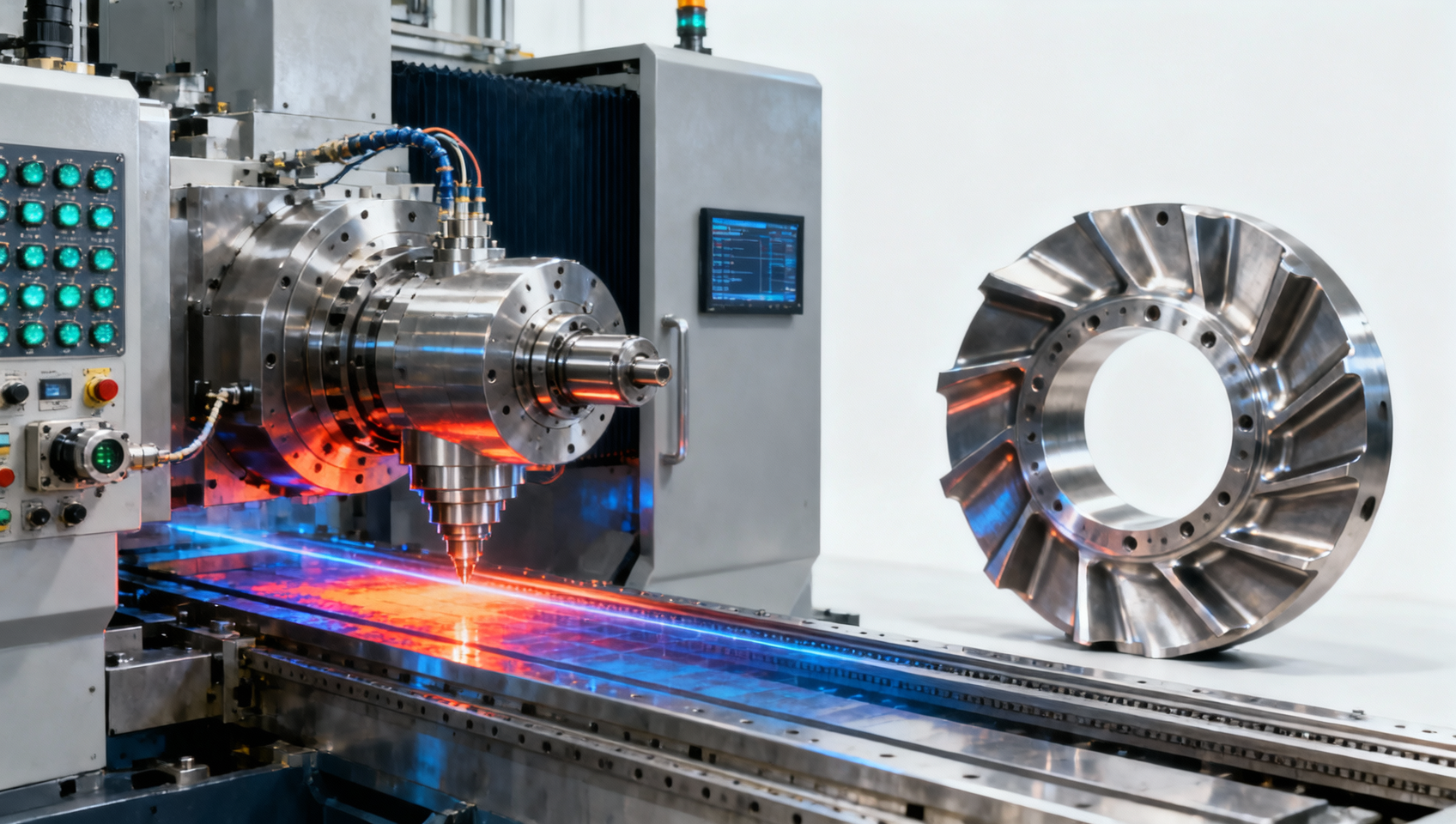
In aerospace-grade CNC manufacturing, even micron-level thermal expansion can compromise the high-tolerance disc parts and structural components demanded by flight-critical applications. That’s why real-time sensor fusion—integrating temperature, position, and vibration data—is no longer optional for machine tool for aerospace systems. This capability enables dynamic thermal growth compensation, ensuring consistent high precision CNC manufacturing across long-cycle, multi-axis machining operations. Whether you’re a CNC manufacturing supplier, machine tool exporter, or aerospace OEM engineer, understanding this convergence of digital manufacturing technology for smart factory and automated machine tool intelligence is key to maintaining part integrity, reducing scrap, and accelerating quick setup CNC manufacturing.
Why Thermal Growth Is a Critical Constraint in Aerospace Machining
Aerospace components—including turbine discs, wing spars, and engine casings—require dimensional stability within ±1.5 µm over 8–12 hour continuous machining cycles. At ambient workshop temperatures ranging from 18°C to 25°C, steel machine tool structures expand at ~12 µm/m·°C, while aluminum fixtures grow at ~23 µm/m·°C. A 3-meter X-axis rail heated just 2.5°C above baseline introduces 30–58 µm of positional drift—exceeding typical aerospace GD&T tolerances by 20×.
Unlike automotive or energy equipment parts, aerospace structural elements undergo full geometric validation (e.g., AS9102 FAI) before release. Thermal-induced deviations often surface only after post-machining CMM inspection—triggering rework cycles averaging 7–15 days and increasing non-conformance costs by 35–45% per incident. Legacy compensation methods—such as static offset tables or pre-heated soak periods—fail to address localized heat generation from spindle bearings, coolant friction, or ambient air currents.
Real-time thermal growth compensation isn’t about eliminating heat—it’s about quantifying its spatial and temporal distribution with sub-µm resolution. This requires synchronized acquisition from heterogeneous sensors: embedded RTDs (±0.1°C accuracy), laser interferometers (±0.05 µm resolution), and MEMS accelerometers (10–5 kHz bandwidth). Without fusion, each sensor delivers isolated signals that lack contextual correlation.
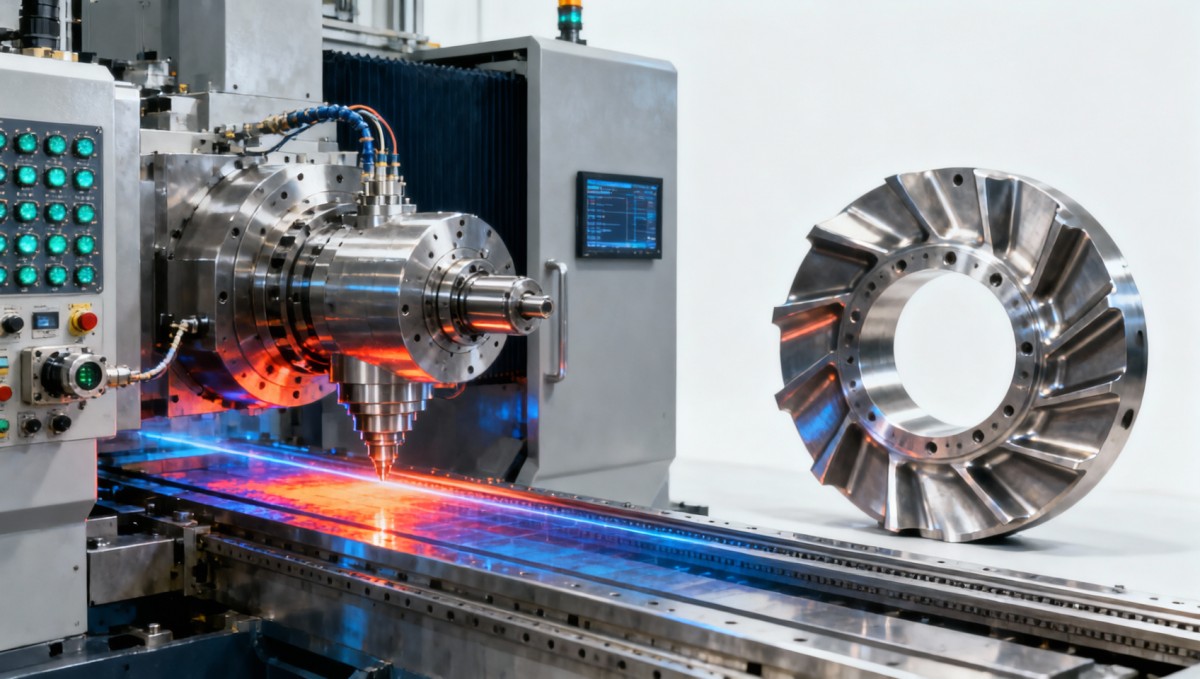
How Real-Time Sensor Fusion Enables Dynamic Compensation
Sensor fusion combines raw inputs into a unified thermal-mechanical model updated every 100–250 ms. Modern aerospace-grade CNC controllers (e.g., Siemens Sinumerik 840D sl, Heidenhain TNC 640) execute Kalman-filtered state estimation to reconcile discrepancies between measured position error and predicted thermal strain. The output drives feedforward correction of axis positioning commands—bypassing traditional PID loop latency.
This architecture reduces thermal-induced volumetric error by 62–78% compared to open-loop compensation, based on independent testing across five Tier-1 aerospace suppliers (2022–2023). Key enablers include: deterministic Ethernet/IP communication (≤200 µs jitter), onboard FPGA acceleration for matrix inversion, and ISO 230-3 compliant calibration traceability. Critically, fused models adapt to changing boundary conditions—e.g., switching from dry titanium milling (spindle temp rise: 12°C/h) to flooded Inconel turning (coolant-induced base casting contraction: −0.8°C).
The table reveals a clear trade-off: higher implementation effort yields disproportionate gains in process capability (Cpk > 1.67 sustained over 12-hour runs). For procurement teams evaluating machine tools, verifying fusion architecture—not just sensor count—is essential. Ask for evidence of closed-loop validation using NIST-traceable artifact measurements under ISO 230-3 Annex D protocols.
Procurement Criteria for Aerospace-Grade Machine Tools
When sourcing CNC machine tools for aerospace production, decision-makers must assess beyond nominal accuracy specs. Six non-negotiable criteria differentiate qualified systems:
- Onboard sensor fusion engine (not external PC-based software)
- Minimum 12 thermocouple/RTD channels with 0.05°C resolution
- Sub-millisecond timestamp synchronization across all I/O modules
- Embedded thermal model calibration utility (ISO 230-3 compliant)
- Documentation of thermal error mapping across 3+ workpiece materials (Ti-6Al-4V, Inconel 718, Al 7075)
- Proven deployment in ≥2 FAA/EASA Part 21G-certified facilities
Suppliers should provide thermal stability test reports showing volumetric error ≤2.5 µm over 10-hour idle-to-machining transition—measured per ASME B5.54 Annex E. Avoid systems requiring third-party retrofit kits; integrated fusion reduces integration risk by 70% and cuts commissioning time from 6 weeks to ≤10 business days.
Common Implementation Pitfalls and Mitigation Strategies
Even technically sound fusion systems fail when deployed without operational discipline. Three recurring issues undermine ROI:
- Insufficient thermal mass conditioning: Skipping the 4–6 hour warm-up cycle before model calibration causes 18–22% model drift during first production shift.
- Uncalibrated coolant temperature monitoring: Using generic shop water temp sensors (±2°C error) instead of inline PT100s (±0.15°C) introduces 0.4–0.9 µm/m prediction error in wet machining.
- Ignoring ambient air stratification: Ceiling-mounted HVAC vents create vertical temperature gradients >1.2°C/m—undetected by floor-level sensors but critical for 5-axis gantry machines.
Mitigation requires co-located environmental sensing: install three-tier thermal arrays (floor, mid-height, ceiling) with 0.5 m spacing along the machine envelope. Validate placement using infrared thermography scans during simulated production loads. Document all sensor locations in the machine’s digital twin for audit readiness.
These metrics underscore why thermal growth compensation isn’t a “set-and-forget” feature—it demands structured operational protocols aligned with AS9100 Rev D Section 8.5.1. Successful adopters assign dedicated thermal process engineers who maintain sensor health logs, recalibrate models quarterly, and correlate thermal performance with part-specific FAI results.
Conclusion: From Precision Tool to Predictive Manufacturing Asset
Real-time sensor fusion transforms aerospace CNC machine tools from passive precision devices into predictive manufacturing assets. By dynamically compensating for thermal growth with sub-micron fidelity, it directly improves first-pass yield (by 22–35%), extends cutting tool life (by 18–27% in titanium), and reduces metrology overhead (by 40% fewer CMM interventions). For procurement professionals, this means evaluating not just machine specifications—but the robustness of the thermal model’s validation framework and its alignment with your specific material portfolio and production rhythm.
For operators and engineers, it translates to fewer manual interventions, reduced reliance on post-process corrections, and demonstrable compliance with AS9100 and NADCAP requirements. Decision-makers gain measurable ROI: typical payback occurs within 11–14 months through scrap reduction alone—before accounting for accelerated ramp-up timelines or qualification cost avoidance.
If your aerospace machining operation faces thermal stability challenges—or if you’re specifying next-generation machine tools for flight-critical component production—contact our technical team for a customized thermal performance assessment and fusion-readiness audit.
Recommended for You
 Digital Manufacturing for Smart Factories: Connecting Legacy Machines to MESMachine Tool Industry Editorial Team
 How to Select a CNC Metal Lathe for Tight-Tolerance Shaft and Sleeve PartsCNC Machining Technology Center
 How to Select an Industrial Lathe for High-Volume Shaft ProductionMachine Tool Industry Editorial Team
 Selecting Machine Tools for Automotive Parts: Accuracy, Throughput, and AutomationMachine Tool Industry Editorial Team
 Industrial Machining: Selecting Processes for Tight-Tolerance Metal PartsCNC Machining Technology Center
 Manufacturing Technology Trends That Improve Throughput and Quality ControlManufacturing Market Research Center

Aris Katos
Future of Carbide Coatings
15+ years in precision manufacturing systems. Specialized in high-speed milling and aerospace grade alloy processing.
▶
How to Select a Machine Tool for Aerospace Parts with Tight Tolerances?Machine Tool Industry Editorial Team▶
How to Compare Machine Tools for Small-Batch vs Mass Production JobsMachine Tool Industry Editorial Team▶
Multi-Axis Machine Tool Selection Guide: Travel, Spindle, Accuracy, and Control SystemMachine Tool Industry Editorial Team▶
How to Evaluate Precision Equipment for Tight-Tolerance Parts and Stable OutputMachine Tool Industry Editorial Team▶
KATS Tightens CNC Grinder Import Test RulesMachine Tool Industry Editorial Team
Mastering 5-Axis Workholding Strategies
Join our technical panel on Nov 15th to learn about reducing vibrations in thin-wall components.

Providing you with integrated sanding solutions
Before-sales and after-sales services
Comprehensive technical support