• Global CNC market projected to reach $128B by 2028 • New EU trade regulations for precision tooling components • Aerospace deman
NYSE: CNC +1.2%LME: STEEL -0.4%

What makes a CNC manufacturing factory truly scalable beyond peak season?
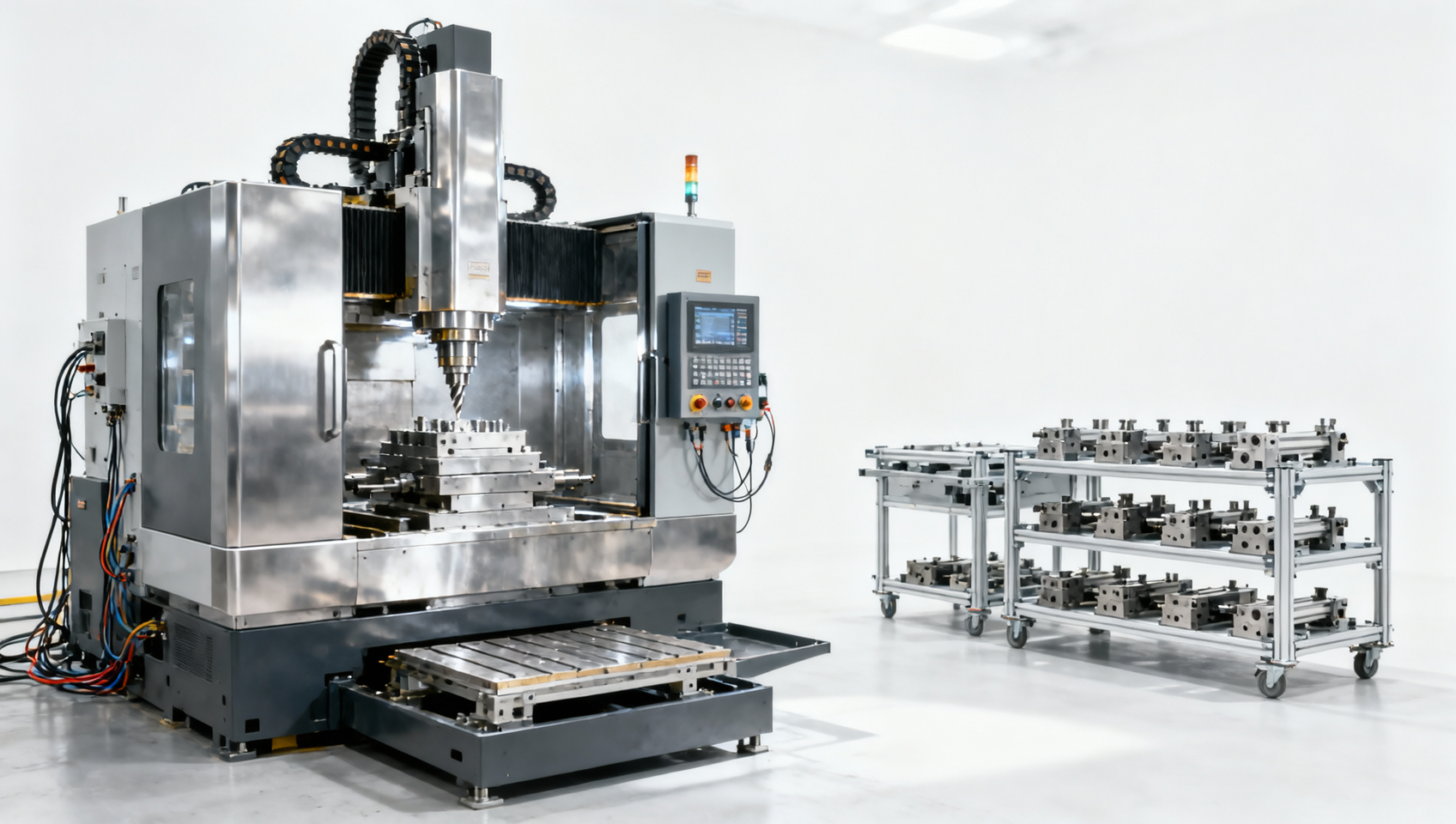
What truly defines a scalable CNC manufacturing factory? It’s not just about handling peak-season demand—it’s about integrating space-saving CNC manufacturing, automated CNC manufacturing, and multi-axis CNC manufacturing into a flexible, low-maintenance, energy-saving infrastructure. Whether serving the automotive industry, aerospace, medical devices, or energy equipment, scalability hinges on precision CNC manufacturing backed by quick setup CNC manufacturing, modular tooling systems, and smart digital manufacturing technology. For procurement professionals, decision-makers, and operations teams alike, choosing a reliable CNC manufacturing supplier—or even a CNC manufacturing exporter—means prioritizing high-precision, cost-effective, and compact machine tool solutions that deliver consistent throughput without compromising quality.
Beyond Peak Capacity: The Four Pillars of True Scalability
Scalability in CNC manufacturing is frequently misinterpreted as simply adding more machines during high-demand periods. In reality, true scalability is systemic—it emerges from interoperable infrastructure, adaptive workforce practices, intelligent resource allocation, and resilient supply chain integration. Industry benchmarks show that top-tier factories achieve ≥35% faster ramp-up between production phases and reduce changeover time by 40–60% compared to non-scalable setups.
A scalable factory maintains stable OEE (Overall Equipment Effectiveness) above 82% across seasonal fluctuations—not just during peak output. This requires synchronized optimization across four interdependent pillars: modular machine architecture, real-time digital twin monitoring, standardized tooling ecosystems, and predictive maintenance scheduling with ≤72-hour response SLAs.
Unlike reactive capacity expansion, scalable CNC facilities embed flexibility into their physical layout: 60–75% of floor space supports reconfigurable workcells rather than fixed-line installations. This enables rapid deployment of new part families—typically within 5–12 working days for medium-complexity aerospace structural components.
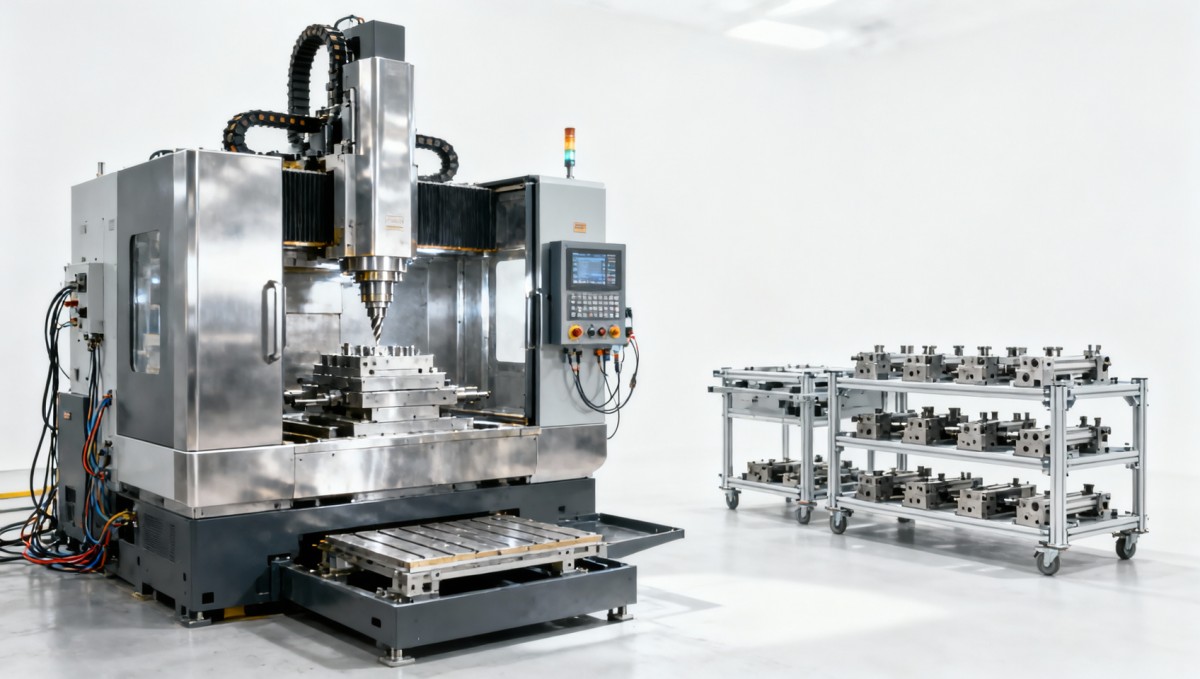
The table reveals how scalability manifests operationally—not as raw capacity, but as consistency under variability. Factories achieving >90% tooling reuse eliminate 2–4 weeks of fixture design lead time per new program and cut non-value-added setup labor by over 50%. Procurement teams should prioritize suppliers demonstrating verified metrics in these three dimensions—not just machine count or catalog specs.
Modular Machine Architecture: From Fixed Lines to Reconfigurable Cells
Scalable CNC factories avoid monolithic production lines. Instead, they deploy modular machining cells—each comprising a multi-axis machining center (e.g., 5-axis vertical/horizontal hybrids), integrated pallet pool (≥12 stations), robotic material handling (cycle time ≤22 sec), and inline metrology (CMM-grade probing accuracy ±1.2 μm).
These cells operate autonomously but communicate via OPC UA–compliant MES interfaces. When demand shifts, cells are physically relocated using standard ISO 15532 mounting interfaces and reconfigured in under 48 hours—no concrete anchoring or utility rewiring required. Leading adopters report 2.8× faster introduction of new product variants versus legacy linear layouts.
Key enablers include standardized power/data bus systems (IEC 61800-3 compliant), plug-and-play coolant filtration modules (capacity: 800–2,200 L/min), and universal base plates compatible with 85% of major OEM machine footprints (Fanuc, Siemens, Heidenhain controls). For procurement professionals, verify vendor compliance with ISO/IEC 62443-3-3 for industrial cybersecurity integration—non-negotiable for digitally connected cells.
Critical Procurement Checks for Modular Systems
- Confirm mechanical interface compatibility across ≥3 leading CNC control platforms (not just one brand)
- Validate cell-level energy metering accuracy (±0.5% full scale) and data export frequency (≤15-sec intervals)
- Require documented proof of ≤3-day field commissioning for cell relocation—including validation reports
- Verify tooling library standardization: ISO 26623-1:2021 compliance for quick-change chucks and collet systems
Digital Integration That Delivers ROI—Not Just Dashboards
Many factories implement “smart manufacturing” dashboards that display real-time spindle load or coolant temperature—but fail to act on anomalies. Truly scalable operations use digital infrastructure for closed-loop decision support: AI-driven tool wear prediction (accuracy ≥91% at 15-min lookahead), dynamic cycle time optimization (reducing non-cutting time by 18–27%), and automated NC program validation against GD&T tolerances pre-launch.
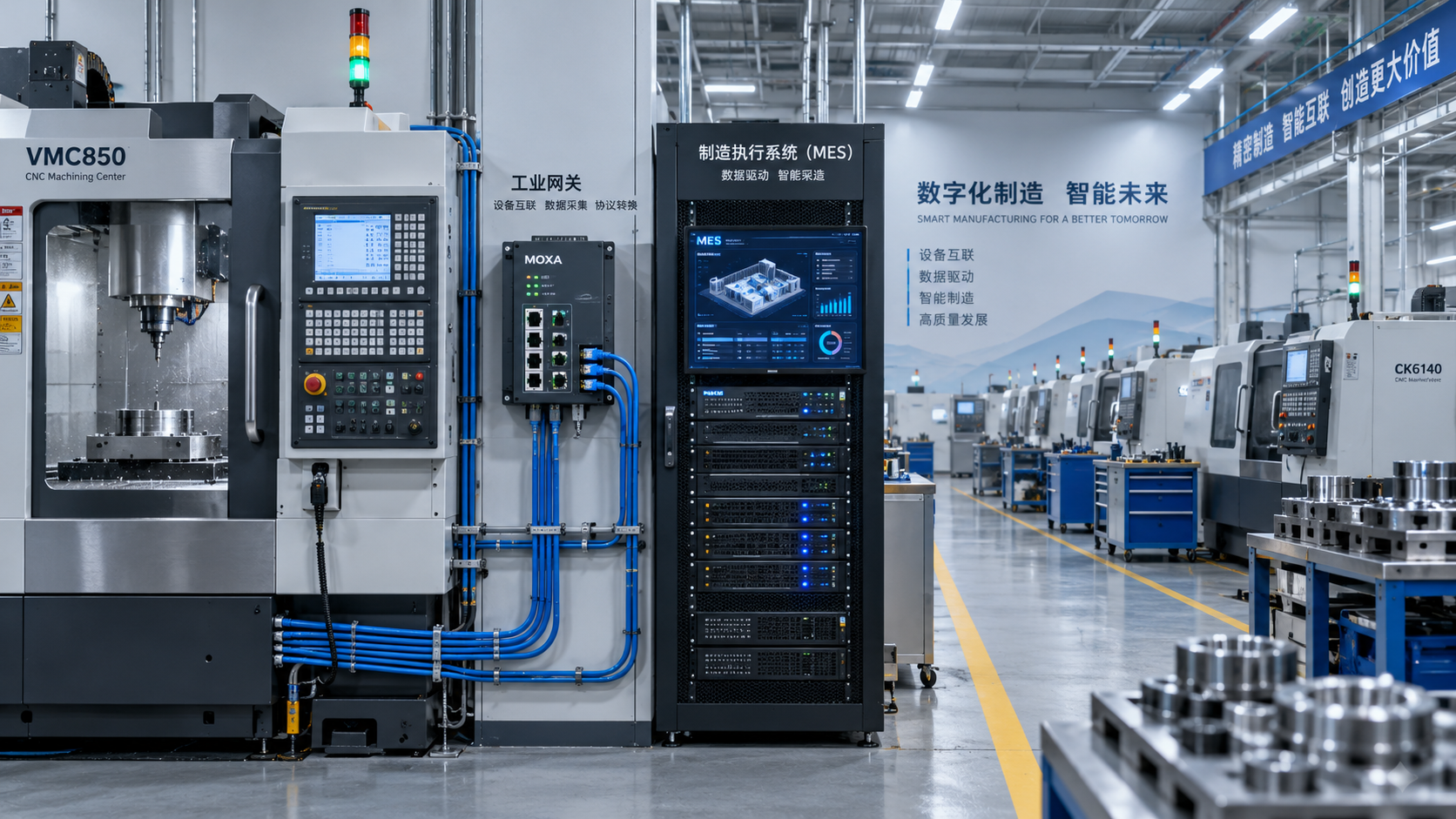
This requires native integration—not bolt-on middleware. Scalable factories deploy edge-computing gateways (e.g., Siemens Desigo CC or Rockwell Stratix) that normalize data from CNCs, PLCs, and CMMs into a unified time-series database. Latency must be ≤80 ms for control-loop responsiveness, and historical data retention spans ≥18 months for trend analysis—critical for aerospace traceability requirements.
For decision-makers evaluating exporters or Tier-1 suppliers, request evidence of ISO 55001-certified asset management integration and documented uptime of ≥99.2% for core MES/SCADA services over 12 consecutive months—not just “cloud-hosted” claims.
The second table highlights how scalability separates tactical digitization from strategic intelligence. Suppliers offering only “live dashboard access” rarely provide actionable alerts or auto-generated corrective actions—yet scalable factories generate 4–7 validated process adjustments daily without operator intervention.
Procurement Strategy: What to Evaluate Beyond Machine Specs
When sourcing CNC manufacturing partners—especially exporters or global suppliers—focus on operational scalability indicators, not just technical brochures. Request auditable evidence of: (1) ≥3 years of on-time delivery performance at ≥98.4% for complex multi-axis parts; (2) documented reduction in first-article scrap rate (target: ≤0.7% after 3 iterations); and (3) certified calibration records for all in-house metrology equipment traceable to NIST or PTB standards.
Also assess service depth: scalable partners maintain ≥12 certified application engineers per regional hub, offer remote NC program debugging (SLA: ≤4 business hours), and stock ≥85% of consumable tooling SKUs locally—ensuring ≤72-hour replenishment for urgent orders. Avoid vendors requiring minimum annual purchase commitments exceeding $1.2M unless your volume consistently exceeds 1,500 complex parts/month.
Finally, validate scalability through reference checks: ask for contactable clients in your exact sector (e.g., medical device enclosures or EV battery housings) who have experienced ≥30% demand volatility year-over-year—and confirm how the supplier managed capacity shifts without quality deviation or delivery slippage.
Conclusion: Scalability Is a Measured Capability—Not a Marketing Claim
True scalability in CNC manufacturing is quantifiable, auditable, and rooted in engineering discipline—not marketing rhetoric. It delivers measurable outcomes: 30–50% faster new-product ramp-up, 22–38% lower energy-per-part variance, and sustained precision within ±2.5 μm across 12-month production runs—even amid 40% demand swings.
For procurement professionals and enterprise decision-makers, this means shifting evaluation criteria from static specifications to dynamic performance evidence. Prioritize partners who transparently share OEE trends, tooling reuse analytics, and digital integration SLAs—not just machine counts or certifications.
If your organization seeks a CNC manufacturing partner built for variable demand—not just peak output—explore our benchmarked supplier network. We help match enterprises with vetted, globally compliant factories demonstrating verified scalability across automotive, aerospace, energy, and medical sectors. Request a customized scalability assessment report for your next RFQ.
Recommended for You
 Digital Manufacturing for Smart Factories: Connecting Legacy Machines to MESMachine Tool Industry Editorial Team
 How to Select a CNC Metal Lathe for Tight-Tolerance Shaft and Sleeve PartsCNC Machining Technology Center
 How to Select an Industrial Lathe for High-Volume Shaft ProductionMachine Tool Industry Editorial Team
 Selecting Machine Tools for Automotive Parts: Accuracy, Throughput, and AutomationMachine Tool Industry Editorial Team
 Industrial Machining: Selecting Processes for Tight-Tolerance Metal PartsCNC Machining Technology Center
 Manufacturing Technology Trends That Improve Throughput and Quality ControlManufacturing Market Research Center

Aris Katos
Future of Carbide Coatings
15+ years in precision manufacturing systems. Specialized in high-speed milling and aerospace grade alloy processing.
▶
Is CNC Machining Hub Better Than Local Shops for Prototyping?Machine Tool Industry Editorial Team▶
German Hydraulic Parts Plant Sale Signals Local Supply ShiftMachine Tool Industry Editorial Team▶
How to Evaluate a Machine Tool Factory: 7 Checks Before Requesting a QuoteMachine Tool Industry Editorial Team▶
Shenwei CNC Dual-Spindle Transfer Machine Passes TÜV Rheinland Production-Line Integration CertificationMachine Tool Industry Editorial Team▶
Delta NC5 Series Gains TÜV SIL3 Certification, Enters BMW Production ValidationMachine Tool Industry Editorial Team
Mastering 5-Axis Workholding Strategies
Join our technical panel on Nov 15th to learn about reducing vibrations in thin-wall components.

Providing you with integrated sanding solutions
Before-sales and after-sales services
Comprehensive technical support